
A bedroom full of visual clutter can make it harder to wind down. Minimalism isn’t about owning nothing. It’s about removing what pulls your attention at night, so the room supports rest.
This guide covers 15 simple changes that make a bedroom calmer, plus a comparison table and FAQ. It’s based on common sleep-environment and design guidance rather than personal sleep tracking, so adapt the ideas to your room. If you have ongoing sleep problems, talk to a healthcare professional.
1. Clear visible clutter
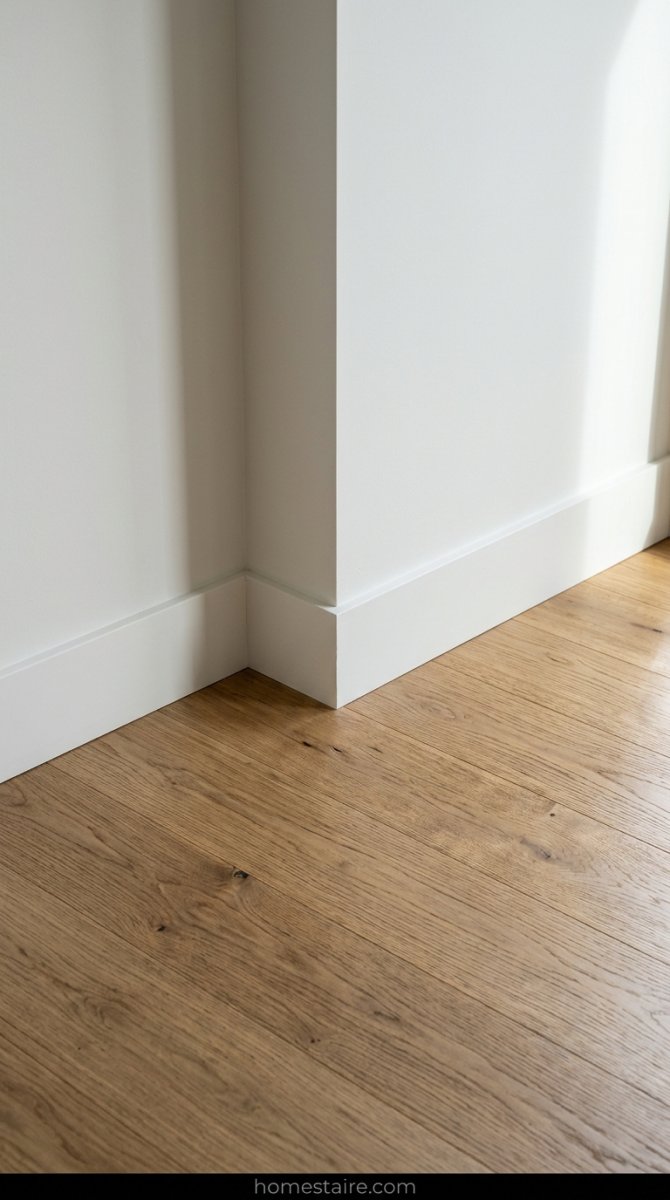
Piles of clothes, papers, and objects keep your eyes busy even when you’re trying to rest. Start by clearing surfaces you can see from the bed.
A simple rule is to keep only what you use daily in view and store the rest.
2. Choose a low bed frame
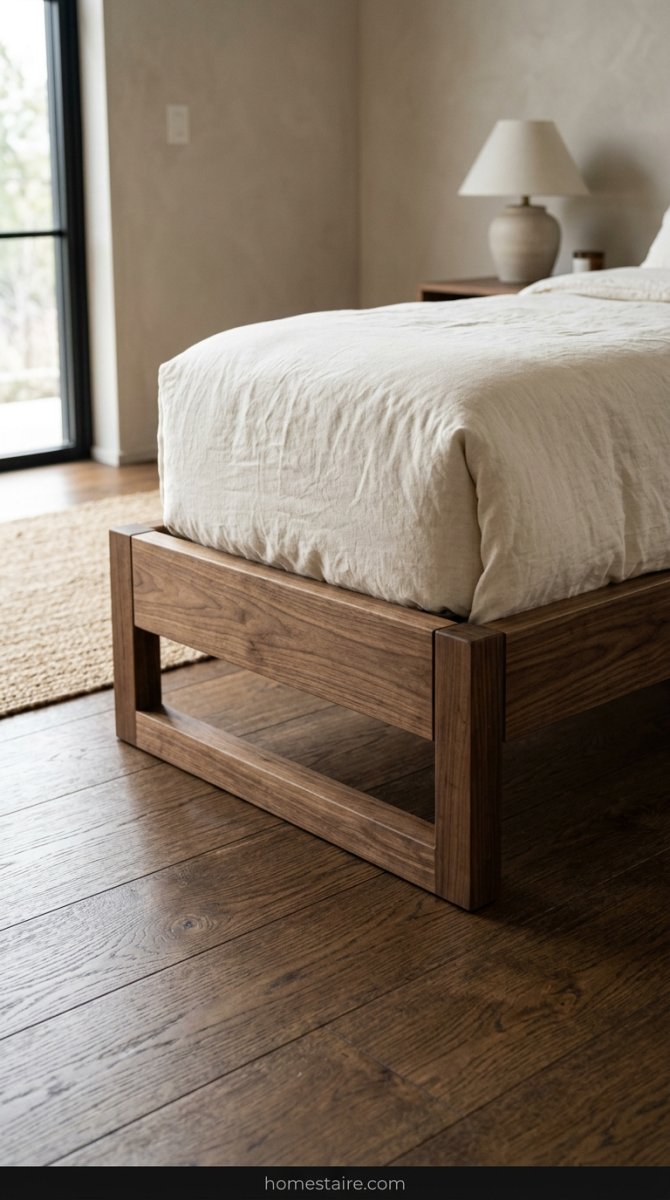
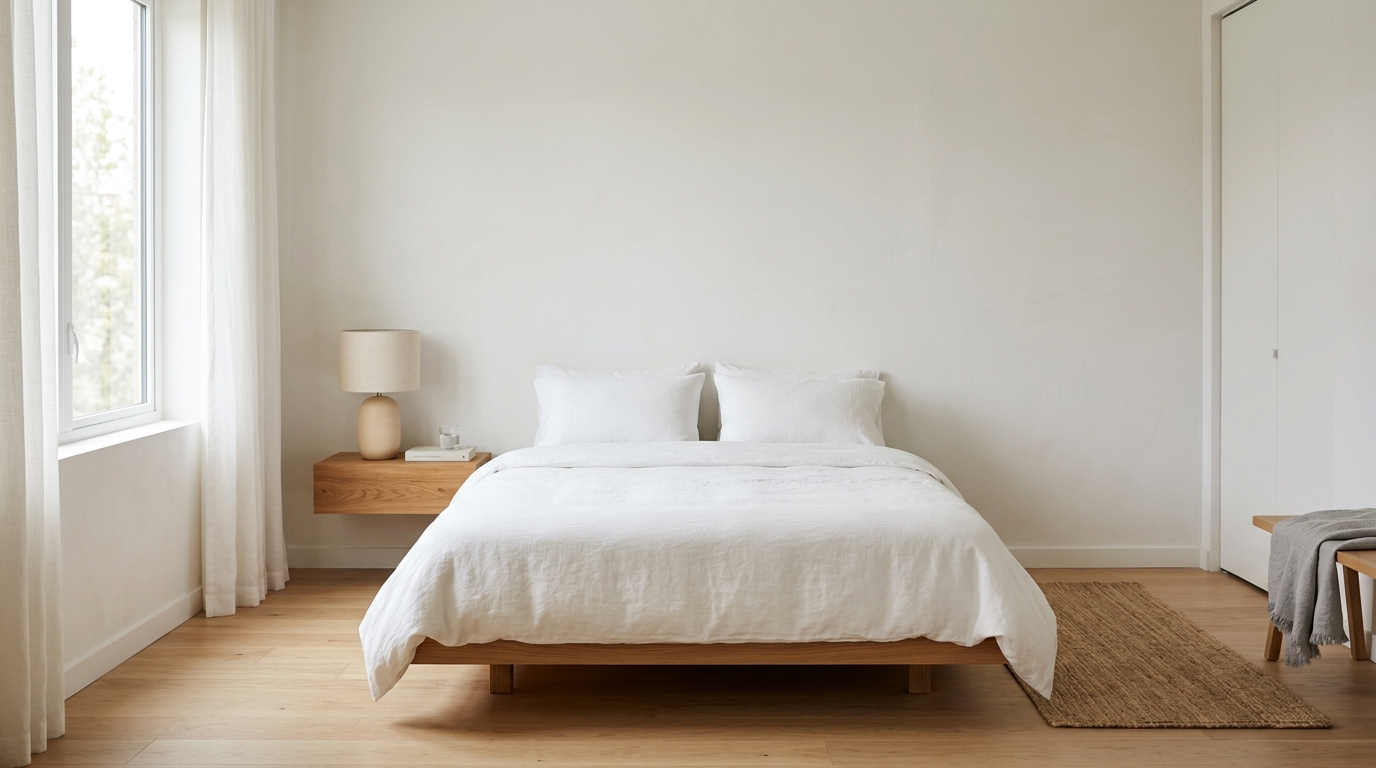
A low-profile frame makes the room feel more open and spacious, and it removes the storage space under the bed that tends to attract clutter.
Make sure the height is comfortable for getting in and out.
3. Use soft, natural bedding

Linen and good-quality cotton are breathable and get softer with washing. A single neutral set keeps the bed looking calm.
Choose a weave and weight that suit your climate.
4. Use an analog alarm clock
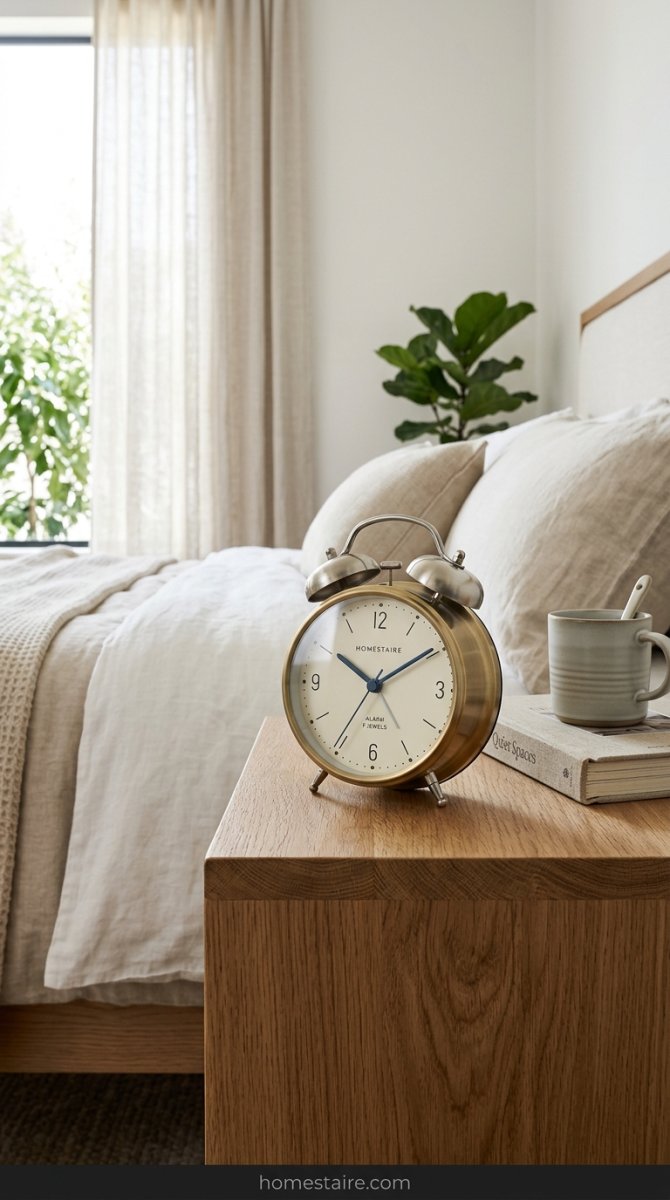
A simple alarm clock lets you keep your phone out of reach at night, which can reduce late scrolling and notifications.
Choose one with a soft or dimmable display, or none at all.
5. Switch to warm bulbs
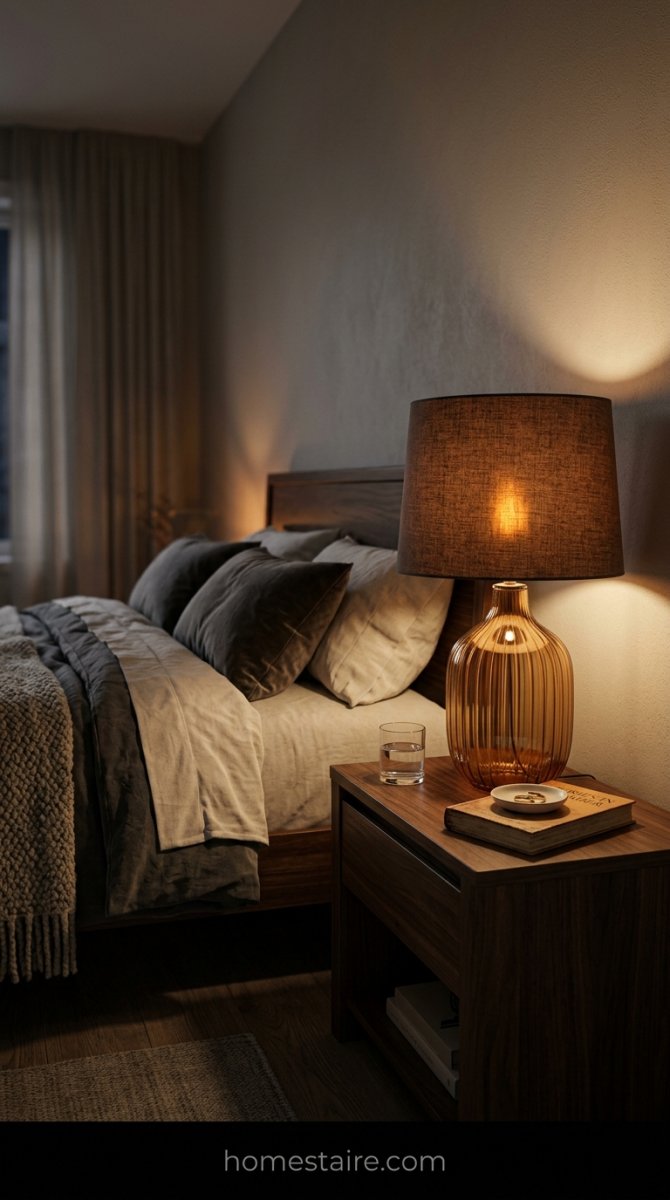
Cool white light is stimulating, while warm bulbs around 2700K feel relaxed in the evening. Use lamps with dimmers instead of a bright overhead light when you can.
It’s one of the cheapest changes you can make.
6. Edit the wall art

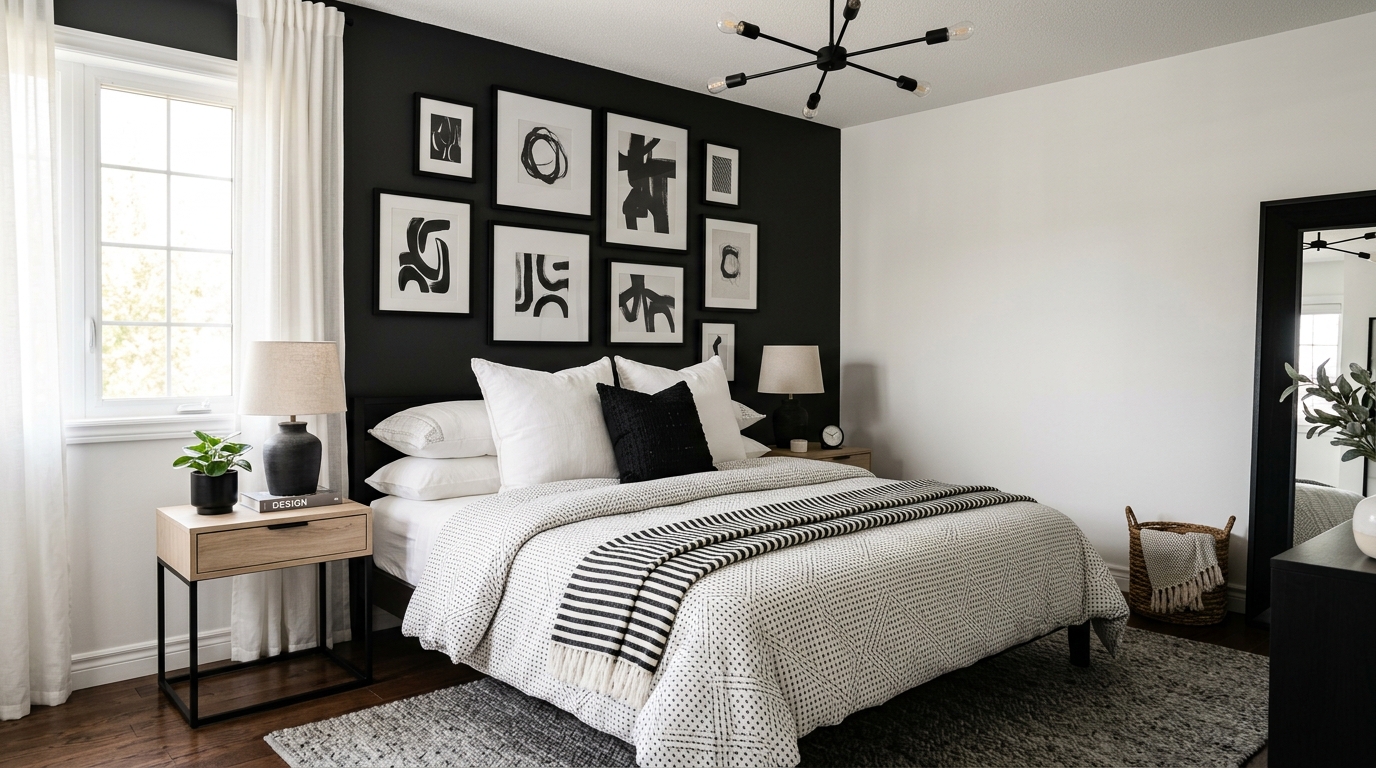
A busy gallery wall can feel stimulating in a bedroom. Keeping one or two pieces, or leaving a wall bare, can make the room feel calmer.
Minimal doesn’t have to mean empty. Choose pieces that you find calming.
7. Remove the clothes chair

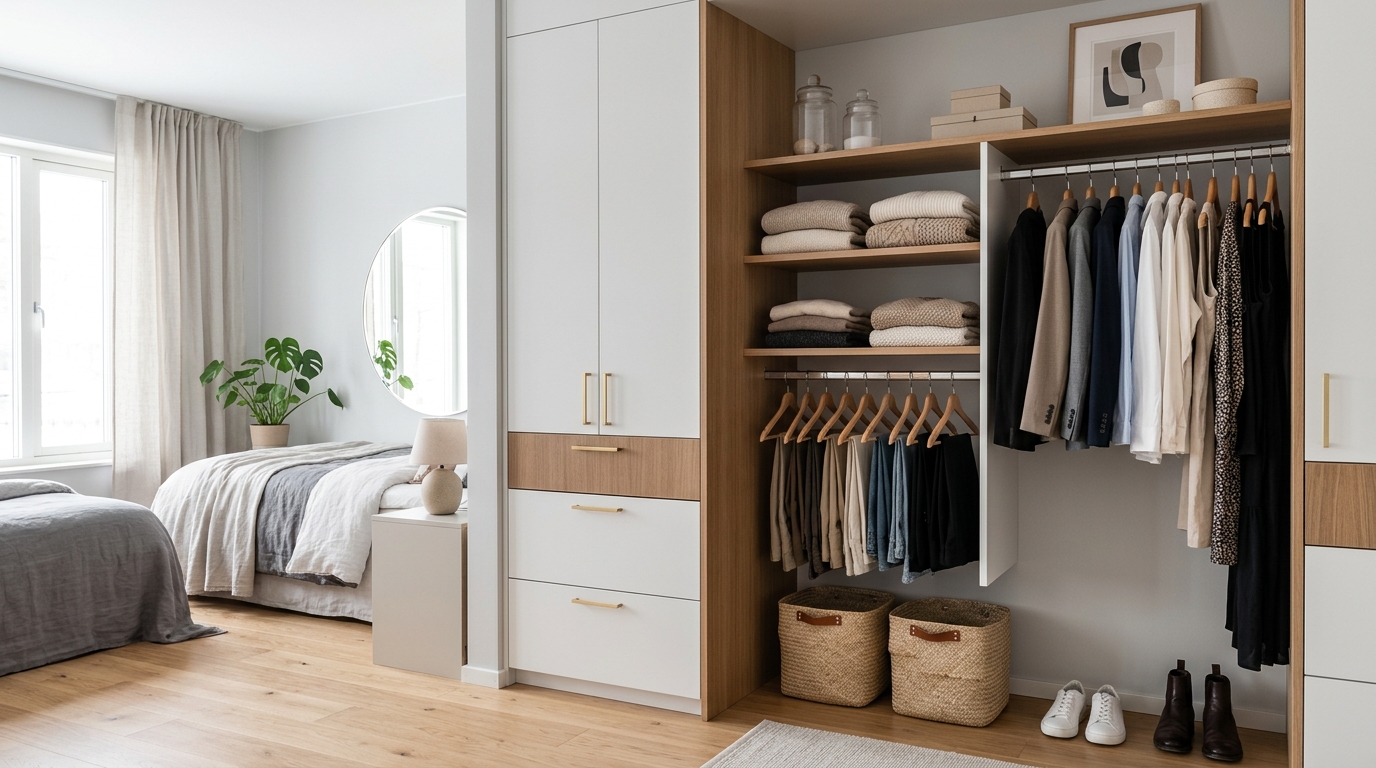
A chair that collects worn clothes becomes a visual pile. Replace it with a hook or a closed hamper so clothes have a clear home.
If you want a chair, keep it clear.
8. Clear under the bed

Under-bed clutter collects dust. Clear it out, and if you keep storage there, use closed boxes that match.
Vacuum the area regularly.
9. Hide cords
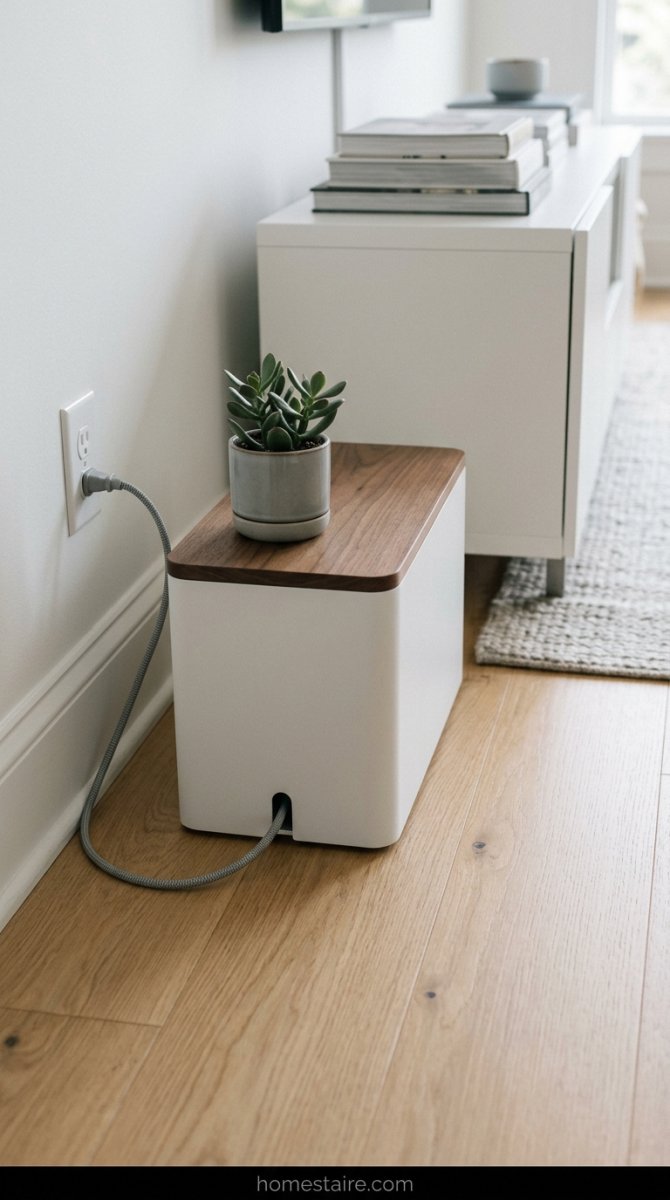
Tangled chargers and cables add visual noise. A cable box or cord organizer near the bed keeps them out of sight.
Make sure it has ventilation and don’t cover power strips in a way that traps heat.
10. Make the room dark at night

Blackout curtains or shades block streetlights, and covering small standby lights helps too. A dark room is a common recommendation for good sleep.
Mount curtain rods securely, since blackout fabric is heavy.
11. Choose a quiet wall color
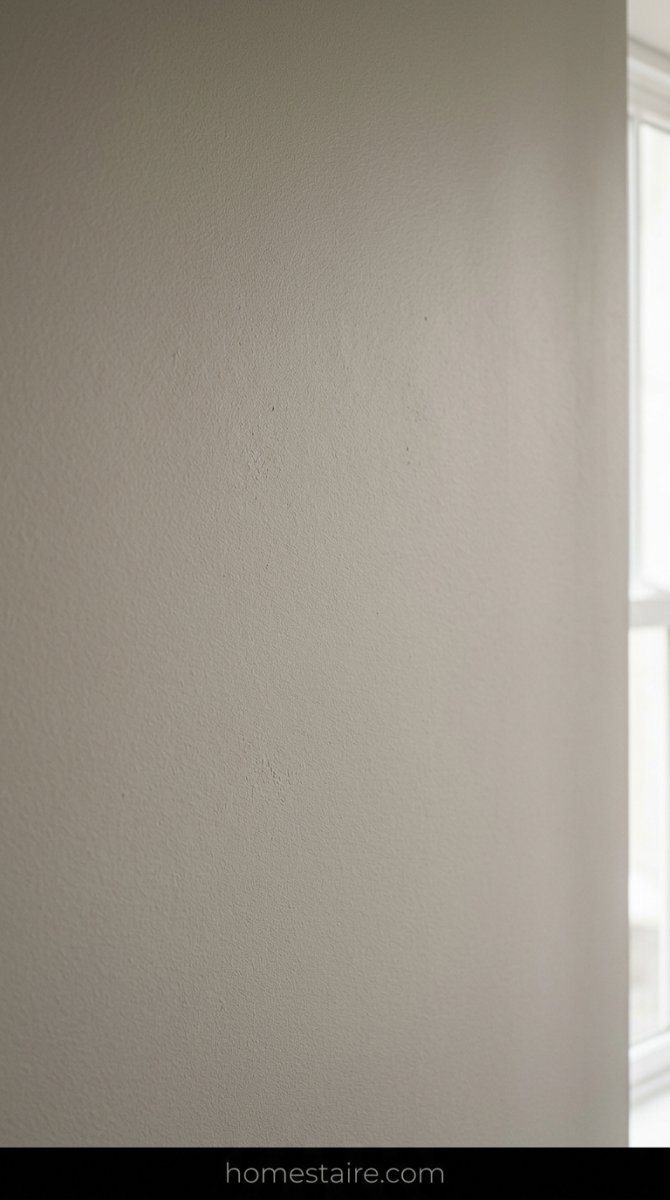
Soft, muted colors such as warm white, greige, pale sage, or soft clay feel restful. Bold patterns and high-contrast colors tend to be more stimulating.
Test samples at different times of day.
12. Think about mirror placement
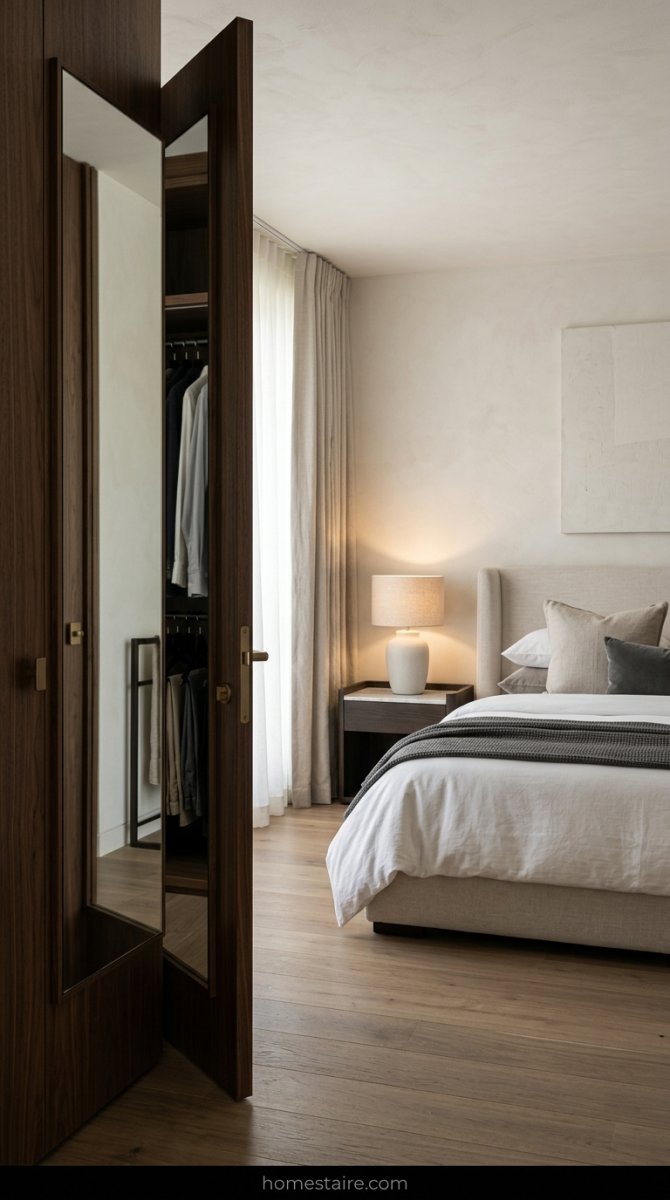
Some people find it unsettling to see a mirror reflection from bed, especially in the dark. It’s a matter of preference, so move a mirror if it bothers you.
A mirror on a wardrobe door or an angled wall is an easy option.
13. Keep one low-maintenance plant

A single plant such as a snake plant adds life without much work. It tolerates low light and irregular watering.
Snake plants can be mildly toxic to pets, so check before placing one where pets can reach.
14. Add a soft rug

A soft rug beside the bed warms cold floors and absorbs sound. Choose a natural, low-pile or medium-pile style that’s easy to clean.
Use a rug pad to prevent slipping.
15. Use a five-minute tidy rule
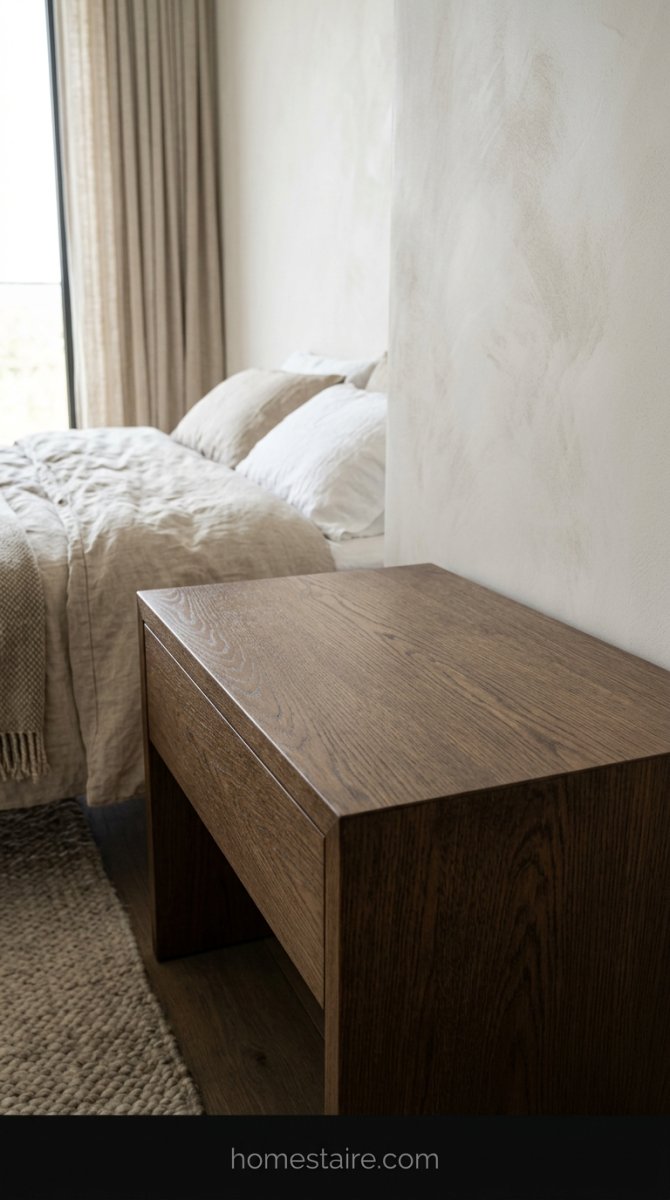
Spending a few minutes tidying before bed keeps the room from drifting back to clutter. Put things back, clear surfaces, and set out tomorrow’s clothes if that helps.
Small habits keep minimalism sustainable.
Which changes help most
| Change | Effort | Cost | Impact on calm |
|---|---|---|---|
| Clearing clutter | Medium | Free | High |
| Warm lighting | Low | Low | High |
| Blackout curtains | Low | Medium | High |
| Quiet wall color | Medium | Low to medium | Medium |
| Hiding cords | Low | Low | Medium |
| Natural bedding | Low | Medium | Medium |
Minimalist bedroom FAQ
Does a minimalist bedroom help you sleep? It can help you feel calmer by reducing visual stimulation, but sleep also depends on habits, light, noise, and health.
How do I start decluttering a bedroom? Begin with surfaces you can see from the bed, then clear the floor, then storage.
Do I have to remove all decorations? No. Keep a few items you enjoy and avoid overcrowding.
Conclusion

A calm bedroom comes from fewer distractions: clear surfaces, warm light, darkness, and quiet colors. Start with one or two changes, such as clearing the nightstand and swapping the bulbs, and see how the room feels.