

I almost cried when the contractor finished. My brand-new “industrial” kitchen didn’t feel like a home—it felt like a place where people go to get their tonsils removed. I had spent eight months and way too much of my savings on a look that was basically a cold, gray box of sadness.
Seriously. It was a disaster.
I realized I had fallen into the trap of thinking “cool” meant “sterile.” I wanted the vibe of a Soho loft but ended up with something that looked like a high-security prison wing. It took me another three months of tinkering—and some weird experiments with textures—to finally make the space feel like a place where I could actually drink coffee without shivering.
Why Most Industrial Kitchens Look Like Cold Surgery Rooms

The problem is that people copy professional restaurant kitchens without thinking about the “soul” part. Restaurants use stainless steel because they have to spray the walls down with a hose at 2 AM. You don’t do that. When you put metal on every surface, the room stops reflecting light in a “cozy” way and starts stabbing your eyeballs with glare.
It’s too much of the same thing. People get obsessed with the “theme” and forget that a home needs to absorb sound, not bounce it around like a rubber ball.
If your kitchen makes you feel like you’re about to perform an appendectomy instead of flipping pancakes, you’ve gone too far. I had to learn that lesson the hard way after my friends refused to hang out in there because it felt “unwelcoming.” Ouch.
Ditching the All-Stainless Steel Vibe for Warmer Brass
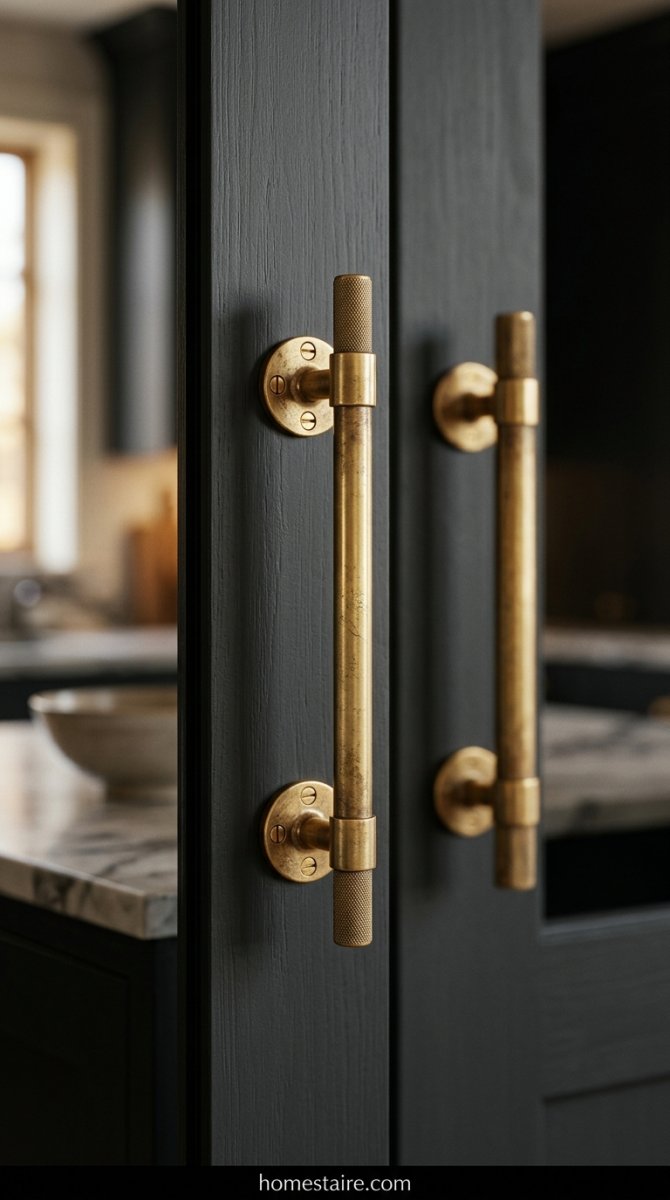
I realized I had to break the rules. Everyone told me industrial means silver, chrome, or black. They were wrong. I went out and bought unlacquered brass hardware—the kind that gets those weird, dark spots and a patina over time.
It felt like a crime at first. But that gold-ish glow against the dark metal? It changed everything.
Mixing metals is the “secret sauce” I wish I knew on day one. I kept my big stainless fridge but swapped the cabinet pulls for brass and copper. It breaks up the monotony. It’s like adding a warm blanket to a leather sofa—it just makes sense once you see it.
The Reclaimed Wood Rule That Saved My Sanity

Here is my rule: if the wood looks like it came from a giant box store and was “distressed” by a machine, don’t buy it. It looks fake because it is. I went to a local scrap yard and found actual 100-year-old floorboards that still had some old nail holes in them.
You need the grit. Real wood has a history that softens the “factory” edges of a room.
Don’t go overboard, though. If you put too much wood in there, you’re living in a mountain cabin. I kept it to just the floating shelves and a small island topper. Just enough to hide the fact that the rest of the room is concrete and steel.
Choosing Lighting That Doesn’t Feel Like a Warehouse
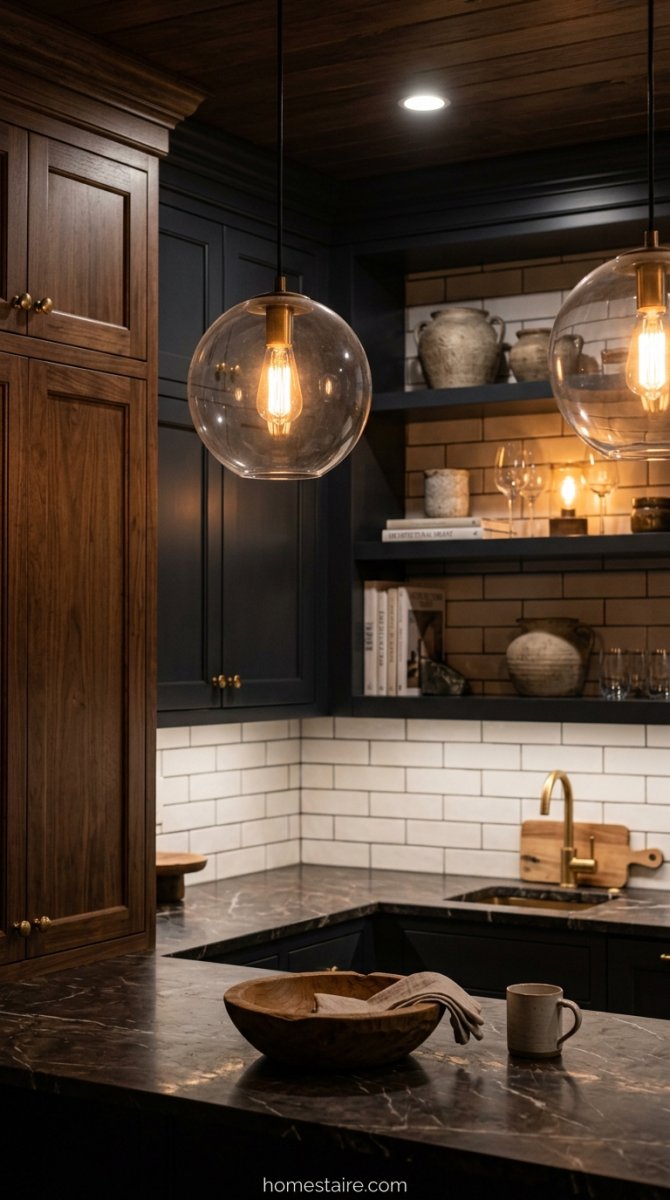
Warehouse lights are a trap. You see those giant metal domes and think “Yes! Industrial!” and then you hang them and realize they only point the light straight down like a police interrogation. It’s depressing.
I threw mine in the trash after a week.
I switched to clear glass globes with those super-warm Edison bulbs—specifically the 2700K color range. Do not buy the “daylight” blue bulbs unless you want your kitchen to look like a Walmart parking lot at midnight. You want a glow that makes your wine look good and your skin look better.
I also added some small lamps on the counter. Yeah, lamps in a kitchen. It sounds crazy until you try it, and suddenly the “factory” vibe feels like a cozy bar.
Brick Walls Need a Little Soul to Work Right
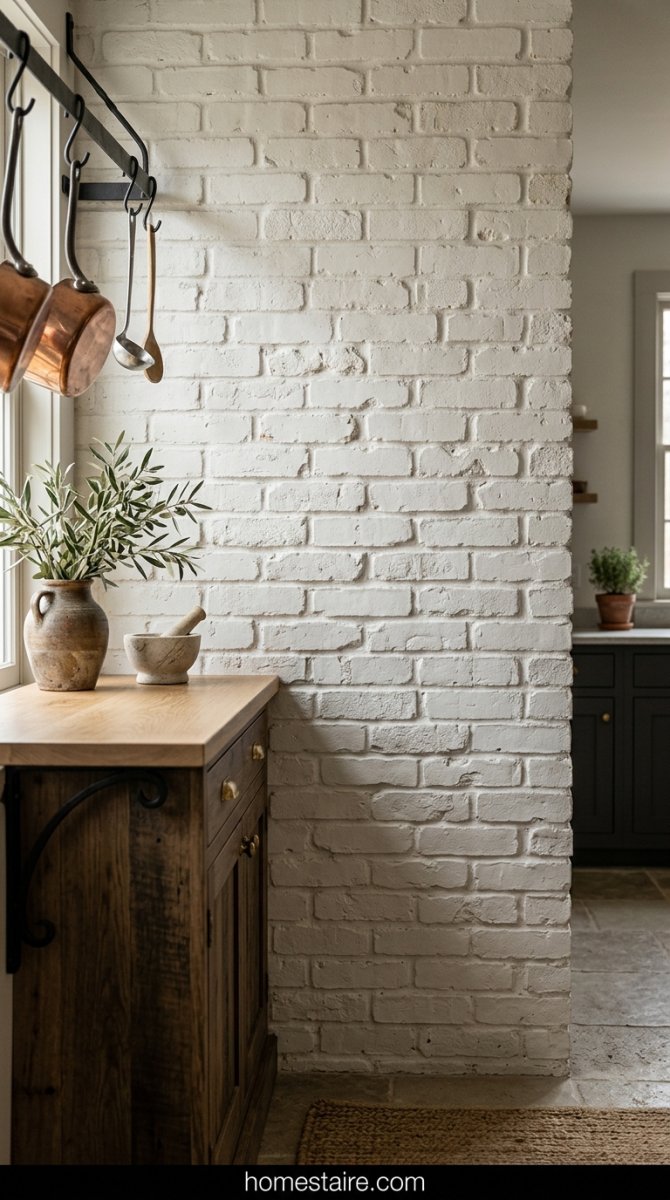
I didn’t want my kitchen looking like a 1920s garment factory where people slept under their machines. Plain red brick is too aggressive. It sucks the light right out of the room—literally just eats it. I ended up doing a messy white lime wash that I applied with an old rag while drinking a beer.
It looks lived-in now.
Don’t buy those fake brick veneers from the big box stores. They look like plastic stickers and you’ll regret it the second the sun hits them. If you have real brick, let the imperfections stay. I left a chunk of old mortar sticking out near the window because it felt like a real story instead of a showroom.
Open Shelving is a Messy Truth I Learned Fast

Everyone on Pinterest lies to you about open shelving. I thought I’d have these perfectly stacked white plates and glowing glassware. Wrong. Within two weeks, everything was covered in a thin, sticky film of cooking grease and dog hair.
I had to buy a specialized degreaser just for my cereal bowls.
If you’re going to do it, keep the shelves away from the stove. Like, far away. I moved mine to the other side of the room and suddenly I wasn’t washing my “clean” plates every time I wanted a snack. Use heavy chunks of wood—thick ones—so they don’t look like flimsy toothpicks against your heavy steel appliances.
Rugs in a Kitchen? I Know, But Hear Me Out

My mom thought I was insane when I rolled out a vintage Turkish runner right in front of the sink. “You’re going to spill soup on that,” she said. Yeah, maybe. But standing on cold, hard concrete or tile for three hours while meal prepping makes my lower back scream.
A rug changes the acoustics.
Industrial spaces echo like a damn cathedral. You drop a fork and it sounds like a gunshot. A thick, slightly beat-up rug kills that noise. Get a “distressed” one on eBay so when you inevitably drop a glob of pesto, it just looks like part of the pattern.
The Trick to Mixing Matte Black Steel with Soft Edges

Too much matte black makes a kitchen look like a high-end dungeon. I learned this the hard way after installing black hardware, black stools, and a black light fixture. It was heavy. To fix it, I started hunting for stuff with curves—round wooden bowls, arched mirrors, and chairs that didn’t have sharp corners.
Contrast is your best friend.
Think about a leather jacket over a silk dress—that’s the vibe you want. I swapped some boxy metal chairs for ones with rounded backs and the whole room finally breathed a sigh of relief. If everything is a rectangle, the room feels like a cage.
The Concrete Countertop Mistake That Cost Me Big

I thought I was a DIY god and decided to pour my own concrete counters. Big mistake. Huge. I didn’t vibrate the forms enough, so I ended up with these tiny air bubbles that looked like a bad case of acne. Then I used a cheap sealer that turned yellow after three months of coffee spills.
It cost me $2,400 to have a pro come in and grind them down to fix my mess.
If you go concrete, don’t DIY the pour unless you’ve done it ten times before. And for the love of everything, get a high-grade penetrating sealer. You want the matte look, not a shiny plastic coating that peels off like a sunburn after a week of heavy cooking.
Using Big Green Plants to Kill the Factory Mood
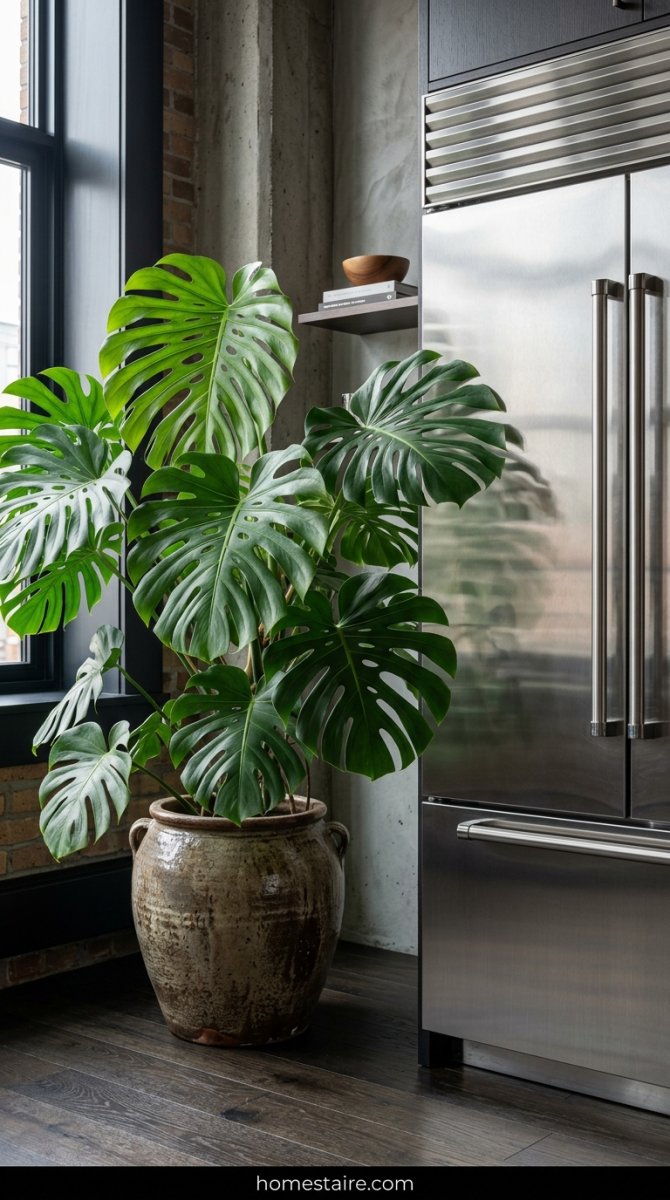
I’m not a “plant person”—or I wasn’t until my kitchen started looking like a scene from a horror movie set in a basement. You need something leafy. Something alive.
I shoved a massive, overgrown Monstera right next to my steel fridge and suddenly the room stopped feeling like a walk-in freezer. It’s about breaking those harsh, vertical lines with something that actually grows.
Go big or don’t bother. Small succulents just look like clutter on a counter. You want a jungle vibe to fight the machine vibe.
Scouring Thrift Stores for Pieces That Have a History
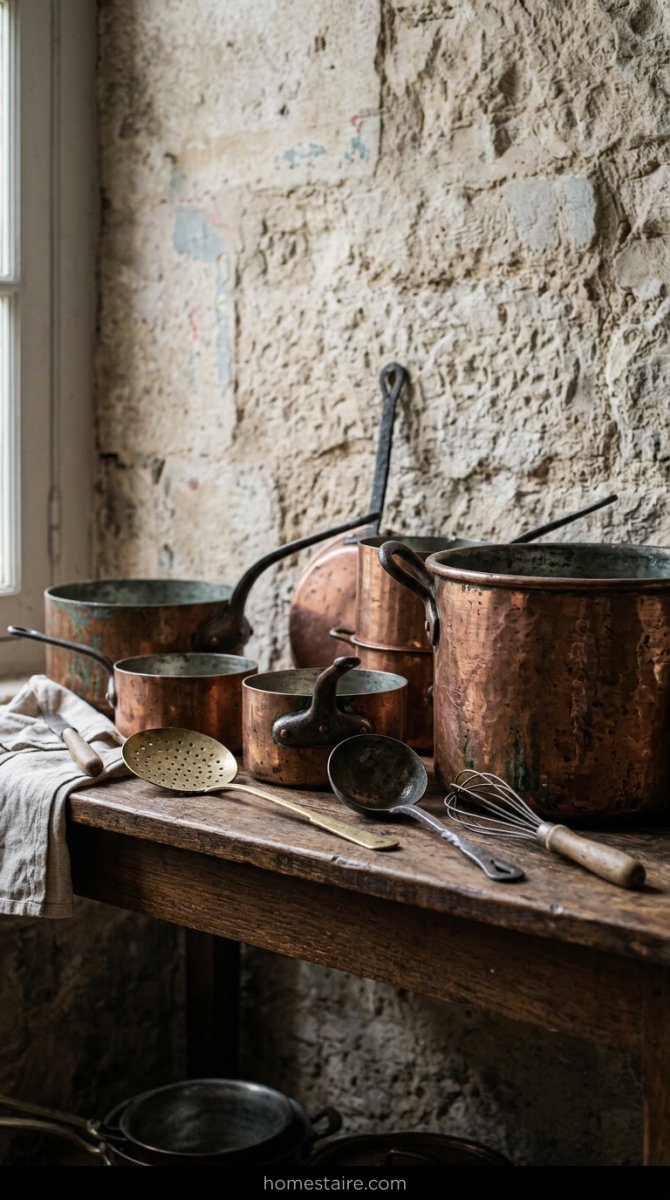
If everything in your kitchen comes in a flat-pack box, you’ve already lost the battle.
I spent three Saturdays digging through dusty thrift shops in the middle of nowhere. I found this weird, battered copper pot that looks like it’s seen some things—maybe even a few crimes. It’s those dings and scratches that make the space feel like a home instead of a showroom.
Cheap, mass-produced “industrial” decor is a trap. It looks fake because it is. Find the stuff that actually survived forty years in someone’s basement.
Why My Giant Industrial Faucet is the Best Part
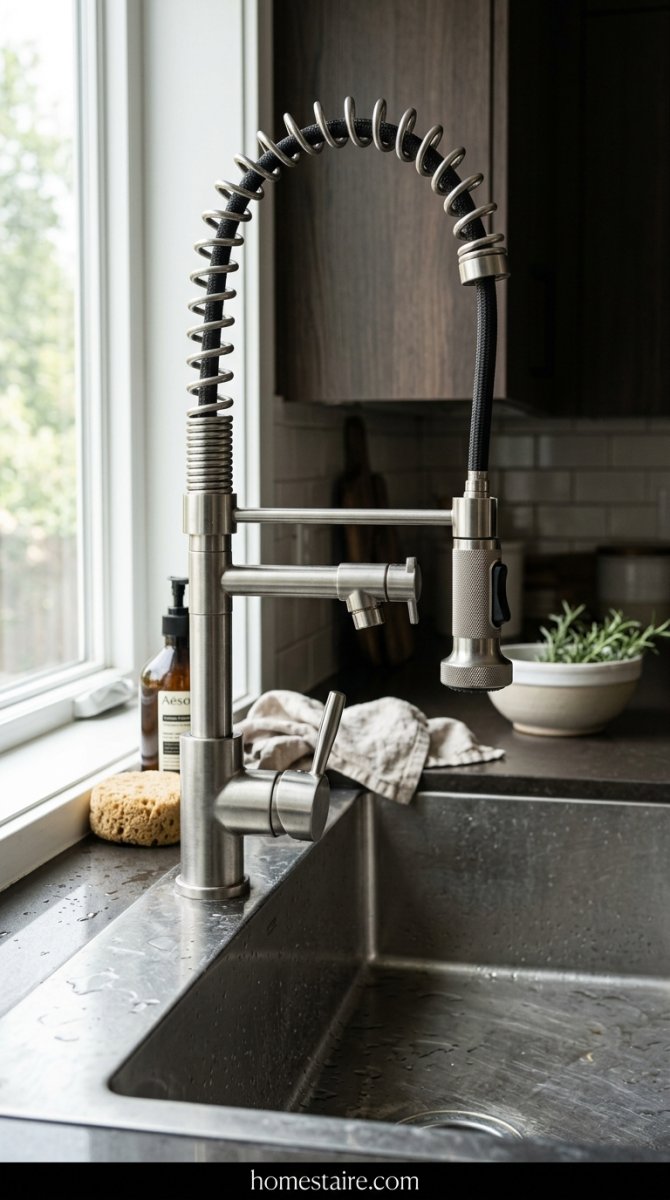
My faucet is basically a fire hose. It’s massive. It’s heavy.
It’s the only “factory” thing in the room that I refused to soften up because, honestly, washing a giant stock pot with a tiny, dainty faucet is a nightmare I’m over. People walk in and they always grab the springy neck of the thing first. It’s tactile.
It makes me feel like a professional chef—even when I’m just rinsing out a bowl of cereal.
Pick Leather Bar Stools Over Those Cold Metal Chairs

Stop buying those metal Tolix chairs. Seriously.
They’re loud, they scratch the floor, and they feel like sitting on an ice cube in the winter. I swapped mine for some beat-up cognac leather stools and my lower back finally stopped screaming at me. The leather adds a “warm” brown that kills the gray-on-gray monotony.
Metal on metal is for morgues. Leather is for living.
How I Painted My Exposed Pipes Without Looking Cheap

My ceiling had these gross, rusted orange pipes that looked less “industrial chic” and more “unsolved plumbing crisis.” I didn’t want them to blend in—I wanted them to look intentional.
I used a specific matte charcoal paint (not jet black, which looks like a cheap 90s bachelor pad). It took three coats and a lot of swearing on a ladder, but now they look like architectural features instead of leftovers.
Don’t use glossy paint. Just don’t. It catches the light in a way that makes the metal look like plastic.
Adding Real Colors Instead of Just Fifty Shades of Gray
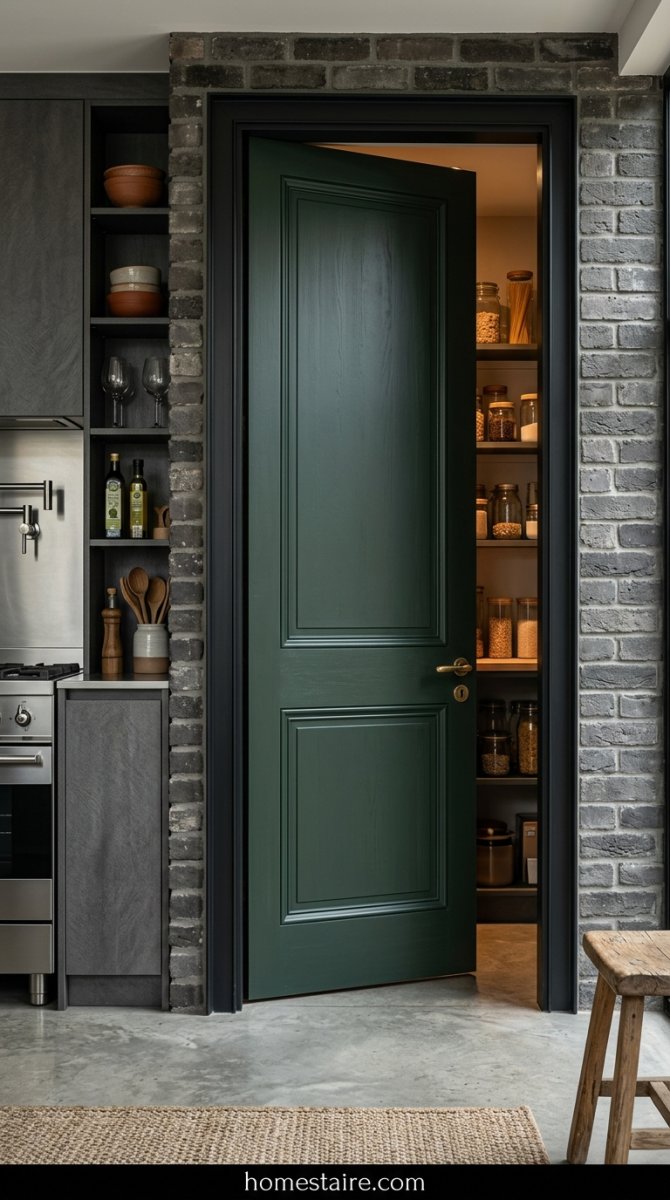
Everyone thinks “industrial” means choosing between slate and charcoal. I did that for a month and felt like I was living in a prison cell—or maybe a high-end morgue. I finally snapped and painted my pantry door a deep, moody forest green. It changed everything.
You need one “anchor” color that isn’t gray. My neighbor used a burnt orange for her backsplash tiles. It sounds hideous, right? It wasn’t. It made the cold steel beams look like they actually belonged there instead of just being leftover construction debris from a failed warehouse flip.
Colors aren’t scary. Grays are.
Conclusion

You don’t want to cook dinner in a place that feels like it produces car parts. That’s the bottom line. My kitchen isn’t a museum and it certainly isn’t a showroom. It’s a mess of metal, old wood, and plants that I occasionally forget to water (oops).
Stop overthinking the “rules” of industrial design.
If a piece of furniture makes you feel like you’re waiting for a root canal, don’t buy it. Keep it weird, keep it warm, and for the love of god, get some rugs. Your feet will thank you when you’re making coffee at 6 AM on a freezing Tuesday morning.