Living rooms should feel like homes, not tech hubs

In many living rooms, the furniture all points at a large black rectangle. A big TV can dominate the room, especially when it’s off. The goal isn’t to hide it entirely but to blend it so it supports the style of the room.
This guide covers 15 TV wall ideas, plus a comparison table and safety notes. It’s based on design guidance and product research rather than personal installations, so follow your TV and mount manufacturer’s instructions and confirm studs and wiring before you install anything.
1. Paint the wall a deep charcoal
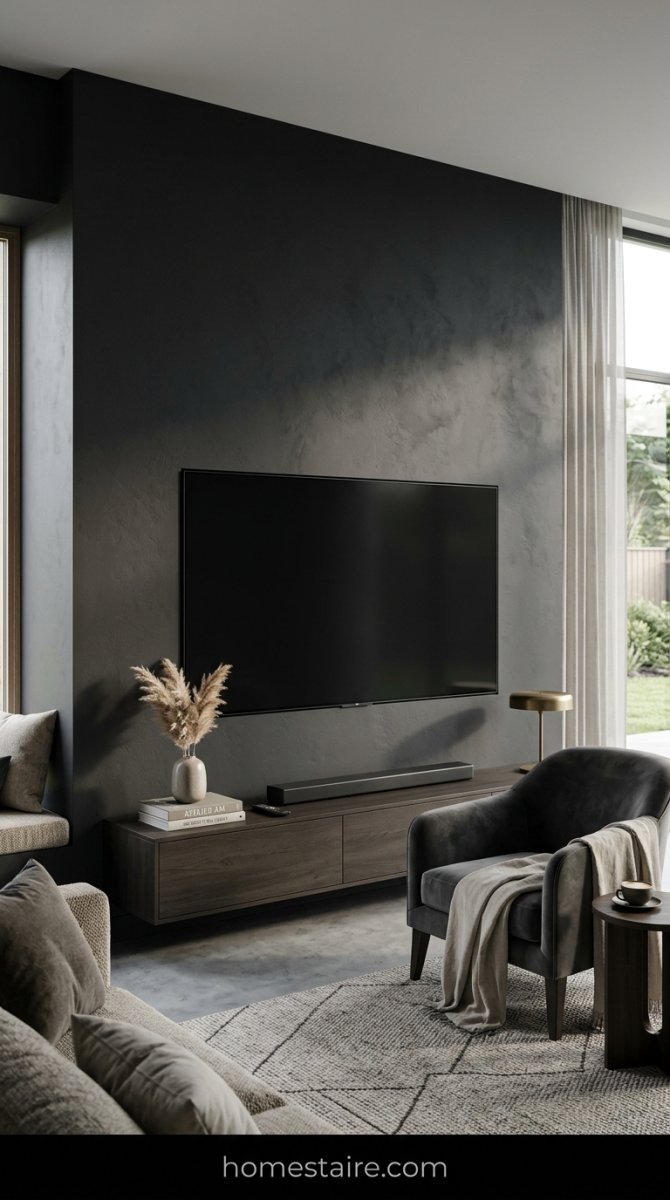
A white wall makes a black TV stand out. A deep charcoal, such as Sherwin-Williams Iron Ore, helps the screen blend in when it’s off.
Use a flat or matte finish, since glossy paint reflects window glare and breaks the effect.
2. Frame the TV with molding
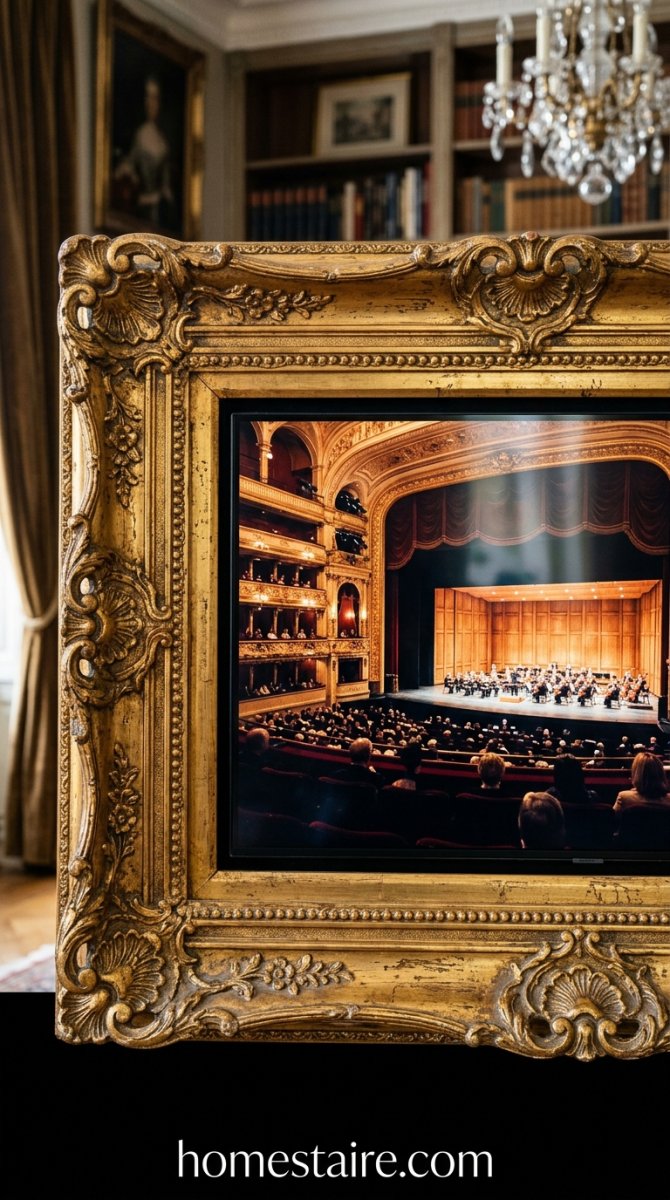
Simple picture-frame molding mitered around the TV makes it look like a framed piece of art. It can be painted or finished to match the room.
Leave space around the TV for ventilation, as recommended by the manufacturer, so it doesn’t overheat.
3. Surround the screen with a gallery wall
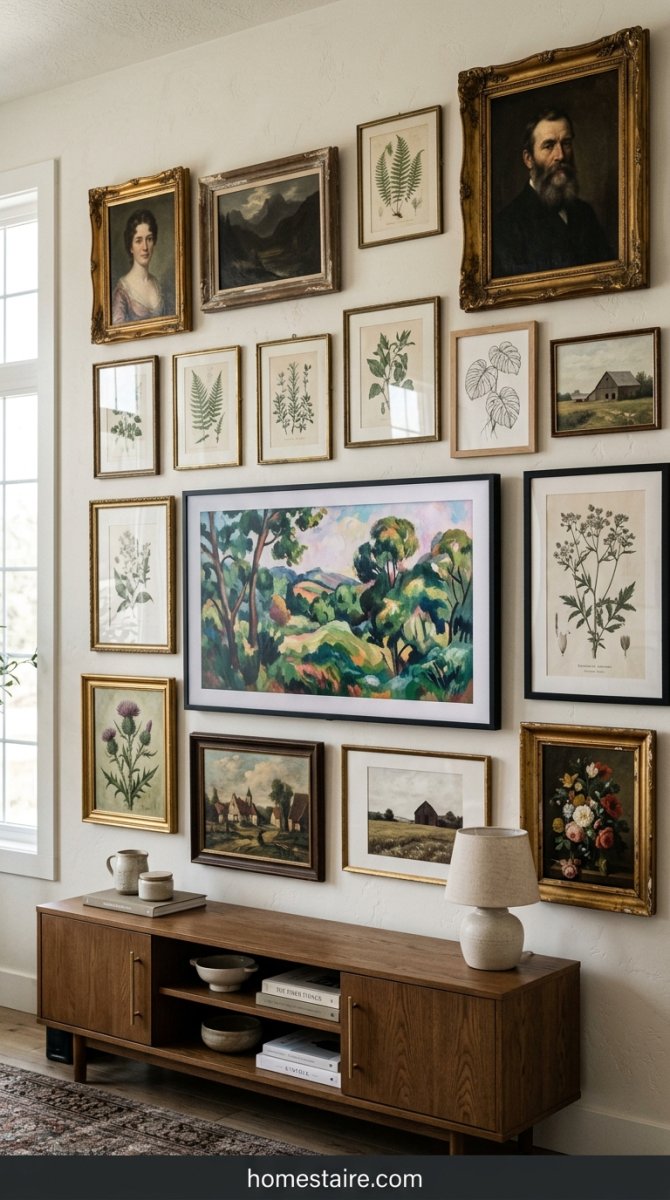
Hanging art around the TV makes it feel like one more piece in the arrangement. Mix frames, prints, and objects, and don’t worry about perfect symmetry.
Plan the layout on the floor or with paper templates before making holes.
4. Consider an art-style TV
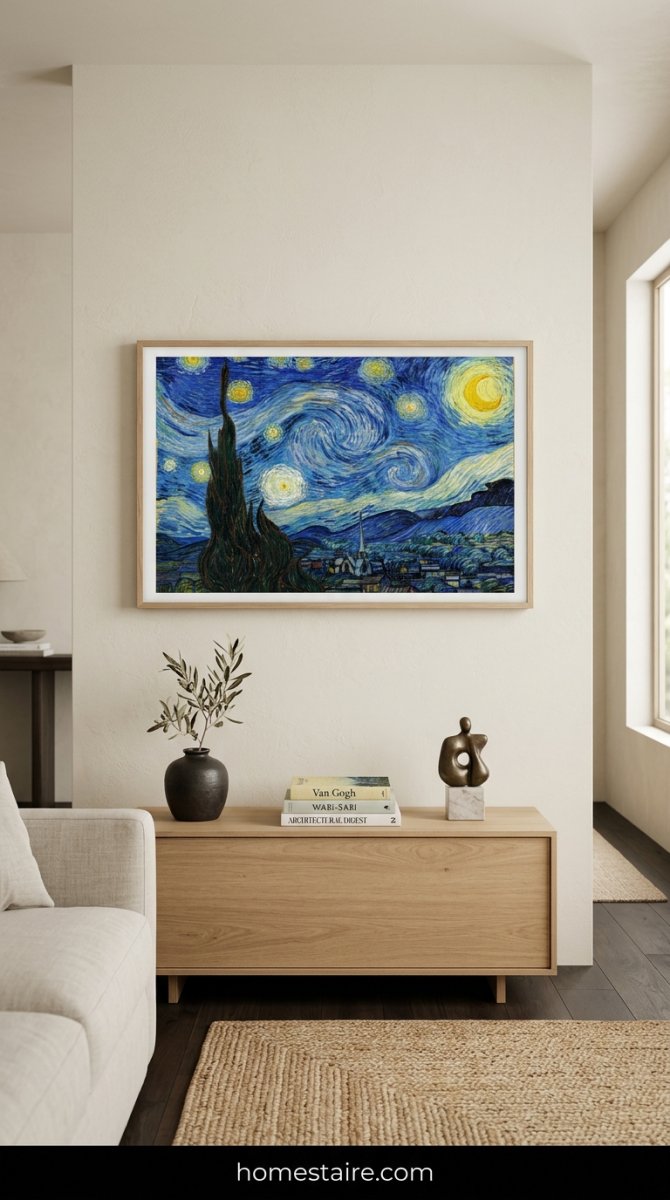
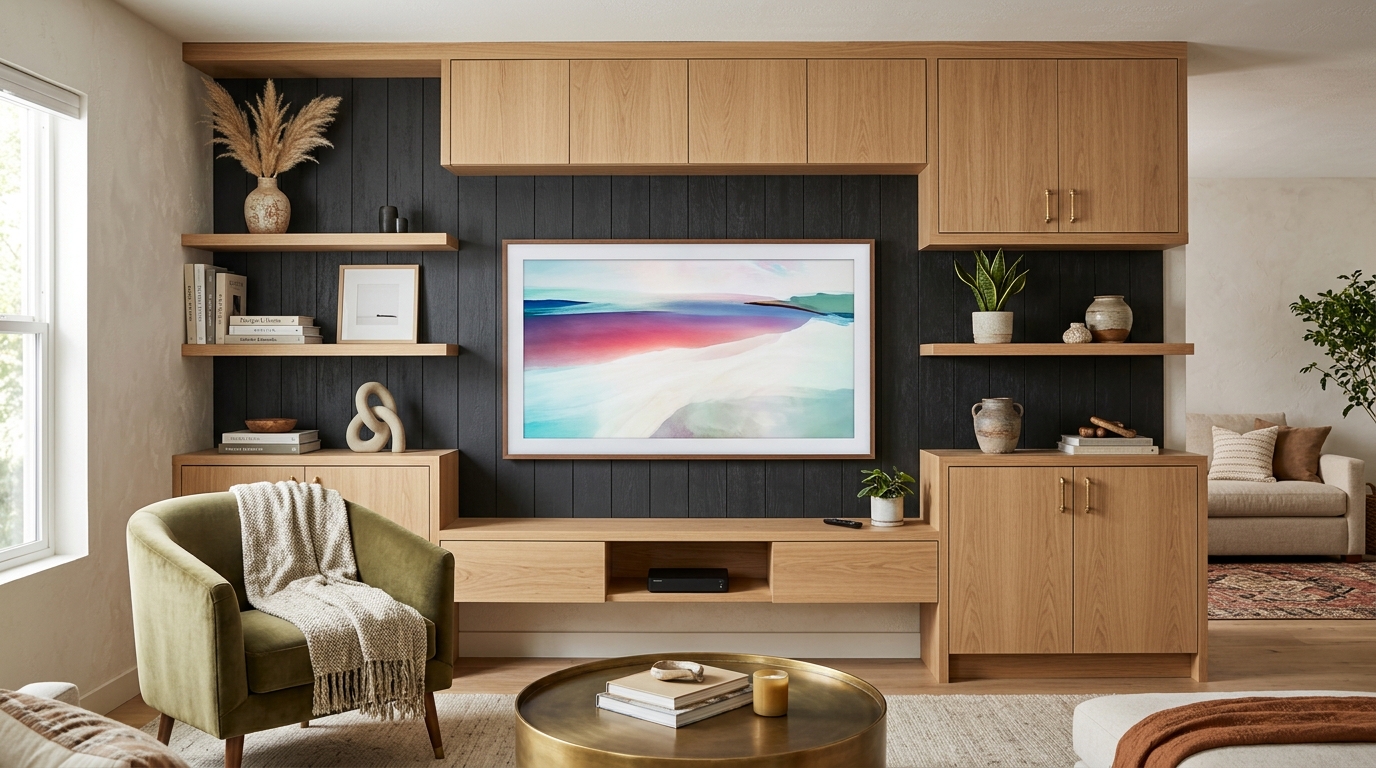
Some TVs are designed to display artwork when not in use and come with slim, flush-fit mounts and swappable frames. They look like a framed canvas on the wall.
They cost more than a standard TV, so decide whether the look is worth the premium.
5. Install vertical wood slats
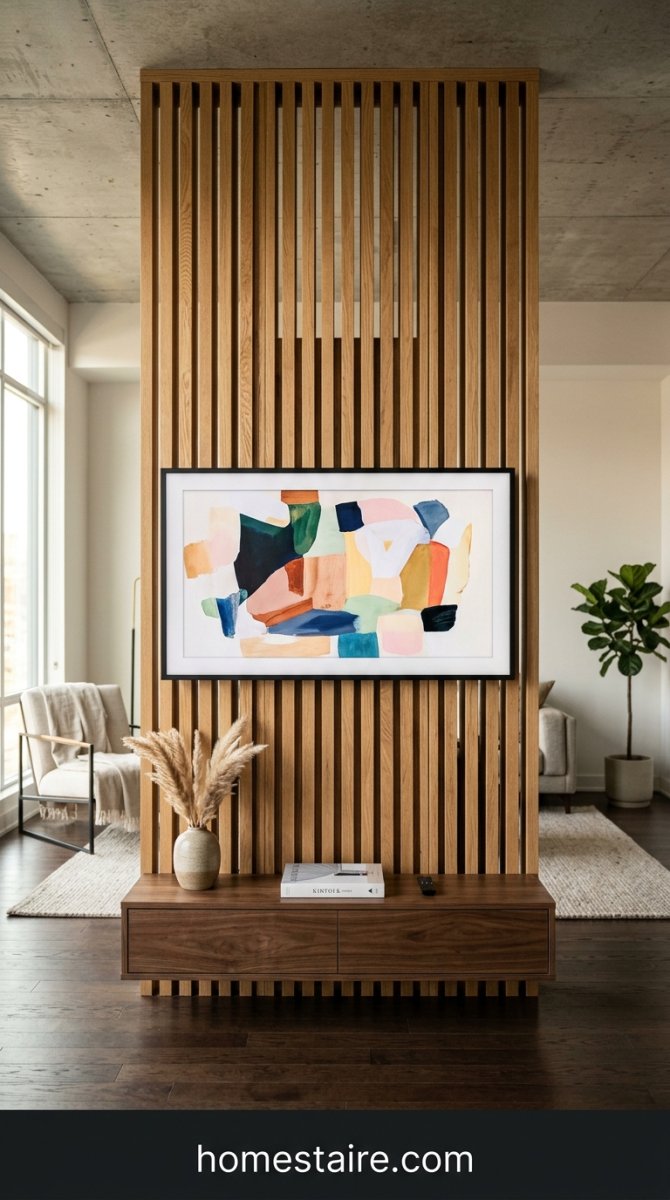
Slatted oak or walnut panels add warmth and draw attention to the wood grain instead of the screen. The vertical lines also make a low ceiling feel taller.
Keep even spacing so it looks deliberate rather than like a fence, and mount into studs or use a backing board.
6. Use built-in bookcases

A TV set into a wall of shelves looks like another shelf item. It also manages a large screen without overwhelming the room.
Use thick, well-supported shelves so they don’t sag, and plan for ventilation and cable routing.
7. Use a floating console
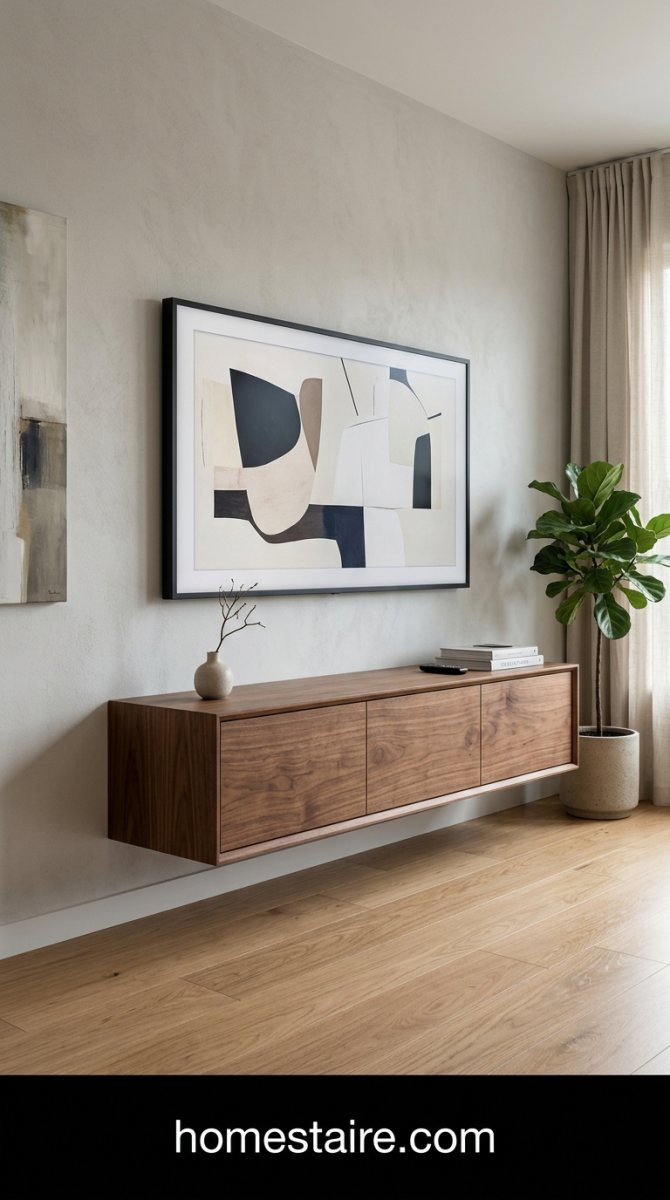
A wall-mounted media cabinet keeps the floor visible, so the room looks bigger and is easier to clean.
Mount it into studs, never drywall anchors alone, and check the weight rating.
8. Add textured grasscloth wallpaper

Natural-fiber wallcovering adds texture and softens the hard glass of a TV. Real grasscloth is costlier than peel-and-stick, but it looks richer.
It can be scratched by pets and is hard to clean, so consider that before choosing it.
9. Hide the TV behind sliding doors
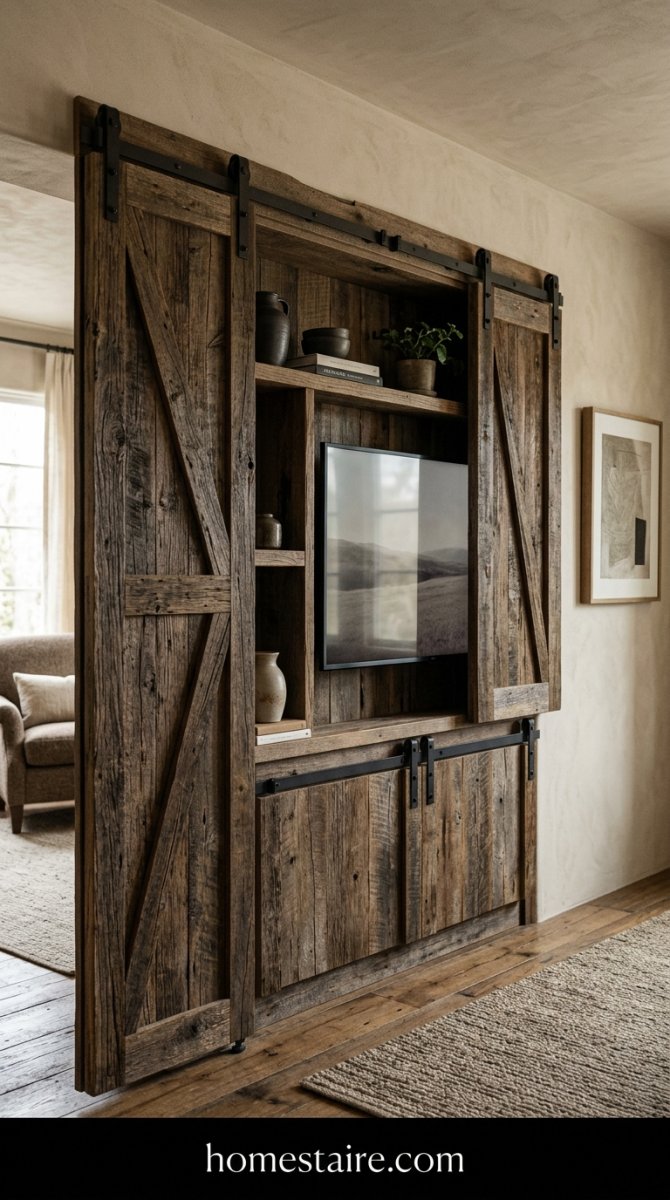
A shallow cabinet with sliding panels lets you close the TV away when you aren’t watching. When it’s closed, the wall looks like art or a wood feature.
Leave ventilation, and run power and cables so doors don’t pinch them.
10. Lean a large artwork next to the TV

A large piece of art leaned against the wall draws attention to itself, so the TV becomes secondary. It’s a relaxed way to decorate.
Choose a heavy frame and make sure it can’t fall on pets or children.
11. Add library-style sconces above the TV
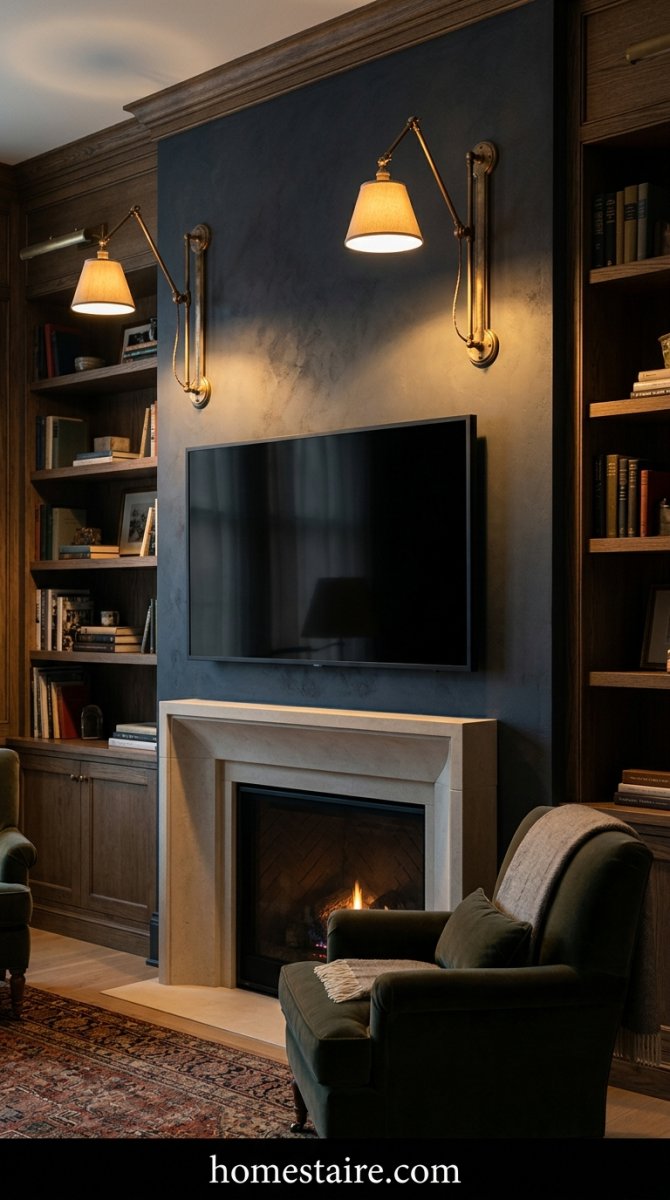
Long-arm picture lights above the TV wash the wall with soft light and make the room look like a library or hotel lounge. They also reduce eye strain compared with watching in the dark.
Battery-powered options avoid wiring.
12. Use limewash paint
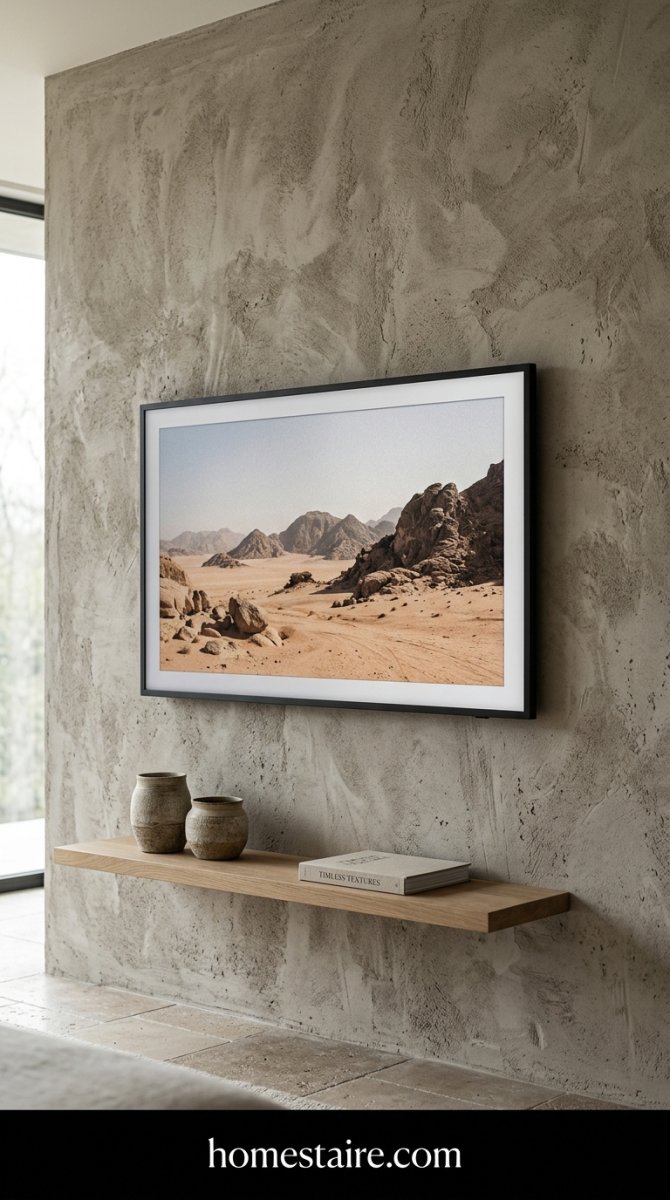
Limewash gives walls a chalky, suede-like texture with soft variation, and it hides small wall imperfections. The mottled finish makes the TV blend in.
It’s applied differently from regular paint, so follow the product’s instructions and test a small area. Wear gloves, since it can irritate skin.
13. Add greenery near the TV

Plants near the screen soften its sharp corners. A large Monstera or similar plant in a pot beside the TV makes the setup feel more natural.
Keep water away from the screen when you mist leaves, and keep soil and moisture away from electronics.
14. Use a low bench instead of a media stand

A long, low wooden bench looks lighter than a bulky media console and shows more of the floor. Hide cables with a basket, a cable cover, or a stack of books.
Make sure devices have airflow and can still receive remote signals.
15. Paint shiplap a deeper color
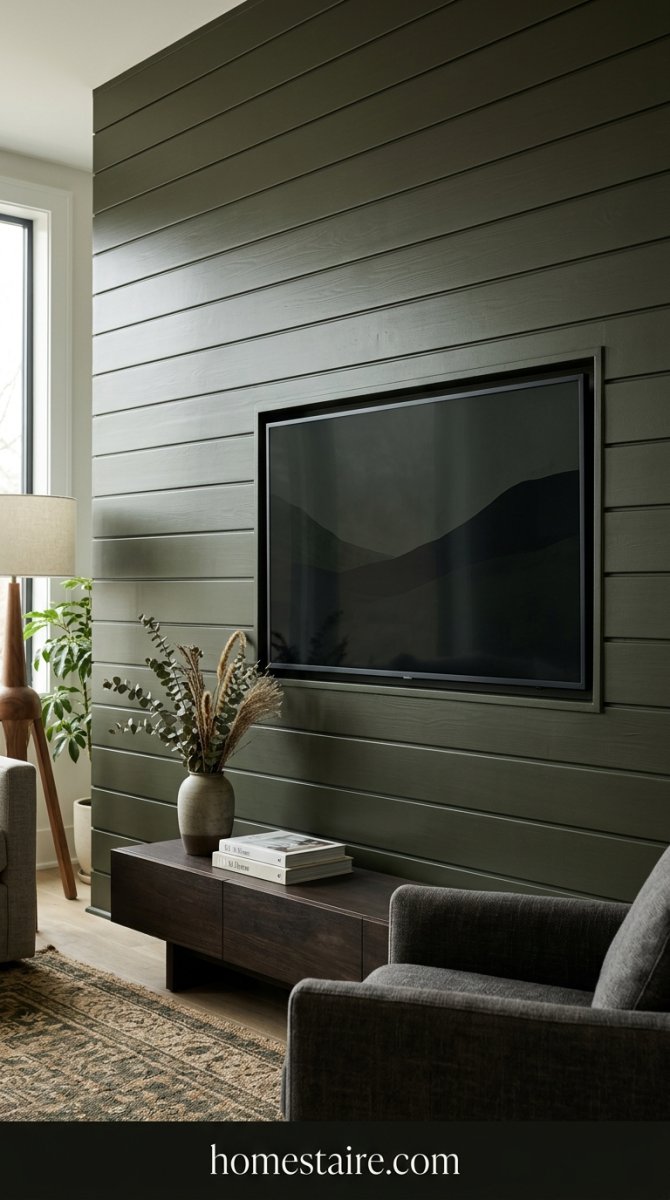
Shiplap adds shadow lines and texture. In a deep olive, charcoal, or terracotta, it feels like real architecture rather than a farmhouse cliché, and the TV blends in better than against white.
Paint before installing if you can, so grooves are covered well.
TV wall options compared
| Idea | Effort | Best for | Watch out for |
|---|---|---|---|
| Dark paint or limewash | Low | Making the screen blend in | Glare on glossy finishes |
| Gallery wall | Medium | Casual, personal rooms | Planning the layout first |
| Wood slats or shiplap | Medium to high | Warm, textured walls | Mounting into studs |
| Built-in shelving | High | Large screens | Ventilation and cabling |
| Sliding doors | High | Fully hiding the TV | Ventilation and cable pinch |
| Floating console | Medium | Small rooms | Weight rating and studs |
| Art-style TV | Low (cost is high) | A gallery look | Price |
TV wall FAQ
How high should a TV be mounted? A common guideline is to center the screen at about eye level when seated, which is roughly 42 inches from the floor, though the best height depends on your seating.
Do I need to mount a TV into studs? Yes for most mounts, or use a backing board and hardware rated for the TV’s weight. Follow the mount instructions.
Does a TV need ventilation? Yes. Follow the manufacturer’s recommended clearances around the TV and any enclosed cabinet, since heat can shorten the life of electronics.
How do I hide TV cables? Use an in-wall cable kit that’s rated for the purpose, a paintable cable cover, or a cabinet that hides the connections.
Conclusion: let the room lead, not the TV
A TV is a tool, not the star of the room. Choose an idea that fits your space and budget, whether that’s a paint color, a frame, or a built-in, and make sure the installation is safe and ventilated.
Start with the easiest option and see how the room feels.