

Why black and white bedrooms are harder than they look

Black and white looks simple, but without warmth it can feel stark, like a hotel or a hospital. The trick is balance: texture, natural materials, and a bit of softness keep the contrast from feeling harsh.
This guide covers 15 black and white bedroom ideas, plus a table of what to watch for and an FAQ. It’s based on design guidance rather than personal trials, so test colors and materials in your own light.
1. Use a black accent wall carefully
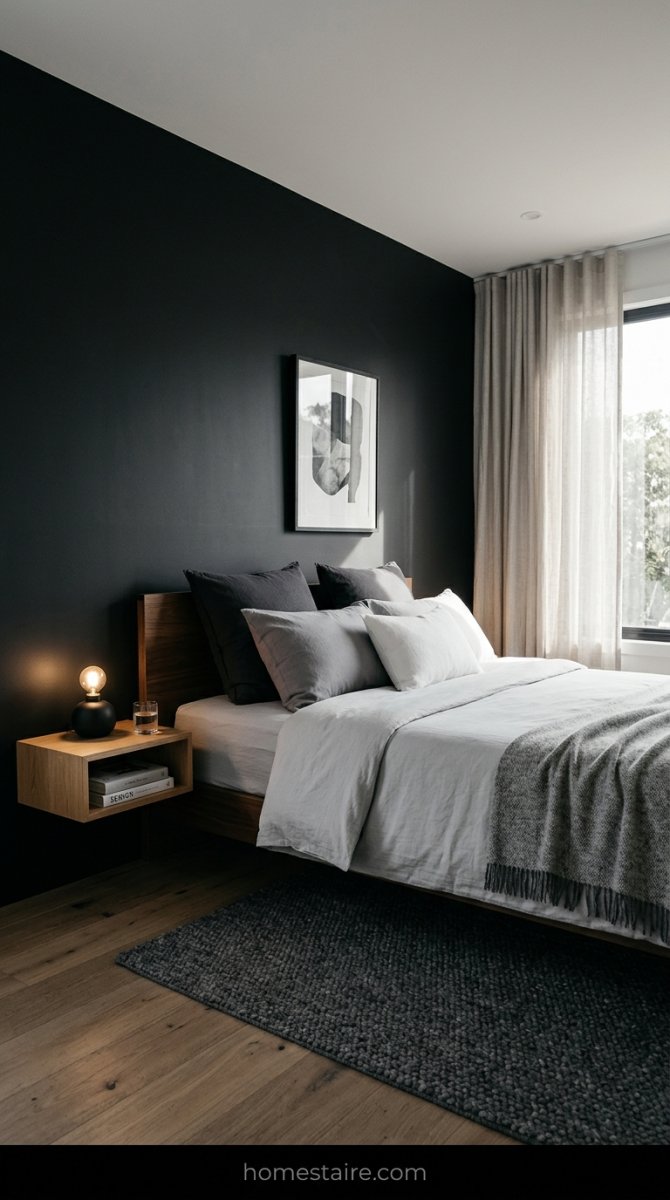
A black wall behind the bed adds drama, but a small, dim room can feel enclosed. Use it where there’s good light, and keep the rest of the walls light.
Choose a matte finish to avoid glare.
2. Avoid stark white bedding only

Bright white sheets can look clinical. Choose warm or creamy whites and add texture through linen, waffle, or a knit throw.
A few black or charcoal pillows break up the white.
3. Be careful with a checkerboard rug
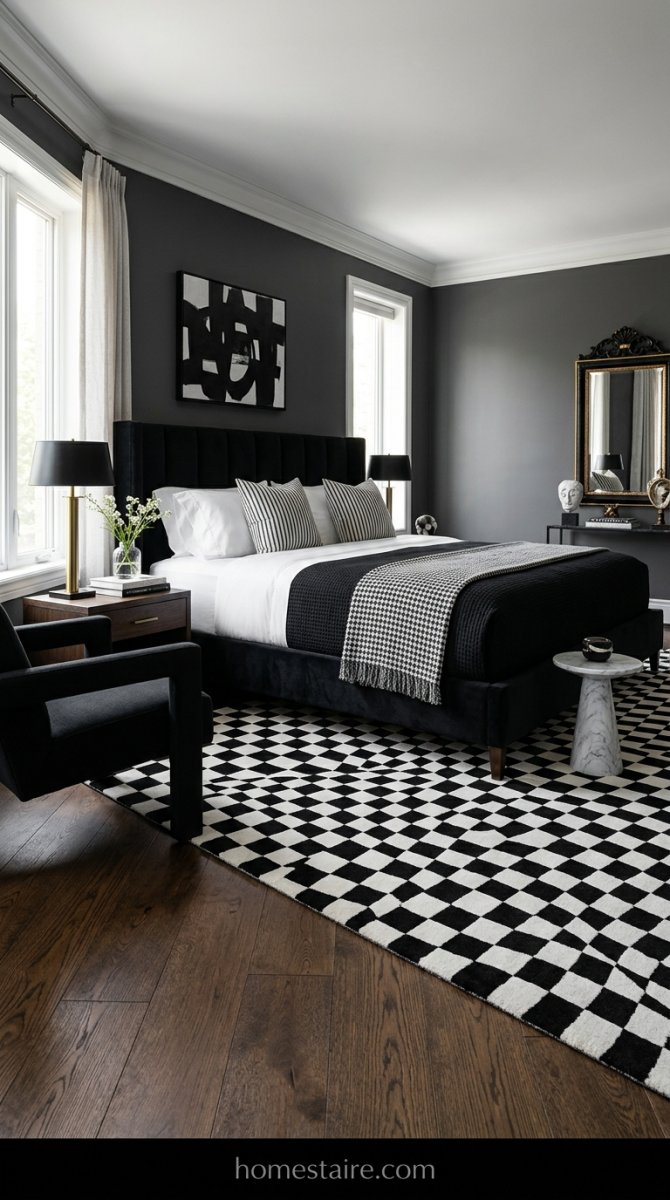
High-contrast patterns can feel busy and make a small room look smaller. Choose a larger scale or a quieter pattern.
A solid or textured rug is a safer choice.
4. Check black metal bed frames

Black metal frames look sharp but can squeak if the joints loosen. Choose a well-welded frame with a solid slat system and tighten bolts occasionally.
A wooden frame is quieter.
5. Mix shades of white

Layering warm whites, creams, and soft grays adds depth and avoids a flat look.
Keep undertones consistent, either all warm or all cool.
6. Keep a gallery wall cohesive

Black frames on a white wall can look rigid if spaced evenly like a grid. Vary the sizes, use mats, and leave breathing room.
Lay out frames on the floor first.
7. Add warm wood
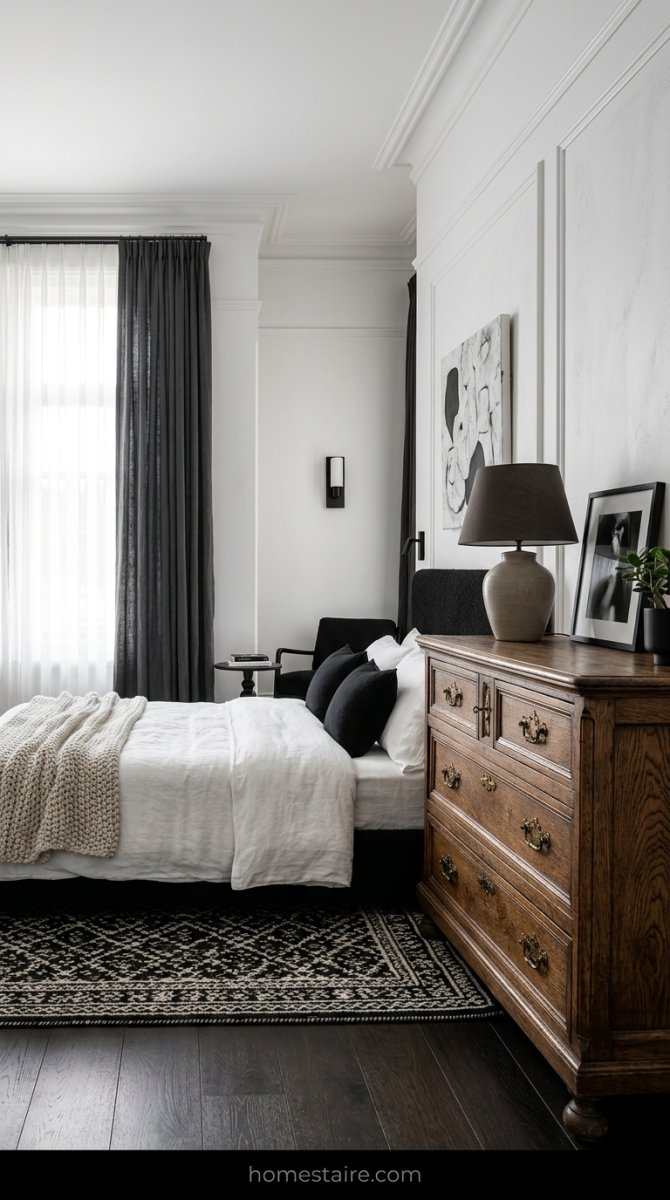
A wood dresser or nightstand adds warmth that softens black and white.
Choose a tone, light oak or walnut, and repeat it once or twice.
8. Use stripes in moderation

Bold black-and-white stripes can feel sporty. Use them on one item, such as a throw, and keep the rest solid.
A thin stripe feels calmer than a wide one.
9. Paint trim black
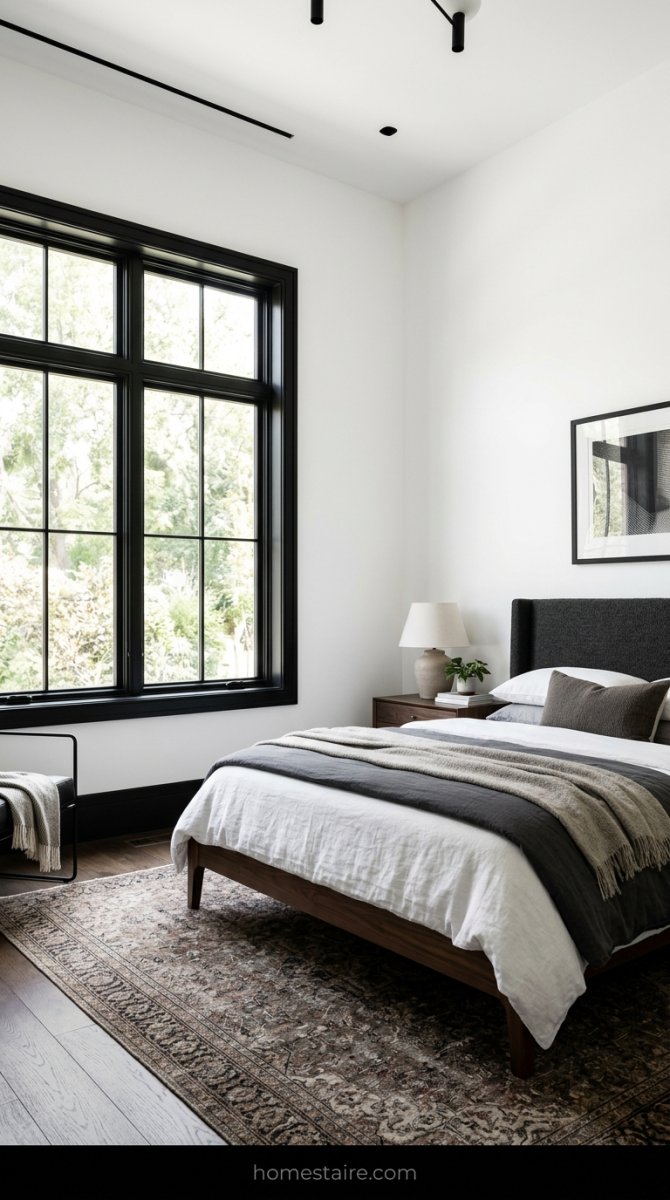
Black window frames, baseboards, or door trim against white walls add definition and look architectural.
Use a semi-gloss or satin trim paint and clean lines.
10. Think about fabric maintenance

Black velvet and dark fabrics show lint and pet hair. Keep a lint roller handy, or choose textured weaves that hide it better.
Washable covers are easier to maintain.
11. Choose large-scale art

A large black-and-white photograph or abstract print fills a wall and ties the palette together.
Hang it at eye level above the bed with the center about 57 inches from the floor, a common gallery guideline.
12. Soften with gray

Soft gray bridges black and white and makes the contrast less harsh.
Choose gray with a warm undertone if the room feels cold.
13. Add a cage-style pendant light

A black wire pendant adds a graphic shape and casts interesting shadows while keeping the room airy.
Use warm bulbs to keep the light inviting.
14. Soften with a sheepskin or shag rug

A soft, textured rug beside the bed counters hard lines and feels good underfoot.
Faux options are easier to clean.
15. Use black accents instead of a dark room

If you’re unsure about a heavy look, use black in small touches, such as lamp bases, frames, and hardware, on a white or light base.
It’s easy to adjust and costs little.
Balance checklist
| Risk | Fix |
|---|---|
| Feels cold or clinical | Add wood, linen, warm bulbs |
| Feels busy | Limit patterns to one or two |
| Feels dark | Keep walls light, use black as an accent |
| Shows lint | Choose textured fabrics |
| Looks flat | Layer whites, grays, and textures |
Black and white bedroom FAQ
How do I make a black and white bedroom feel cozy? Add warm lighting, wood, soft textiles, and a rug.
Is black a good bedroom color? It can be, especially as an accent, but it needs good lighting and balance.
What colors go with black and white? Warm wood, soft gray, brass, and muted greens or terracotta.
Conclusion: balance contrast with warmth
Black and white works when you soften it with texture, warm materials, and good light. Start with bedding and a rug, then add black in small, intentional touches.
Test each change before committing to a whole room.