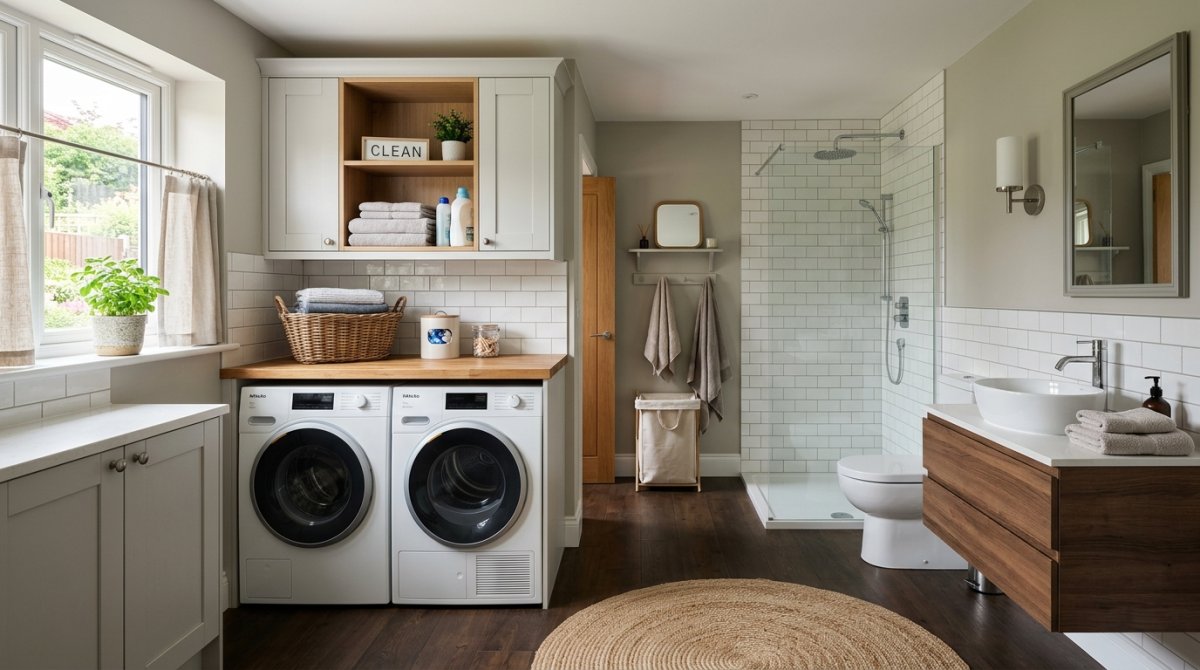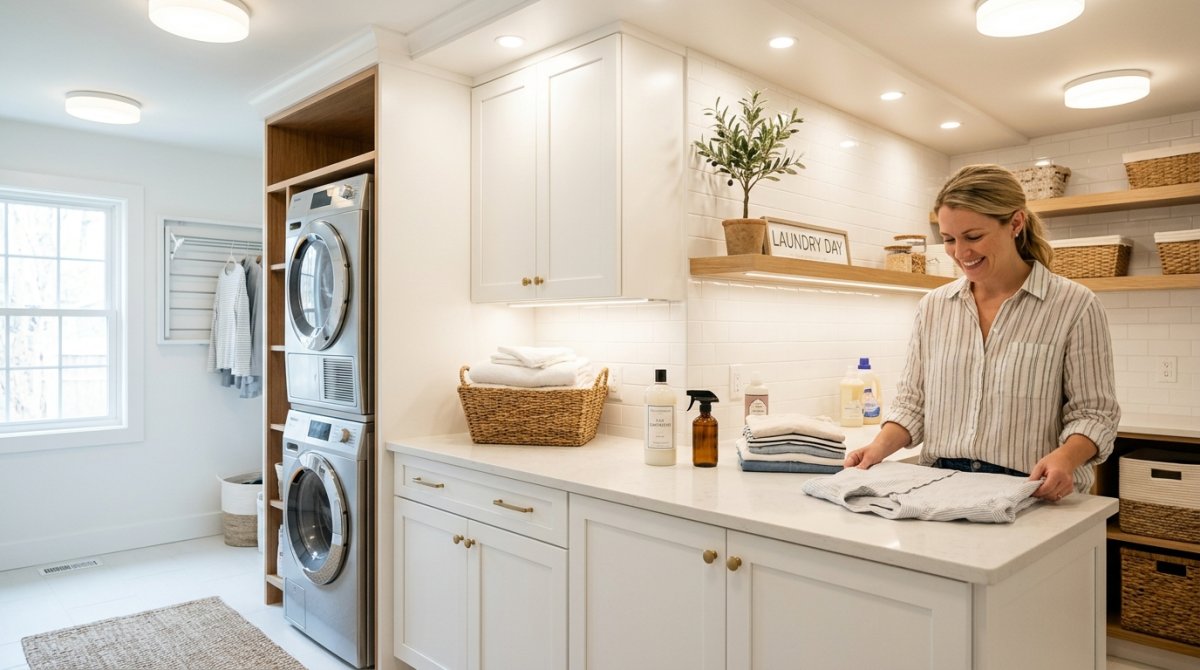
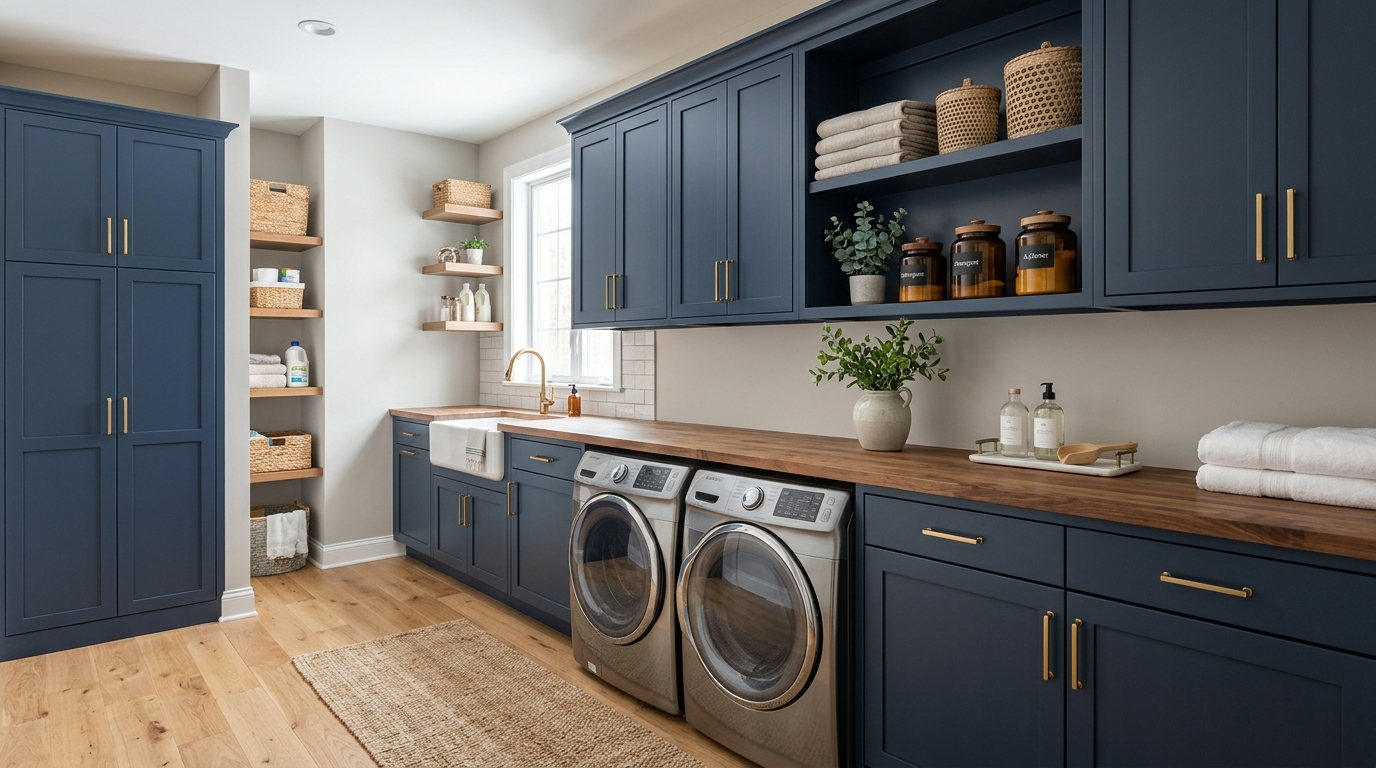
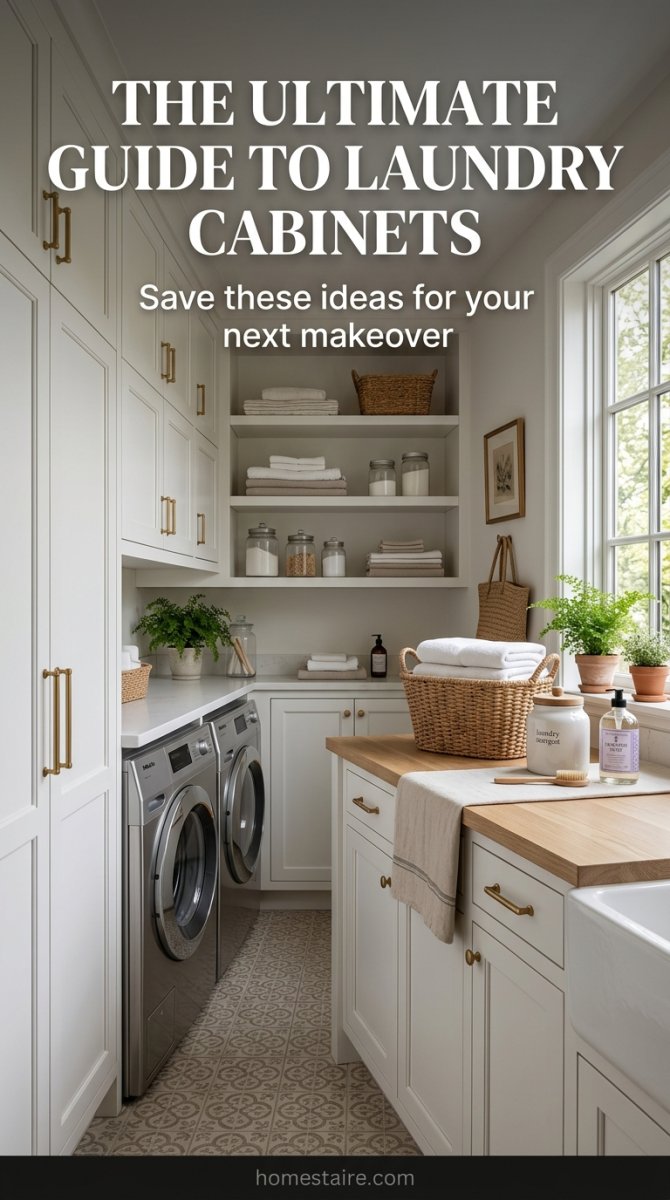
I spent three weeks staring at cabinet catalogs for my laundry room renovation last year. It felt like a fever dream. Most laundry rooms look fine on Pinterest, but they fail the “real life” test once you actually drop a full bottle of blue detergent on the floor.
I’ve built three of these rooms in different houses. I made some expensive mistakes.
Seriously. Don’t buy anything until you read this.
White Shaker Cabinets: The Boring but Perfect Choice
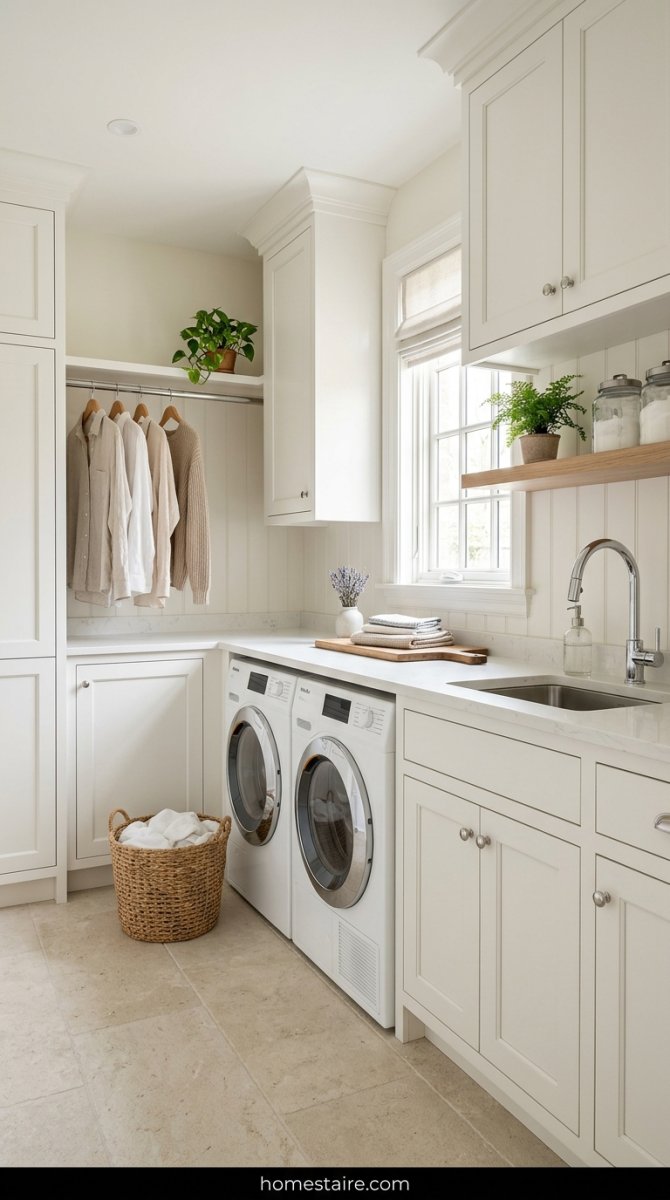
Look, I know. White shaker is the vanilla ice cream of the design world. But after I tried those trendy deep navy cabinets in my first condo—and spent every morning wiping off white lint that stuck to them like glue—I crawled back to white.
They don’t date. If I want the room to feel “fresh” in five years, I just swap the knobs for five bucks.
It’s the safest bet for your resale value, too.
Skip It: Why I Regret My Open Shelves

I fell for the trap. I put up these gorgeous oak floating shelves thinking I’d display cute glass jars of scent beads and folded linen towels.
Fast forward two months and everything was coated in a thick, gray felt. Dryer lint is a relentless beast that finds every flat surface and clings to it. I spent more time dusting my “decor” than actually washing my clothes.
Never again. Doors are there for a reason—to hide the mess and keep the lint out.
Floor-to-Ceiling Pantries for Massive Storage
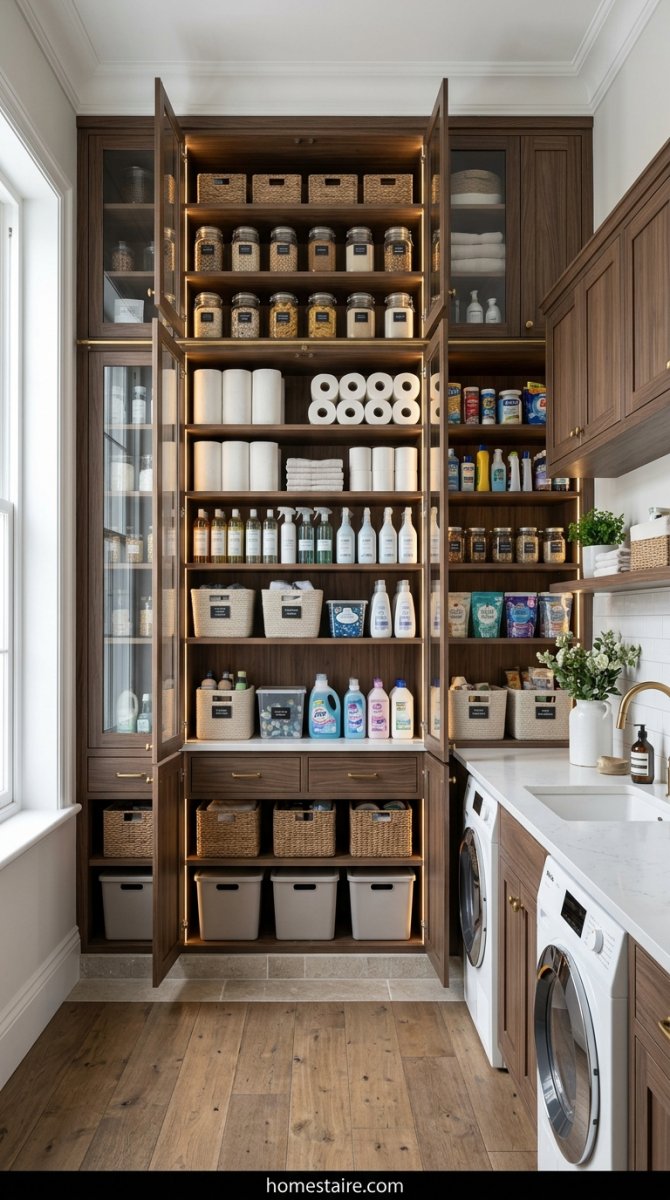
If you have the wall space, just go big. I stopped buying those tiny, overpriced bottles of detergent because I finally had a place to hide the industrial-sized jugs from Costco.
My pantry cabinet also hides my vacuum, the ironing board that I use once a year, and a giant stash of paper towels. It keeps the room from looking like a cluttered storage unit.
It’s basically a closet that looks like a wall.
Wall-Mounted Floating Cabinets for Easy Mopping
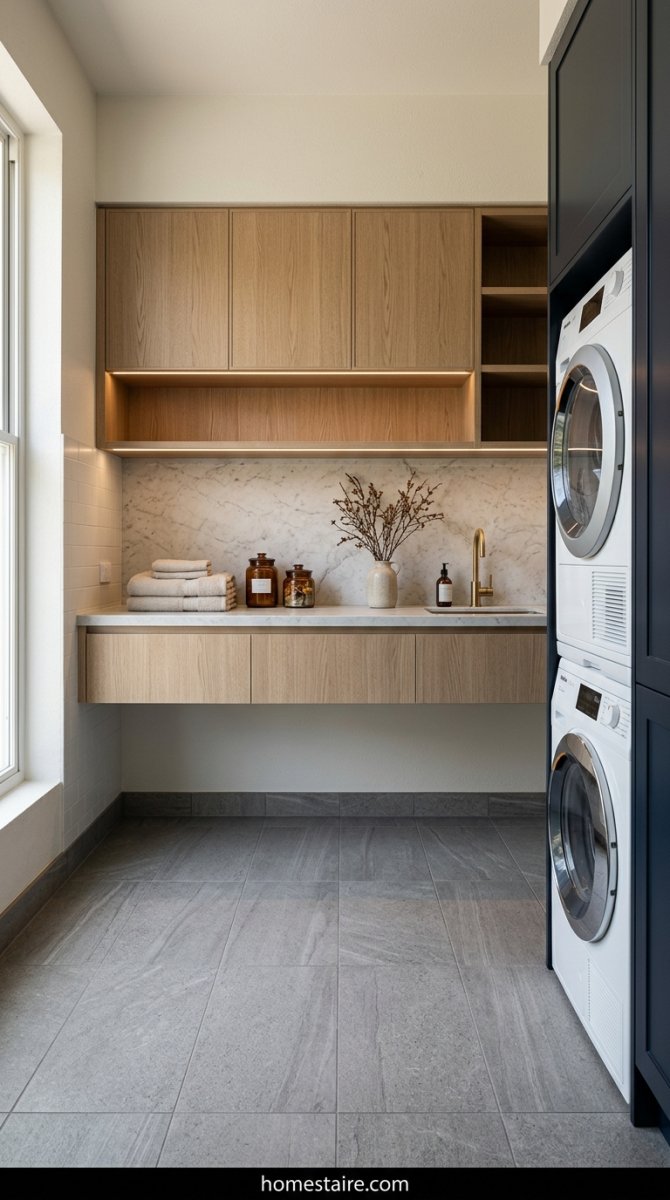
My washer leaked once. Just a tiny puddle. If I had standard base cabinets with those wooden toe kicks, that water would have soaked into the particle board and started a mold party.
With floating cabinets, I just grabbed a towel and swiped under them. Done.
Plus, it makes the tiny room feel way bigger because you can see the floor all the way to the wall—a trick my contractor taught me that actually works.
Skip It: Glossy Finishes Are a Nightmare to Clean
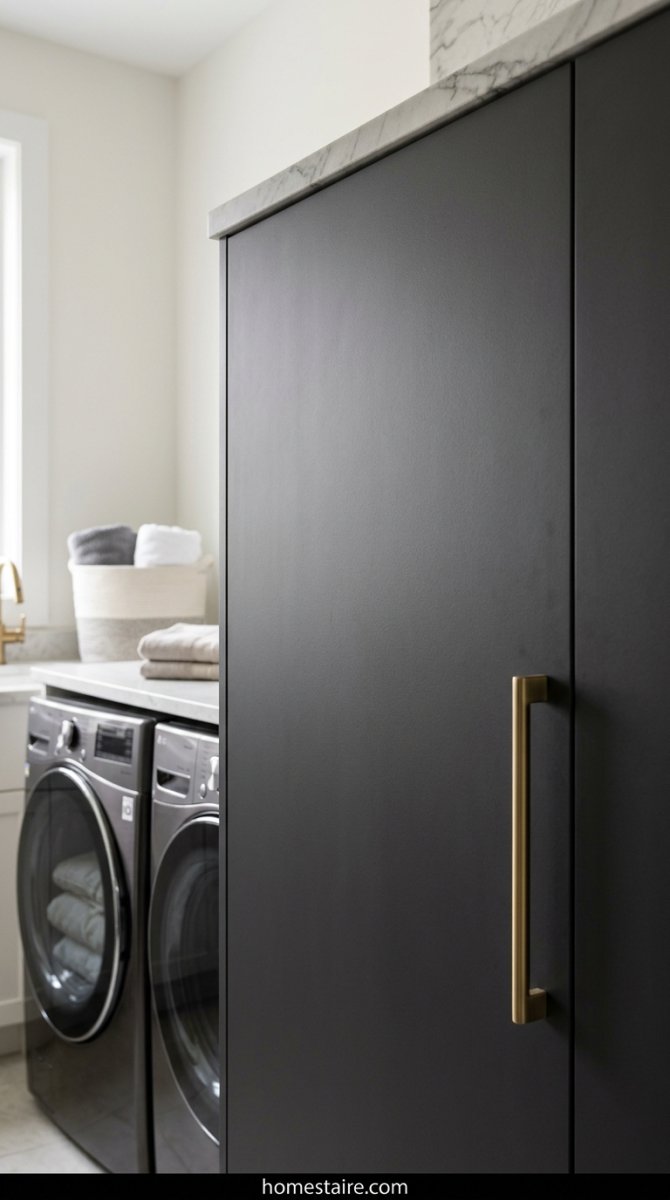
They look great in a magazine. In real life? They’re a full-time job.
I fell for the “modern look” trap once. I bought these high-gloss white cabinets for a flip. Total mistake. Every single time I touched them with even a slightly damp hand—bam—smudges everywhere. In a laundry room, you’ve got detergent drips, fabric softener spills, and lint flying through the air. That stuff sticks to gloss like glue.
I spent more time buffing out fingerprints than actually washing my clothes. Plus, if you scratch them even a tiny bit, there’s no fixing it. You’re just stuck looking at that one permanent scuff every time you do a load of darks. Stick to matte or wood grain. Your sanity is worth more than a shiny door.
Metal Mesh Inserts for Better Airflow
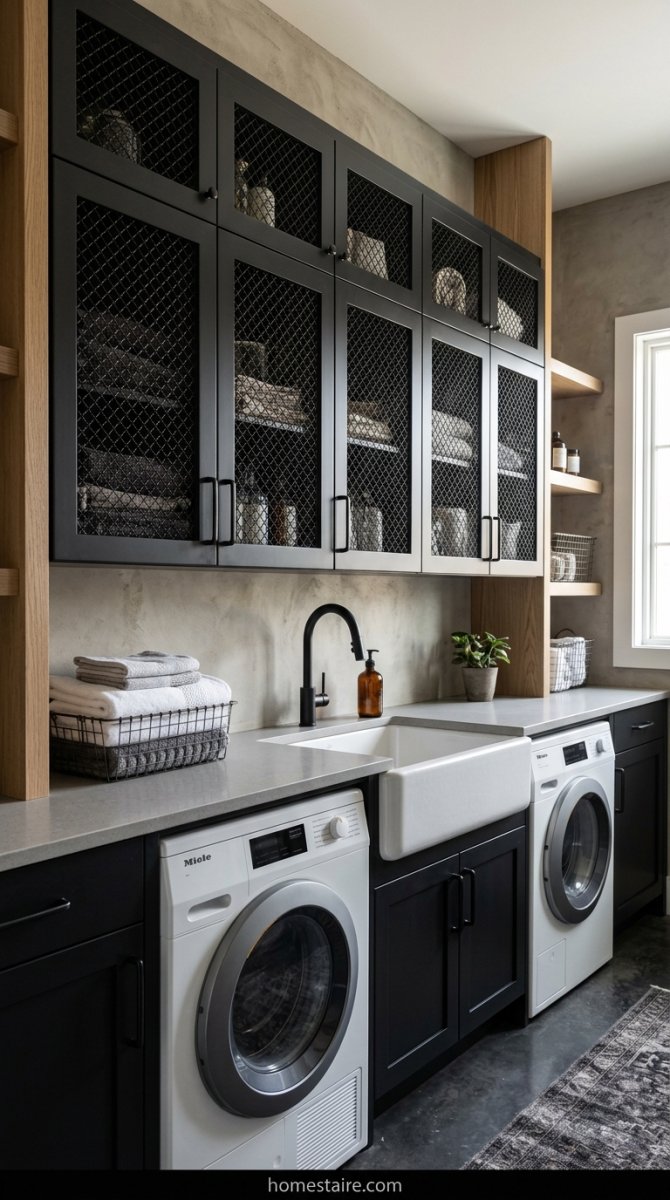
This is my secret weapon for the “half-dirty” clothes pile.
Stagnant air is the enemy. I learned this the hard way after finding a mildewed gym bag buried in a solid wood cabinet. It was gross. I ended up swapping the middle panels of my upper cabinets for black metal mesh. It looks industrial—kinda cool, honestly—and it lets the air move so things don’t get that “basement” smell.
It’s a cheap fix that saved my nose. If you store damp rags or towels before wash day, you need this. It’s better than leaving a pile on the floor.
Deep Pull-Out Drawers for Heavy Detergent Jugs
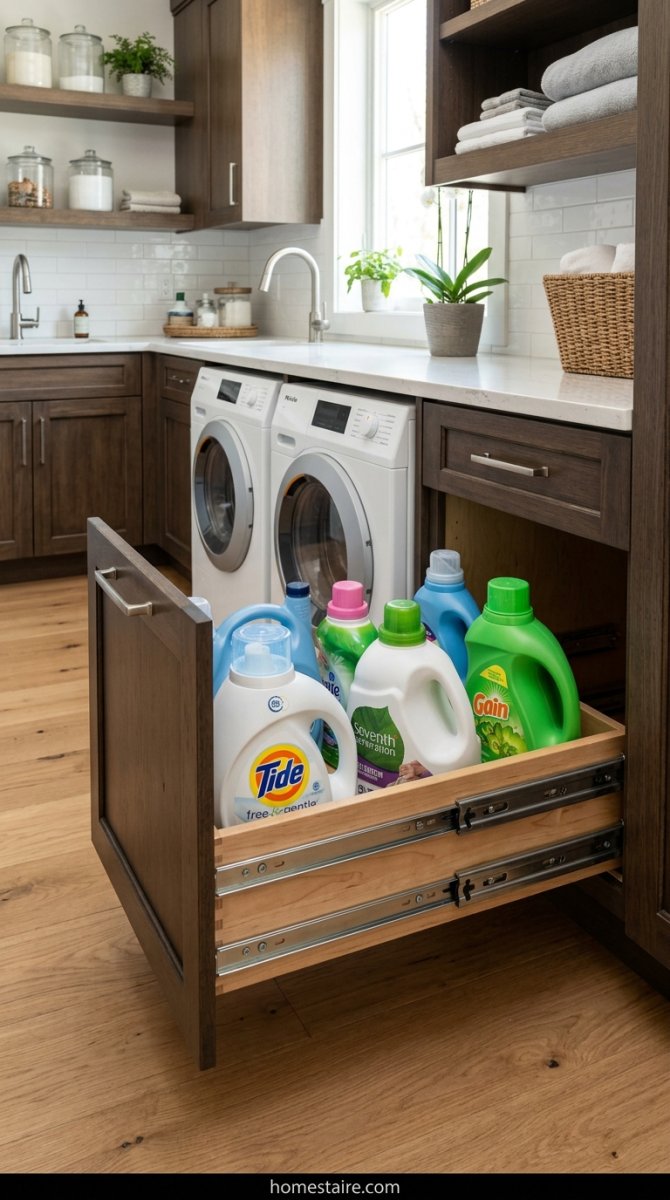
My lower back thanked me for this one. Seriously.
Why are we still lifting those giant, 150-ounce Costco-sized detergent tubs? It’s a recipe for a pulled muscle. I had a deep drawer built with heavy-duty slides that can hold 50 pounds without wobbling. Now, I just pull the drawer out and pump the soap right into the cup. No lifting. No mess on the counter.
Most people put these jugs on a high shelf. Don’t do that. You’ll eventually drop one, and cleaning a gallon of blue goo out of grout is a special kind of hell I wouldn’t wish on anyone.
The Built-In Hidden Drying Rack Cabinet
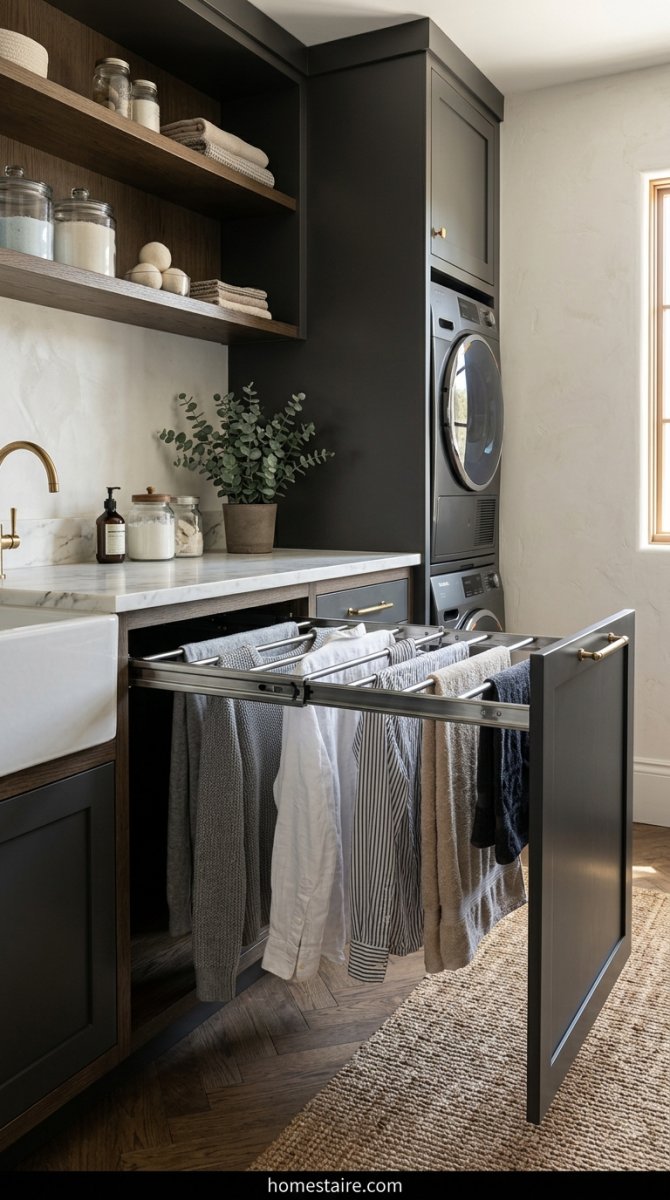
I hate those wooden folding racks that trip you up in the hallway. They are the worst.
I found a cabinet design that has a pull-out rack built right into the frame. You pull what looks like a drawer, and—surprise—there are metal rungs for your delicates. When the clothes are dry, you just slide it back into the wall. It’s like magic.
It keeps my air-dry stuff (mostly expensive leggings I don’t want to ruin) out of sight. No more tripping over a rickety rack while trying to reach the dryer. Why doesn’t every house come with these?
Tilt-Out Hamper Cabinets for Hiding Dirty Clothes
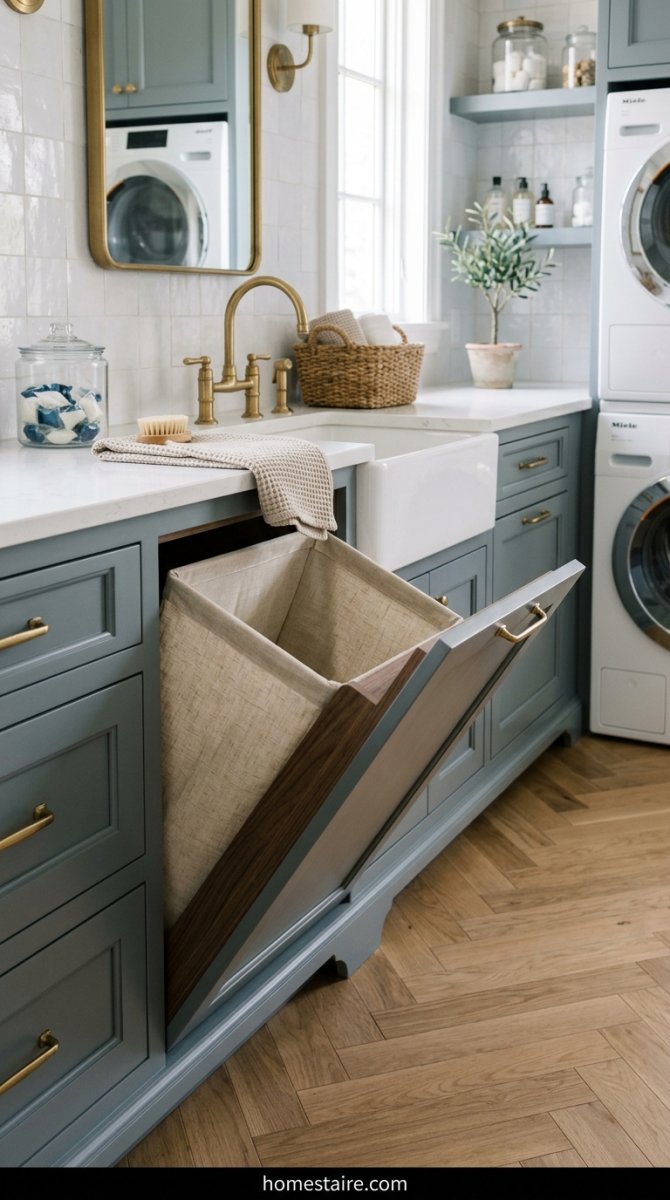
Keep the chaos behind a door.
I don’t want to see a mountain of my husband’s dirty socks when I walk into the room. These cabinets tilt out exactly like a kitchen trash bin. They hold a plastic basket inside that you can just grab and go. It makes the whole room look like a high-end spa instead of a locker room.
Get two. One for lights, one for darks. Just make sure the hardware is sturdy because people tend to overstuff them until they’re heavy as lead. Use a washable liner inside the basket too—smells happen.
Skinny Pull-Out Cabinets for the Gap Next to the Dryer
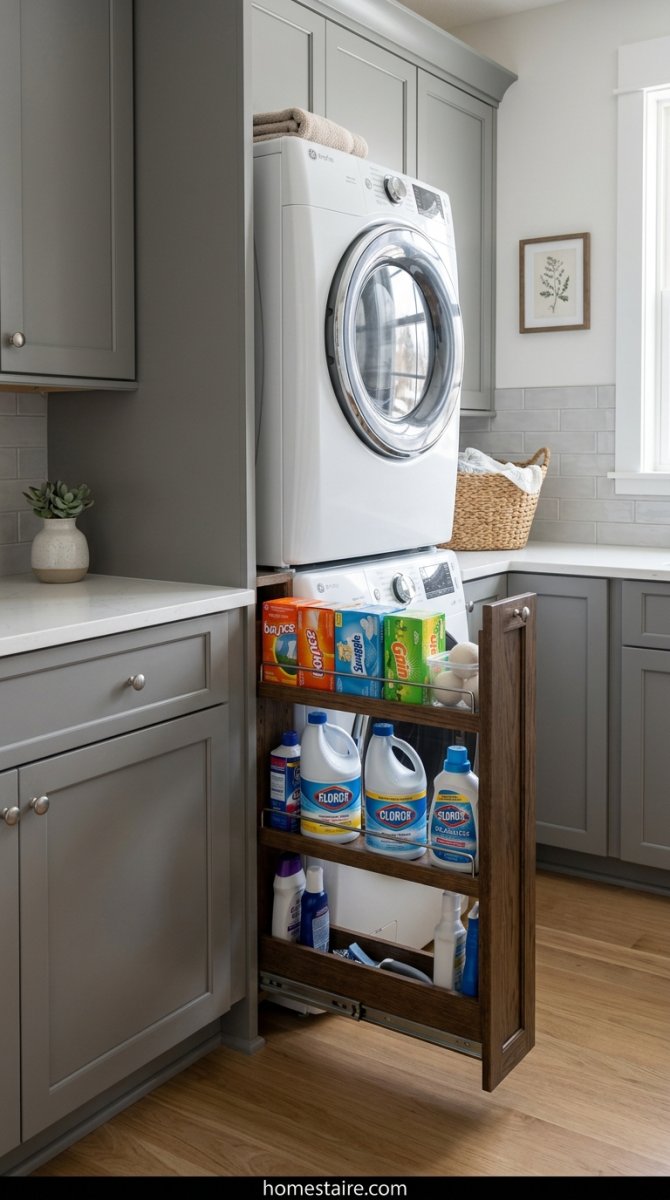
That awkward six-inch gap next to my dryer used to be a graveyard for stray socks and massive dust bunnies. I hated it. Then I shoved a skinny pull-out cabinet in there. It’s barely wide enough for a bottle of bleach and some dryer sheets, but it feels like a secret compartment.
Best part? No more bending over to find the scent boosters. They’re right there.
Seriously, if you have a sliver of unused space, fill it. It makes the whole room look built-in without the five-figure price tag.
Choosing Solid Plywood Over That Cheap Particle Board
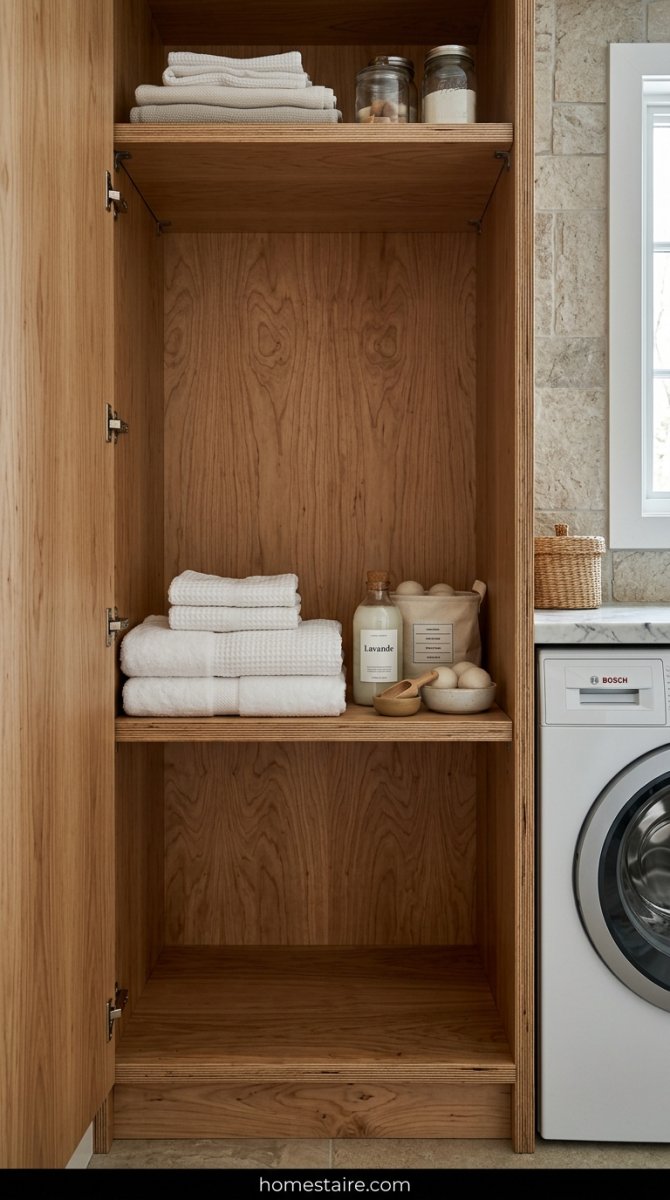
Don’t let the big box stores trick you with those “ready-to-assemble” particle board units. They’re basically made of compressed sawdust and hope. The second your washing machine has a tiny leak—and it will, believe me—that bottom shelf is going to puff up like a marshmallow.
It’s disgusting.
I only buy solid plywood now. It’s way tougher against the weird humidity that happens when the dryer is running for three hours straight. It costs more upfront, but I’d rather pay now than rip out a moldy, crumbling cabinet in two years.
Soft-Close Hinges Are Worth the Extra Money
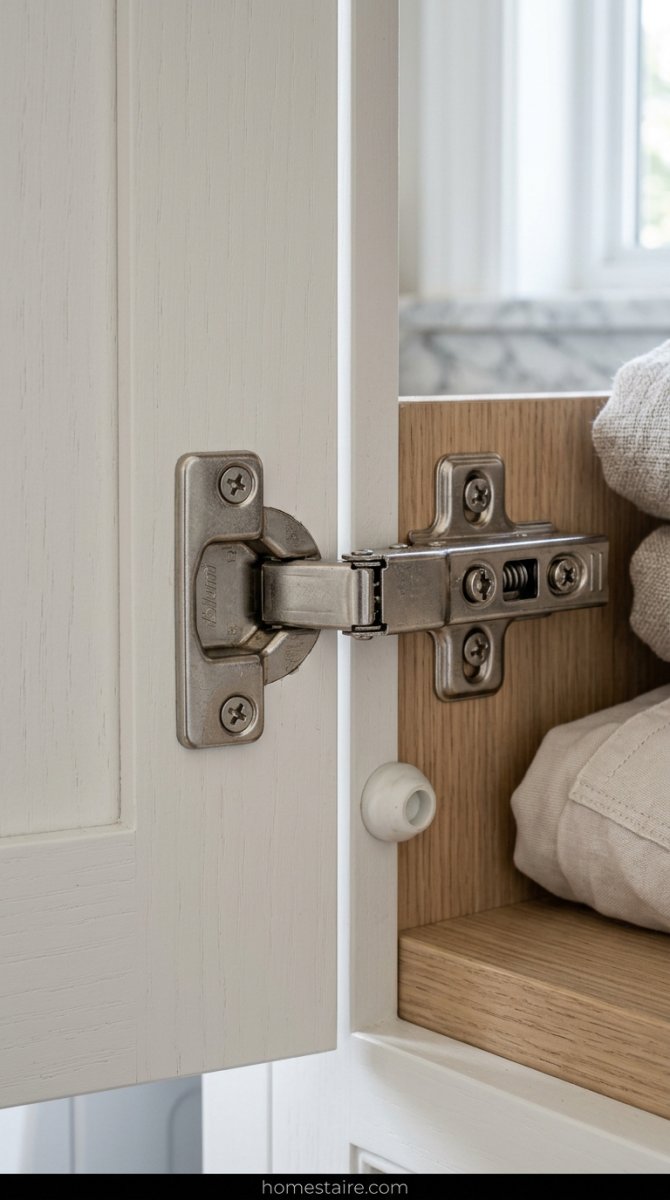
I used to think soft-close hinges were for rich people with fancy kitchens. I was wrong. In a laundry room, you’re usually holding a heavy basket with one hand while trying to kick a cabinet shut with your foot.
Without soft-close? BANG.
It sounds like a gunshot every Tuesday night. Spend the extra twenty bucks for the hardware upgrade. Your sanity will thank you when you aren’t waking up the whole house during a midnight load of towels.
Mixing Cabinet Heights to Avoid a Boxy Look
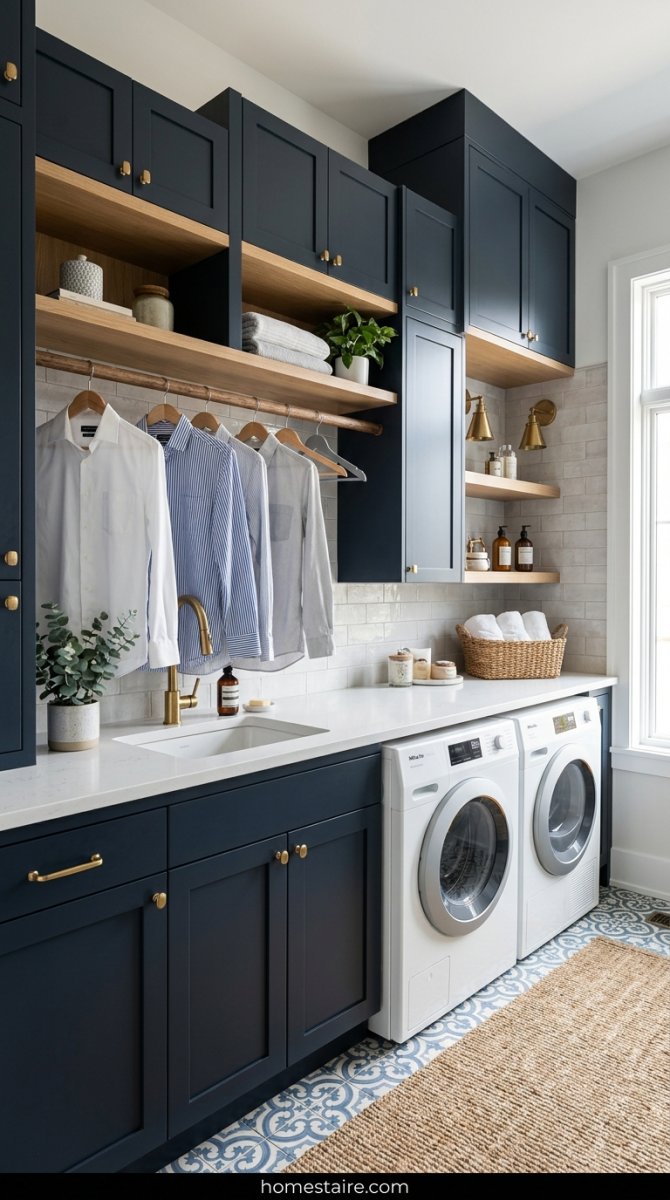
Most laundry rooms look like a sterile doctor’s office because people line up their cabinets in a perfectly straight, boring row. It’s a total snoozefest. I like to stagger mine.
Try putting a taller cabinet over the sink and a shorter one over the folding station—it breaks up the eye line. (This also gives you a spot to hang a rod for air-drying shirts). It makes the room feel less like a utility closet and more like a space I actually want to exist in.
Uniformity is overrated.
Matte Black Hardware to Hide Finger Grime

Laundry detergent is surprisingly slimy. If you use shiny chrome or polished brass handles, you’re going to see every single greasy thumbprint from the moment you start a load. I spent way too much time polishing my old silver knobs.
Never again.
Matte black is my go-to. It hides the soap residue and the general “house grime” that builds up when you’re scrubbing grass stains off soccer jerseys. Plus, it looks sharp against almost any paint color you pick. It’s the ultimate “lazy person” hack for a clean-looking room.
Beadboard Doors for a Quick Style Upgrade
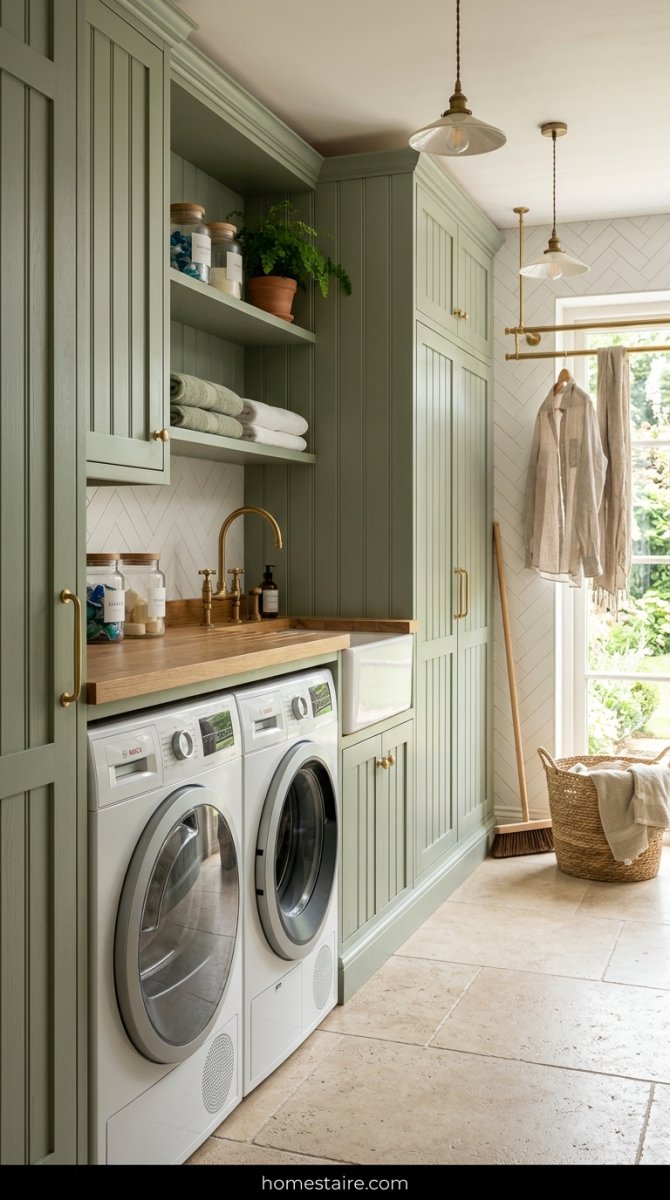
I used to think beadboard was just for grandmas or dusty coastal cottages in Maine. I was wrong. If you want your laundry room to look like a person actually lives there—and not some cold, sterile hospital wing—swap those flat panels for beadboard. It hides the inevitable dings from heavy laundry baskets hitting the doors.
Trust me on this.
Last year, I painted my beadboard doors a deep sage green. It took maybe two hours. Now, every time I walk into that tiny room to scrub grass stains out of my kid’s soccer jersey, I don’t feel like I’m in a dungeon. It’s a cheap way to fake a custom “designer” look without the designer price tag. Plus, it covers up the fact that I bought the cheapest cabinet boxes I could find.
Conclusion
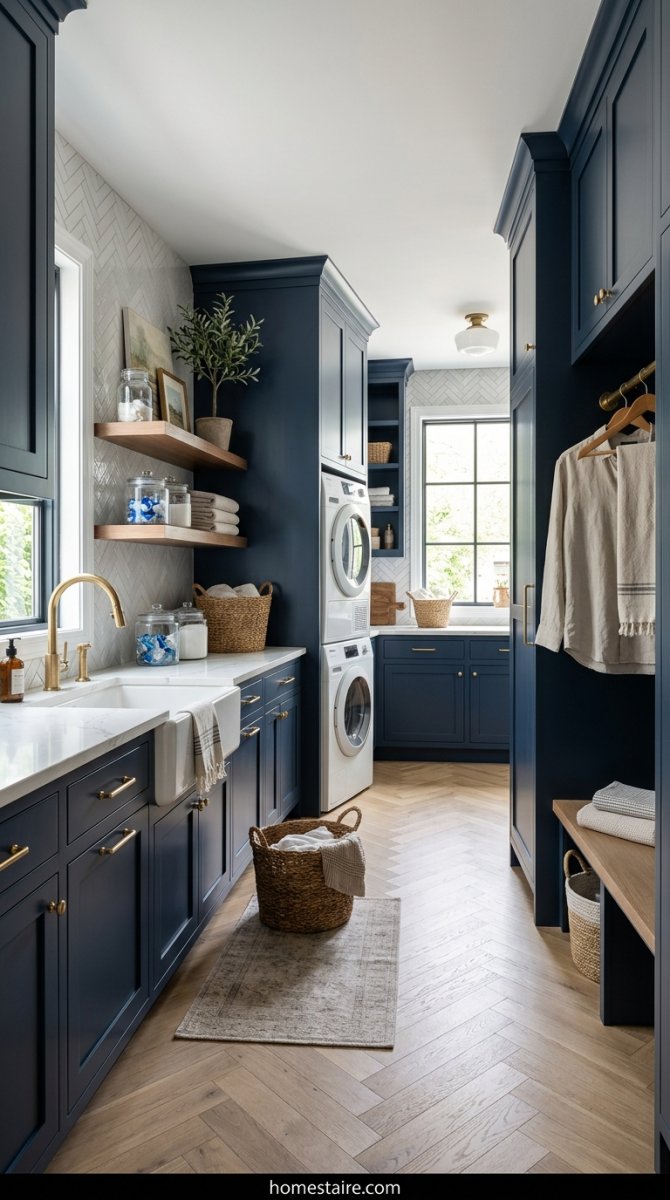
Laundry rooms are workhorses, so don’t get too precious about them. Pick cabinets that can take a beating from heavy jugs of Tide and soggy towels. If you skip the glossy stuff and the open shelves (please, just don’t), you’ll be much happier.
Seriously, my life got 10% better when I hid the mess behind some solid plywood.
Spend the extra cash on the pull-outs. Your back will thank you when you aren’t digging in the dark for that one last dryer sheet. Don’t overthink it—just build a room that makes the chore feel a little less like a chore. Now go get some paint.