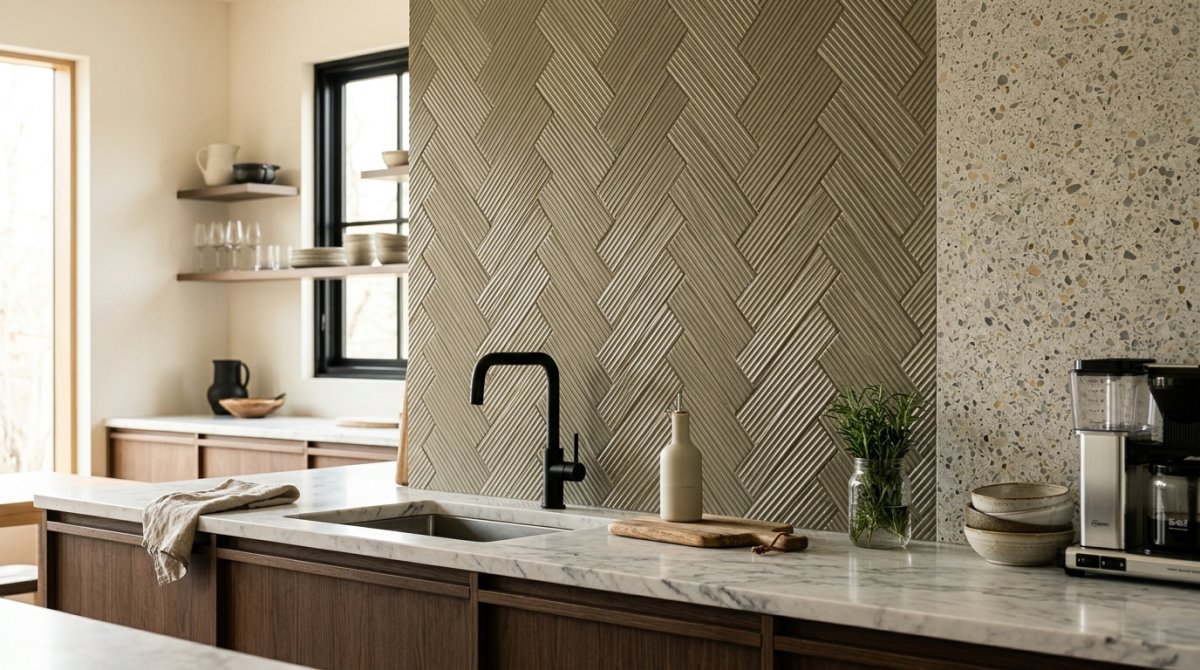
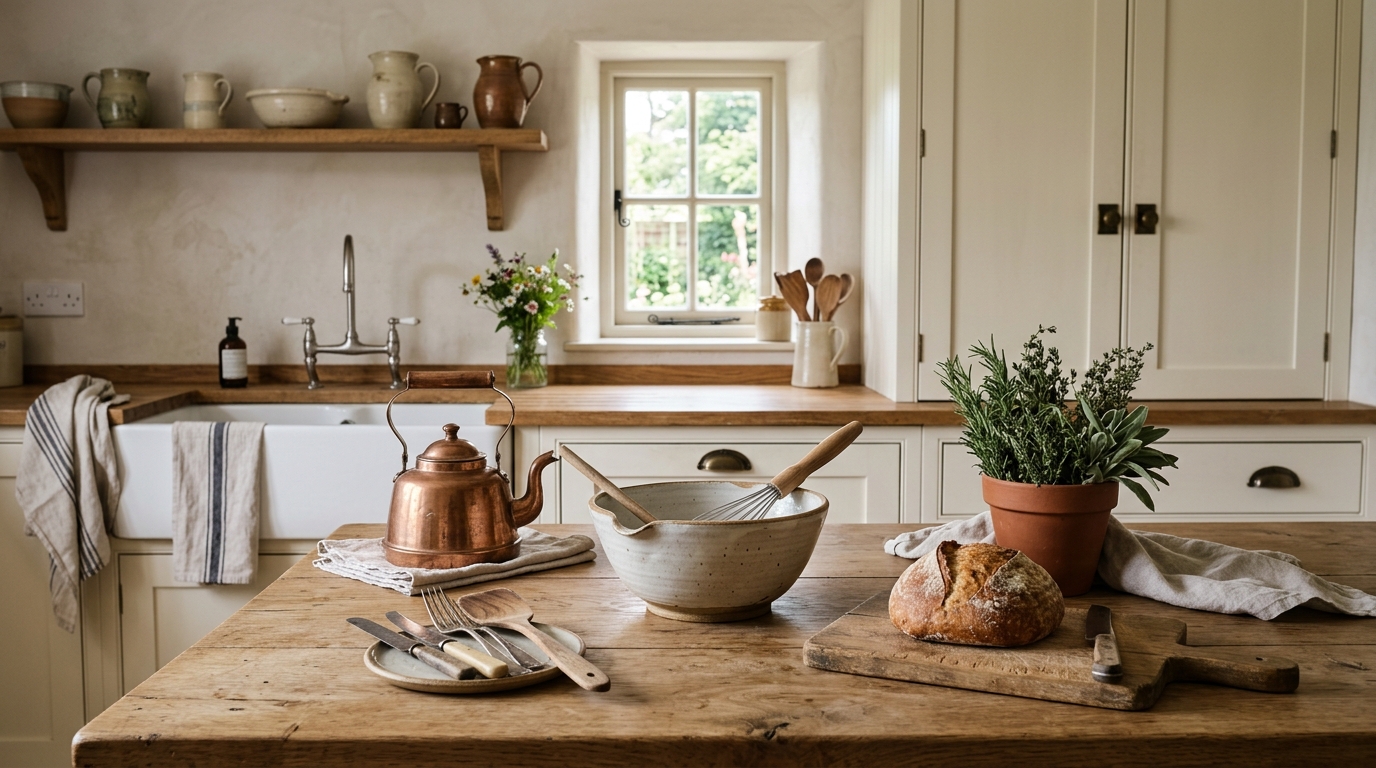

I walked into my kitchen six months ago and almost threw a wooden spoon at my shiplap. Everything was too white. Too clean. It looked like a page from a big-box store catalog—and I mean that in the worst way possible.
If your house feels like a showroom where nobody actually lives, you’ve got a problem.
Real farmhouse style isn’t about buying a “rustic kit” and calling it a day. It’s about the grit. I spent a year tossing out the mass-produced junk to make room for things that actually have some soul.
My struggle to avoid the boring catalog look
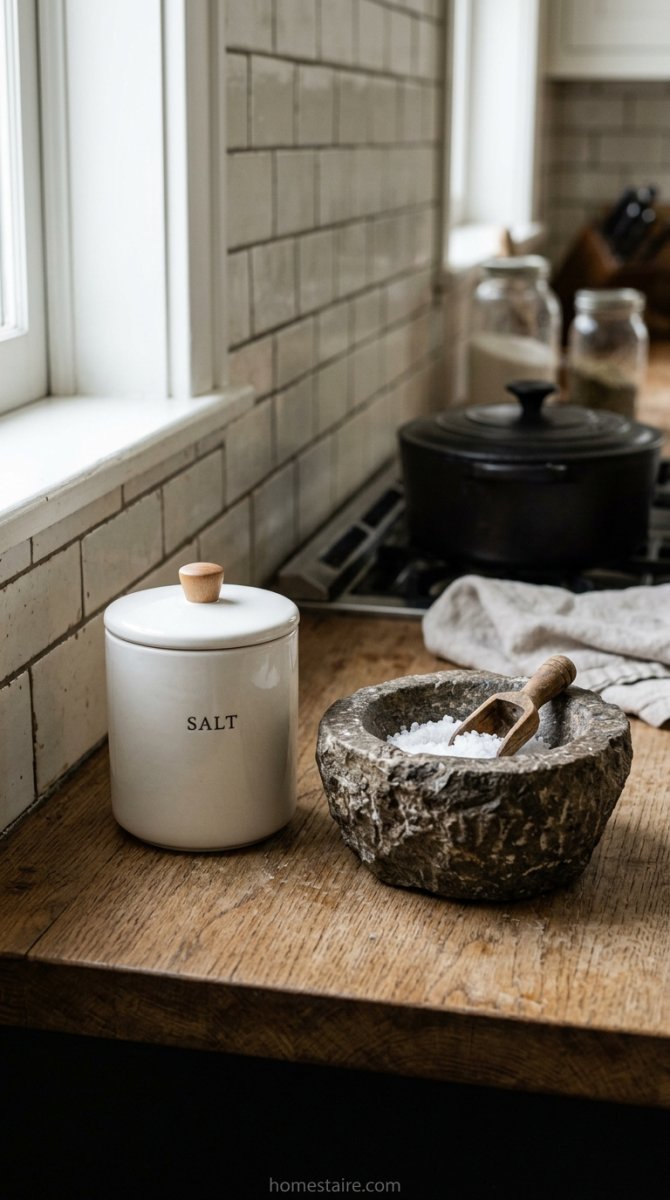
Buying everything from one store is a trap. I fell for it hard. I thought if I bought the matching “distressed” clock and the matching white canisters, I’d finally feel like I lived on a ranch. Instead, my kitchen felt like a doctor’s office in a barn.
The “rustic” section at those giant home stores is a lie—it’s just plastic or cheap pine painted to look like it has a history.
I had to learn to stop looking for things that were “perfectly imperfect.” I needed things that were just… imperfect. I started hitting up estate sales and digging through literal piles of dirt to find stuff that didn’t come wrapped in bubble wrap.
The thick reclaimed wood shelf I hung up myself (badly at first)

This piece of wood weighed about forty pounds and smelled like an old basement. I loved it immediately. Of course, I tried to hang it with tiny drywall anchors because I was impatient.
Big mistake.
The whole thing sagged like a wet noodle and nearly took out my toaster. I ended up having to drill straight into the studs with massive lag bolts that look like something out of a shipyard. It’s slightly crooked—if you look close enough—but it holds my heavy plates without flinching.
Don’t buy those hollow “floating” shelves that feel like cardboard. Go find a raw chunk of oak that gives you a splinter just by looking at it.
Those mismatched crocks I dug out of a garage sale box
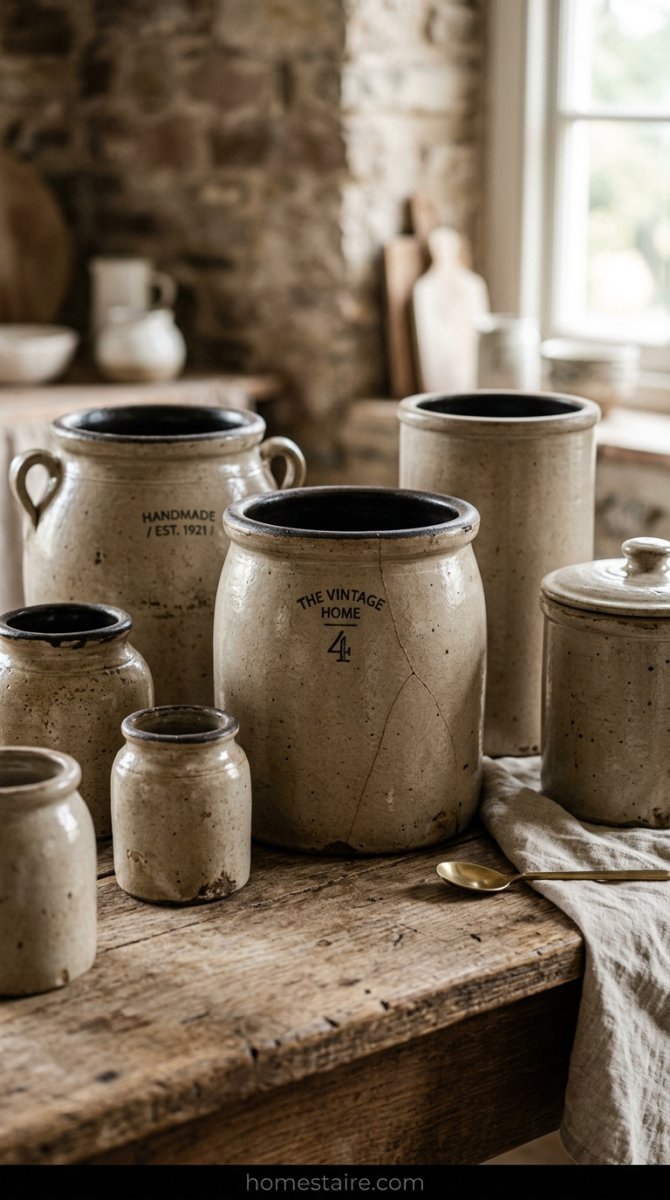
I found these in a soggy cardboard box behind a rusty lawnmower. I paid three bucks for the whole lot. They weren’t a “set,” which is exactly why they worked.
One is a weird shade of oatmeal-beige and the other has a hairline crack running down the side.
Most people see a crack and think “trash.” I see a crack and think about the fifty years of wooden spoons that probably hit that rim. They don’t match my floor or my walls, and that’s the point.
Why I picked hammered copper handles that show every fingerprint
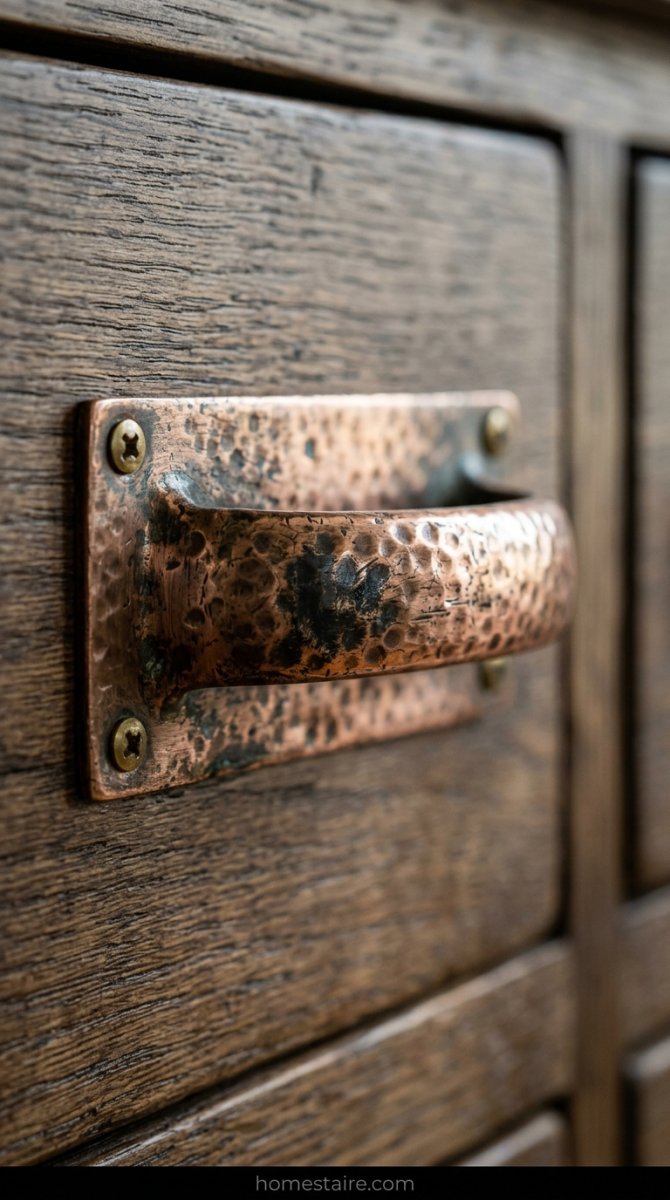
Everyone told me copper was high maintenance. They were right. If I touch these handles after making a sandwich, there is a visible smudge that stays there until I scrub it.
I don’t care.
Patina is just a fancy word for “dirty metal” and honestly? I’m here for it. Shiny, brushed nickel feels like a hotel. These copper pulls change color every month, turning dark in some spots and staying bright where my thumb hits the most. It looks lived in. It looks like someone actually cooks here.
The massive butcher block that took me three days to sand down
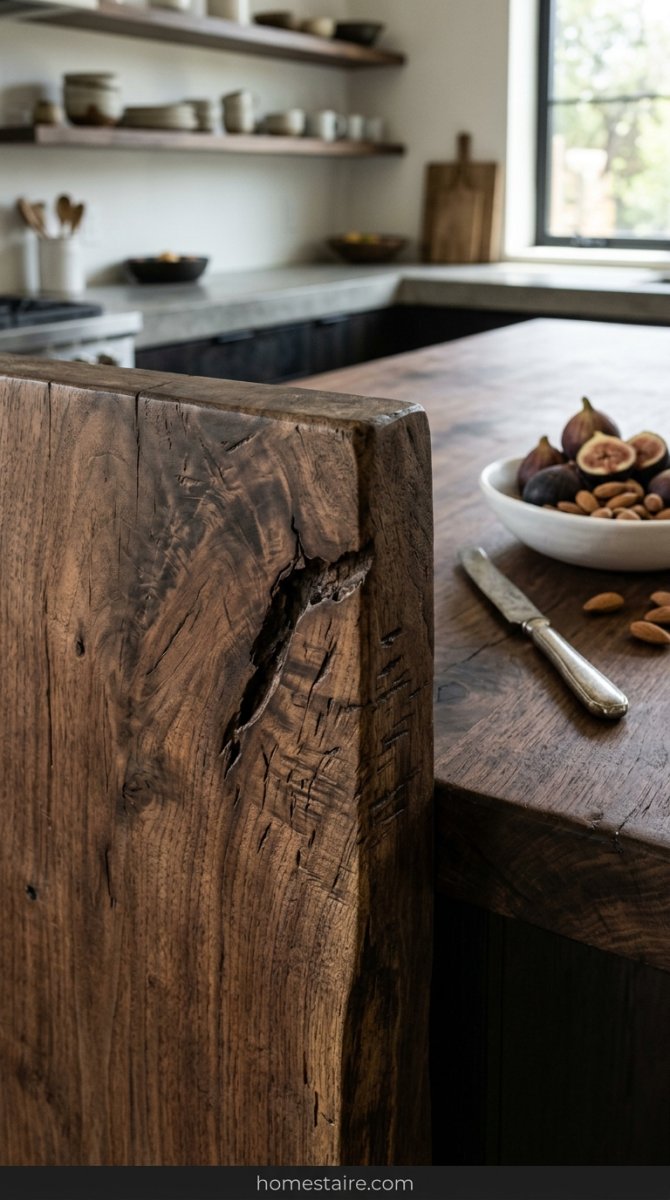
I found this thing at a yard sale for fifty bucks because it was covered in some weird, sticky purple stain. My husband thought I was insane for dragging a hundred-pound slab of wood into the trunk, but I knew those “perfect” island tops at the big box stores looked way too fake.
I spent three days in the garage with a belt sander and enough sawdust to fill a barn—seriously, it was in my hair for a week.
It isn’t perfect. There’s a deep gouge on one corner where the sander slipped, and the grain is a bit uneven, but that’s the point. When I roll out pie crust on it now, it feels like a real tool, not a prop from a showroom.
Using linen towels that feel like real fabric and not plastic
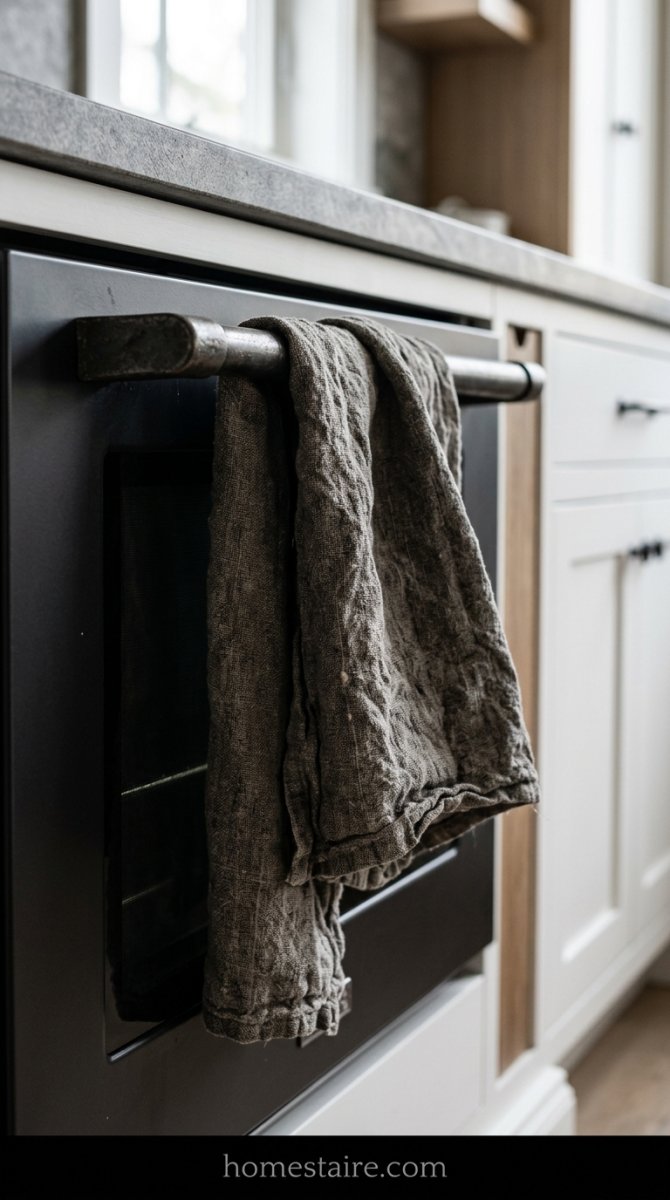
Most kitchen towels you buy these days are basically made of recycled water bottles or something—they don’t actually soak up water, they just push it around the plate. I traded all my microfiber junk for raw, heavy linen that feels almost scratchy at first.
They get better every time I throw them in the wash.
I don’t fold them perfectly. I just hang them over the oven handle or shove them into a drawer because they look better when they’re a little wrinkled and lived-in. If a guest spills red wine, I don’t freak out because a stained linen towel just looks like it has a history—unlike those bright white “Live Laugh Love” towels that look ruined the second they touch a crumb.
Those old milk bottles I use for whatever weeds grow in my yard

Stop buying those glass vases that are shaped like weird teardrops from the craft store. They look cheap. I started hoarding old milk bottles—the kind with the chipped rims and the cloudy glass that won’t come clean no matter how much vinegar I use.
I don’t buy fancy flowers either.
I just walk into the backyard and grab whatever is growing near the fence—dandelions, long grass, or those tiny white flowers that most people call weeds. Stick them in an old bottle with a bit of water and put it on the windowsill. It looks like a real home where someone actually walks outside once in a while.
My cast iron skillet that basically lives on the front burner
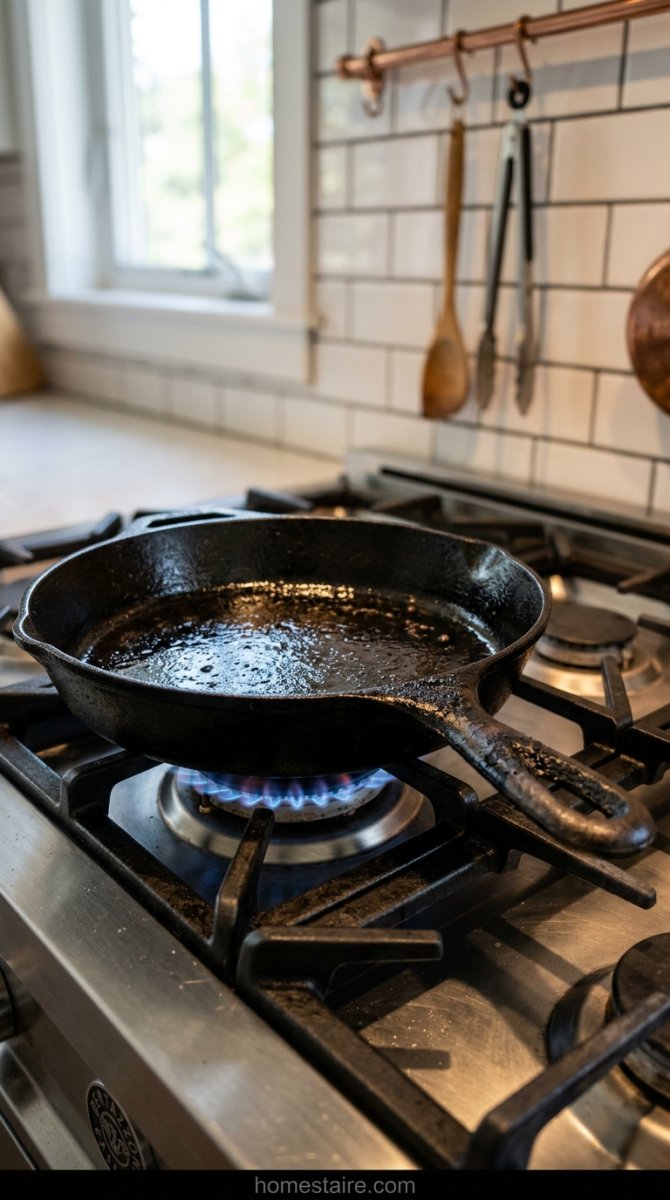
I haven’t put this pan in a cabinet in three years. It’s heavy as a boat anchor and has this gorgeous, jet-black seasoning that took me forever to get right (mostly by frying way too much bacon).
It stays on the stove because I use it for everything.
Leaving it out signals that this is a working kitchen, not a museum. Every time I see a “farmhouse” kitchen on Instagram with a perfectly clean, empty stove, I know nobody actually eats there. My skillet has a little bit of residual oil on it and a handle that’s slightly charred—it’s the heart of the room.
Deep woven baskets for hiding my mountain of ugly Tupperware

Let’s be honest: my Tupperware drawer is an absolute disaster zone of mismatched lids and stained plastic tubs from three years ago. If I put those on an open shelf, the “vibe” would be dead instantly.
I bought these massive, chunky seagrass baskets that smell like a hayfield.
I just chuck all the plastic crap inside them and slide them onto the lower shelves. From the outside, it looks like I’m some organized goddess with a rustic aesthetic—but inside, it’s just total chaos. It’s the ultimate trick for making a house look “curated” while still living like a normal person who keeps leftover spaghetti.
That heavy antique scale that just sits there looking cool
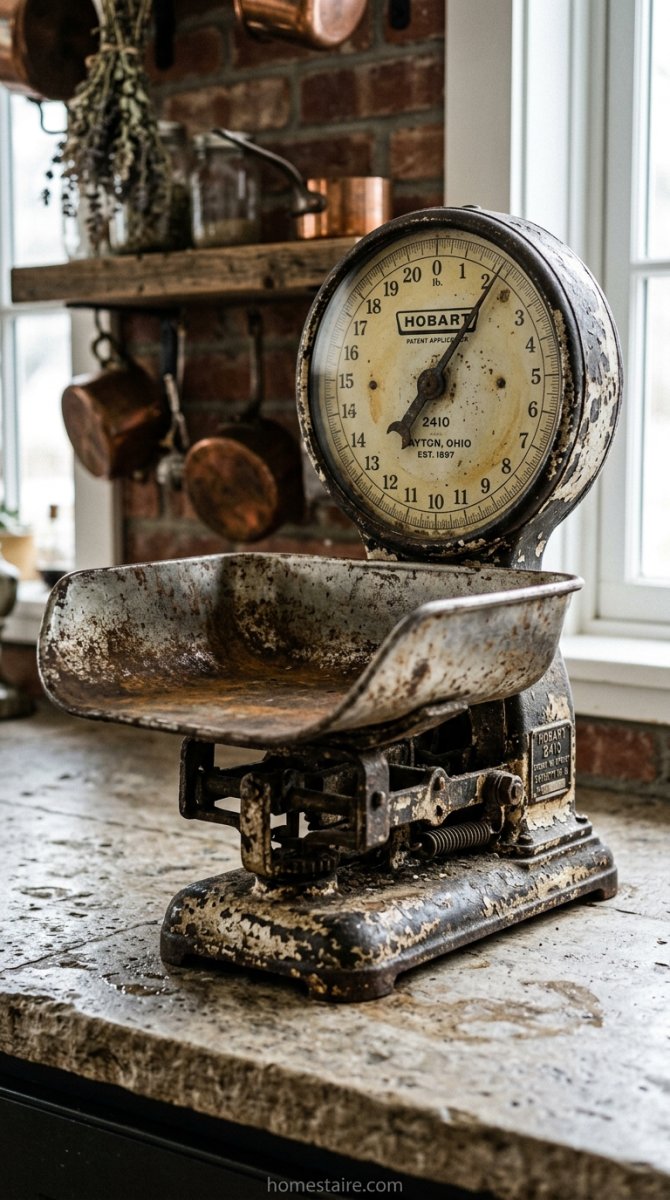
I spent forty bucks on a rusty Hobart scale that weighs absolutely nothing accurately anymore. It takes up a massive chunk of my counter space near the toaster. I don’t care. It’s got this chipped white paint that looks like it’s seen a century of flour dust—which is way better than some plastic junk from a big box store.
The needle bounces around if you even walk past it too fast. It’s totally useless for actually baking.
But seeing that heavy metal base sitting there makes the kitchen feel grounded. It doesn’t scream “I bought this in a three-piece set.” It screams “I found this in a damp basement and spent two hours cleaning it with steel wool.”
Galvanized trays that do not look like they came from a kit
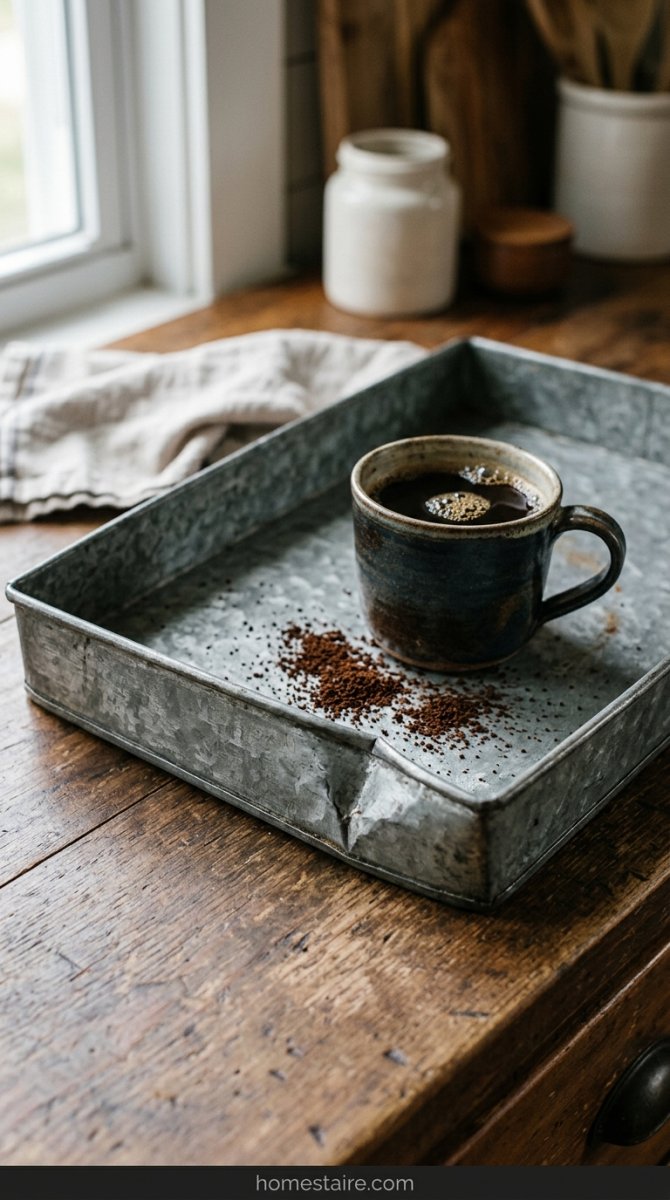
Most galvanized stuff today looks like it was sprayed with cheap silver glitter in a factory. Gross. My favorite tray has a literal dent from when I dropped it in the driveway while unloading the truck. It’s dull. It’s grey. It’s perfect for holding my messy coffee station together so the grounds don’t get everywhere.
Stay away from the shiny stuff.
If it looks like it would survive being left out in a rainstorm for a week, buy it. If it looks like it belongs in a wedding aisle, leave it on the shelf. Mine has these weird tea stains on the bottom that won’t come out, and honestly, that’s my favorite part about it.
Real bread boards with scars from a thousand actual meals
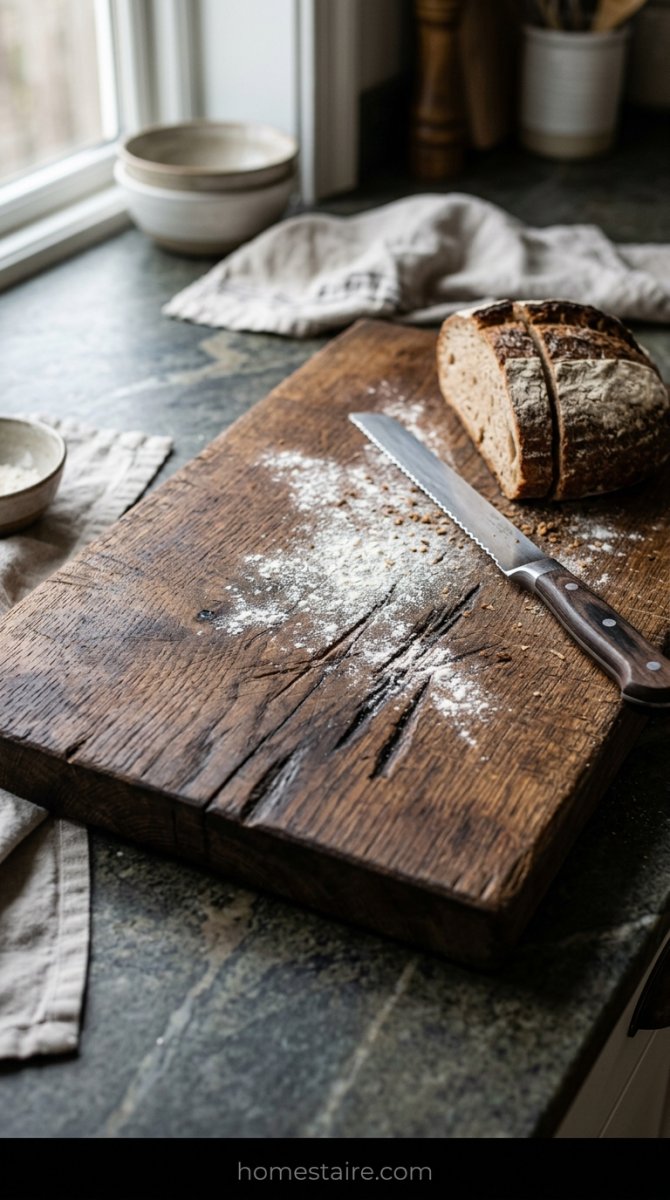
If your bread board doesn’t have at least one deep gouge from a slip of a serrated knife, you aren’t really cooking. My favorite one is made of thick oak and smells faintly of the rosemary focaccia I burnt last Christmas. I didn’t buy it at a home store—I found it at an estate sale and spent an hour scrubbing off mystery grease.
It’s heavy as a brick.
I don’t display it on the wall like a piece of art. I keep it right on the counter where I chop onions and pile up hot sourdough. The wood is darkened in the center from years of oil and use, which gives it a patina you just can’t fake with a bottle of stain.
Chunky iron hooks to hang my heavy cooking gear
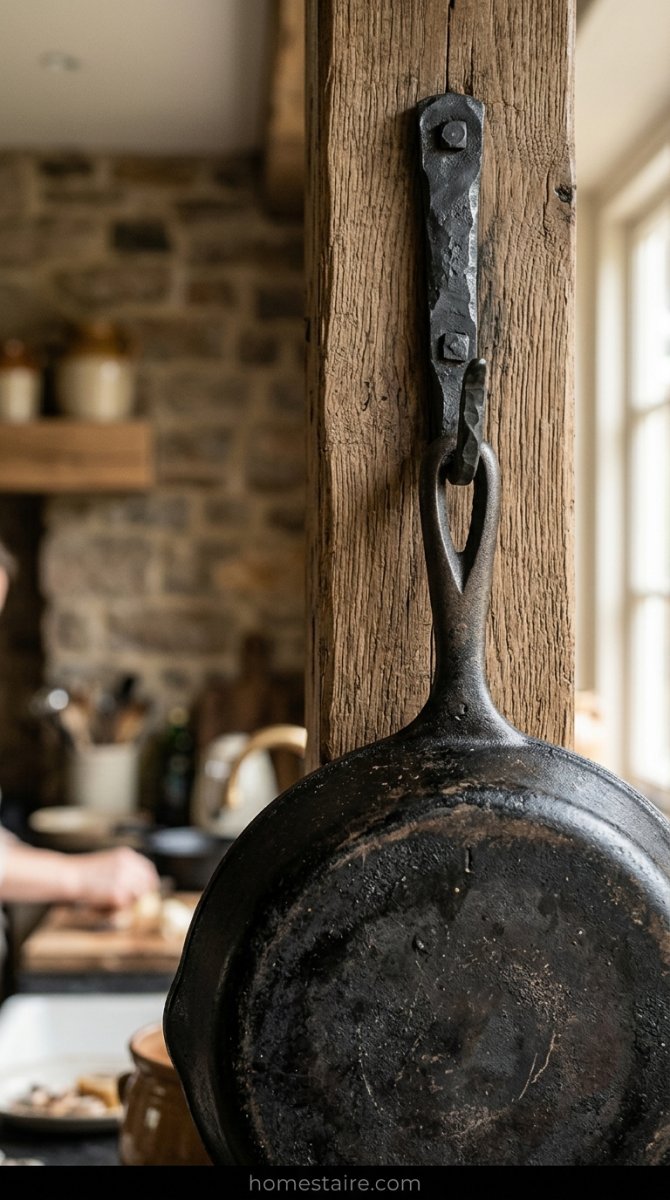
I ripped those original thin brass hooks right out of the drywall. Total amateur move on my part. Now I use hand-forged iron hooks that I hammered directly into the studs—yes, actually in the studs because my cast iron pans weigh more than my dog.
They look rough.
They have this black soot finish that gets on my fingers if I fidget with them too much. These aren’t those “farmhouse style” hooks from a craft store that feel like they’re made of aluminum foil. These are the real deal. They make the kitchen look like a workshop, not a showroom.
Earthenware pitchers that feel heavy and look like my grandma’s
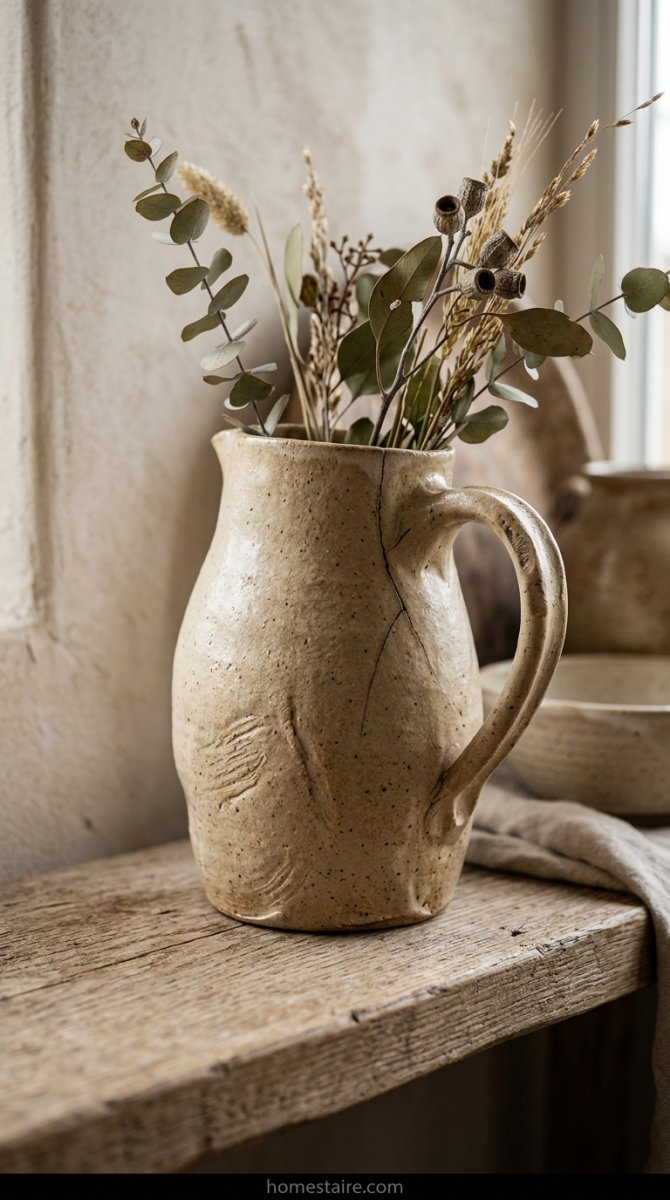
There is a specific kind of beige pitcher that just feels “right” when you pick it up. It shouldn’t feel like a toy or a prop. Mine has a tiny hairline crack near the handle that I keep a close eye on, but that’s what gives the thing soul.
I use it for wooden spoons mostly.
The truth is, it’s actually way too heavy to pour water with one hand without straining a wrist. It sits next to the stove, slightly lopsided because the bottom wasn’t fired perfectly flat. That’s the charm. It looks like someone’s actual hands shaped it, rather than a machine churning out ten thousand identical cylinders.
A farmhouse sink with enough scratches to tell a real story
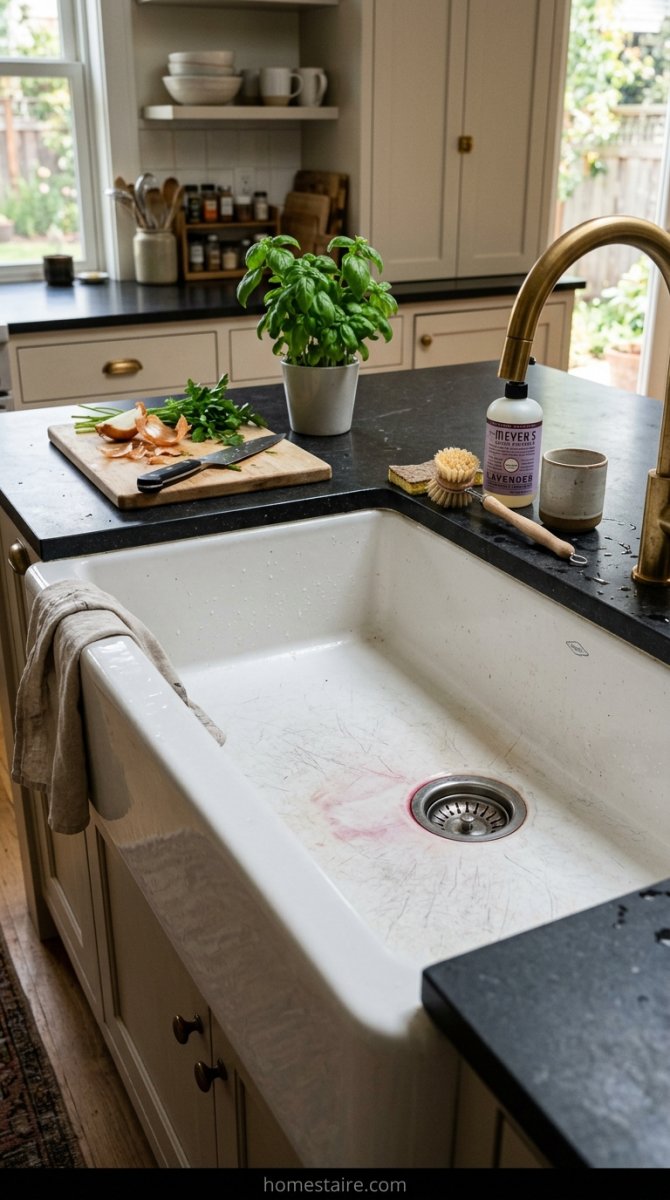
I almost lost my mind when I dropped a heavy cast iron pan and left a nasty gray streak across the bottom of my white apron sink. It was brand new. I thought the world was ending—literally. But then my friend came over, saw the mark, and said it finally looked like a real kitchen. She was right.
Don’t baby it. Scrub it with some grit and let the scratches happen.
A sink without a few scars is just a prop for a photo shoot. Mine tells people I actually cook dinner instead of just ordering takeout every night. It’s loud, it’s stained from that one time I left a beet in there too long, and I wouldn’t trade it for a pristine one if you paid me. Seriously.
Conclusion
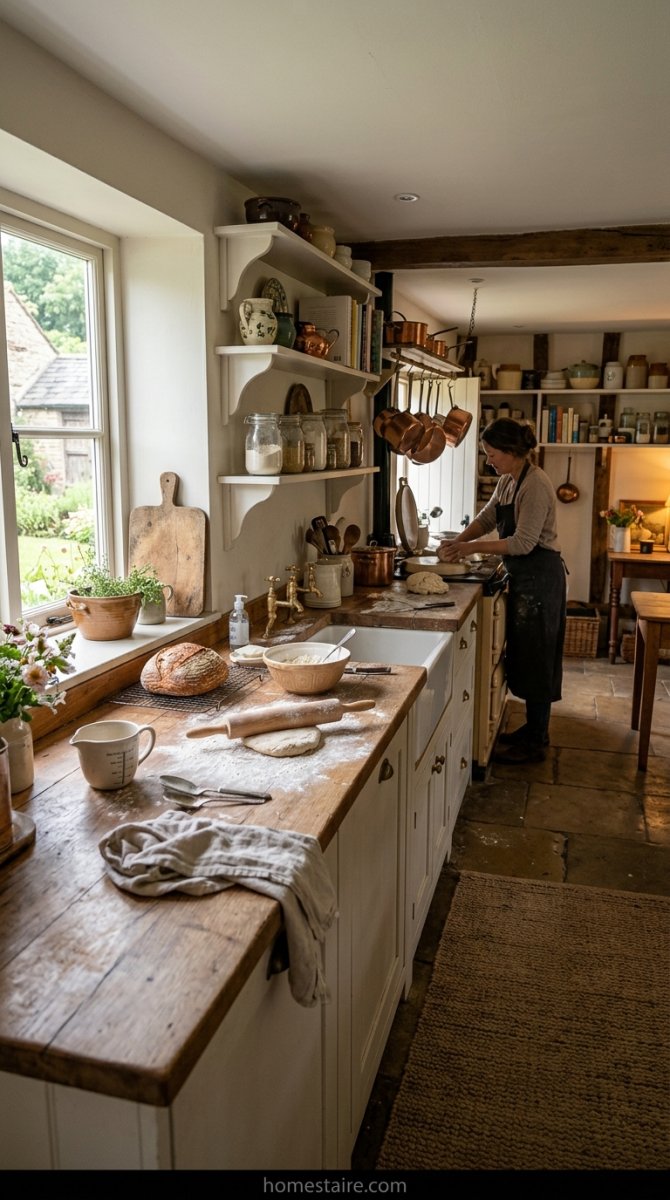
Look, your house isn’t a museum. If everything matches perfectly and looks like it was delivered in one giant box, it’s going to feel cold—like a hotel room where nobody actually stays. Go find the weird stuff. Buy the bowl that’s a little lopsided.
The goal is to feel something when you walk into your kitchen. If you aren’t bumping into a heavy basket or squinting at a scratch on your wood counter, are you even living there? Probably not.
Get messy. Buy things that have weight. Your kitchen should look like you—flaws and all—and not some staged room in a catalog that nobody is allowed to touch. That’s the whole point.