I spent three years trying to get that “clean” look and mostly just ended up with a house that felt like a bus station. Everyone says “less is more.” They’re lying. Or at least, they aren’t telling you that “less” can easily turn into “cold and depressing” if you don’t know the tricks.
Minimalism isn’t just about throwing your stuff in the trash—I learned that the hard way after tossing my favorite (admittedly ugly) recliner and realizing I had nowhere to actually sit.
It took me three tries—and a lot of wasted cash at West Elm—to figure out how to make a room look empty on purpose rather than just unfinished.
My first big fail: The “all-white” hospital trap

I went all in on the “cloud” vibe for my first attempt. White sofa. White rug. Eggshell walls. My sister walked in and asked if I was starting a dental practice.
It was soul-crushing.
When everything is the same shade of bleached bone, your eyes don’t have anywhere to rest. You just feel exposed. I realized quickly that a room needs “visual weight”—or at least things that look like they could survive a spilled cup of coffee without causing a mental breakdown.
Layering textures so you don’t feel like a robot

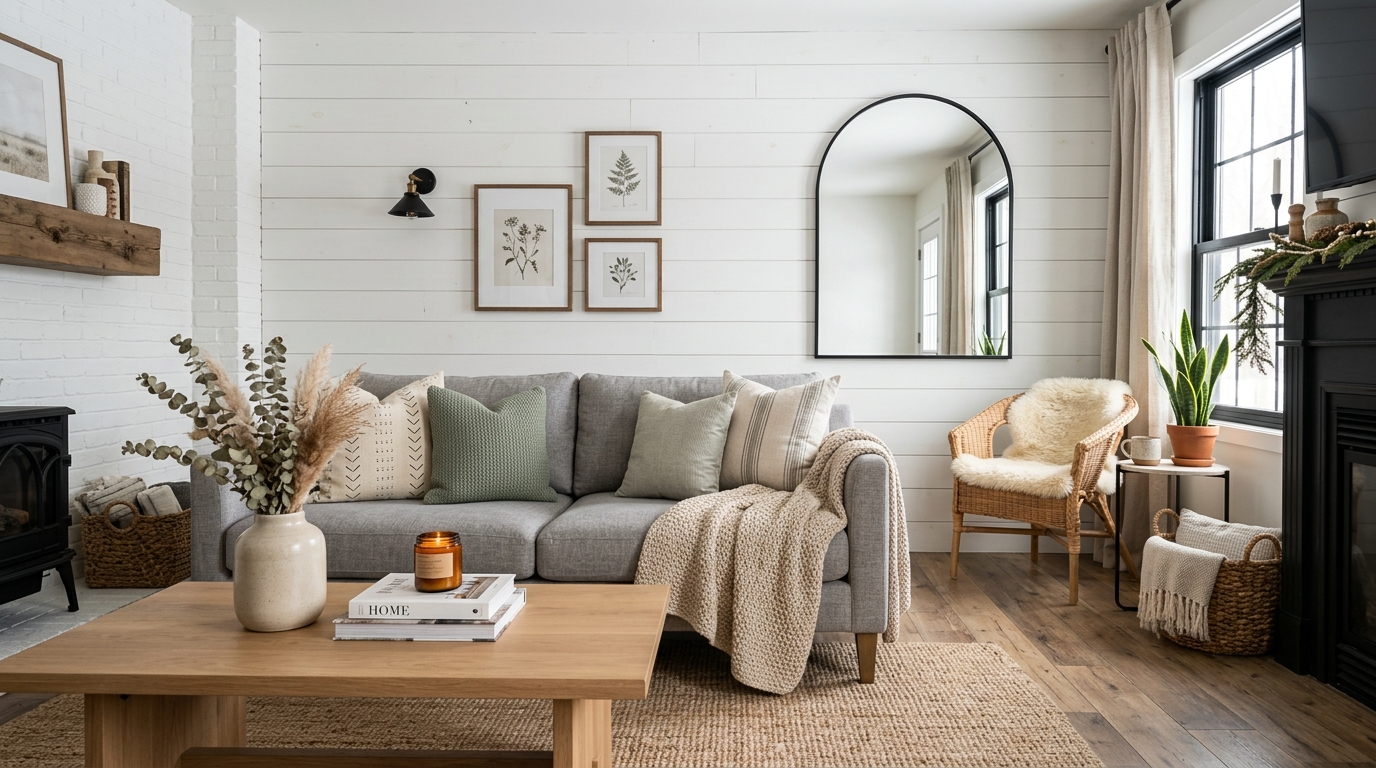
You need stuff that’s bumpy, fuzzy, or even a little bit scratchy. If every surface is smooth plastic or flat paint, you’re going to feel like a robot living in a simulation. I started throwing chunky wool blankets over my sleek chairs—stuff that actually feels like something when you touch it.
Texture is basically a cheat code for making a sparse room feel expensive instead of empty.
I found this old, rough wooden bowl at a garage sale and put it on my glass coffee table. The contrast was weird. I loved it. It broke up the “perfect” look that was making me feel so itchy.
Ditching the matching sets I bought on impulse
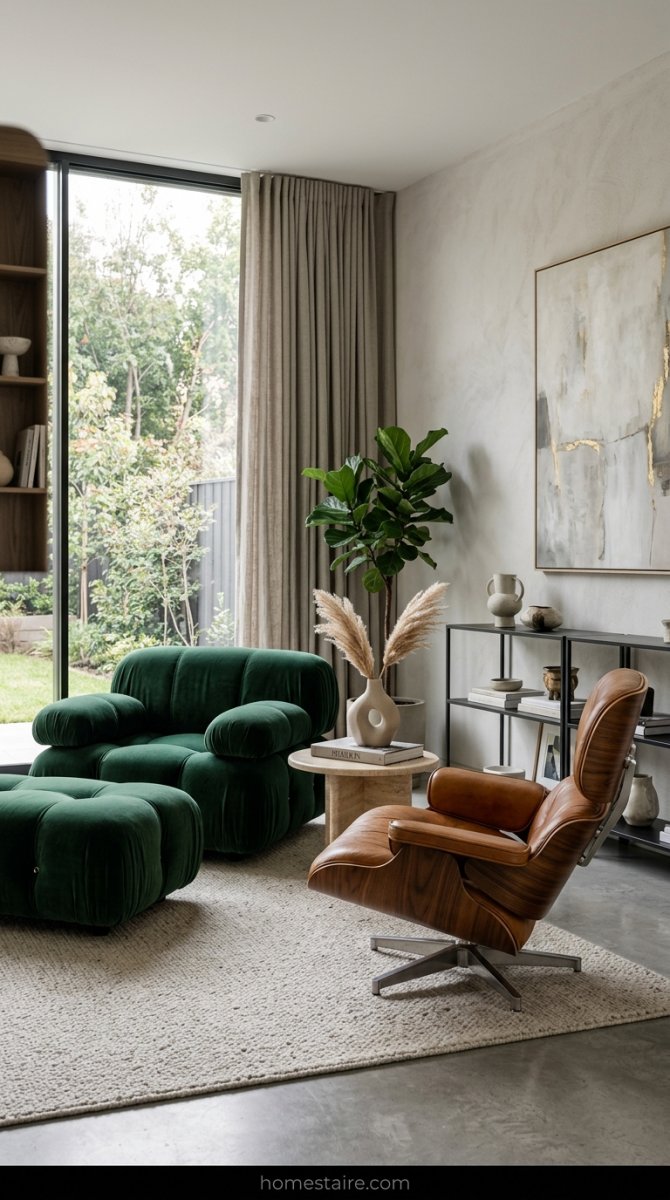
I fell for the “Living Room in a Box” deal at a big furniture store once. Couch, loveseat, and coffee table—all matching perfectly. It was a nightmare. My house looked like a staged photo in a cheap real estate flyer.
Break the sets up. Seriously.
I eventually sold the loveseat on Marketplace and replaced it with two mismatched chairs I found at different shops. It felt messy at first, but then it clicked. Real homes aren’t “sets”—they’re collections of stuff you actually like, which is way harder to pull off but looks ten times better.
Picking furniture with legs (it’s a game changer)
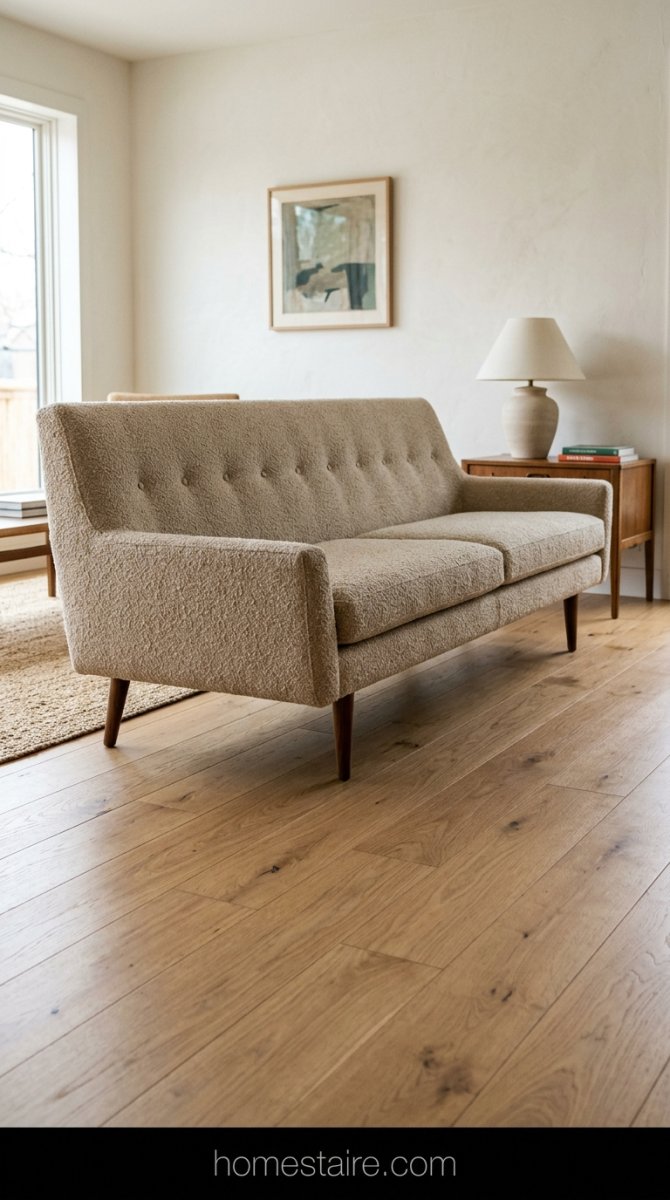
Stop buying furniture that sits flat on the floor like a giant, heavy brick. I used to have this “chonky” sofa that went all the way to the carpet. It sucked the life out of the room and made my 12×12 space feel like a closet.
Legs are the secret.
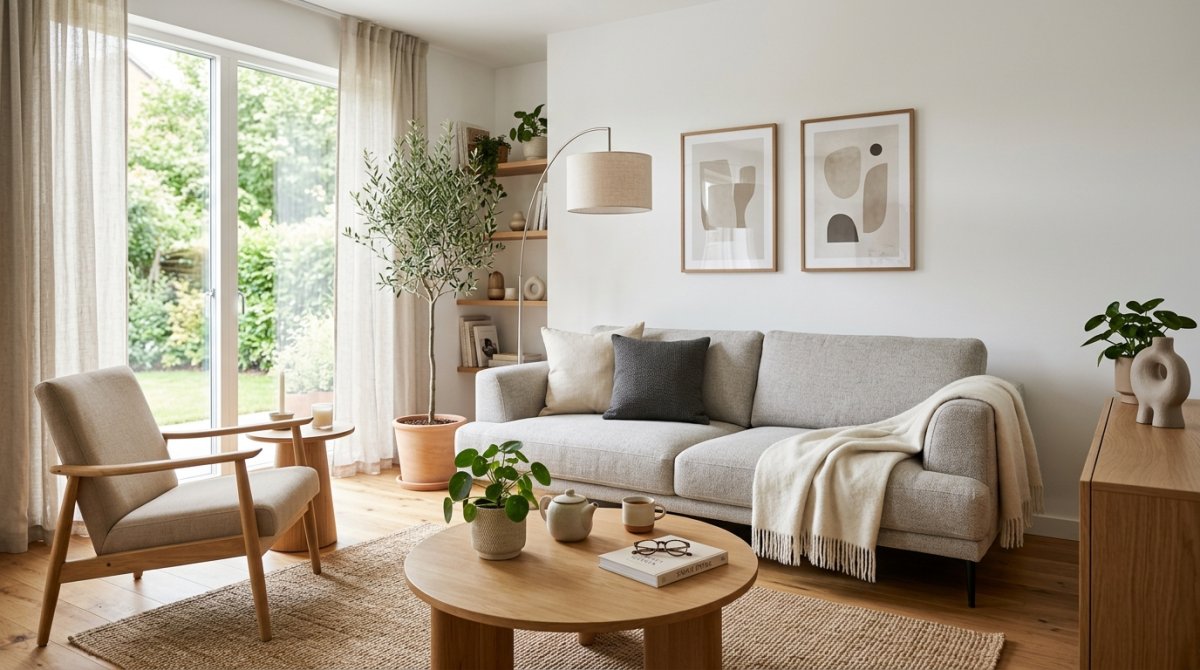
When you can see the floor underneath your sofa or your TV stand, the whole room feels like it can breathe. I swapped that heavy beast for a mid-century piece with skinny wooden legs. It’s like the room suddenly grew an extra five feet of space—pure magic.
The rug size mistake that made my room look tiny
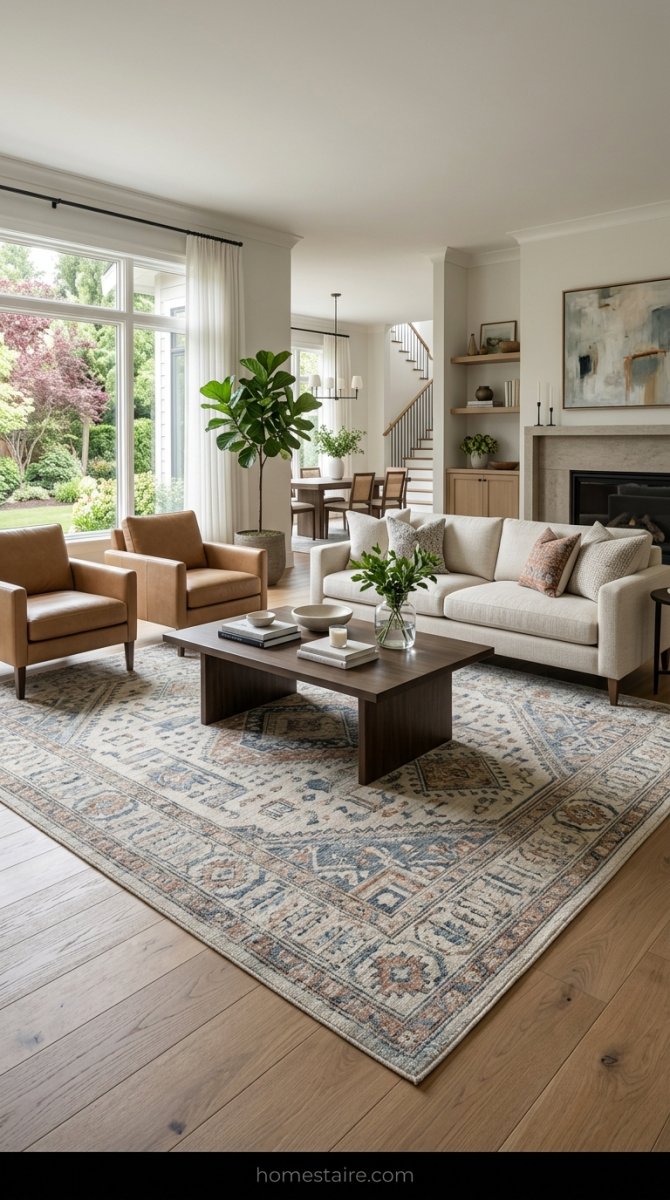
I thought I was being smart by saving two hundred bucks on a 5×7 rug. I wasn’t. It sat in the middle of the floor looking like a sad, fuzzy postage stamp—totally awkward. A tiny rug shrinks your brain’s perception of the floor space. My couch looked massive and my floor looked like a scrap heap.
If the front legs of your chairs aren’t sitting on that rug, you’ve messed up.
Go bigger than you think you need. I finally swapped that little scrap for an 8×10 that actually goes under the furniture. It anchored everything. Suddenly, the room felt like a “space” instead of a collection of random objects floating in a sea of hardwood.
Letting one “loud” piece do all the heavy lifting

Minimalism isn’t about being a monk or living in a white box. I stopped trying to make everything “blend in” and bought one cognac leather armchair that looks almost aggressive. It does all the work.
If you have one weird, bold thing, the rest of the room can stay quiet without feeling like a boring waiting room. It works.
My mistake was trying to make every piece of furniture look “minimalist.” When everything is subtle, nothing is interesting. Now, I let my weird orange chair be the loudmouth while the rest of the room stays shut. It’s the only way to have style without the clutter.
Why I finally hid my TV in plain sight
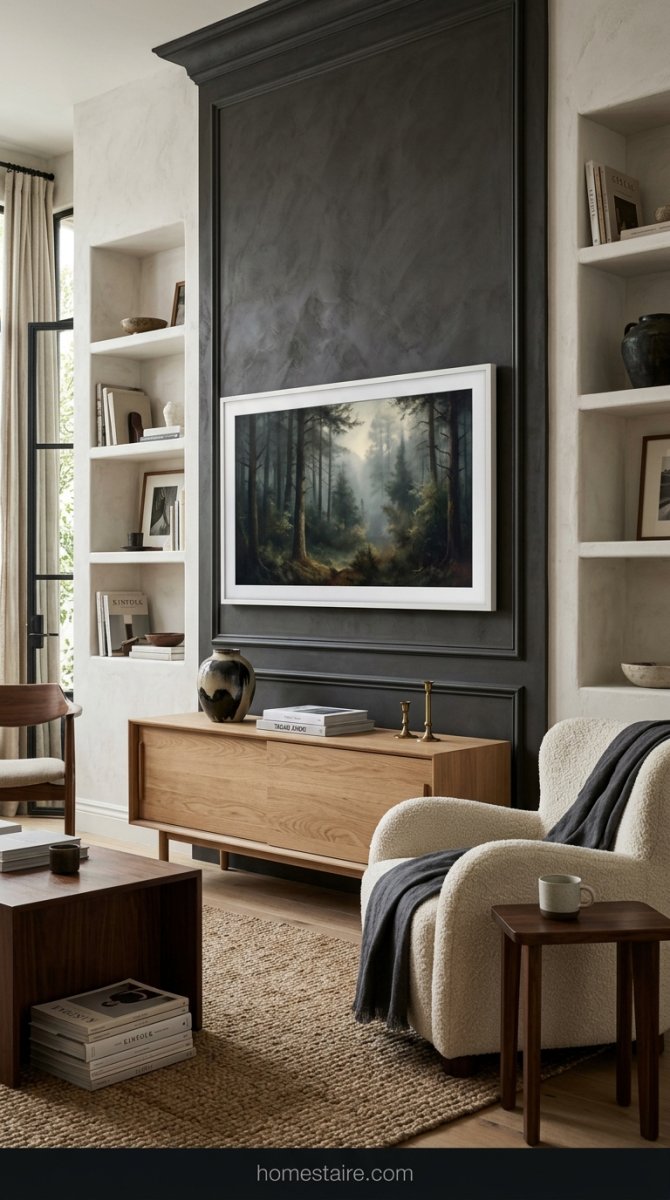
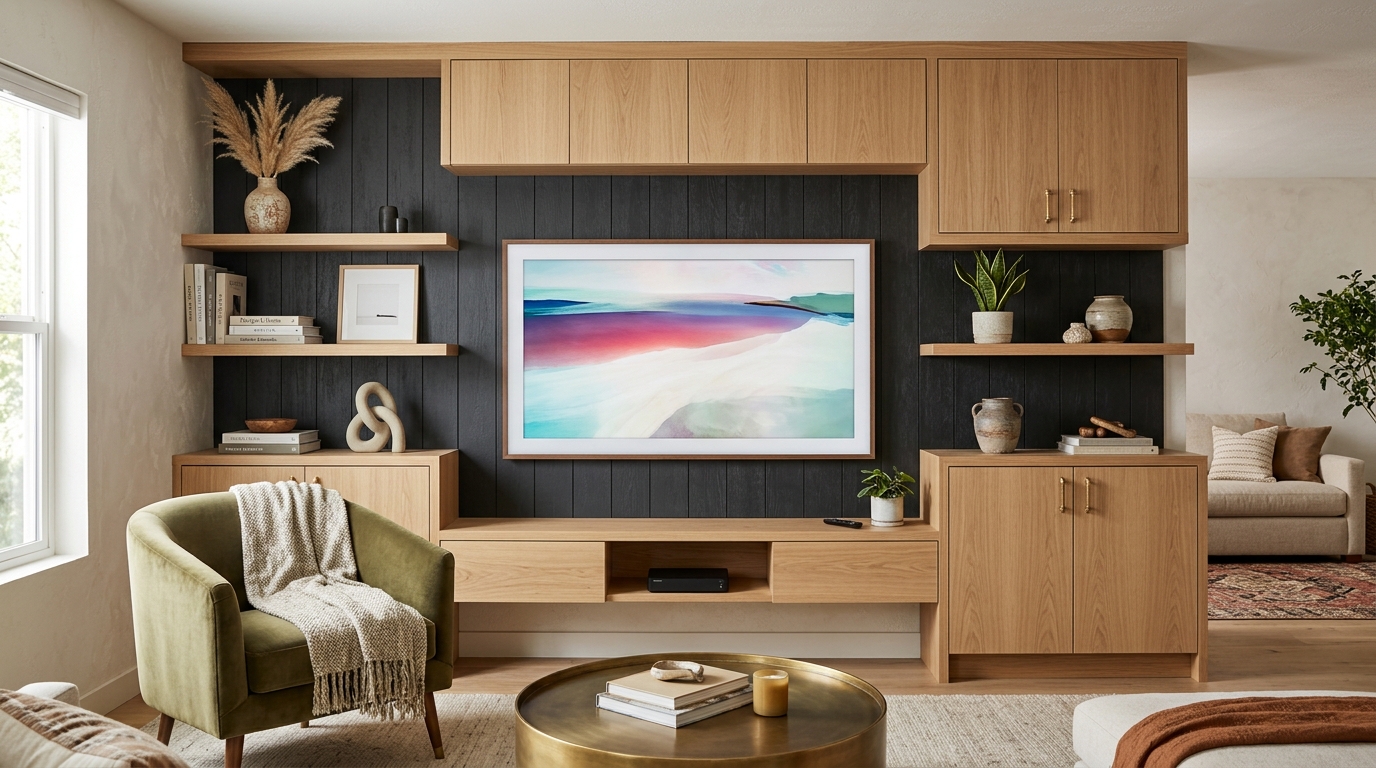
Giant TVs are a total vibe killer. For years, my living room just pointed at a giant black plastic void like some weird altar. It sucked the life out of the room. I finally caved and got the kind of TV that looks like framed art when it’s off—no more soul-sucking rectangle.
It’s expensive, sure, but staring at a photo of a moody forest beats staring at a dead screen any day.
Seriously.
If you can’t afford the fancy “art” TV, just hide the thing in a cabinet or put it on a dark wall. Anything is better than a 65-inch black hole staring back at you while you’re trying to drink your coffee. It changed the whole energy of my house.
Natural light is great, but lamps are better
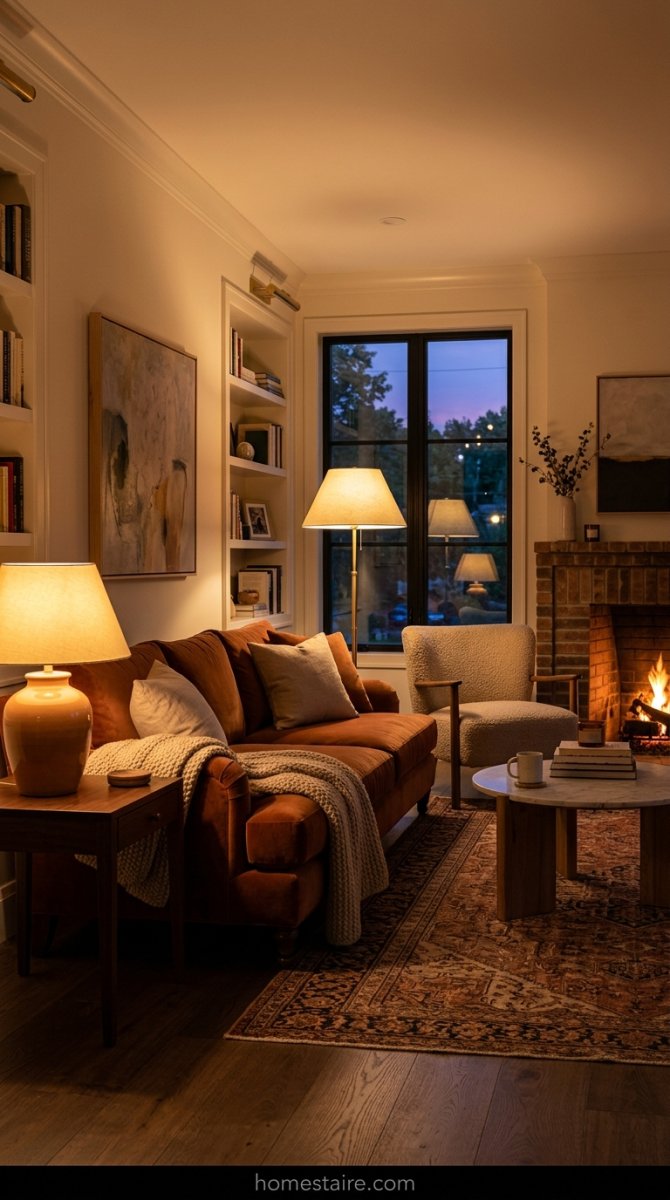
Turning on the “big light” in the ceiling is a crime in my house. It’s too harsh and makes my skin look gray—kind of like I’m in an interrogation room. I started layering lamps at different heights instead.
A low lamp on a side table and one tall floor lamp makes the room feel cozy. Even if you have almost zero furniture, warm light makes it feel “done.”
Lighting is the only reason my house doesn’t feel like a clinic anymore. I use those “warm” bulbs (the 2700K ones) because they make everything look expensive. Overhead lights are for finding a lost contact lens, not for living your life.
The truth about open shelving—it’s usually a mess

Open shelving is a lie sold by people on Pinterest who don’t actually own stuff. I tried it and my room looked like a cluttered thrift store within a week. I went back to closed cabinets for 90% of my junk.
Now I only keep three things on the shelf: a cool vase, one book I’ll probably never read, and a candle.
Anything else is just a dust magnet that ruins the view. If you can see your stacks of mail and half-empty pill bottles, you haven’t achieved minimalism—you’ve just moved your junk to a stage. Hide the mess behind a door so your brain can actually relax.
Real talk: How I keep it clean with actual humans living here
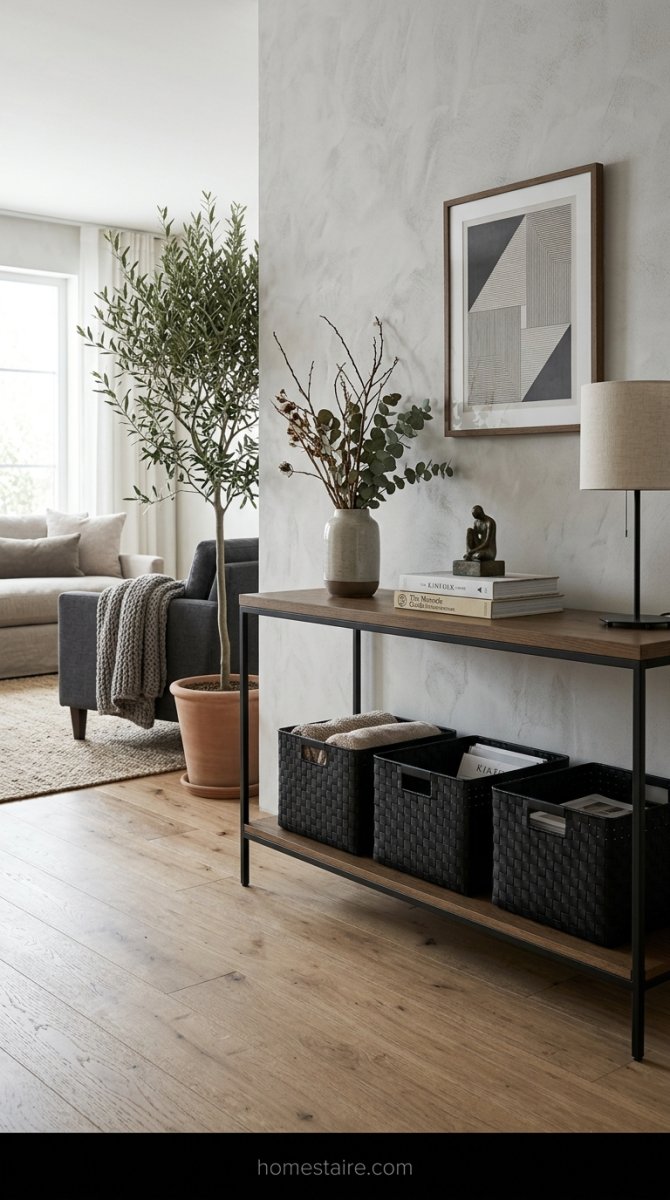
Look, I live with a partner who treats the coffee table like a locker and a dog that sheds enough to build a second dog every week. People see my photos and think I live in a museum, but that’s a total lie. Minimalism in a house where people actually eat and breathe requires what I call “shove buckets.” I have these deep, matte black baskets tucked under the console table. When the doorbell rings, every stray sock, piece of junk mail, and dog toy gets tossed in there in roughly thirty seconds. Out of sight, out of mind.
You have to be ruthless about what stays on the surfaces.
If it doesn’t have a specific “home,” it’s garbage or it’s hidden. I stopped trying to organize the chaos and started just deleting it from my field of vision. It’s the only way to stay sane without spending four hours a day cleaning.
Conclusion

I spent three years and way too much money trying to live inside a magazine page. It sucked. My living room finally feels right because I stopped caring about the rules and started caring about how my brain felt when I walked through the door. If your space makes you feel stiff—like you can’t even put a glass of water down—you’ve gone too far into the doctor’s office vibe.
Go move one chair today.
Seriously, just shift one thing or hide that pile of old magazines. You don’t need a full renovation to stop your house from feeling like a waiting room. Just trust your gut more than you trust some filtered photo on your phone. My gut was wrong for years, but eventually, it figured out that “less” doesn’t have to mean “nothing.”