
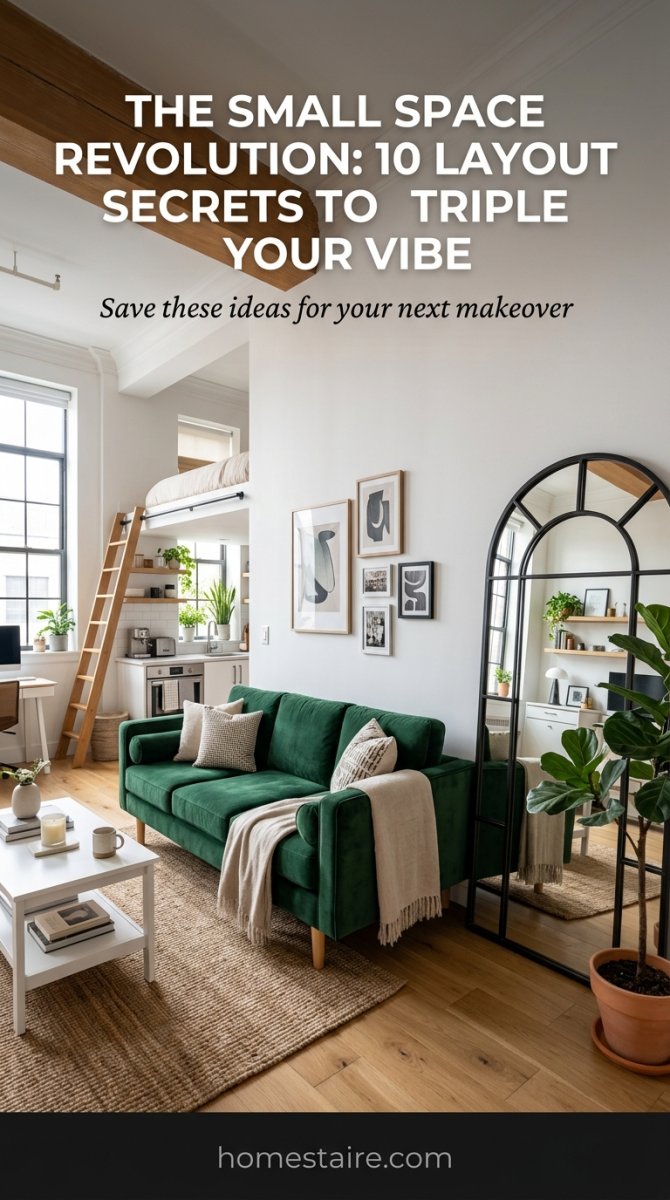
I spent three years living in a 400-square-foot studio that felt more like a hallway than a home. I moved my green velvet sofa twelve times. Twelve! My downstairs neighbor actually asked if I was building a bowling alley.
I wasn’t—I was just desperate for a layout that didn’t make me feel claustrophobic.
Most “small space” advice is garbage. People tell you to buy tiny furniture that feels like it belongs in a dollhouse. That’s a mistake. After a dozen failed experiments, I figured out that making a tiny room liveable isn’t about having less stuff—it’s about where that stuff sits.
Stop Pushing Every Piece of Furniture Against the Walls
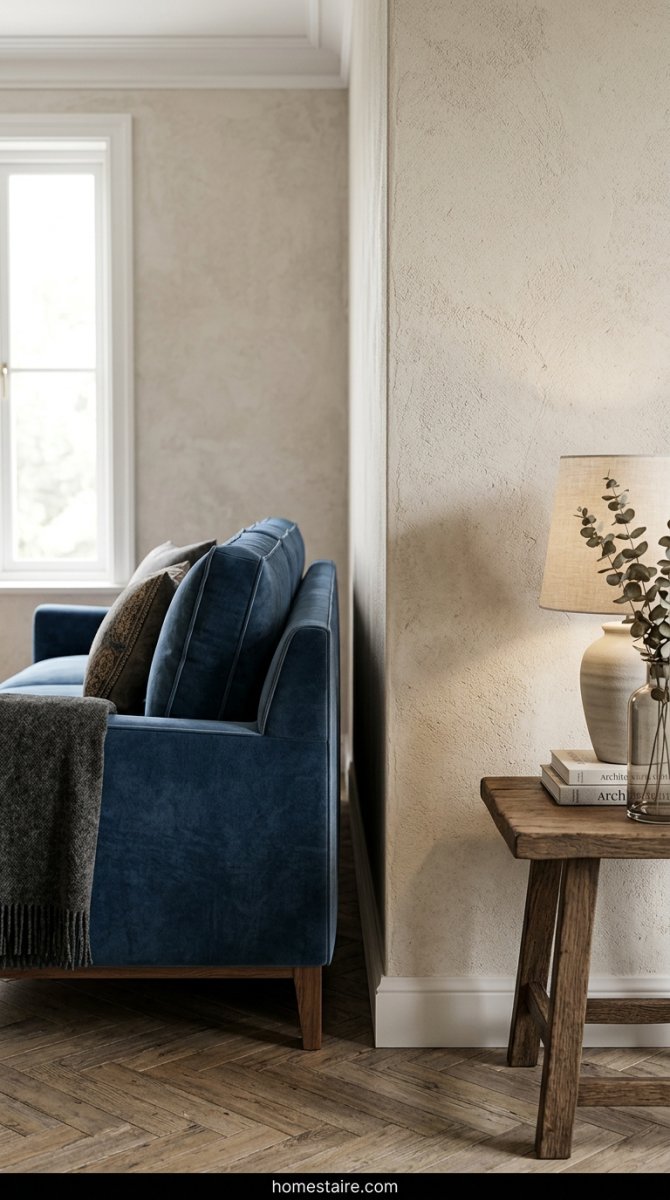
I used to think the “waiting room” look was the only way to survive. I shoved every single chair and shelf against the drywall like I was scared of the middle of the room. It looked terrible.
Pulling my sofa just four inches away from the wall—literally the width of a coffee mug—changed the entire vibe. It gives the furniture some “breathing room” and makes the floor look wider than it is.
It sounds counterintuitive to waste space behind a couch, but it works. Try it.
Use Rugs to Define Zones Without Adding Bulky Dividers
Screens and bookshelves are space killers. I tried a folding screen once and tripped over the legs every single night for a week until I finally threw it in the trash.
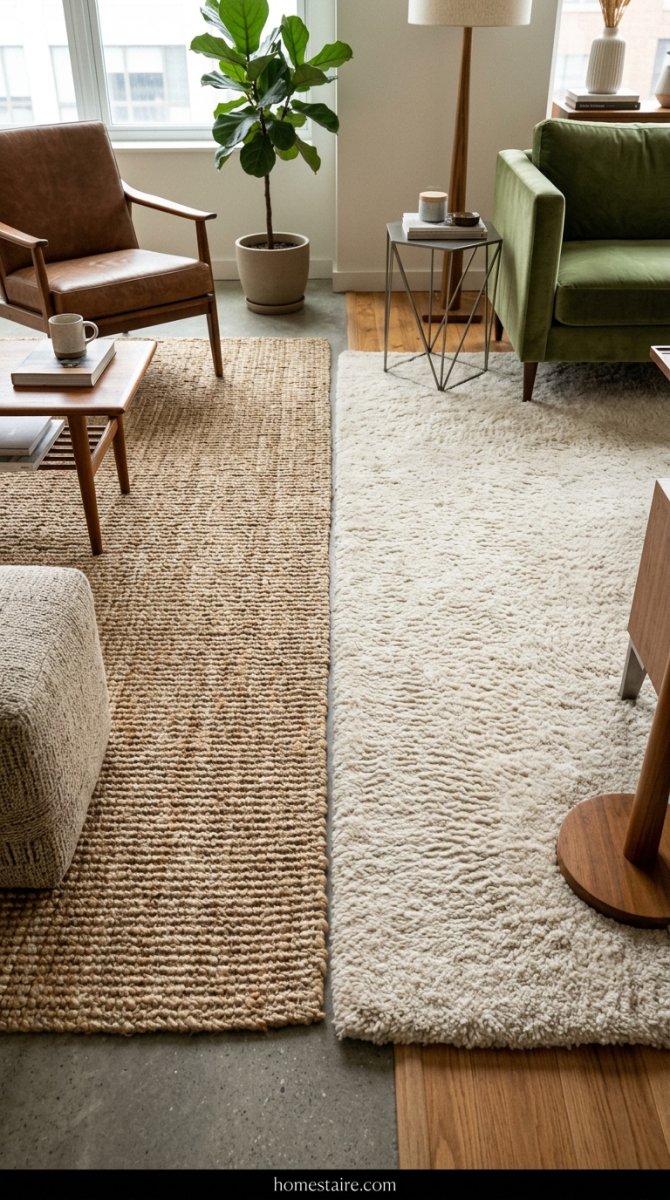
Now I use rugs to tell my brain where “the office” stops and “the lounge” starts. My desk sits on a scratchy jute rug, while the sofa area has a thick, plush piece that I actually like touching.
It creates invisible walls. Without those rugs, my flat just looks like a pile of furniture dumped in a corner.
Buy Furniture with Legs to Keep the Floor Line Visible
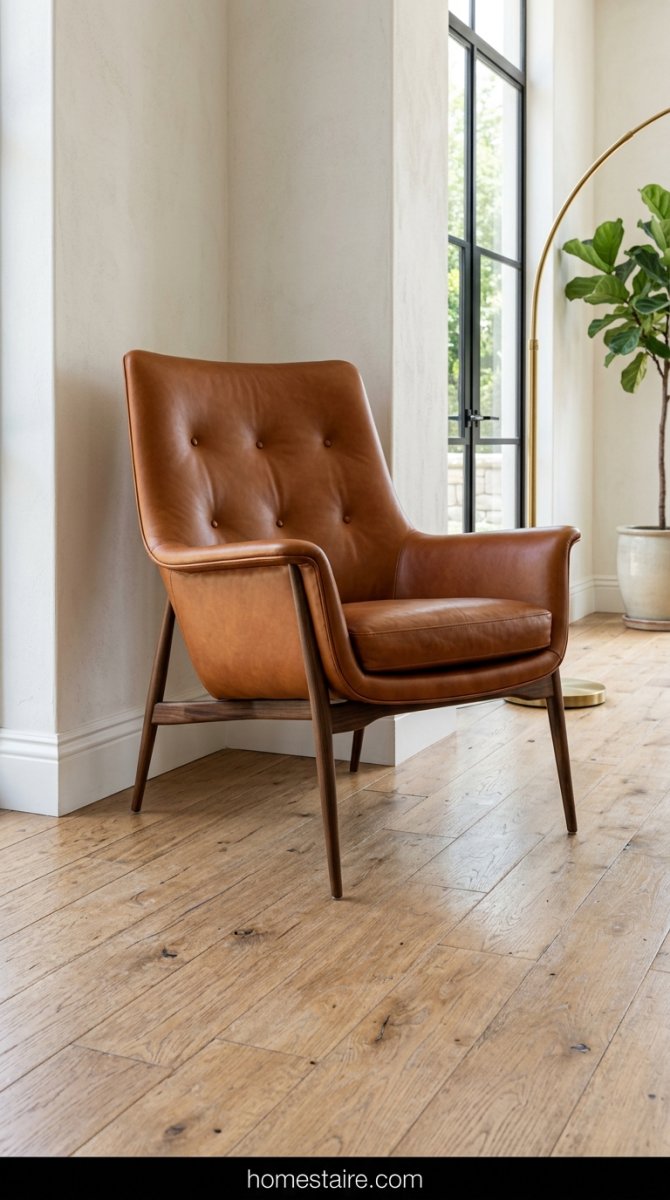
Boxy furniture is the enemy of tiny apartments. If you can’t see the floor under your couch, your brain thinks the room ends where the fabric starts. It’s a sneaky way to feel cramped.
I swapped my chunky, floor-hugging armchair for a mid-century style one with skinny wooden legs. Total game changer.
Now my eyes can see all the way to the baseboards. This makes the square footage feel way bigger than it actually is (even if it’s just an illusion). Look for “leggy” things.
Take Your Storage All the Way to the Ceiling
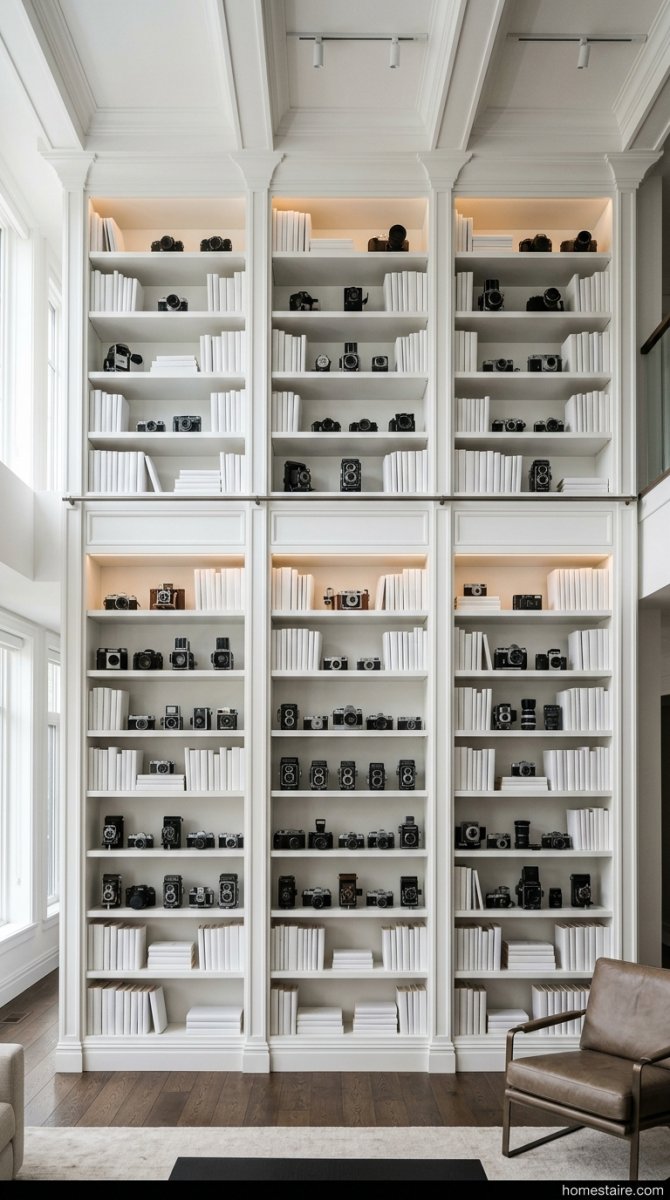
Most people stop their shelving at eye level. That’s a massive waste of prime real estate.
I bought those cheap IKEA bookcases and stacked them almost to the ceiling—anchored to the wall, obviously, because I’m not trying to die in a book-avalanche. I put the stuff I never use, like my collection of vintage cameras and cookbooks I never open, on the very top.
It draws the eye upward. It makes guests look at my high ceilings instead of my tiny floor.
Vertical space is free. Use it.
Choose One Large Sofa Instead of Multiple Small Chairs
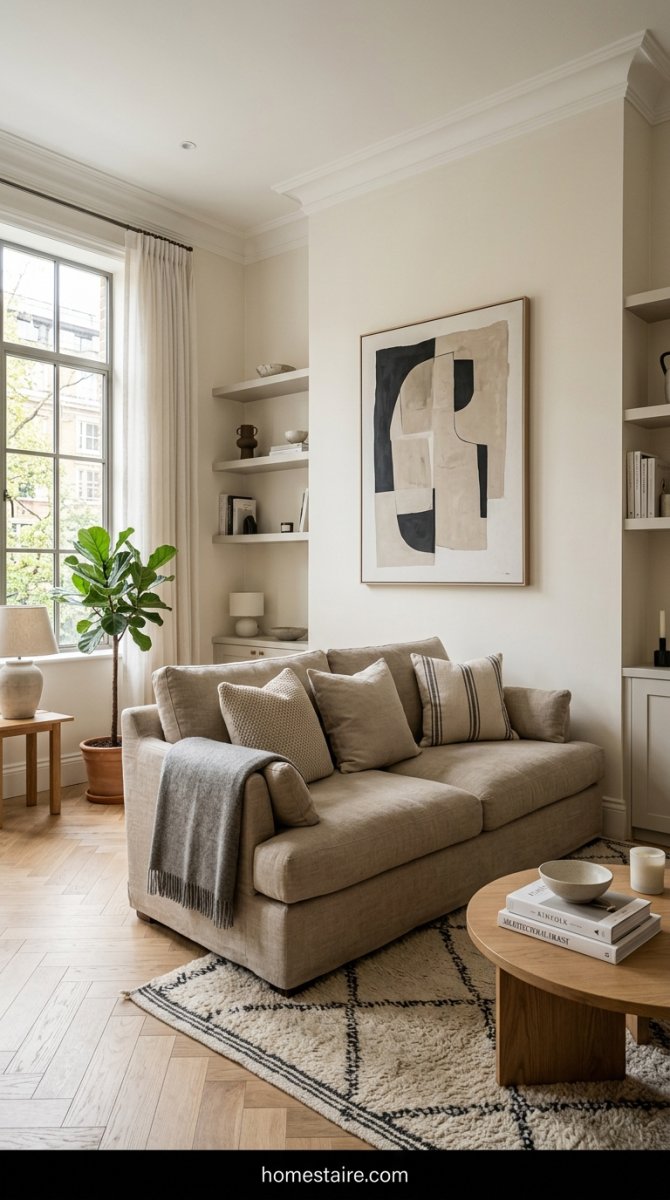
I wasted $800 on two “dainty” velvet chairs thinking they would make my place look open and airy. They didn’t. They just made the room look like a crowded waiting room at a vet clinic. I eventually bit the bullet and got a massive, deep three-seater sofa.
It sounds crazy to put a huge couch in a tiny room—but it works.
One big piece of furniture cuts out all the visual “static” that comes with having eight different chair legs and weird gaps everywhere. It anchors the space. Plus, you can actually nap on a sofa. You can’t nap in a tiny accent chair without waking up with a neck cramp that lasts three days.
Create a Clear Traffic Path So You Stop Bumping Into Things
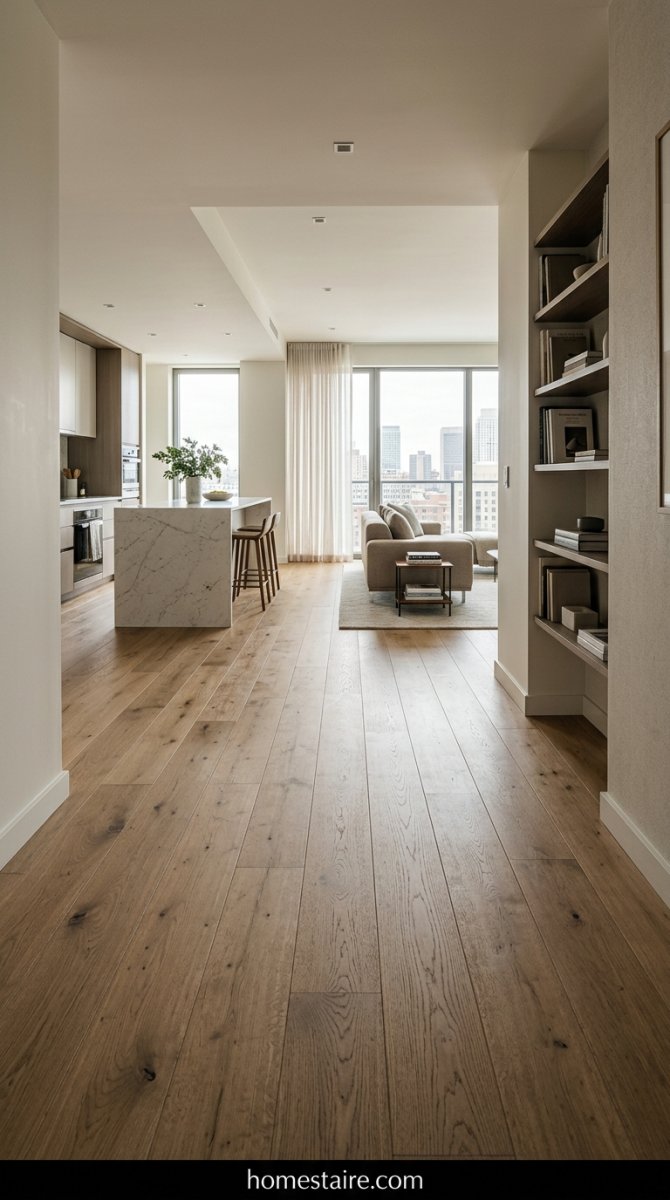
My shins used to be covered in bruises. Why? Because I tried to fit a dining table right in the middle of the “natural” walking path from my front door to the kitchen. If you have to do a weird little shimmy or turn your body sideways to get to the fridge, your layout is broken.
You need a straight shot.
I cleared a three-foot path that goes directly through the room without hitting a single sharp corner. It meant pushing my sofa two inches closer to the window than I wanted, but the “flow” is way better now. I stopped cursing at my furniture every time I got up to get a glass of water.
Swap the Giant Coffee Table for Lightweight C-Tables
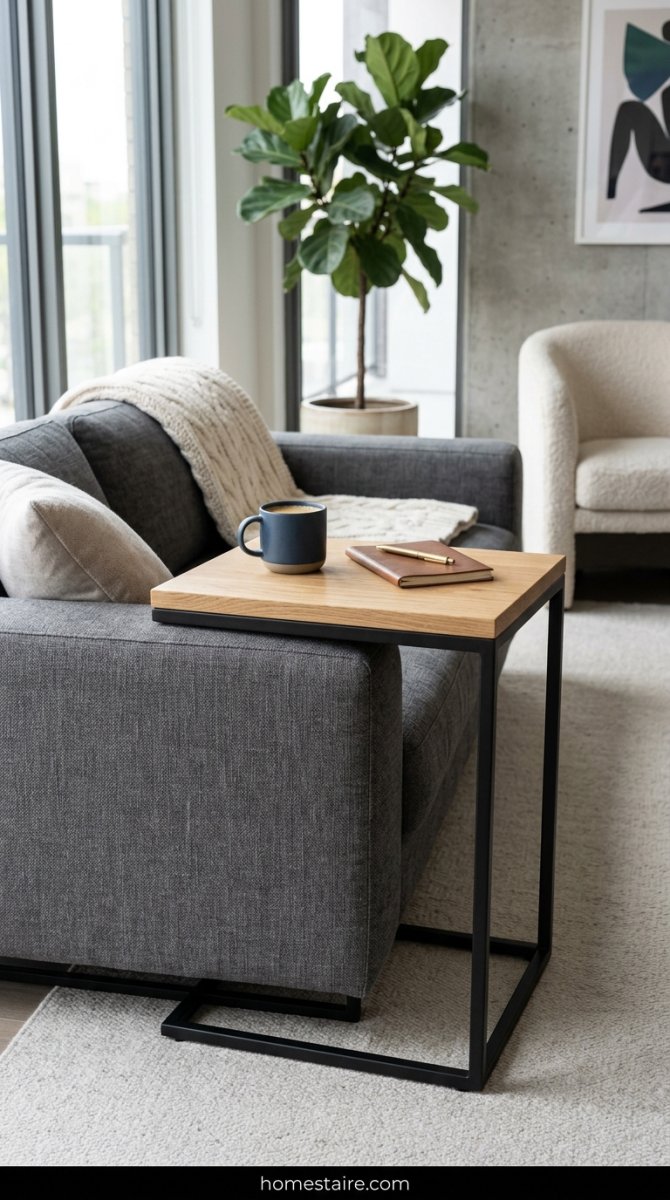
Coffee tables are mostly just junk magnets. I had this heavy wooden one that I constantly tripped over in the dark—a total space hog. I finally sold it on Facebook Marketplace and bought two cheap C-shaped tables that slide right over the sofa cushions.
They are a total game changer.
They take up almost zero floor space. When I’m eating ramen and watching Netflix, the table is right there under my chin. When I’m done, I tuck them against the wall. My floor finally feels empty in a good way.
Turn Your Dead Corners Into a Miniature Home Office
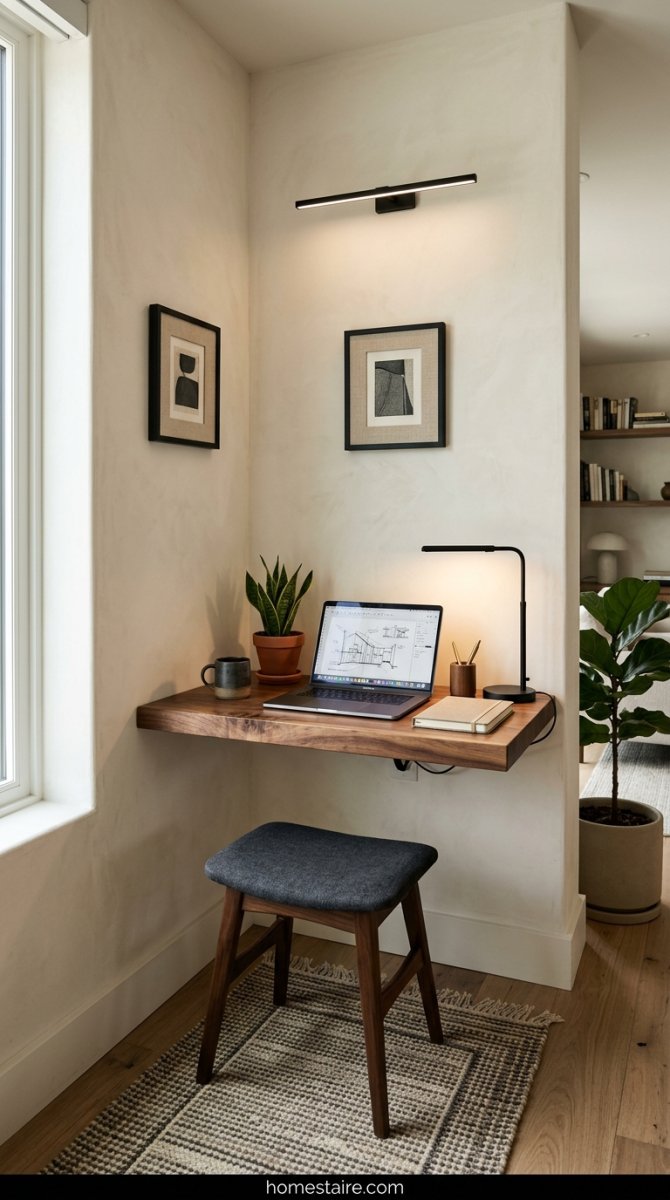
Stop ignoring that weird 30-inch gap behind your sofa or the awkward nook next to the heater. I call these “dead zones.” I jammed a tiny floating shelf into my dead corner and turned it into a makeshift office.
It is cramped.
My elbows hit the walls sometimes, sure. But having a designated “work spot” that isn’t my bed or my kitchen counter saved my productivity. If you have a corner that’s currently just holding a pile of mail, put a stool there and call it a workspace.
Use Mirrors to Trick the Eye into Seeing More Depth
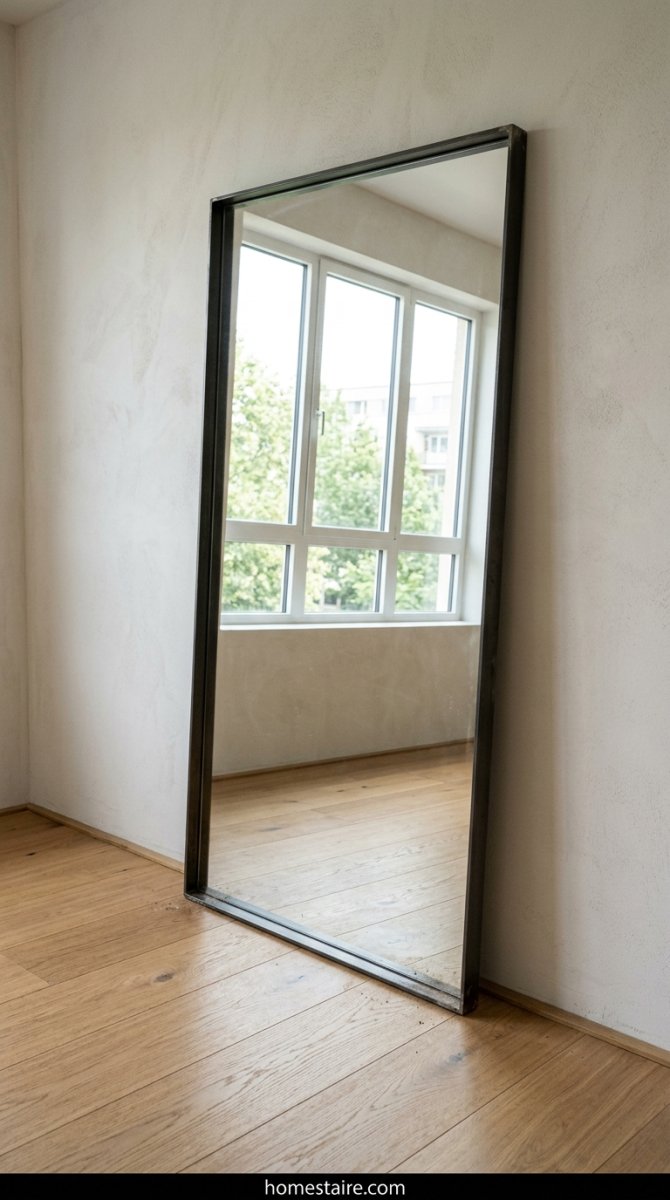
I went to IKEA and bought the biggest floor mirror that would fit in my car. I propped it up right across from my only window. Now, when I’m sitting on the couch, I catch a glimpse of the reflection and for a split second, I think I live in a place with twice the square footage.
It’s a cheap psychological trick.
Don’t bother with those tiny decorative mirrors that look like portholes. They do nothing. You want something massive that reflects the floor and the ceiling at the same time. It makes the wall feel like it’s a doorway into another room instead of just a slab of drywall.
Ditch the Media Console for a Floating Wall Mount
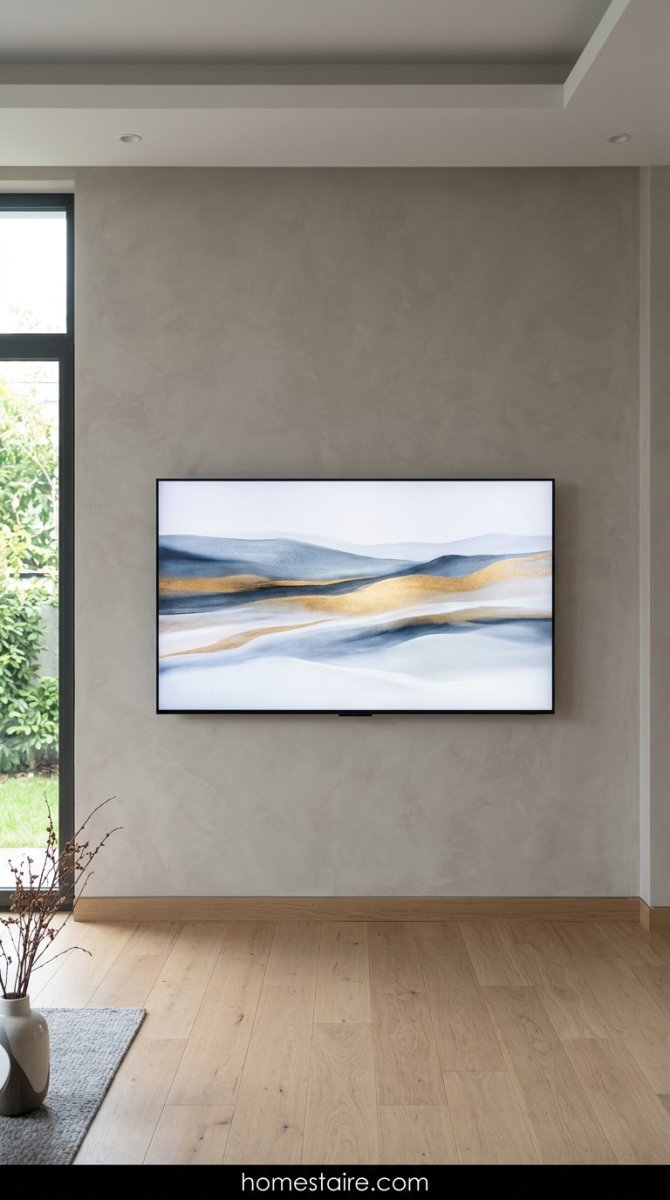
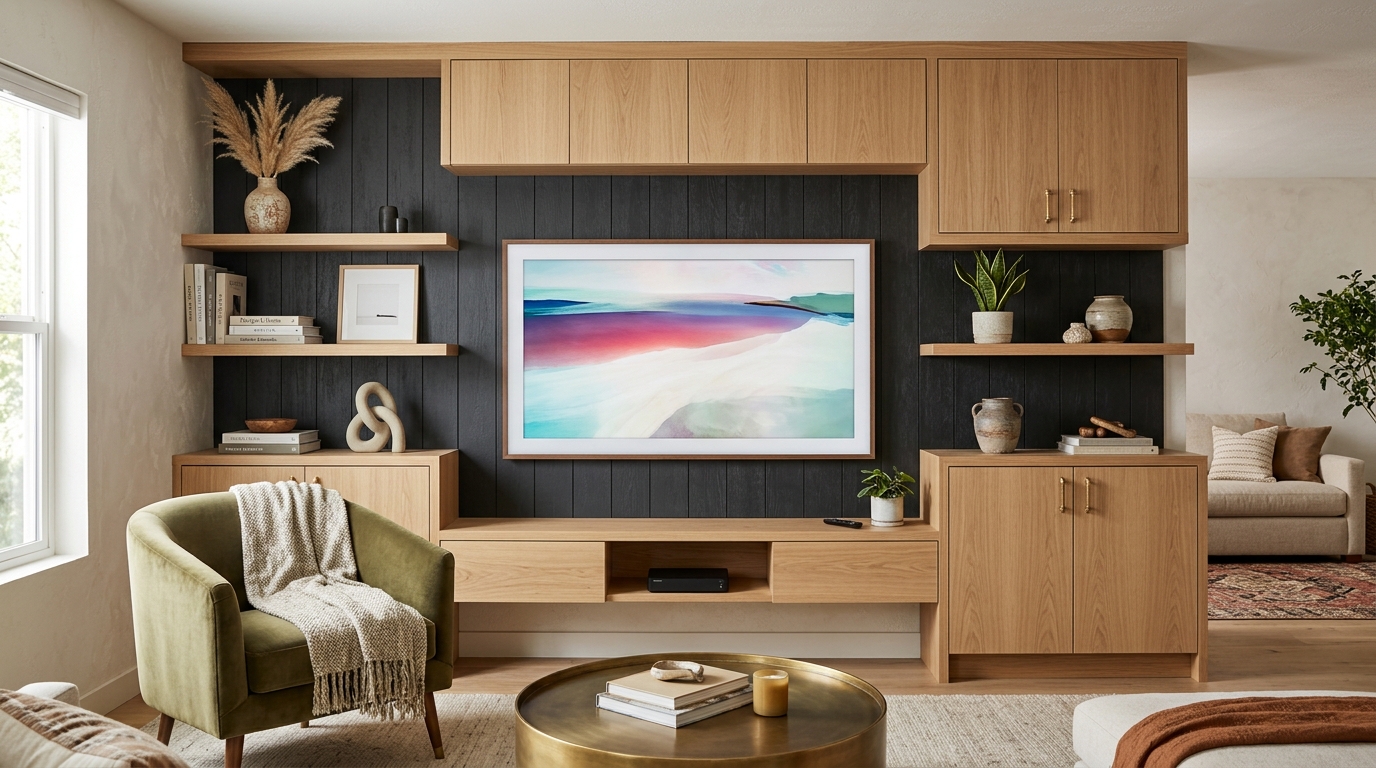
I used to have this clunky IKEA stand that felt like a giant anchor in my tiny room. I swear I hit my shins on its sharp corners at least twice a week—not fun. I finally ripped it out and bolted the TV straight to the wall studs instead.
It looks way better.
When you can see the baseboards under the TV, your brain thinks the room is huge—it’s a total head game. I just hid the messy cords inside a cheap plastic sleeve I painted the same color as my wall. No more dust bunnies hiding in the dark gaps behind a heavy wooden box.
Conclusion
Living in a shoebox shouldn’t feel like a losing game of Tetris. I spent way too many Sunday mornings dragging a heavy velvet sofa across my floorboards just to figure this out. It was honestly exhausting, but these few layout tricks are the only ones that didn’t make me want to move out after a month.
Stop fighting the square footage you have and just work with it. Seriously.
If my apartment can go from a cluttered mess to a place where I can actually breathe—and walk without tripping—yours can too. Just keep the floor visible and get rid of anything that feels like a big, heavy block. It’s really that simple.