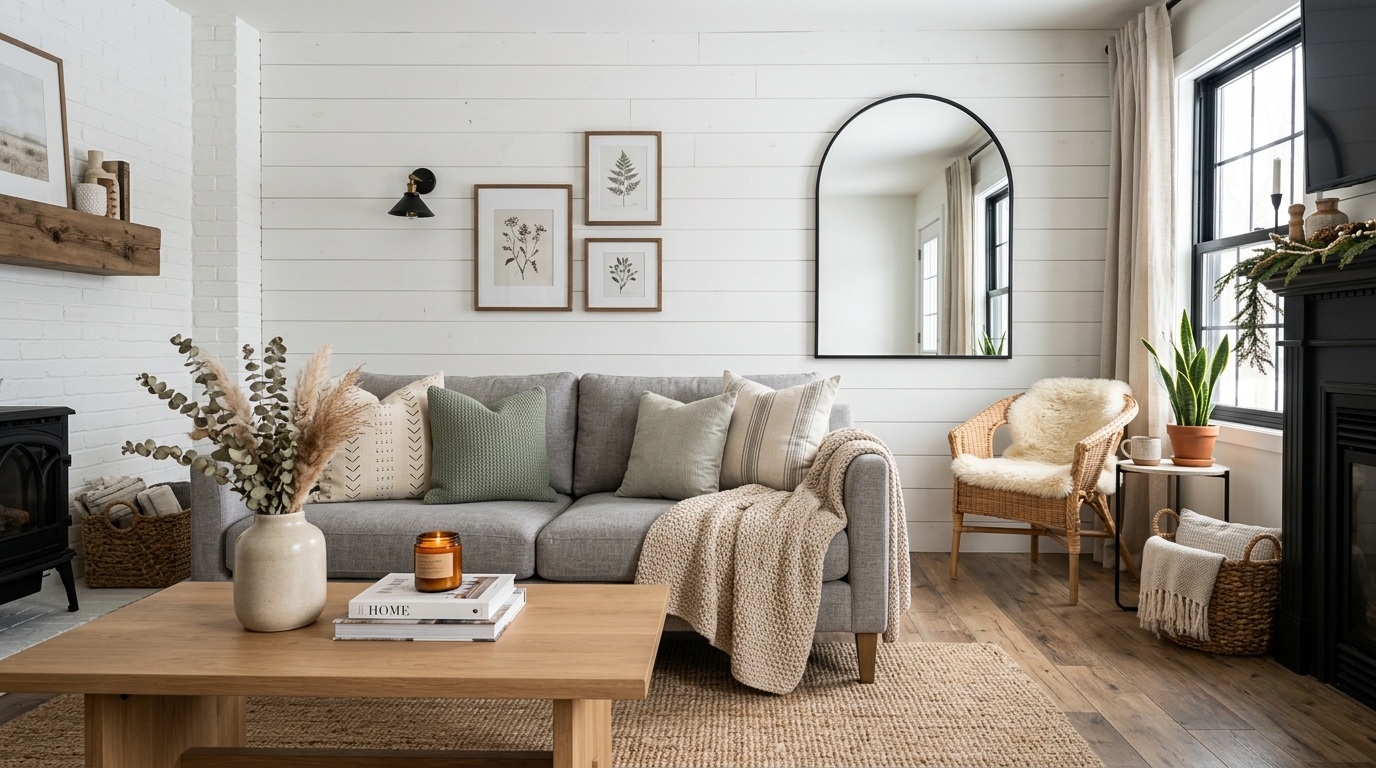
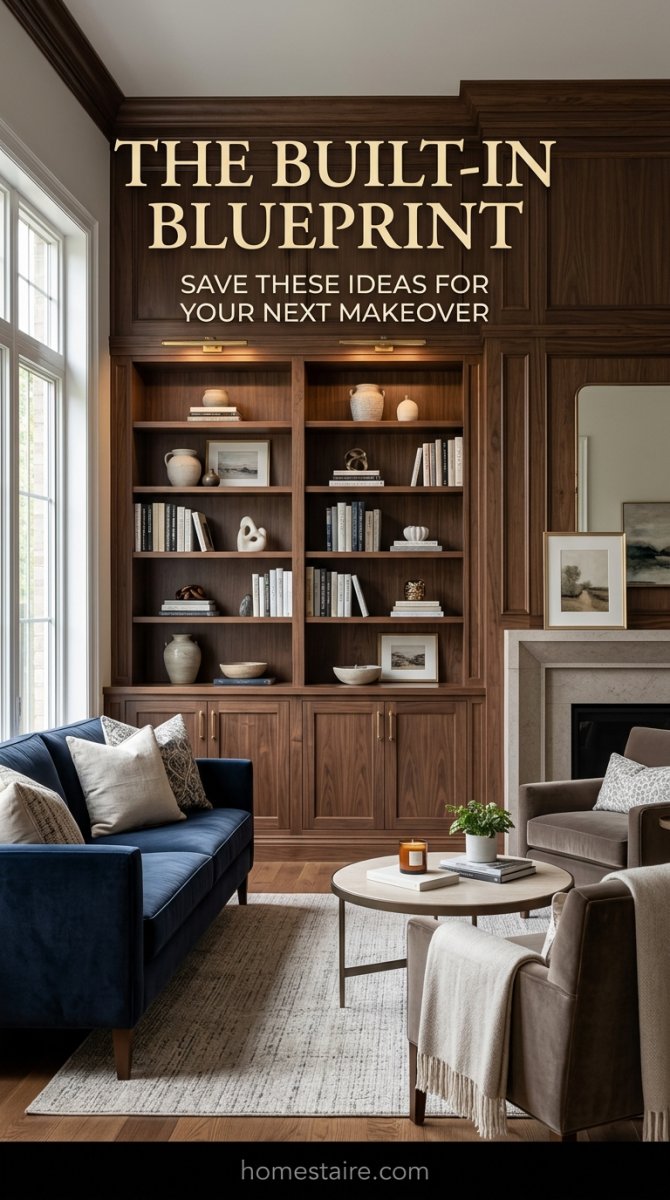
Built-in shelves add storage and architectural character, but plain boxes can look dull. A few design choices, such as color, lighting, and mixed storage, make them look custom.
This guide covers 14 living room built-in shelf ideas, with a planning table and FAQ. It’s based on carpentry and design guidance rather than personal projects, so measure carefully and consult a carpenter for structural details.
1. Paint them a deep color
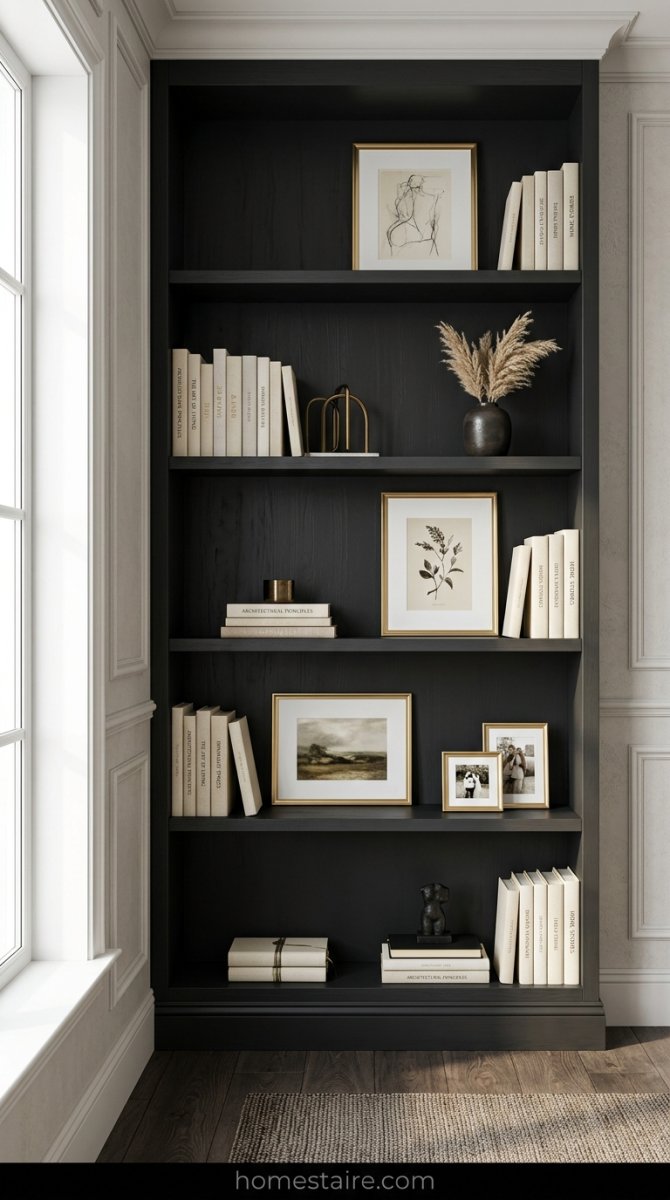
Charcoal, navy, or deep green makes built-ins feel rich and makes objects stand out.
Use a durable enamel.
2. Add arched openings
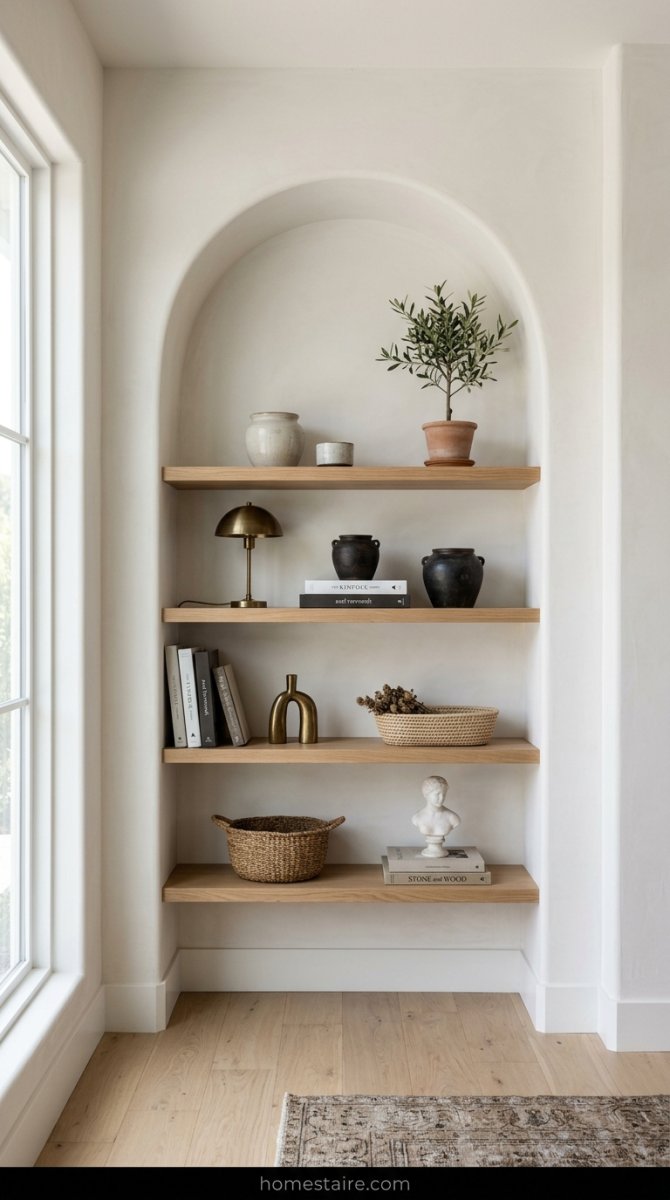
Arches soften the straight lines of shelving and add character.
They take more carpentry skill, so budget for it.
3. Use floating shelves

Floating shelves look clean and modern and are simpler than a full unit.
Mount into studs and check the load rating.
4. Add integrated LED lighting
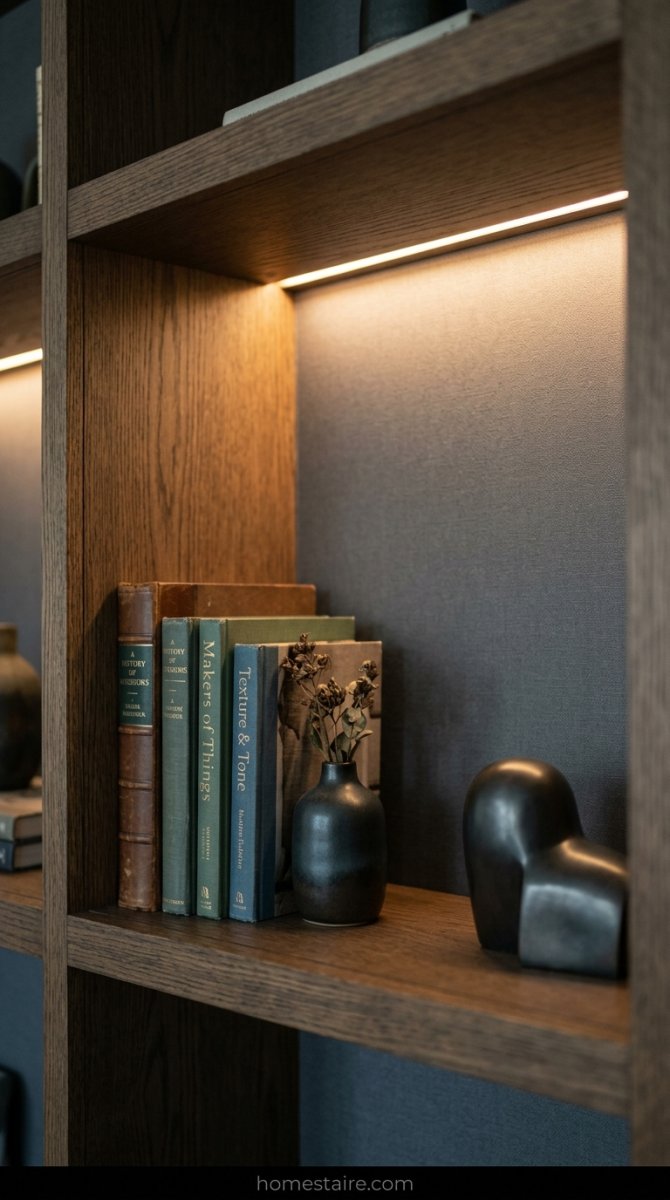
LED strips inside the shelves highlight displays and make them look custom.
Use warm strips with a diffuser and plan wiring.
5. Wallpaper the backs

Pattern or color on the back panels adds depth.
Peel-and-stick is an easy option.
6. Try asymmetry

Varying shelf heights and widths looks less stiff than a grid.
Plan sizes for what you’ll store.
7. Go floor to ceiling
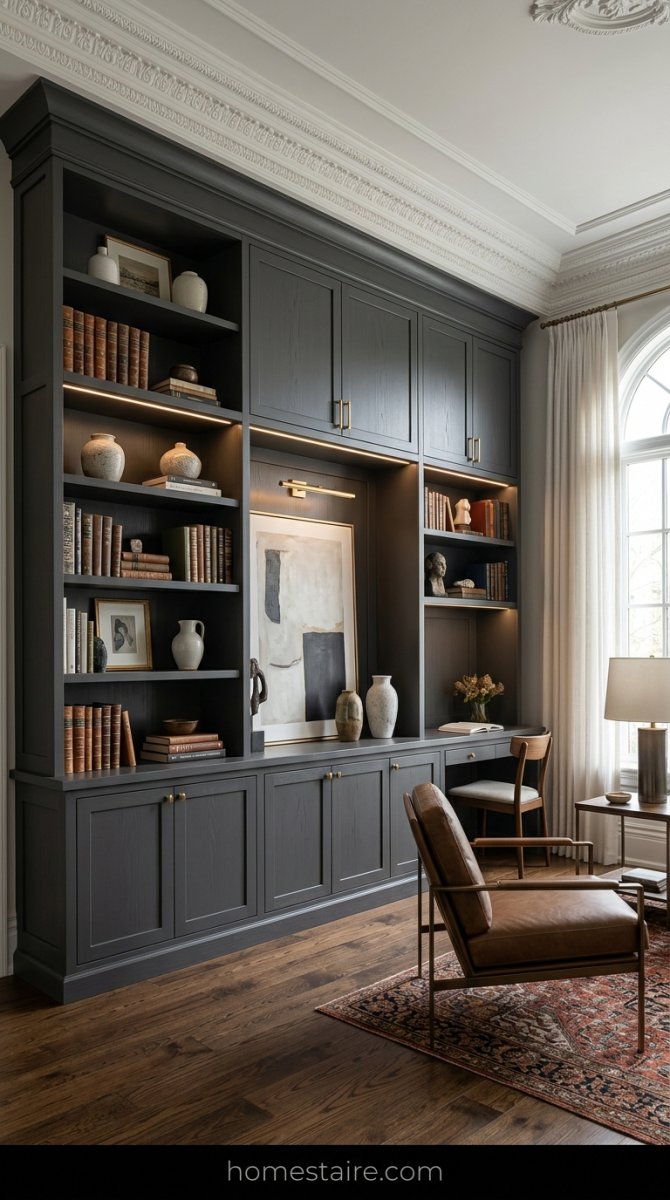
Full-height units add storage and make the room look taller.
Anchor them to the wall.
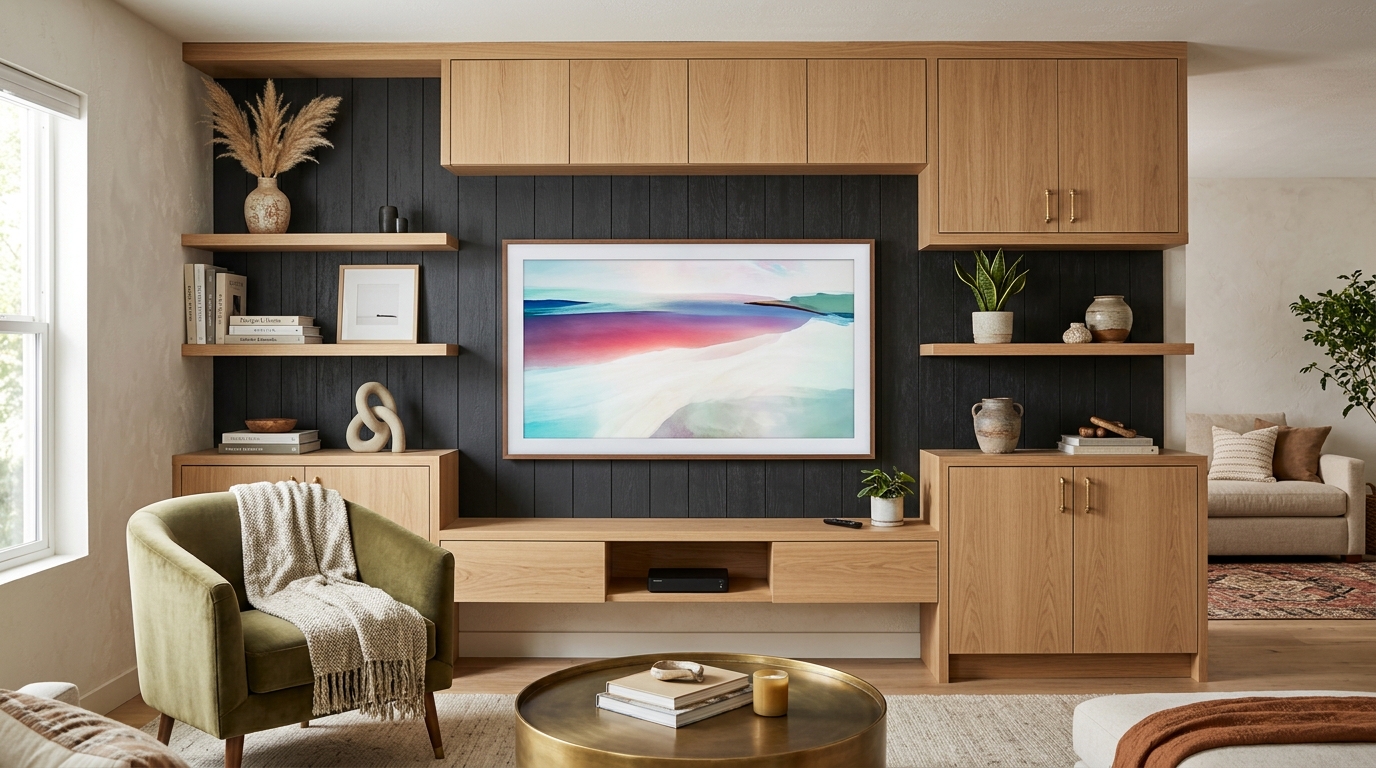
8. Integrate the TV
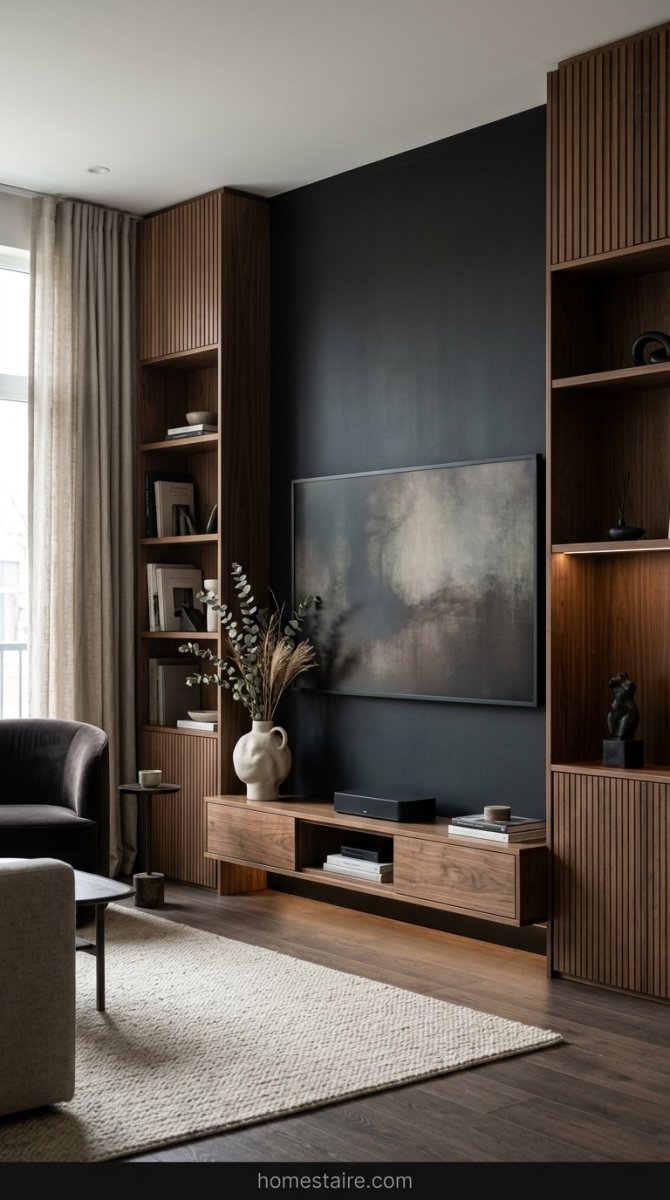
A TV set into shelves blends in, especially with a dark finish.
Allow ventilation and cable routing.
9. Add a library ladder
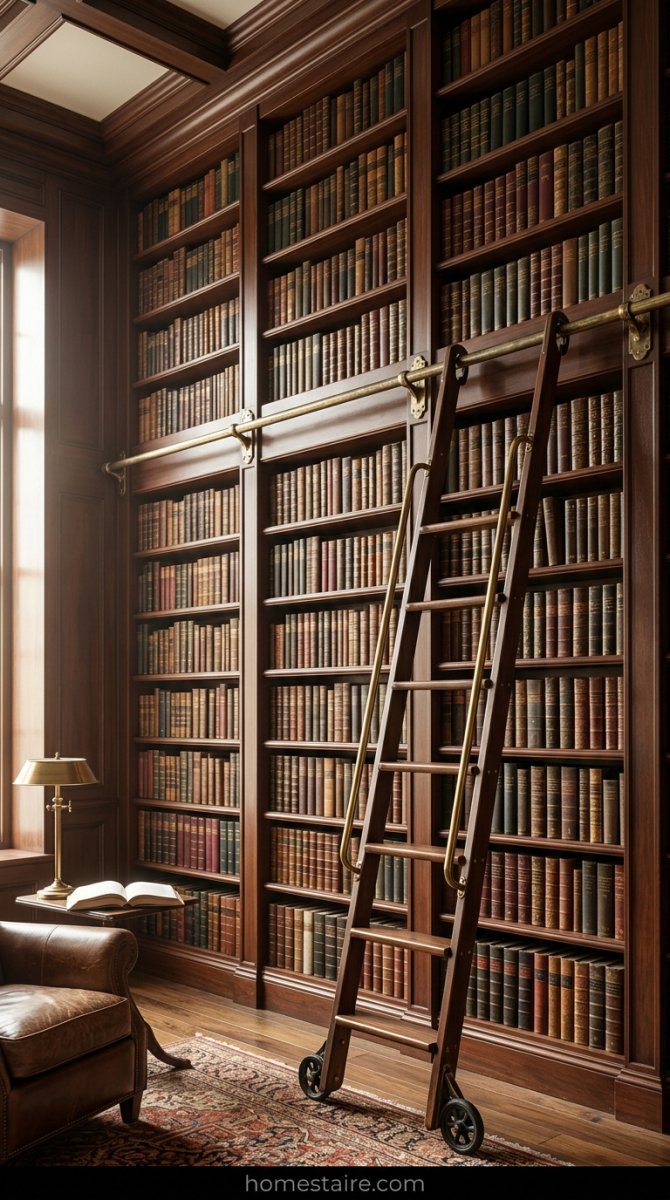
A rolling ladder gives access to high shelves and looks like a library.
Use proper rails and safety hardware.
10. Mix raw wood with painted frames
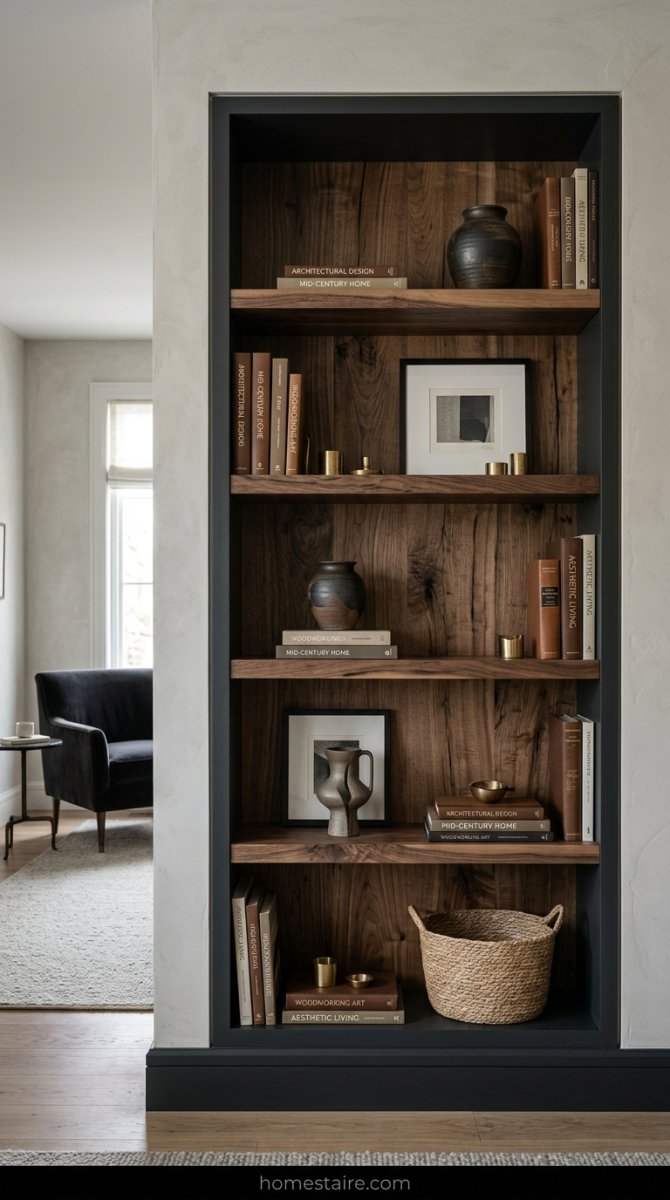
Painted frames with wooden shelves create contrast and warmth.
Seal the wood.
11. Include a hidden bar
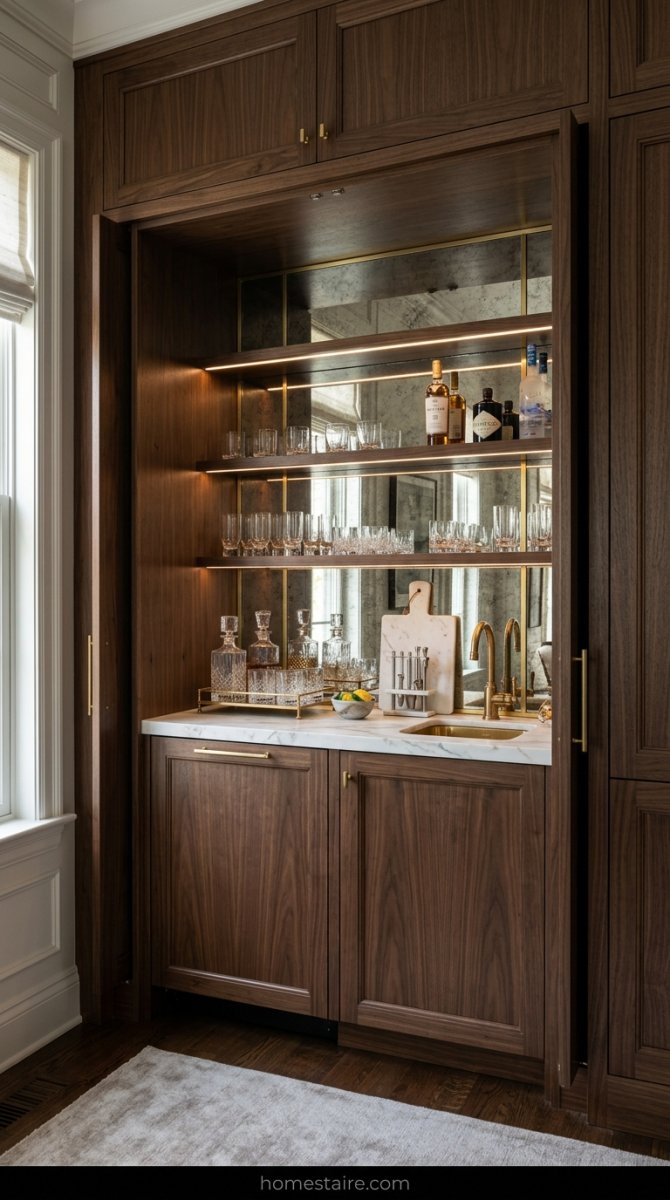
A fold-down or cabinet bar hides bottles and glasses.
Plan outlets and surfaces for spills.
12. Use brass hardware
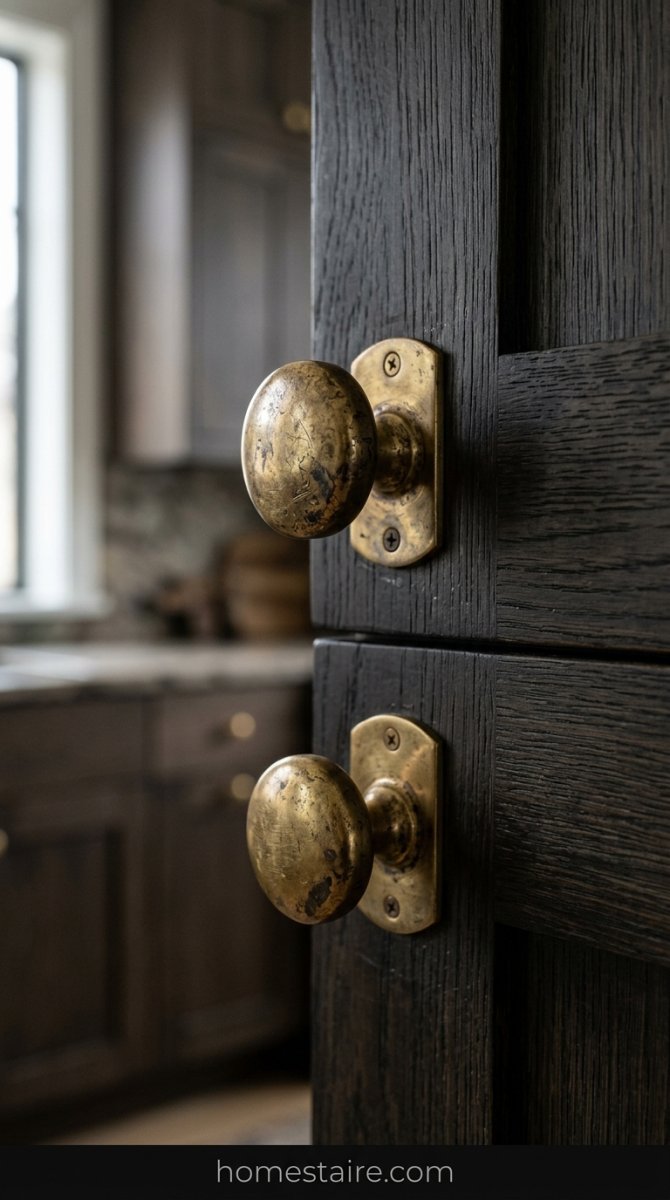
Brass knobs add warmth and visual weight to cabinet doors.
Keep finishes consistent.
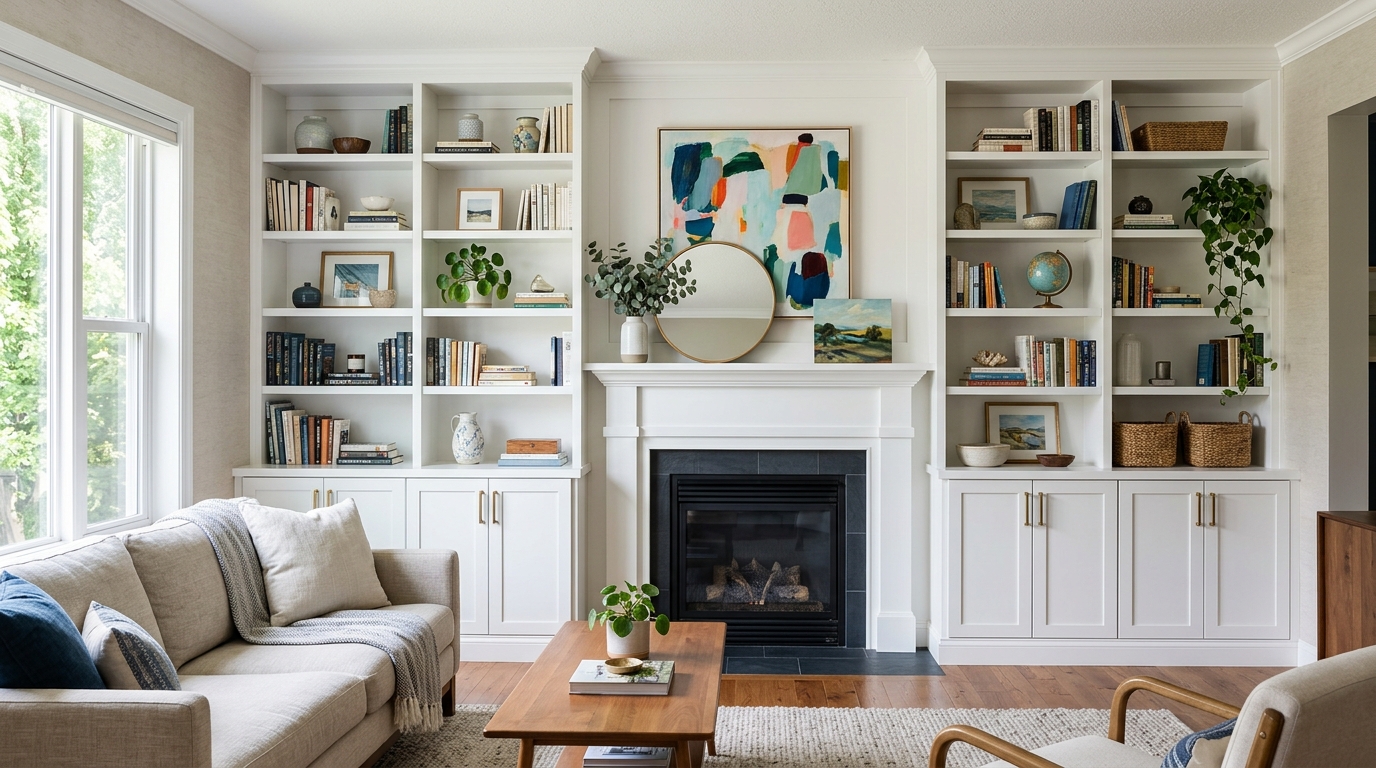
13. Mix cabinets and open shelves

Closed cabinets below hide clutter, and open shelves above display items.
Place heavy items in the lower cabinets.
14. Frame a window with shelves
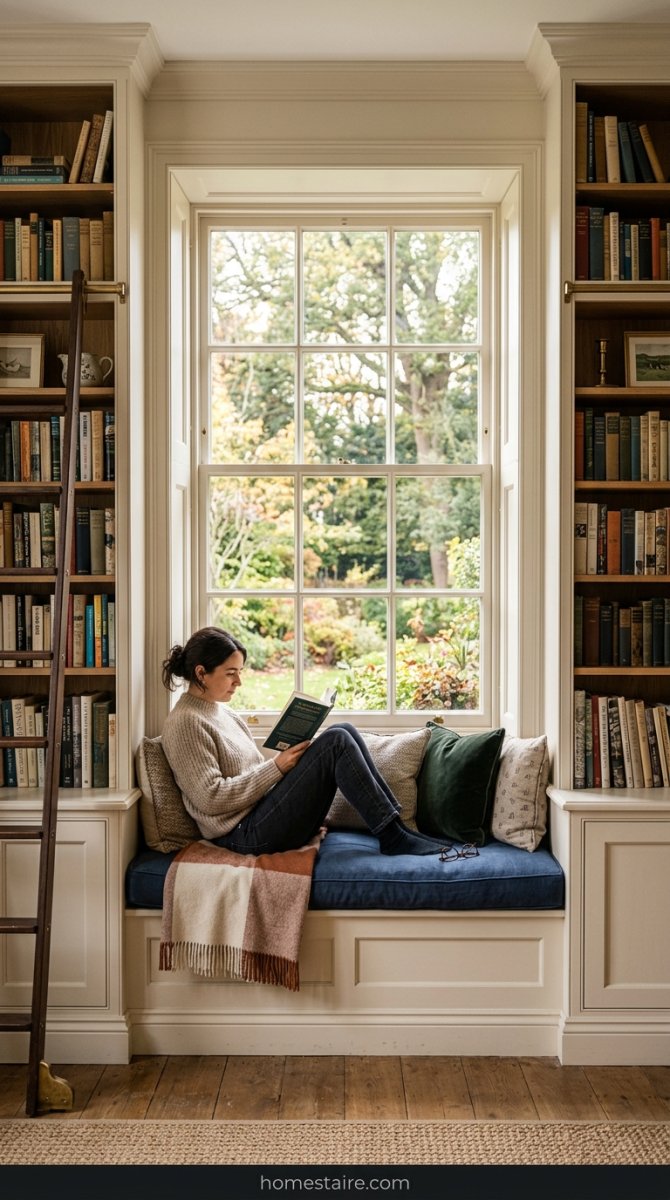
Shelves on either side of a window make a built-in feel and add storage.
Keep the window clear for light.
Bonus: slim ledges for tiny rooms
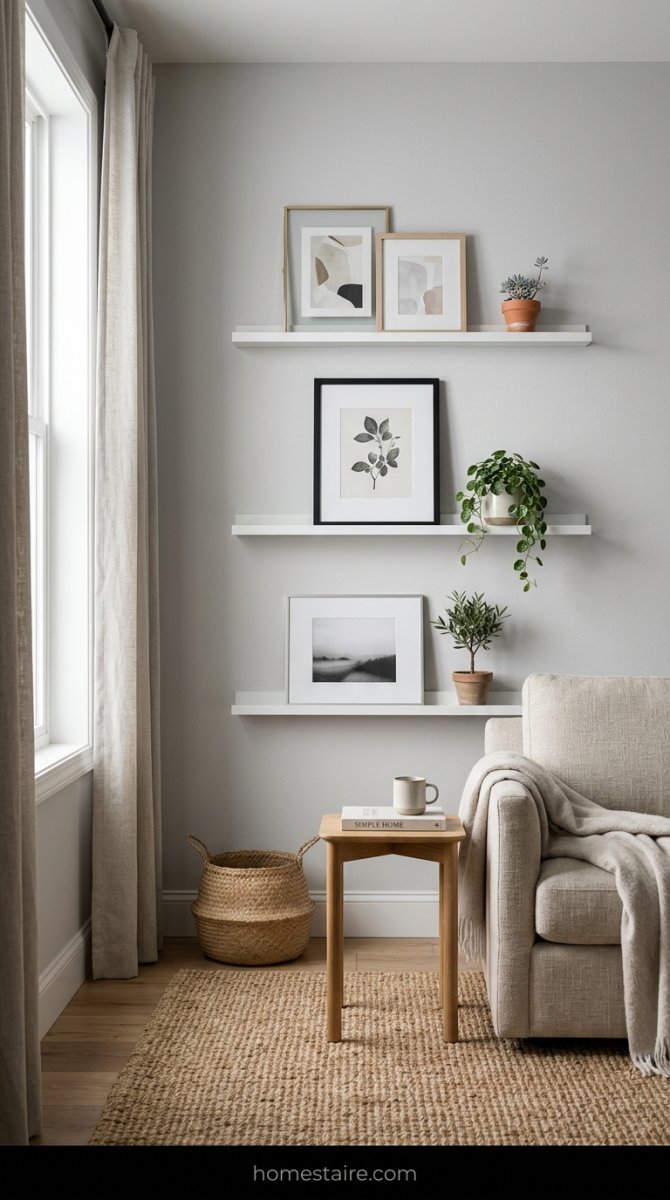
Slim picture ledges add display space without depth.
They suit small rooms.
Planning built-ins
| Decision | Consider |
|---|---|
| Depth | 10 to 14 inches for books, deeper for storage |
| Shelf span | Keep spans short to avoid sagging |
| Material | Plywood and MDF are common; solid wood costs more |
| Lighting | Plan wiring early |
| Anchoring | Fasten to wall studs |
A styling formula for shelves
Style shelves in layers. Start with the largest items, such as books stacked horizontally and vertically, then add objects of different heights, such as a vase, a small framed print, and a plant. Group items in odd numbers, and repeat a color or material across shelves so the display feels cohesive.
Leave a third or more of each shelf open so it doesn’t look crowded, and mix closed storage, such as baskets and boxes, with open display. Lighting inside the shelves makes the display more appealing.
Common mistakes
Building shelves too deep wastes space, while shelves that are too long can sag, so keep spans short or add supports. Forgetting to plan outlets and lighting makes changes harder later. Ignoring baseboards and crown molding can make the built-ins look tacked on, so integrate trim. And filling every shelf makes the unit feel heavy, so leave space.
Built-in shelves FAQ
How much do built-ins cost? It varies widely with materials, size, and labor, so get quotes.
Can I DIY built-ins? Simple versions, yes, using stock cabinets and trim. Complex ones are best left to a carpenter.
How do I style shelves? Mix books, objects, and plants, and leave empty space.
Conclusion
Built-ins look custom when they have a deliberate color, lighting, and a mix of open and closed storage. Plan measurements and anchoring carefully, and style them with restraint.