Why sage green works in a bathroom
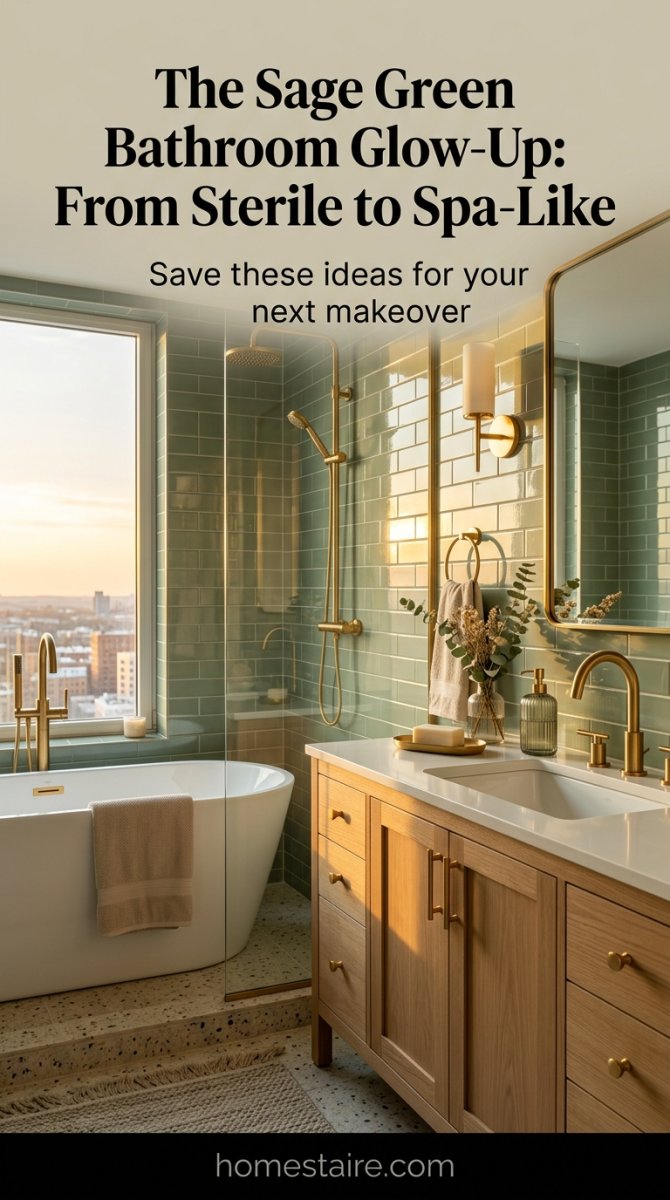
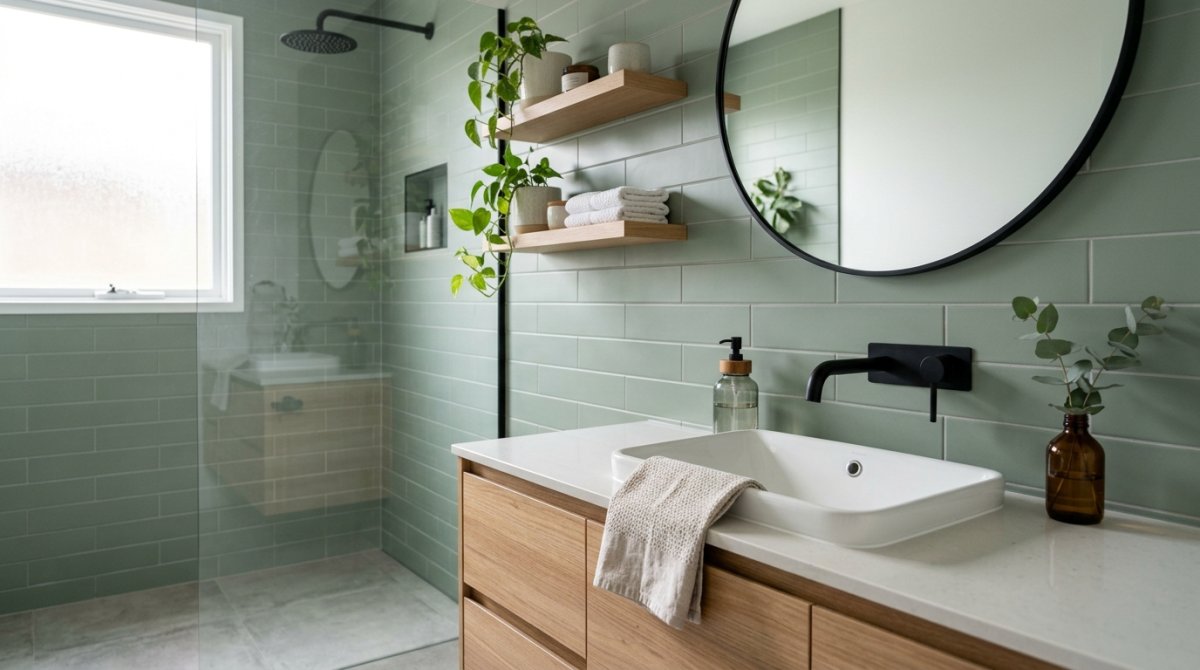
Sage green softens a stark white bathroom and feels natural and calm. But shade, finish, grout, and lighting all affect how it looks, and a poor choice can read muddy or gray.
This guide covers 10 tips for a sage green bathroom, with a pairing table and FAQ. It’s based on color and tile guidance rather than a personal remodel, so test samples in your own light and get quotes before committing.
1. Choose the right shade
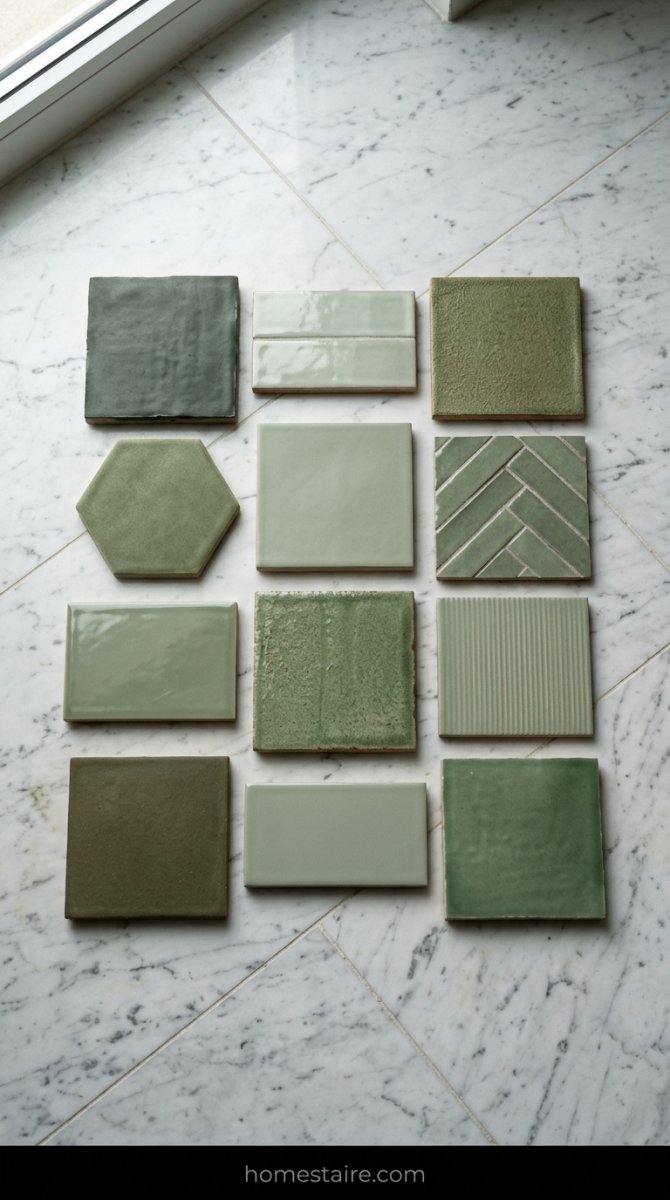
Sage greens vary from gray to yellow. Test large samples to avoid a pea-soup look.
View them in daylight and evening light.
2. Matte or glossy tile
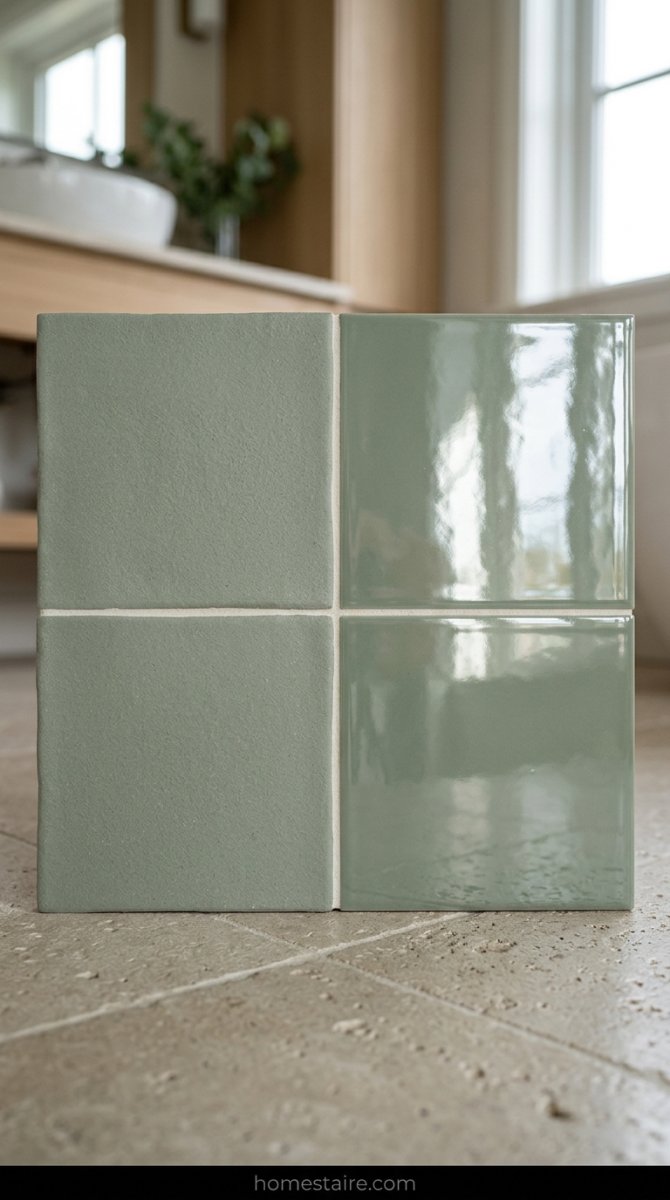
Glossy tile reflects light and brightens a small room. Matte tile feels softer and hides water spots.
Choose a slip-resistant finish for floors.
3. Pick the grout color carefully
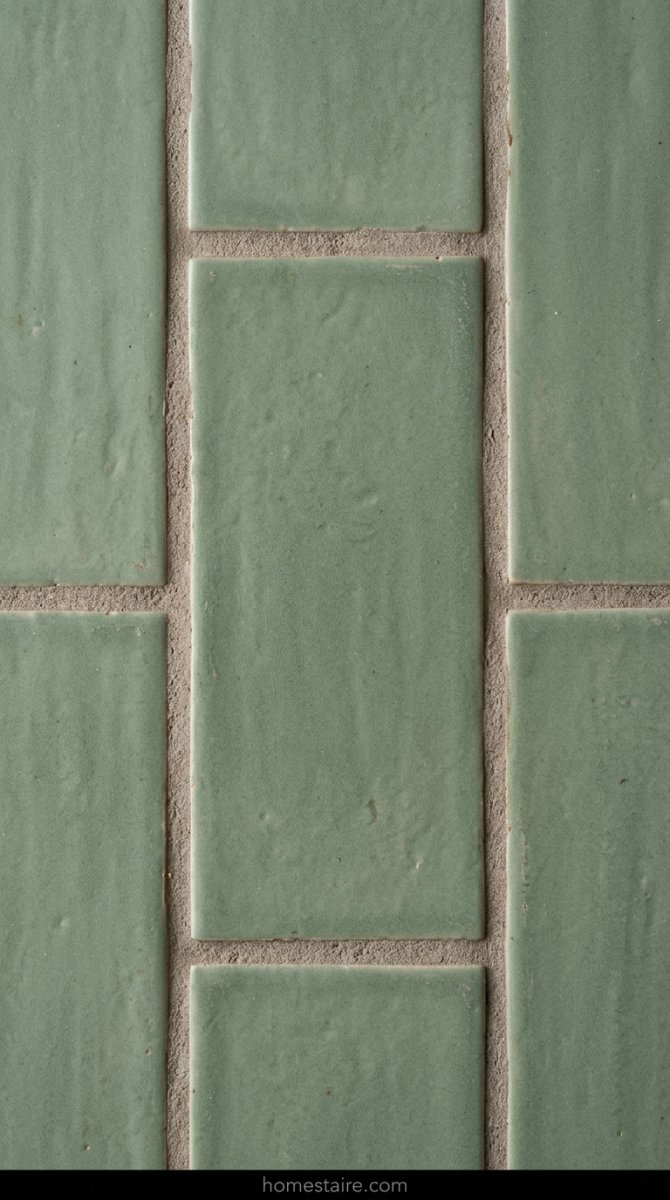
Grout can blend in or outline each tile. A close tone looks calm, while white grout looks graphic.
Test a sample board.
4. Pair with brass
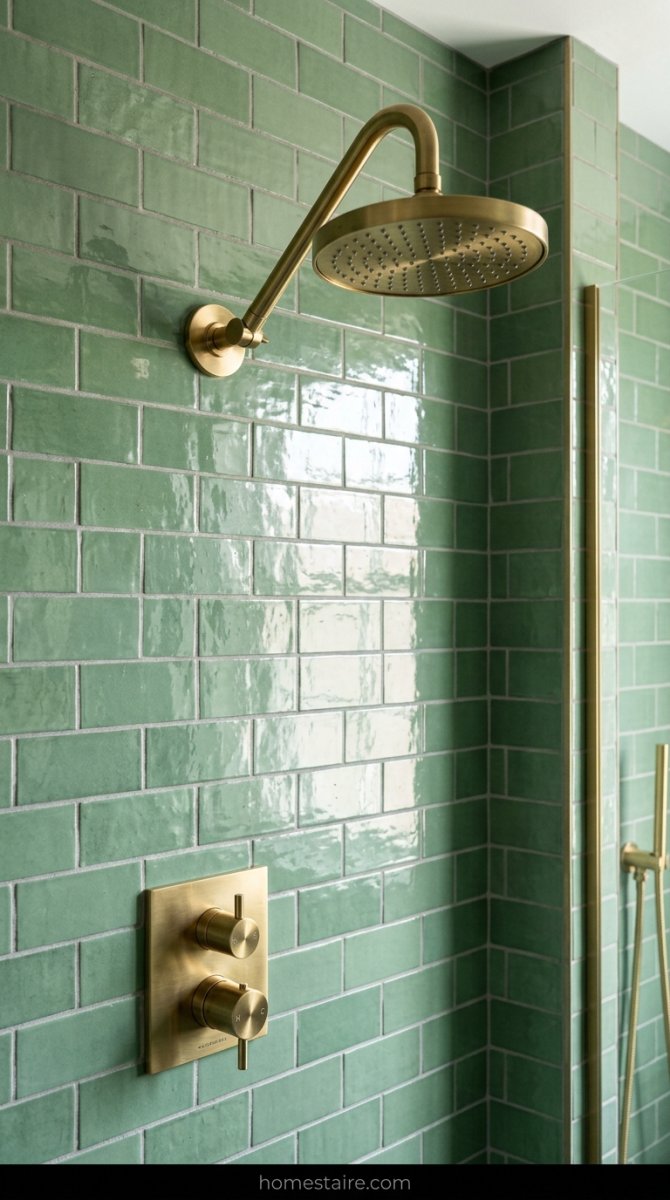
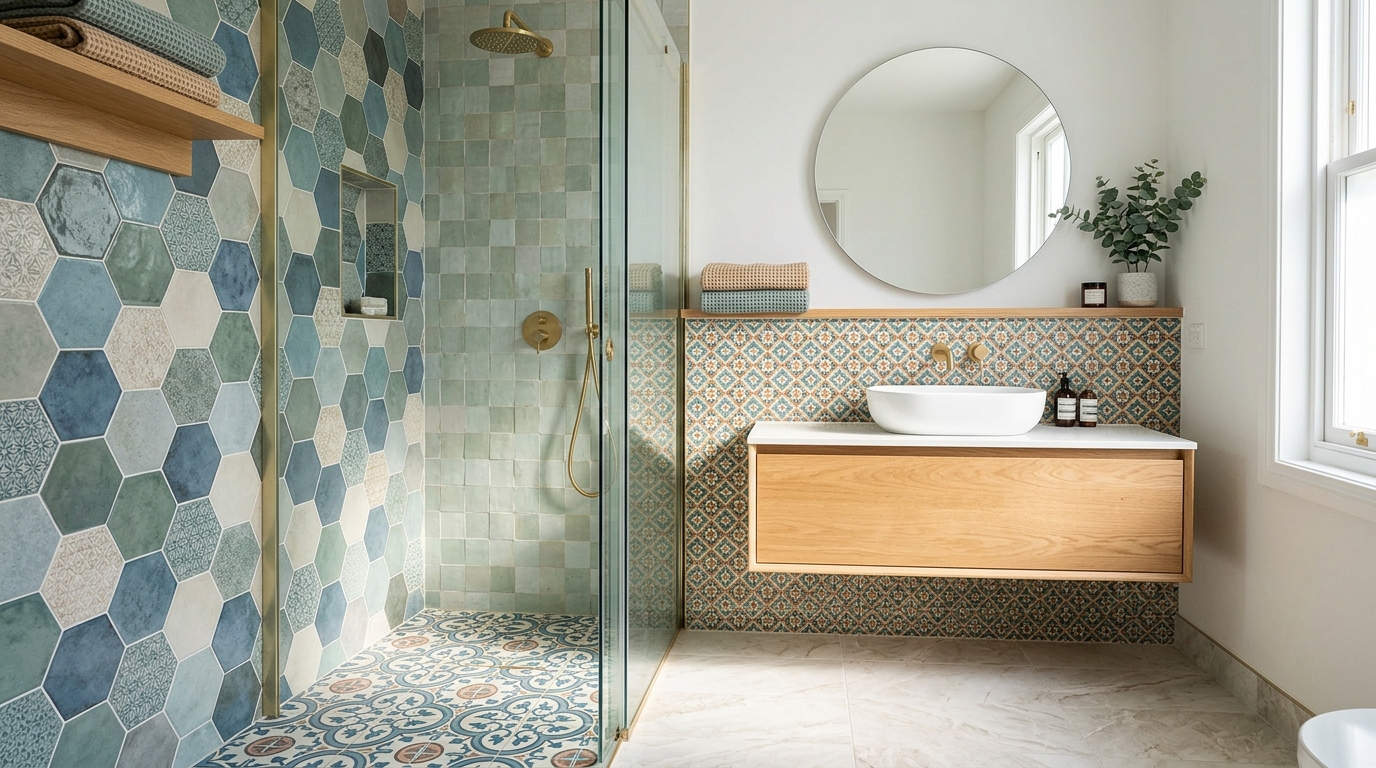
Brass fixtures look warm against sage tile.
Keep the finish consistent.
5. Check the lighting
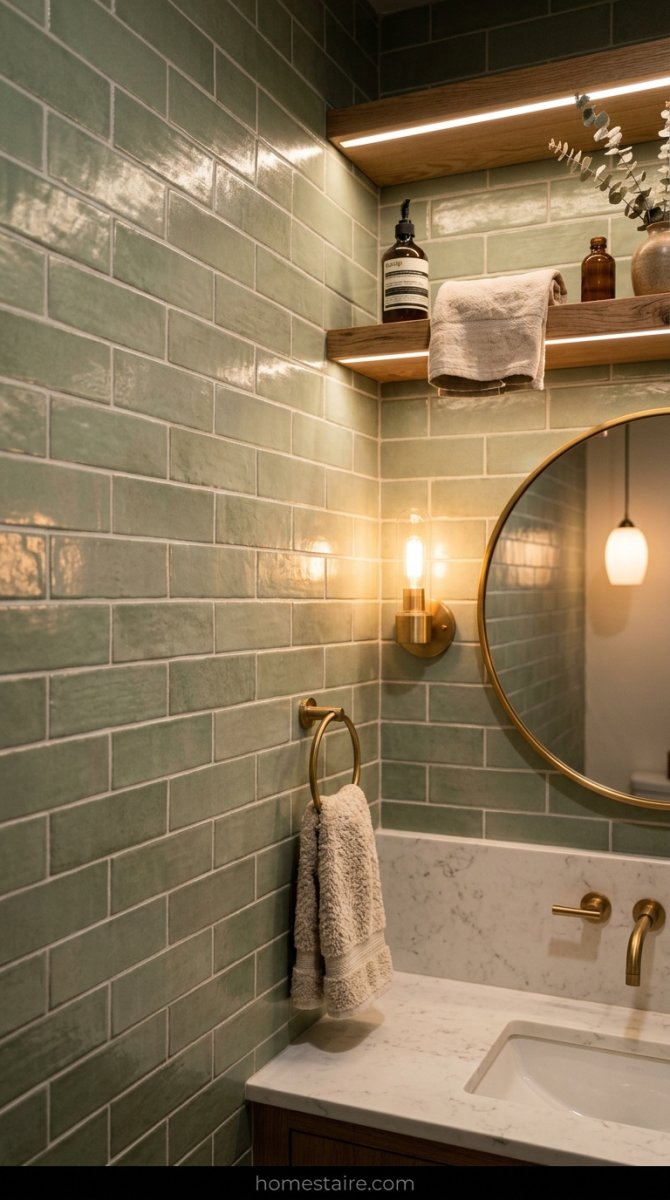
Cool 5000K bulbs can make green look gray or muddy. Warm to neutral bulbs show sage better.
Choose bulbs with a high color rendering index.
6. Add wood accents
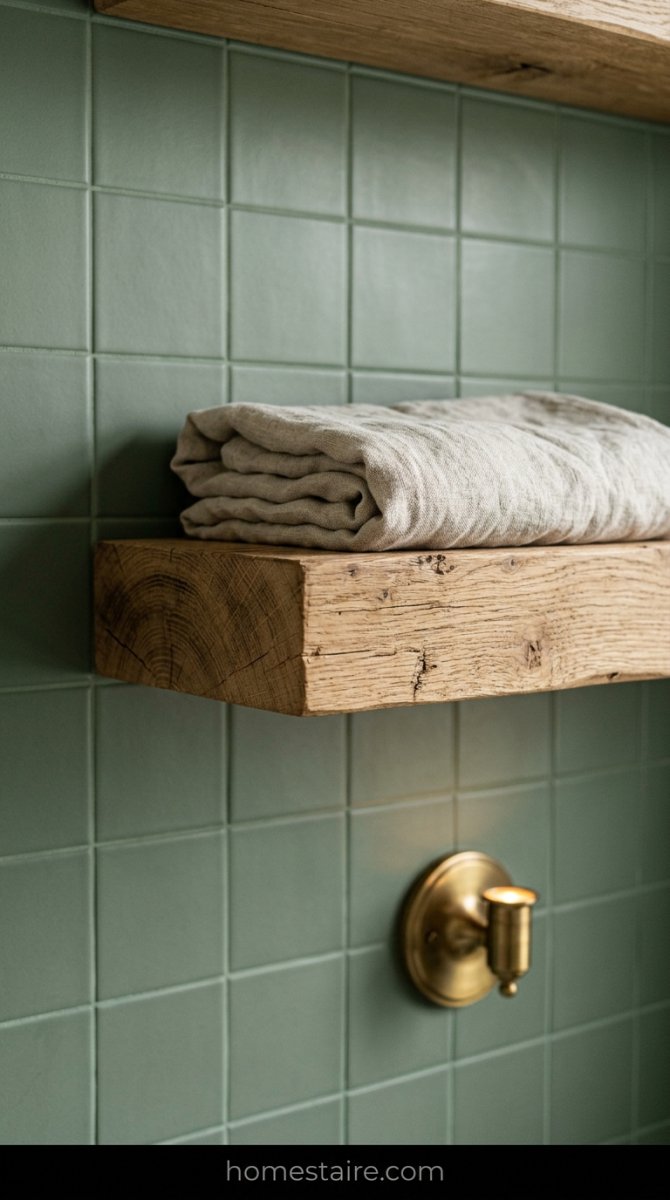
Wood warms the room and balances the cool tile.
Use sealed, moisture-resistant wood.
7. Think about maintenance
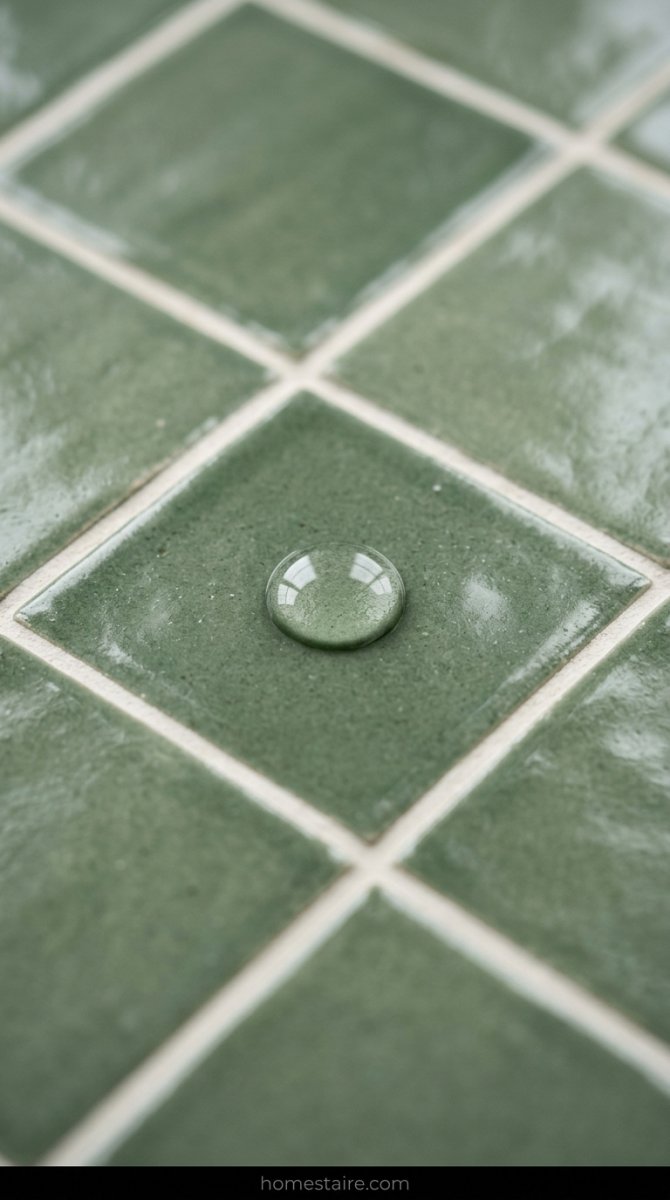
Mid-tone colors hide dirt better than white, though water spots and soap scum still show on glossy tile.
Wipe regularly and ventilate.
8. Plan the budget

Tile, labor, waterproofing, and fixtures all add up. Get several quotes and include a contingency.
Paint or peel-and-stick alternatives cost less but last shorter.
9. Think about trends
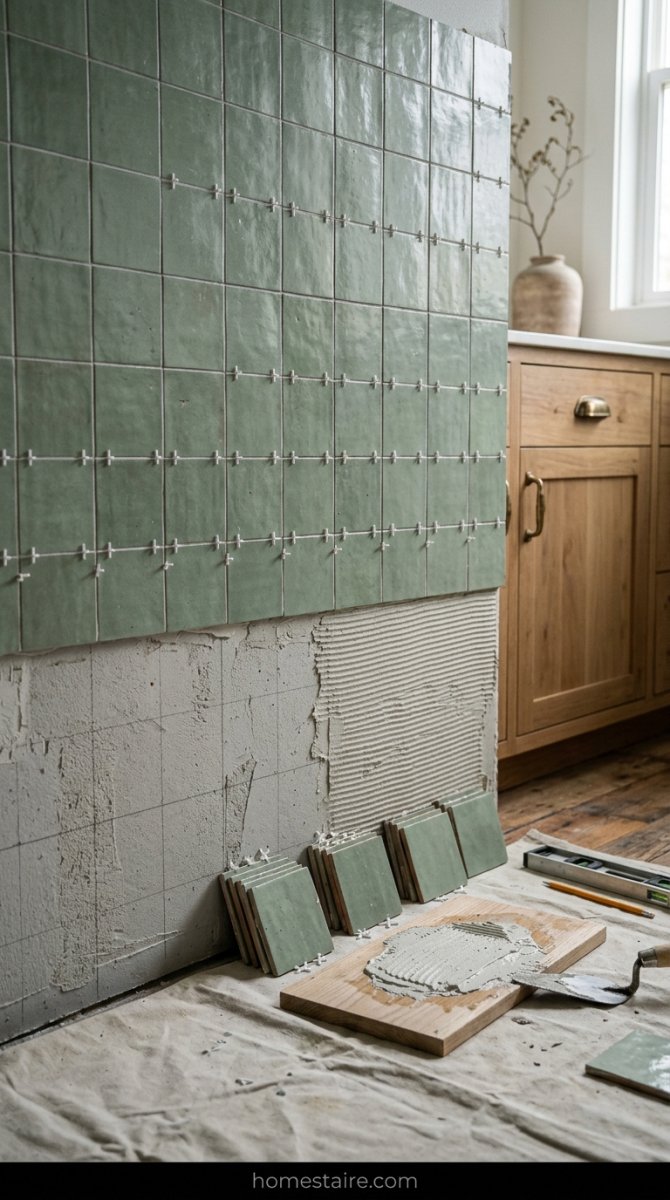
Colors go in and out of fashion. A muted sage with timeless fixtures lasts longer than a bright, trendy shade.
Use color in tile or paint you can change.
10. Think about how it feels
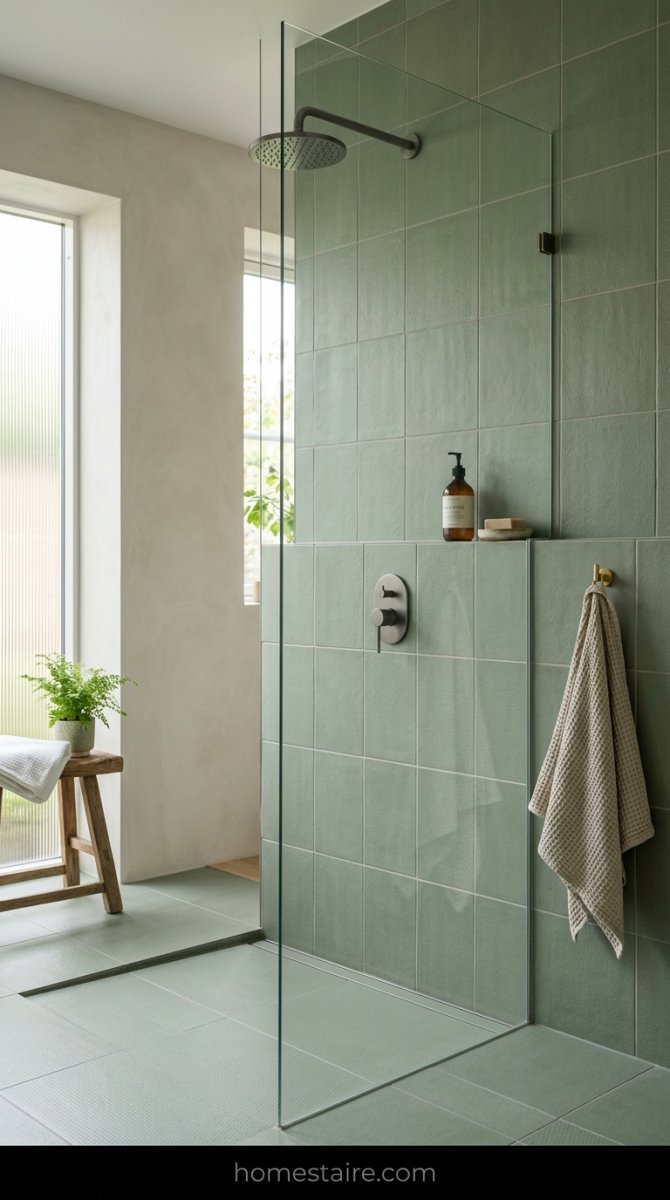
Many people find green calming, but reactions vary. Choose a color you enjoy waking up to.
Live with samples for a few days.
Sage green pairings
| Pair with | Effect |
|---|---|
| White or cream | Fresh, bright |
| Brass | Warm and classic |
| Natural wood | Earthy |
| Black fixtures | Modern contrast |
| Terracotta | Warm accent |
Tile size and finish options
Small tiles, such as 2×2-inch squares or hexagons, add pattern but have more grout to clean. Medium tiles, such as 3×6-inch rectangles or 4×4-inch squares, are classic and easy to install. Large-format tiles have fewer grout lines and feel modern. Handmade or crackled glaze adds character but may vary in color and size.
Glossy finishes bounce light and brighten a small bathroom, while matte finishes feel softer and hide water spots. For floors, choose a tile with a suitable slip rating, and for walls, choose what’s easiest to clean.
Lighting that shows sage correctly
Light changes how sage looks. Cool, bluish bulbs can make it look gray or muddy, while warm bulbs make it feel soft and natural. Choose bulbs around 2700K to 3000K with a high color rendering index, and put light at face level on both sides of the mirror so the color looks consistent.
Sage green bathroom FAQ
What grout goes with sage green tile? A close tone for a calm look, or white for contrast.
Does sage green suit a small bathroom? Yes, with good lighting and lighter accents.
Can I paint instead of tile? Yes, with moisture-resistant paint, though tile lasts longer in wet areas.
Conclusion

A sage green bathroom works with the right shade, grout, and lighting. Test samples in your light and choose finishes that suit how you use the room.