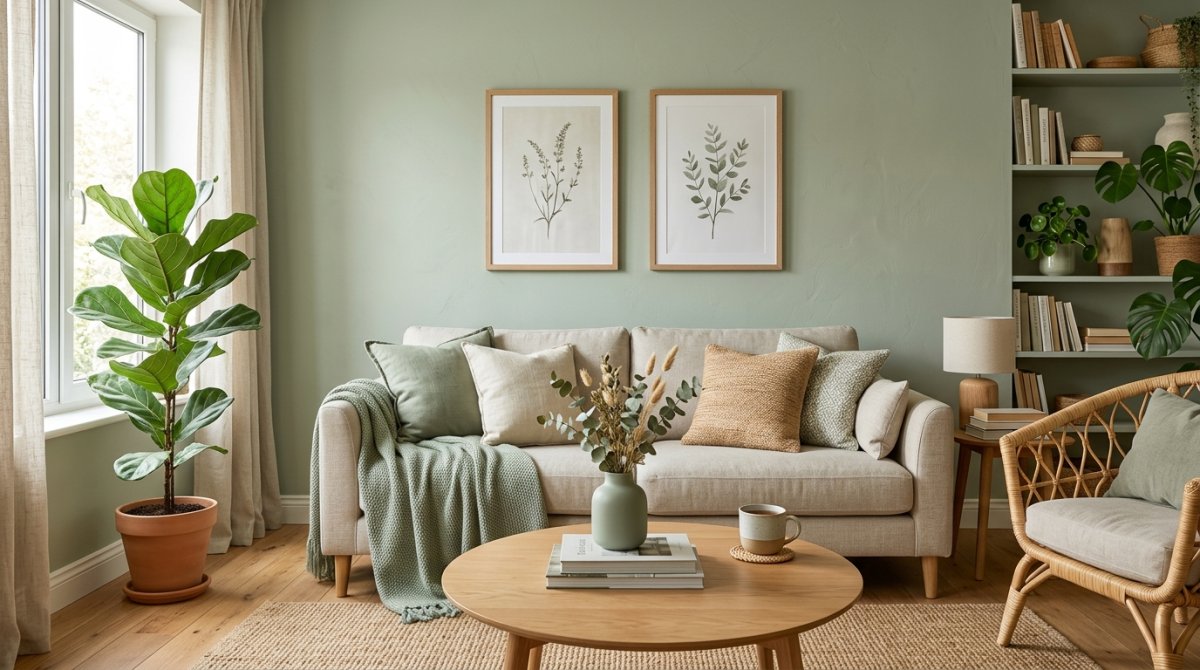
Sage green is a calm, natural color that suits living rooms, but it can look minty, gray, or flat if the undertone and finishes are off. A few careful choices make it look sophisticated.
This guide covers 10 tips for using sage green in a living room, with a pairing table and FAQ. It’s based on color and design guidance rather than a personal repaint, so test samples in your own light.
1. Avoid a minty sage
Sages with too much blue-green can look minty or cold. A gray-leaning sage reads as calmer and more natural.
Sample large boards on different walls.
2. Check the undertone
Undertones, such as yellow, gray, or blue, change with light and surroundings. Compare your sage against your sofa, floor, and trim.
View it in morning, afternoon, and evening light.
3. Add texture
Linen, wool, bouclé, and woven baskets keep a muted color from looking flat.
Vary the scale and weave.
4. Pair with dark wood
Walnut and other dark woods add depth and make sage look richer.
Mix with lighter woods so the room isn’t too heavy.
5. Choose warm metals
Brass and gold look warm against sage, while cool silver can look flat.
Keep finishes consistent.
6. Add black accents
Black frames, lamp bases, or hardware add definition.
Use them in small amounts.
7. Choose the rug carefully
A neutral, textured rug, such as jute or wool in cream or oatmeal, works well. Strong patterns can compete.
Make sure the rug’s undertone matches the green.
8. Consider a green sofa
A sage or olive velvet sofa is a bold choice. It works best in a room with neutral walls.
Velvet shows marks, so check the fabric’s durability.
9. Watch the light
Sage changes through the day. North-facing rooms look cooler and grayer, and south-facing rooms look warmer.
Choose warm bulbs for evening.
10. Consider painting the trim
Painting trim and walls the same sage, called color drenching, makes a room feel enveloping and modern.
Use a semi-gloss or satin finish on trim.
Sage green pairings
| Pair with | Effect |
|---|---|
| Cream or off-white | Fresh and light |
| Dark wood | Rich and grounded |
| Brass or gold | Warm and classic |
| Black accents | Modern definition |
| Terracotta | Warm contrast |
Where to use sage green
You don’t have to paint every wall. Sage works well on all four walls for a calm, enveloping feel, on a single accent wall behind the sofa, on built-in shelving or cabinetry, or in smaller touches such as pillows, a throw, a vase, or a framed print. If you’re unsure, start with textiles and accessories, then paint once you’re confident in the shade.
Sage also pairs well with other muted colors. Terracotta, mustard, soft pink, and warm cream give a natural palette, while navy or charcoal makes it more formal.
Common mistakes
Choosing a shade from a tiny swatch is the most common one, since sage changes a lot with light. Using cool bulbs can make it look gray. Matching everything in green can make the room flat, so vary the tones and add texture. Finally, forgetting the floor and large furniture can cause clashes, so compare your sample against the sofa and rug before buying paint.
Sage green living room FAQ
What colors go with sage green? Cream, white, terracotta, warm wood, brass, and black.
Is sage green good for a small living room? Yes, as long as the shade is light enough and the room has good lighting.
What finish should I use? Matte or eggshell on walls, and satin or semi-gloss on trim.
Conclusion
Sage green works best with the right undertone, texture, and warm accents. Test samples in your light and layer the room with natural materials.