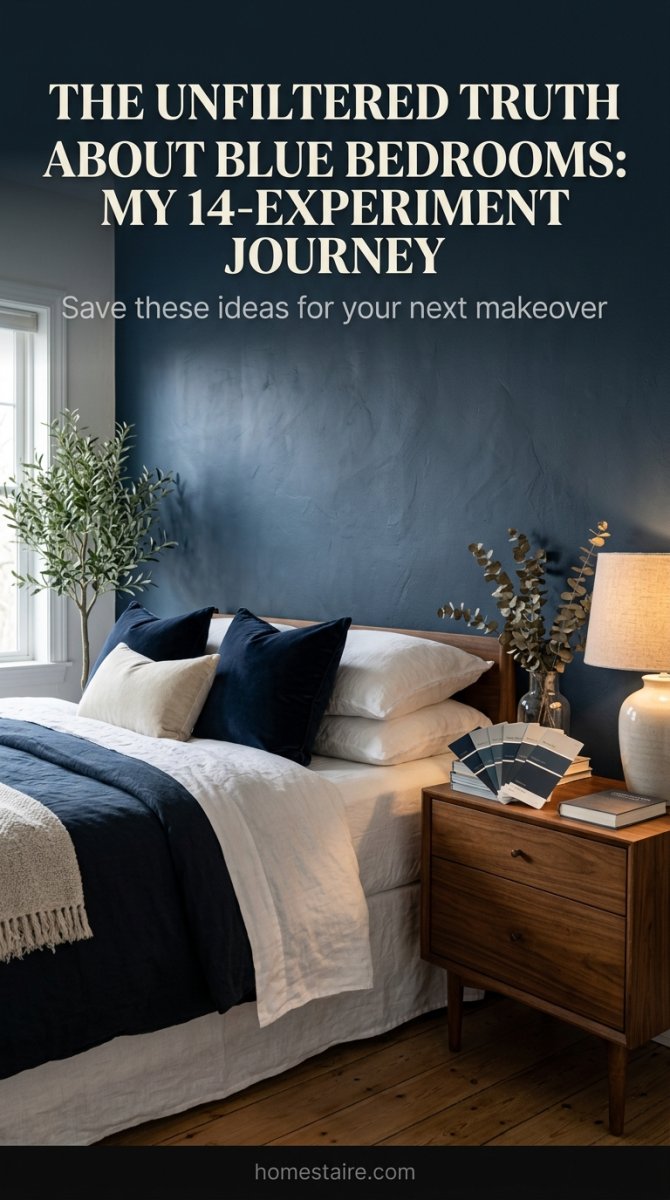
Blue is one of the most popular bedroom colors because it feels calm, but not every shade or combination works. Some blues can feel cold, childish, or dark, depending on light and what surrounds them.
This guide covers 14 ways to use blue in a bedroom, with a table of shades and an FAQ. It’s based on color and design guidance rather than personal painting tests, so try samples in your own room before committing.
1. Paint one wall navy
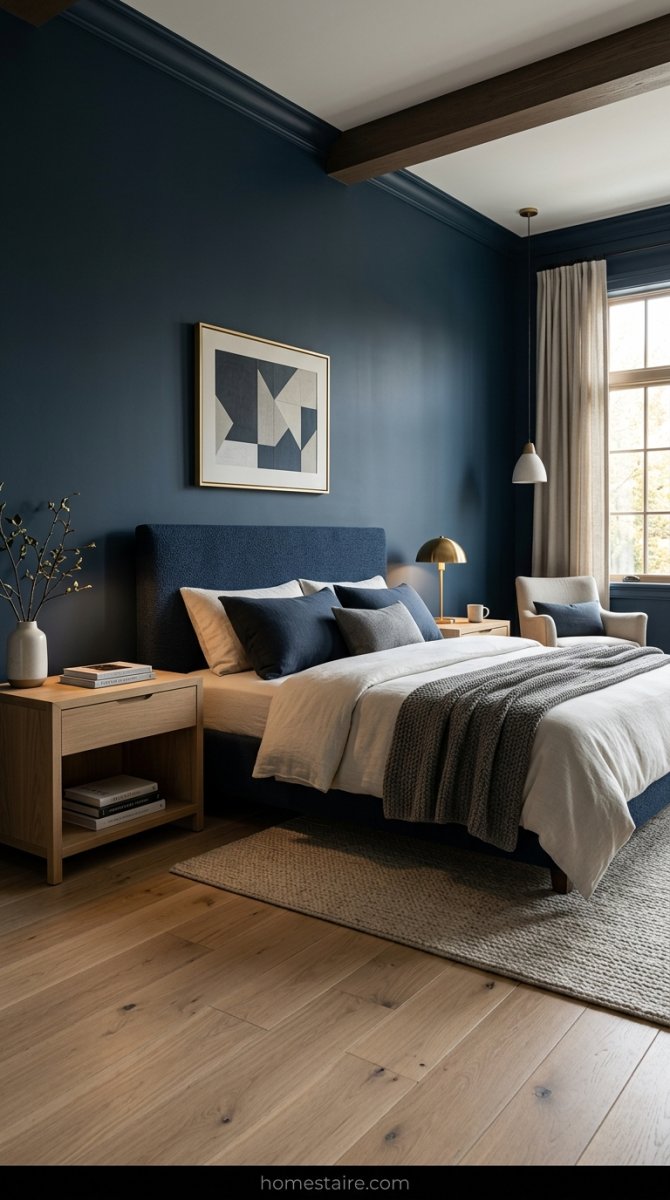
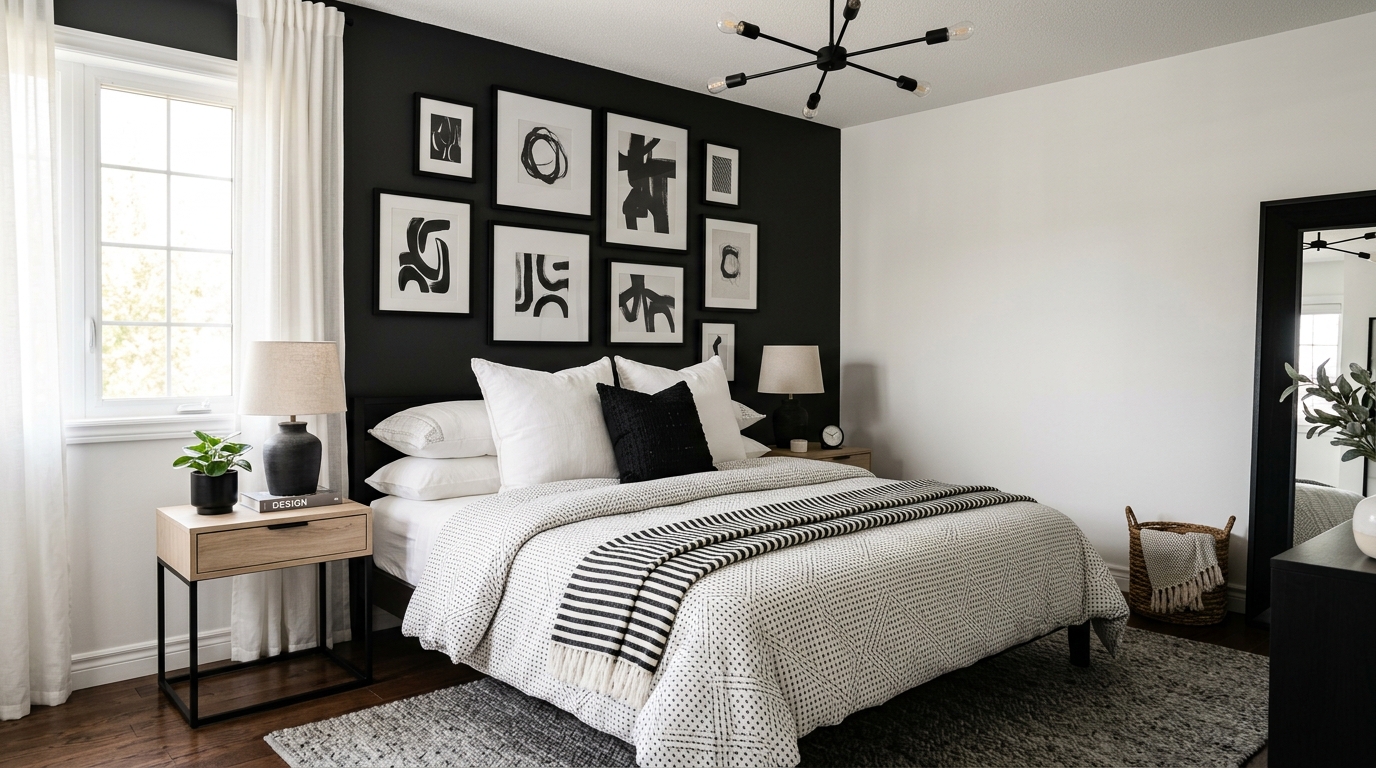
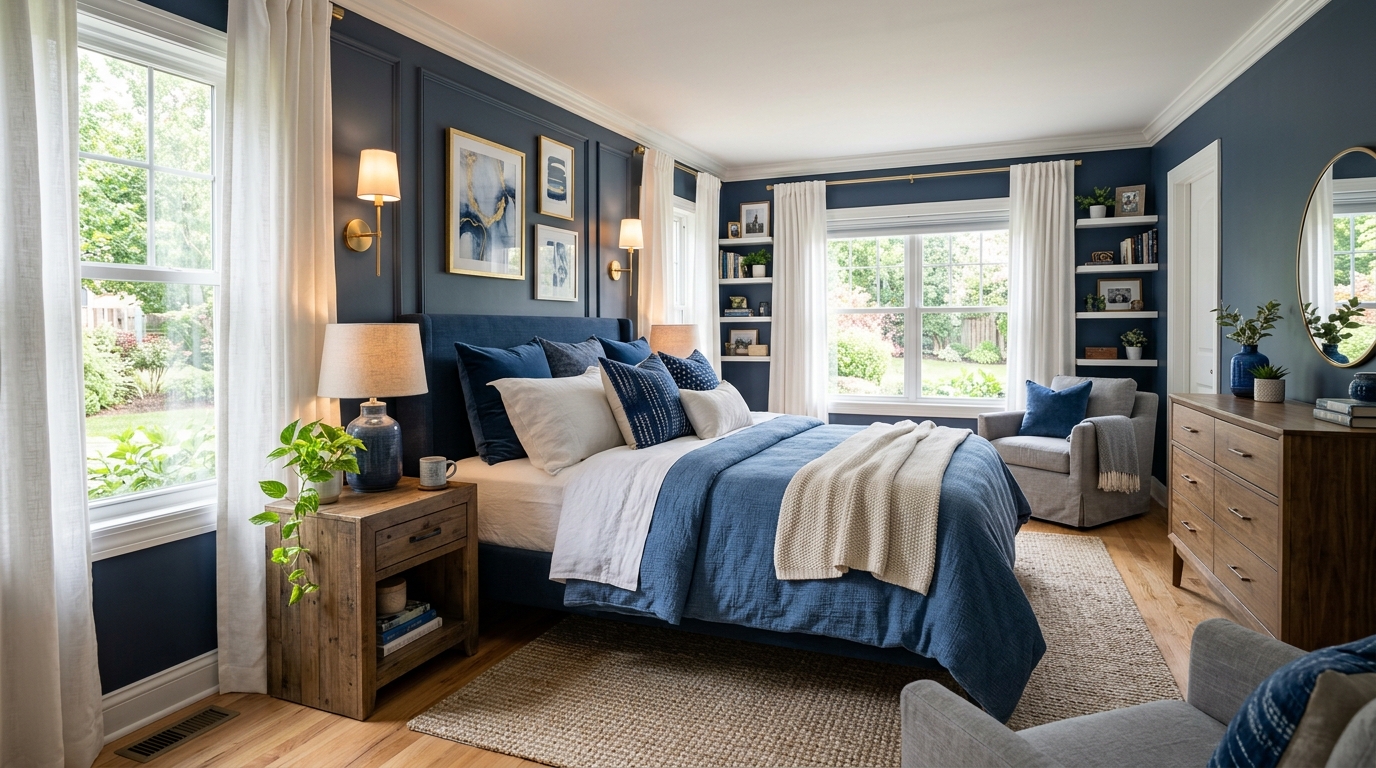
A navy accent wall behind the bed adds depth and drama without darkening the whole room. Keep the other walls light.
Use a matte or eggshell finish so the wall doesn’t reflect glare.
2. Be cautious with powder blue bedding
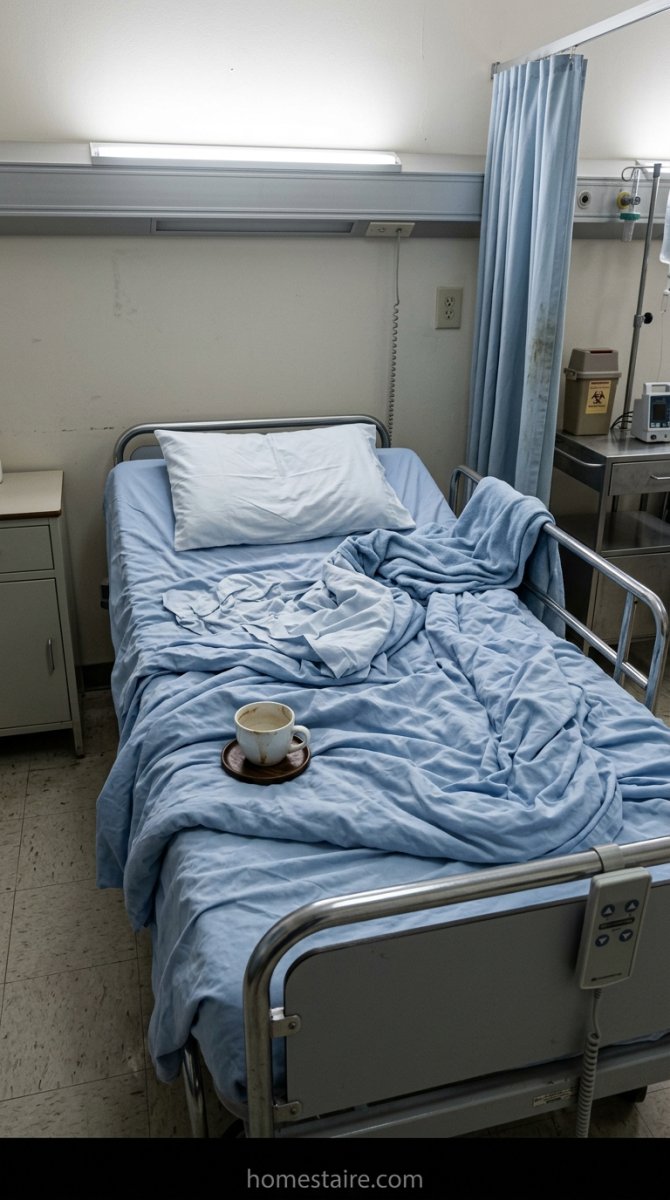
Very pale blue bedding can feel cold or nursery-like in some rooms. Pair it with warmer neutrals, such as cream or oatmeal, and natural textures.
It works best with plenty of natural light.
3. Consider a blue ceiling

A soft sky blue ceiling is a traditional trick that can feel airy and restful. It works better with good natural light and higher ceilings.
Test a sample first, since a colored ceiling can make a low room feel lower.
4. Layer blue textures
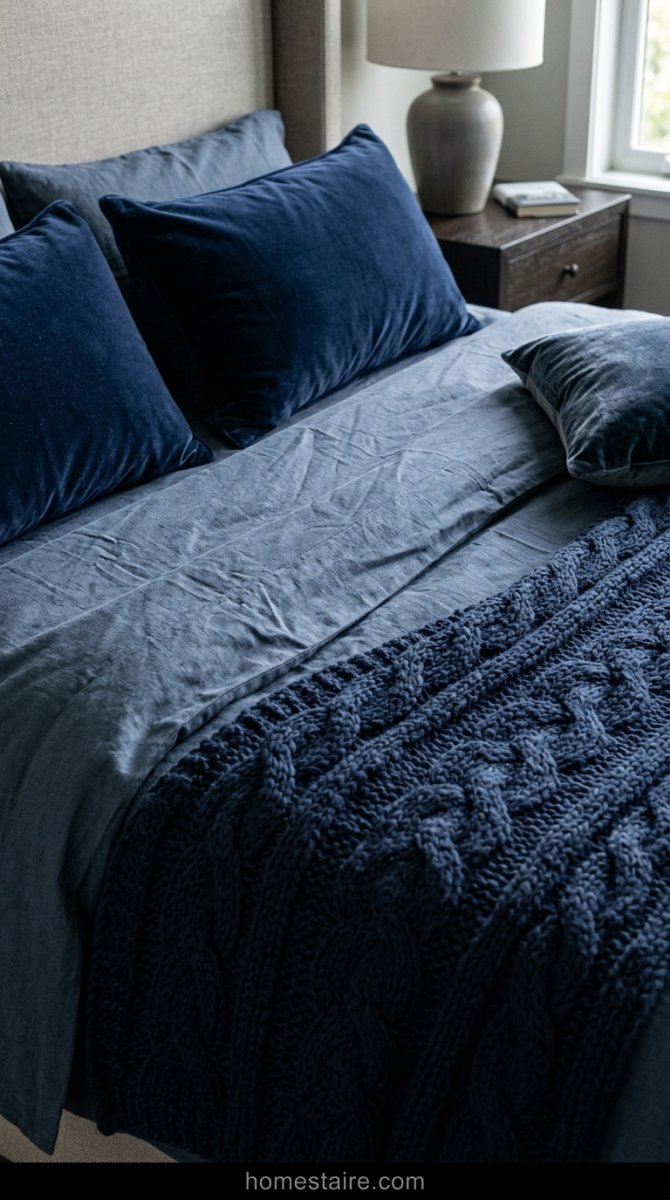
Mix shades of blue in different textures, such as linen, velvet, and wool, and keep them in a related range. Texture keeps the room from looking flat.
Add a neutral to break up the blue.
5. Try teal nightstands
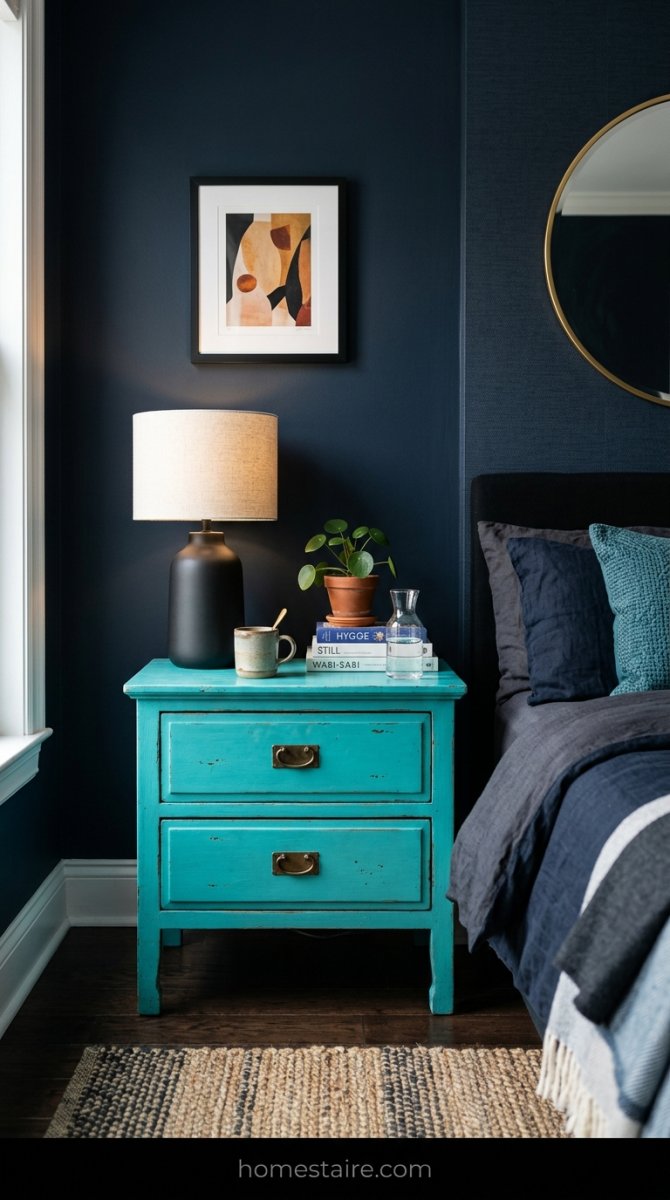
Painted teal or blue-green furniture adds a surprising pop against neutral walls. Nightstands are an easy, low-risk place to try it.
Use furniture paint and a primer for a durable finish.
6. Choose slate blue linen sheets

Slate blue is a muted, grayish blue that looks sophisticated and hides wrinkles in linen. It works with white, wood, and brass.
Check the care label, since colored linen can fade over time.
7. Pair gold hardware with deep blue
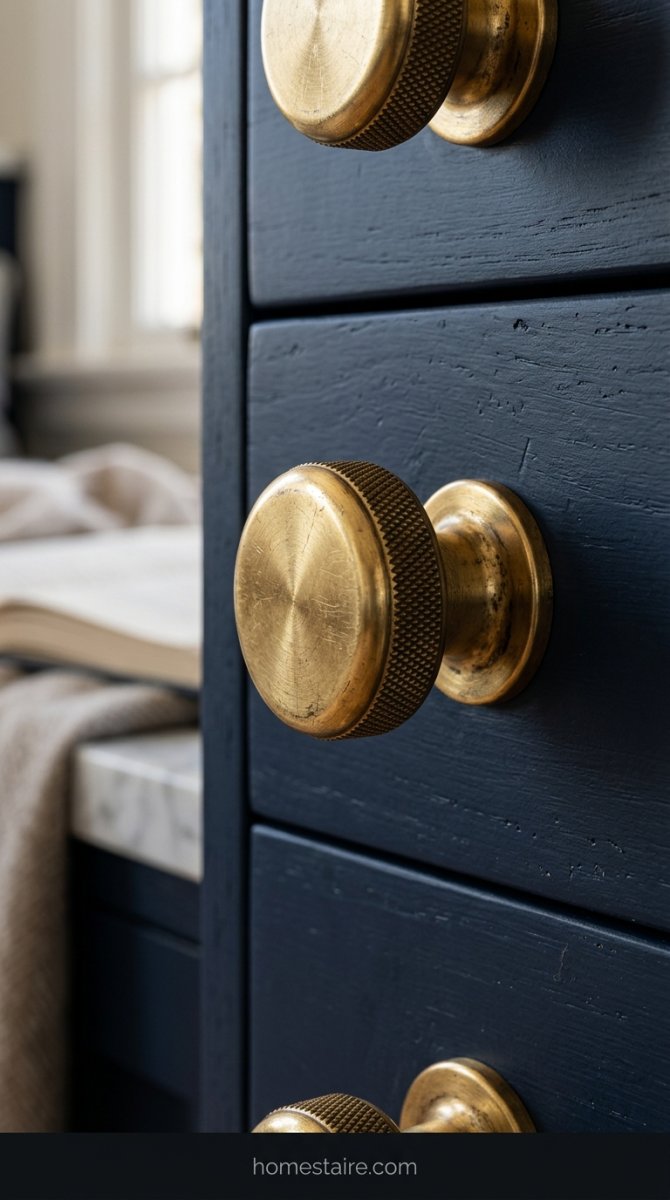
Brass or gold pulls on deep blue furniture feel rich and classic. Blue and warm metal are natural partners.
Keep the finish consistent across hardware.
8. Dusty blue trim on white walls
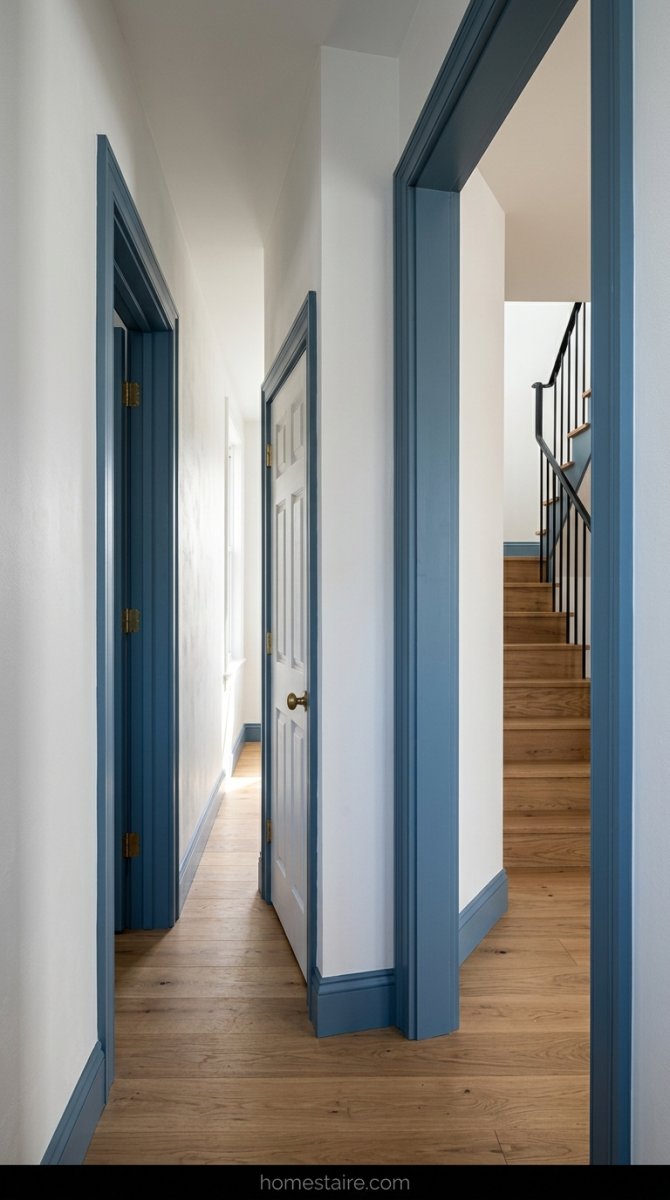
Colored trim against white walls adds subtle character, but it needs careful painting and a crisp edge. Dusty blue can look gray in some light.
Use a semi-gloss trim paint and mask carefully.
9. Add a denim-toned rug
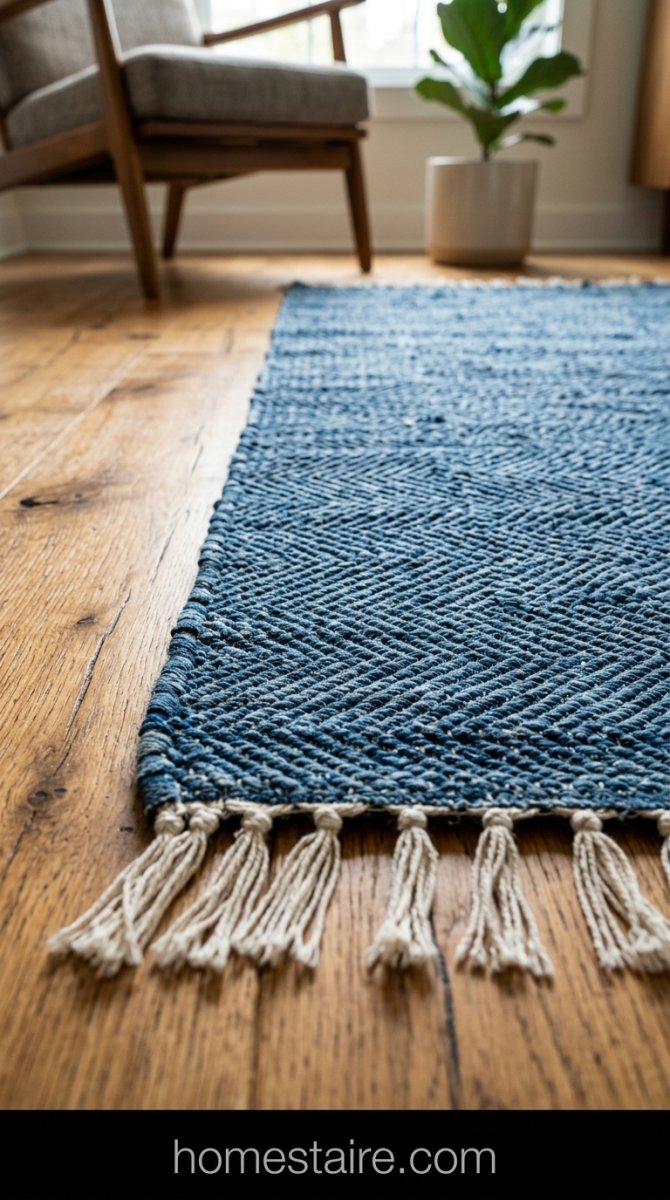
A washed denim-blue rug grounds a blue room and feels casual. It hides stains better than a light rug.
Choose a size that fits under the bed with space on either side.
10. Hang dark blue blackout curtains
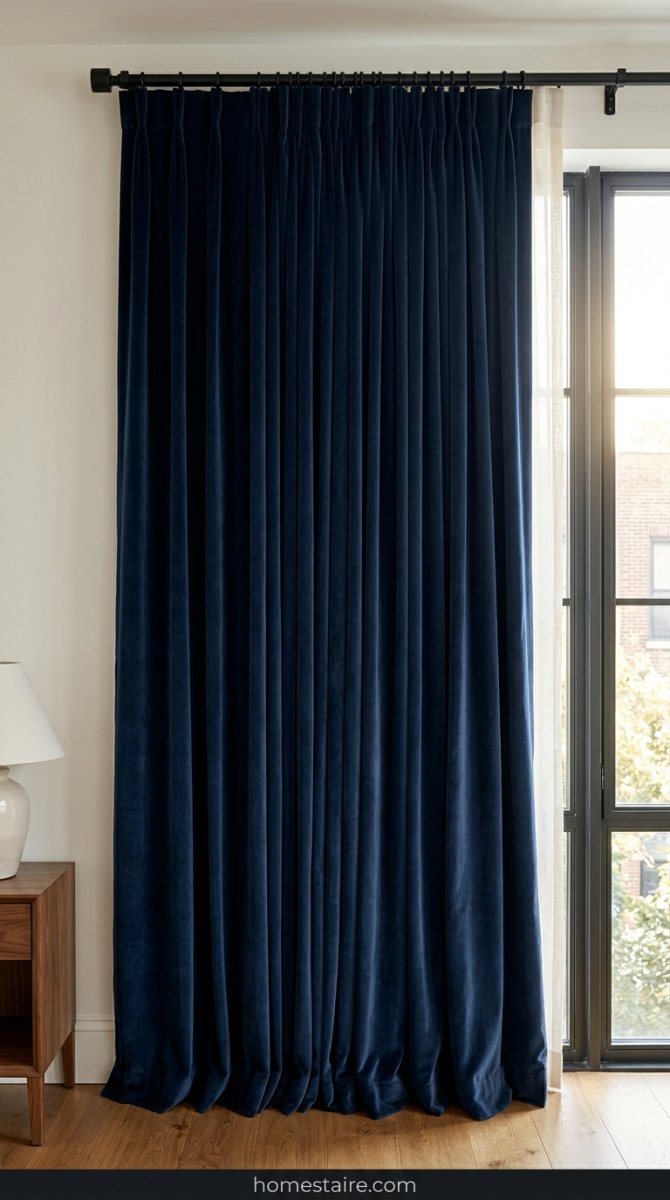
Dark blue curtains block light and feel cozy. They suit a bedroom where darkness matters for sleep.
Mount the rod securely, since blackout curtains are heavy.
11. Use coastal patterns carefully

Stripes and subtle wave patterns in blue give a coastal feel. Keep them to one or two pieces, or the room can look like a themed hotel.
Pair them with natural fibers and avoid matching sets.
12. Try steel blue in a small room

A gray-leaning steel blue can recede visually and make walls feel less close in a small room. Pair it with a lighter ceiling.
Test it in daylight and evening light.
13. Add cobalt accents
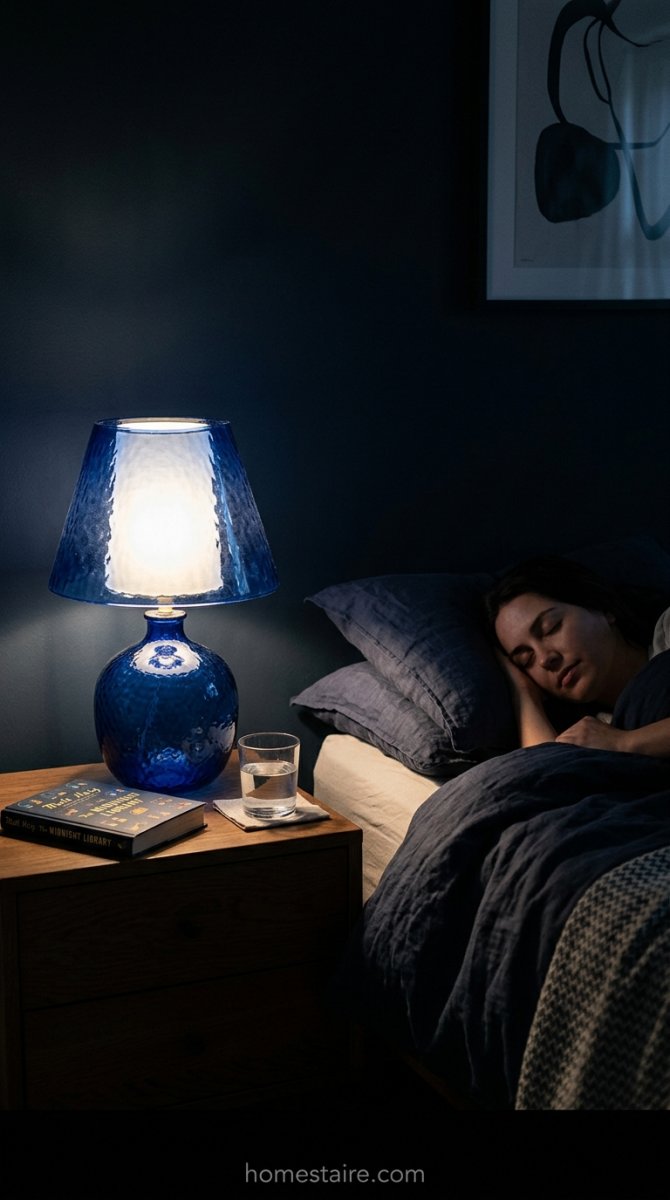
Bright cobalt lampshades or accessories give a strong accent in a neutral room. Use them in small doses.
Choose shades with a lining so the glow stays soft.
14. Avoid going all blue

A room where every surface is the same blue can feel heavy. Break it up with white, wood, and warm accents.
A monochromatic scheme only works with varied tones and textures.
Bonus: blue walls with natural wood

Blue and wood are a reliable combination. The warmth of wood balances the coolness of blue, and the pairing suits many styles.
Use wood furniture, frames, or a headboard to bring in warmth.
Blue shades at a glance
| Shade | Feel | Pair with | Caution |
|---|---|---|---|
| Navy | Dramatic, cozy | White, brass, wood | Can feel dark in low light |
| Powder blue | Soft, airy | Cream, natural textures | Can feel cold or childish |
| Slate blue | Sophisticated | Linen, wood, white | May look gray in shade |
| Dusty blue | Muted, vintage | Warm whites | Can read gray |
| Steel blue | Receding, calm | Light ceilings | Test in all light |
| Cobalt | Bold accent | Neutrals | Use sparingly |
Blue bedroom FAQ
Is blue a good bedroom color? Many people find blue calming, but the effect depends on the shade and the light.
What colors go with blue in a bedroom? White, cream, gray, brass, natural wood, and warm neutrals.
How do I stop a blue bedroom from feeling cold? Add warm lighting, wood, and textured fabrics, and avoid very pale cool blues in north-facing rooms.
Conclusion
Blue works best when it’s balanced with warm neutrals, natural materials, and good lighting. Start with a small change, such as bedding or an accent wall, and test samples before committing.
Choose a shade that suits your light and the mood you want.