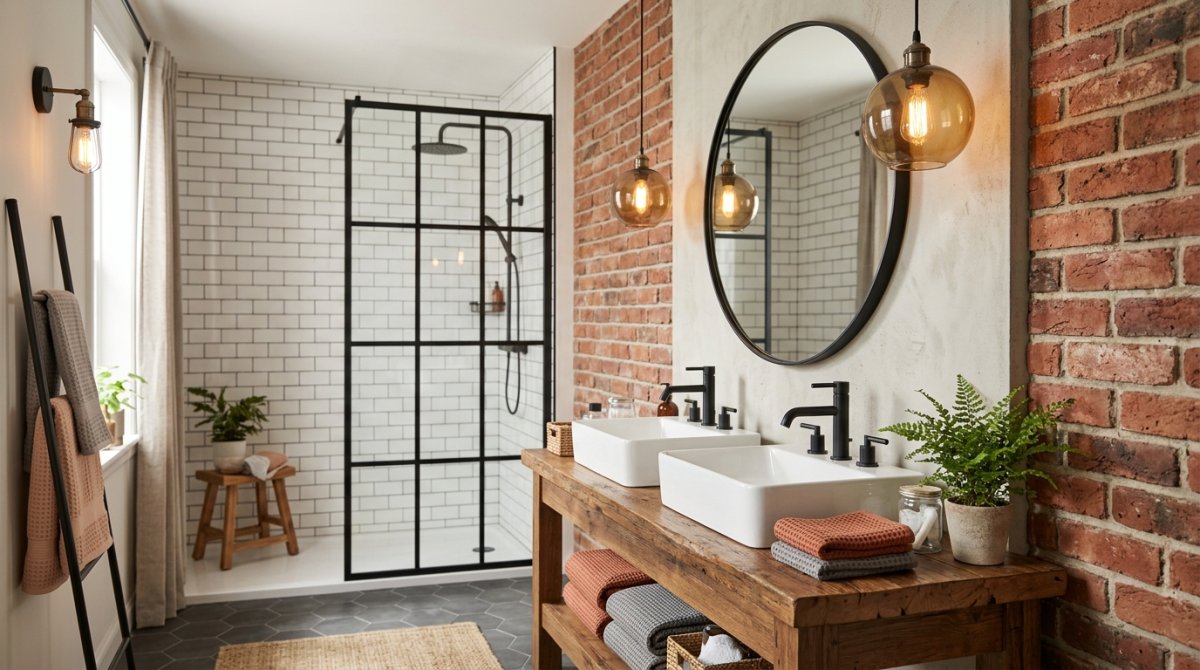
Why industrial bathrooms can feel cold
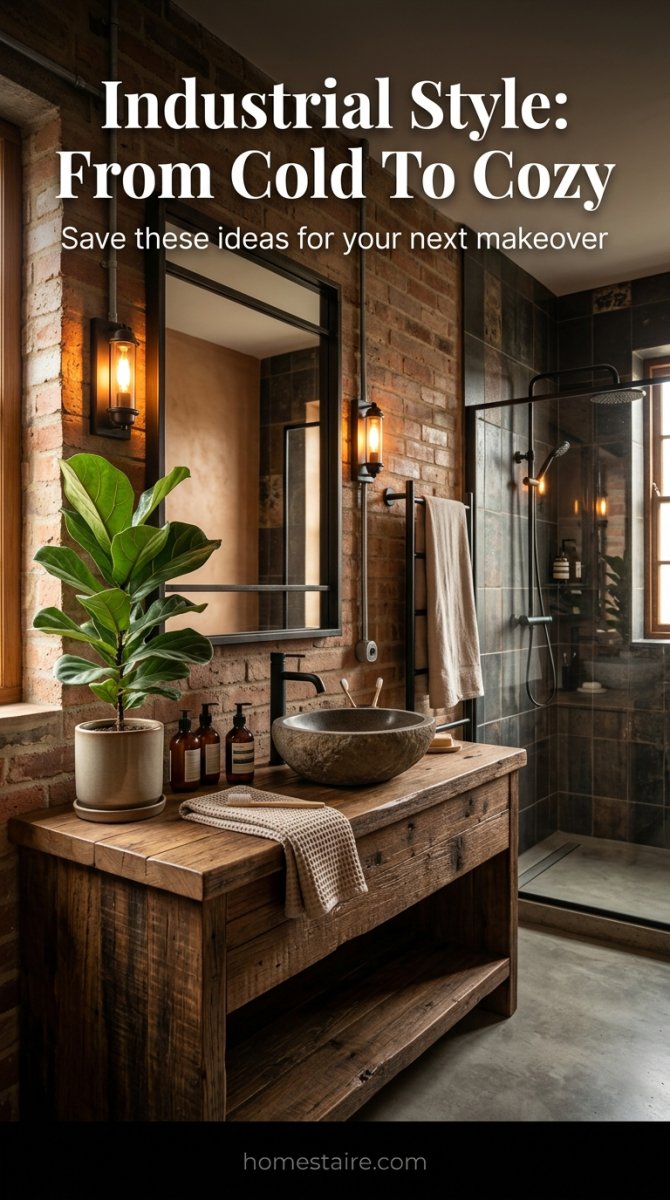
Industrial style uses concrete, metal, and brick, which can feel cold in a small, hard-surfaced bathroom. Warmth comes from wood, soft textiles, and warm light.
This guide covers 10 ways to keep an industrial bathroom comfortable, with a table and FAQ. It’s based on design guidance rather than a personal remodel, so confirm plumbing, waterproofing, and electrical details with professionals.
1. Add reclaimed wood
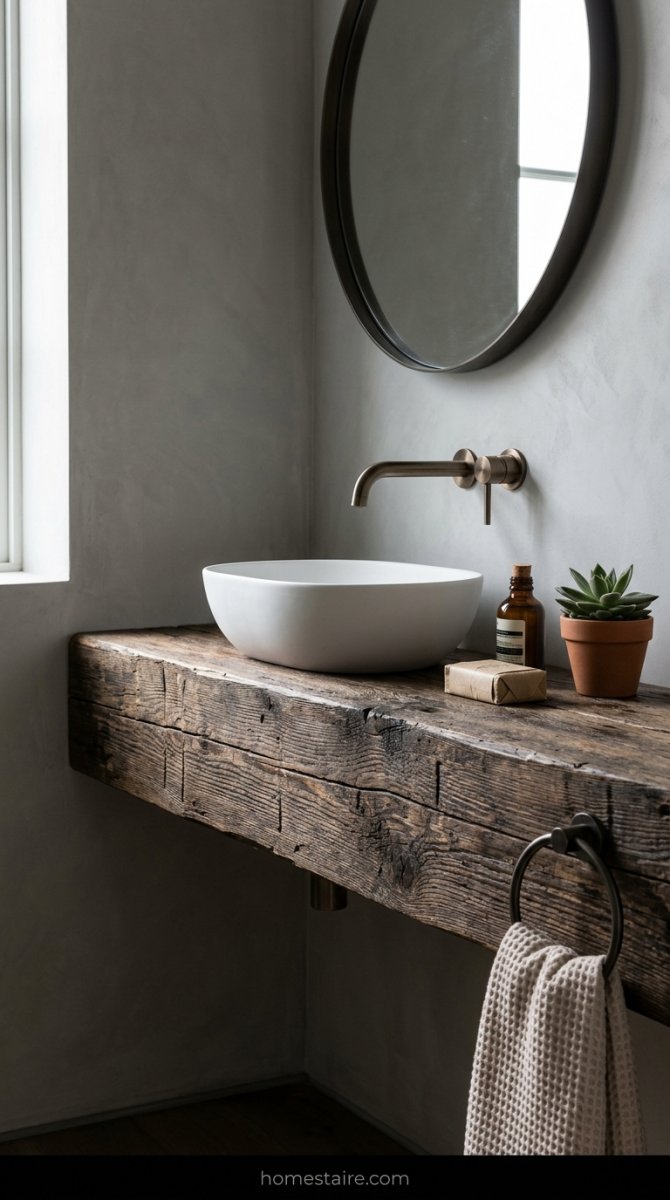
Reclaimed wood adds warmth. Seal it for moisture.
Use it for a shelf or vanity top.
2. Use copper or exposed pipes
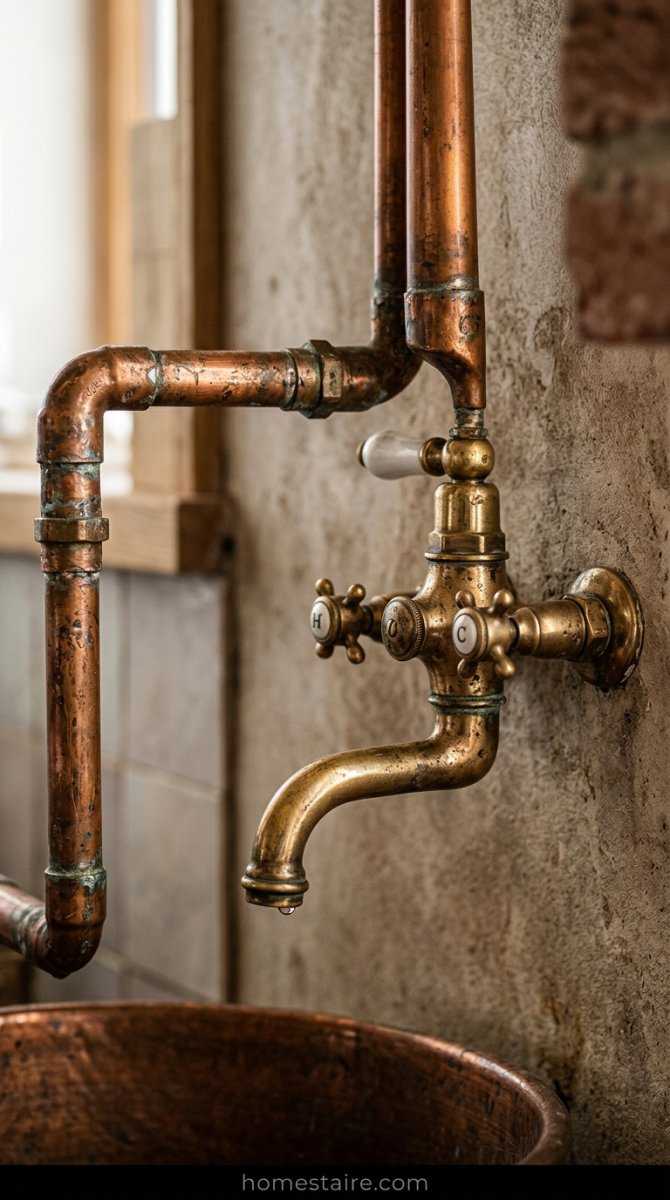
Copper or brass pipes add warmth compared with chrome.
Have a plumber handle exposed plumbing.
3. Use warm bulbs
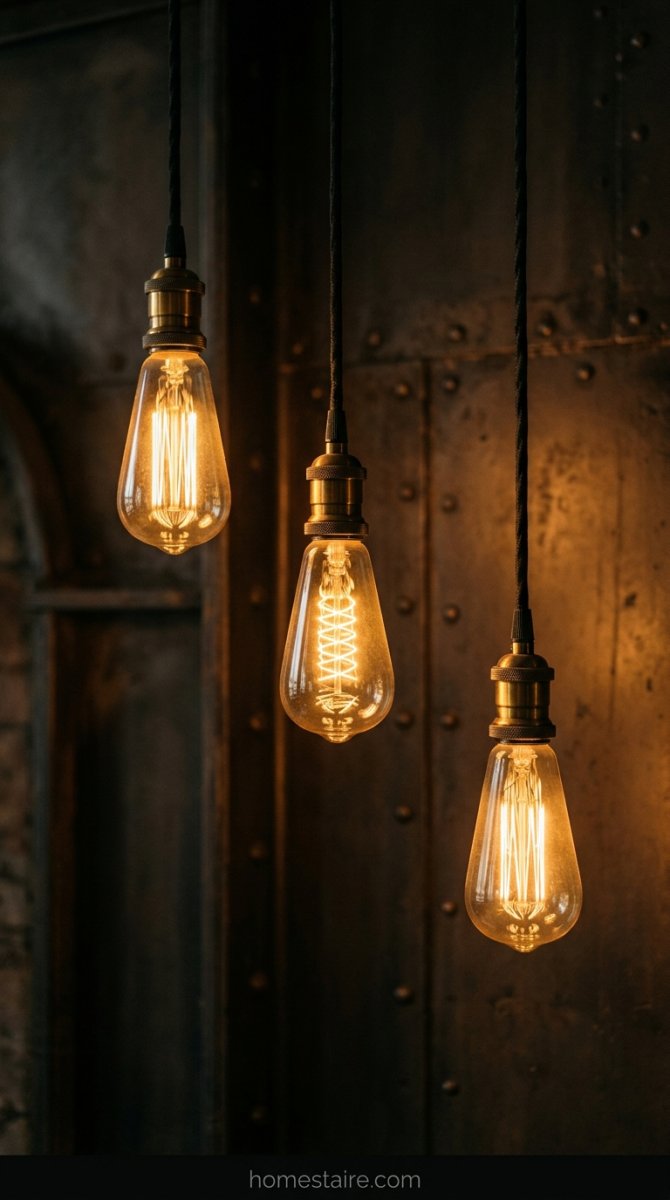
Amber, warm-white filament-style bulbs feel cozy.
Use wet-rated fixtures near showers.
4. Soften concrete sinks
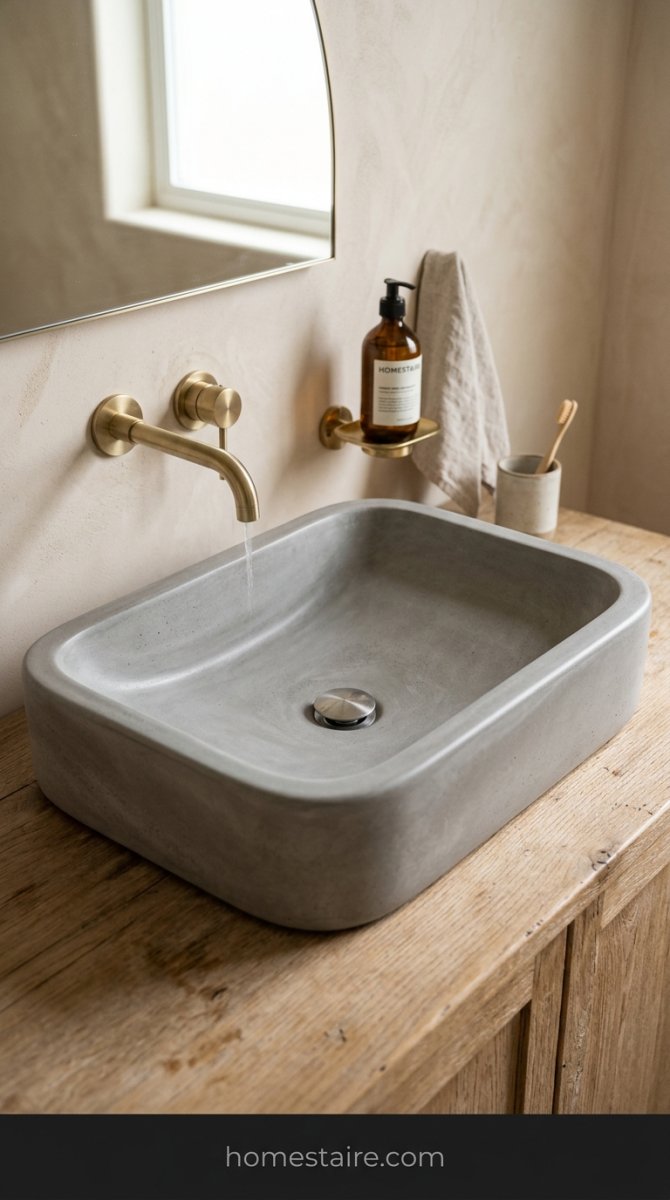
Concrete sinks suit the style. Pair them with wood and soft towels.
Seal them regularly.
5. Add a black steel shower frame
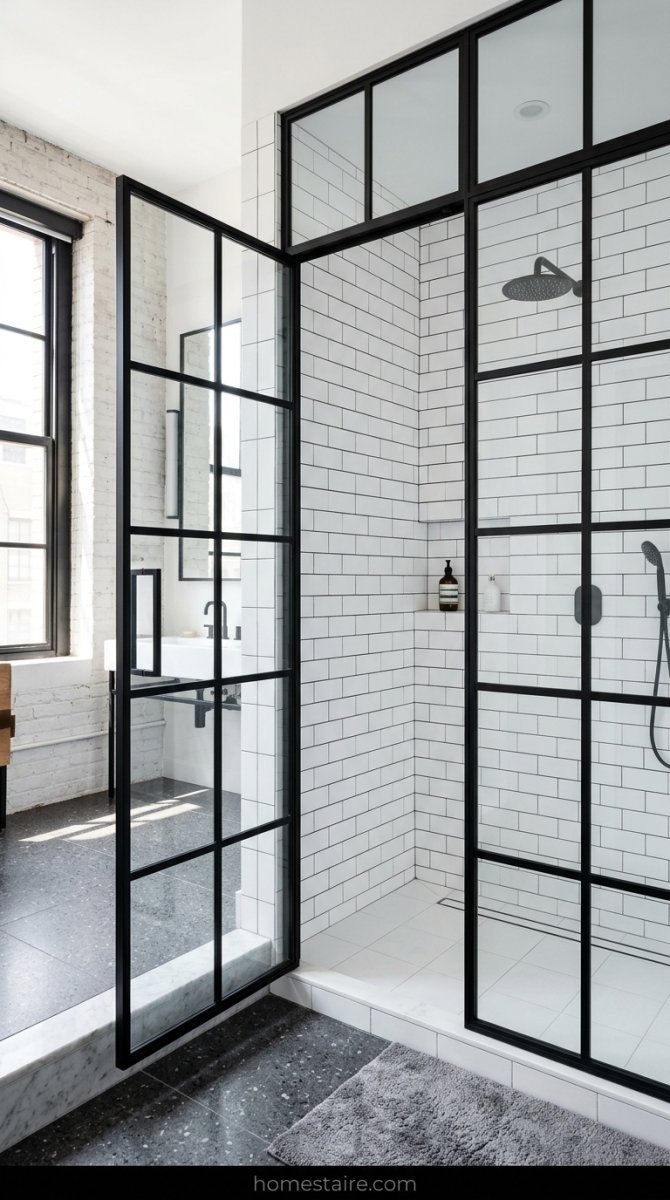
A black-framed glass enclosure gives a loft look.
Use tempered glass.
6. Seal brick walls
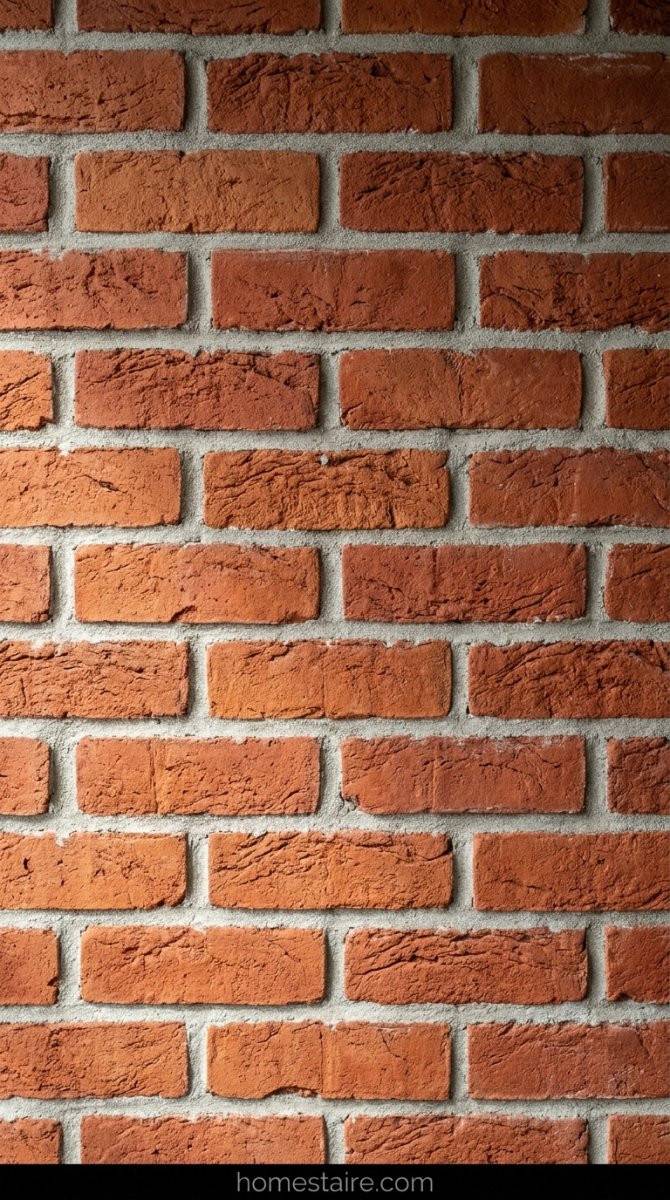
Brick can shed dust and absorb moisture. Seal it in a bathroom.
Brick tile is a lighter alternative.
7. Add a large vintage mirror
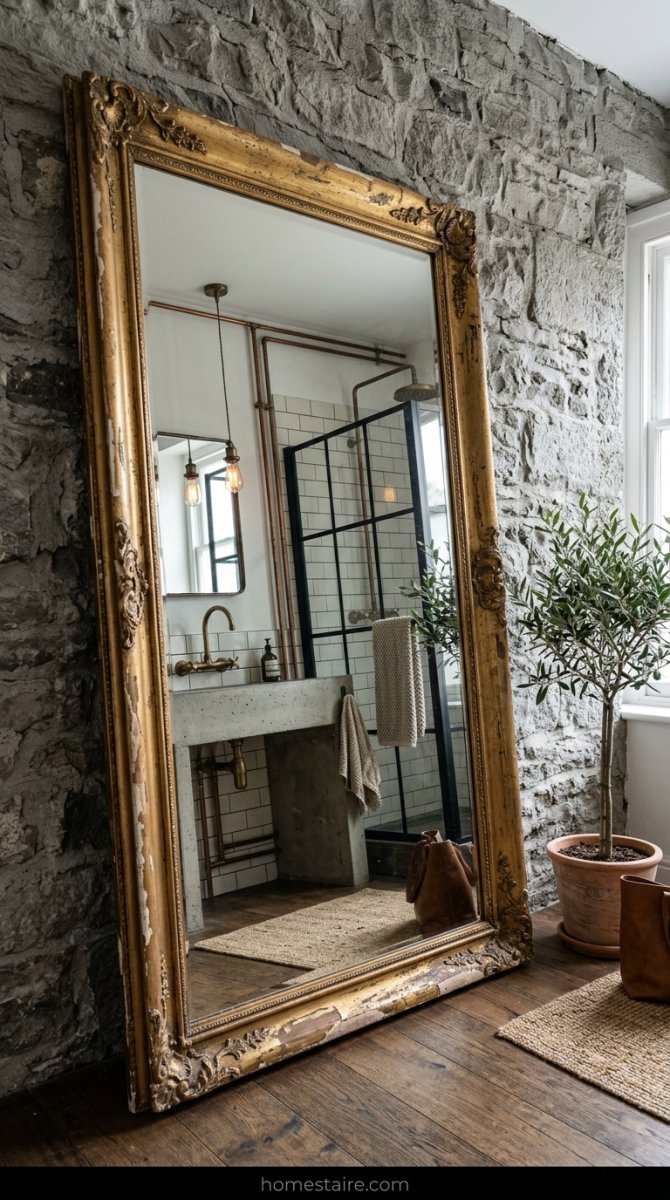
A big mirror reflects light and adds character.
Check backing for moisture damage.
8. Layer textiles
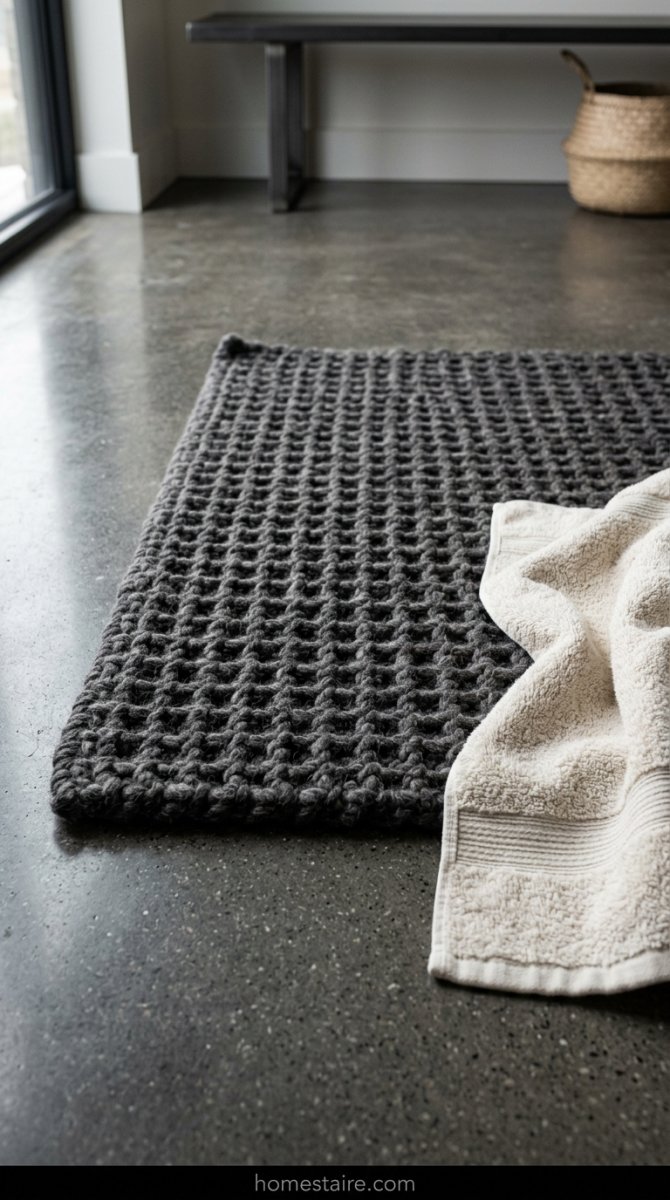
Waffle towels and rugs soften hard surfaces.
Use quick-drying fabrics.
9. Use matte black hardware
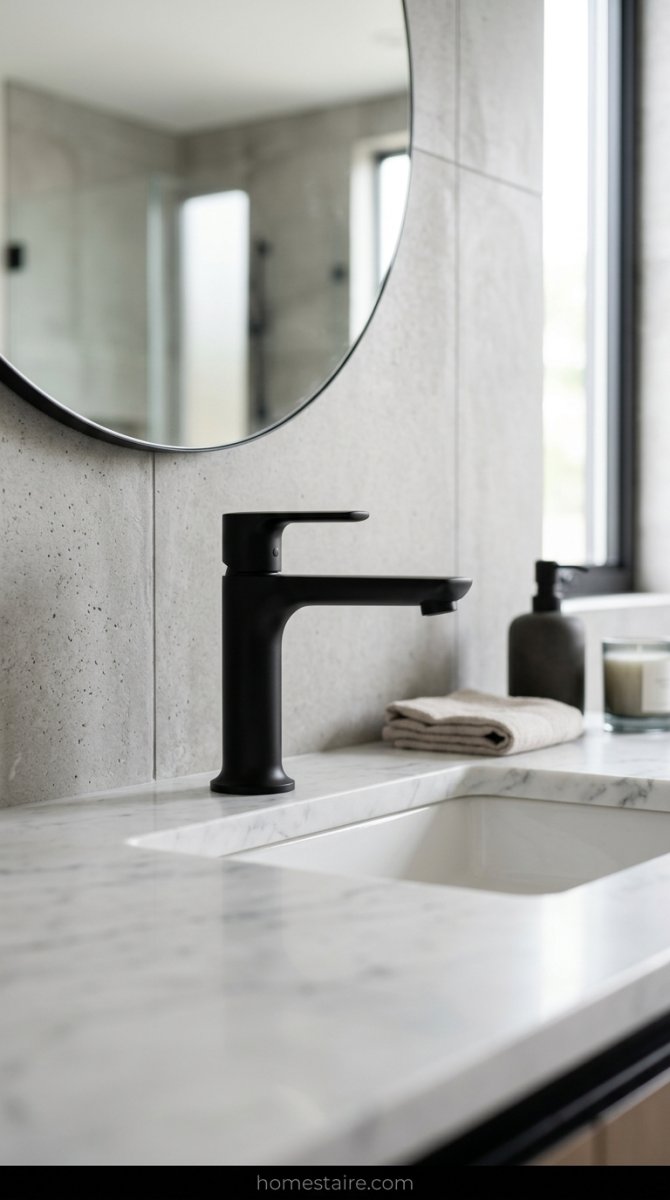
Matte black hardware is an easy upgrade.
Keep finishes consistent.
10. Add plants
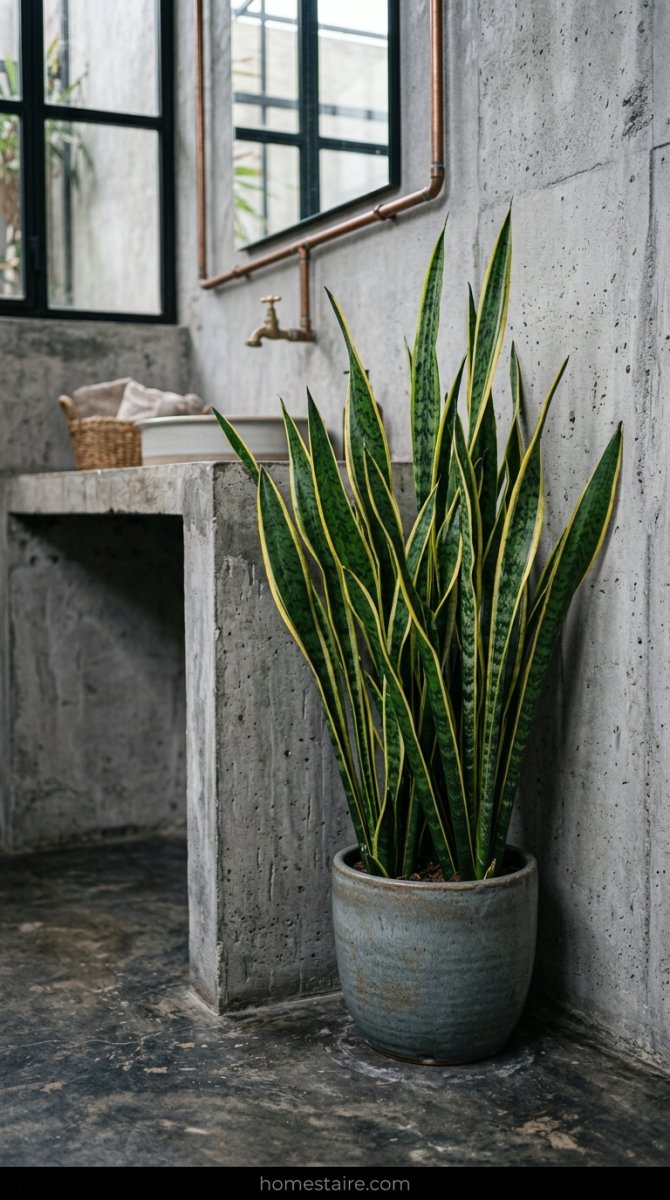
Plants soften the hard look. Choose ones suited to the light.
A faux plant works in a windowless room.
Industrial materials
| Material | Pros | Cons |
|---|---|---|
| Concrete | Durable, unique | Porous; needs sealing |
| Brick | Texture | Dust; needs sealing |
| Black steel | Graphic look | Can rust if not coated |
| Copper | Warm | Patinas |
An industrial bathroom planning checklist
- Ventilation: hard surfaces trap humidity, so install a properly sized exhaust fan that vents outside.
- Waterproofing: concrete, brick, and exposed substrates need sealing or a waterproof membrane in wet zones.
- Electrical: use GFCI protection and wet-rated fixtures, and have exposed wiring done by a licensed electrician.
- Metal finishes: choose coated or powder-coated steel, since bare steel can rust.
- Floors: pick a textured, slip-resistant surface, because polished concrete and large tile can be slippery when wet.
- Warmth: plan wood, textiles, and warm lighting from the start so the room doesn’t feel stark.
Common mistakes to avoid
Using only hard materials makes the room echo and feel cold, so add absorbent textiles. Leaving porous brick or concrete unsealed lets water and stains soak in. Choosing decorative bulbs with low light output can leave the mirror area too dim, so add proper task lighting. And exposing pipes without checking their condition can turn a style choice into a leak risk.
Industrial bathroom FAQ
How do I make it cozy? Add wood, soft textiles, warm light, and plants.
Is concrete practical in a bathroom? Yes if sealed.
What colors suit it? Gray, black, brick, and wood tones.
Conclusion

An industrial bathroom works when its hard materials are balanced with warmth. Add wood, textiles, plants, and warm light, and seal porous surfaces.