Why neutral bathrooms can feel flat
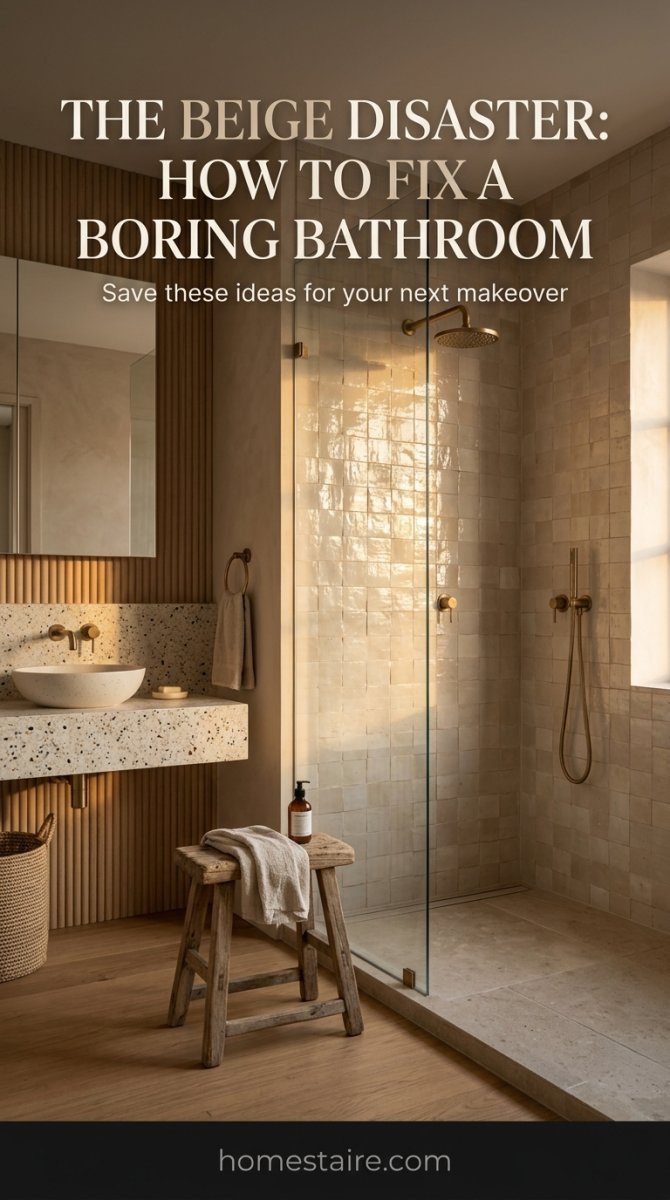
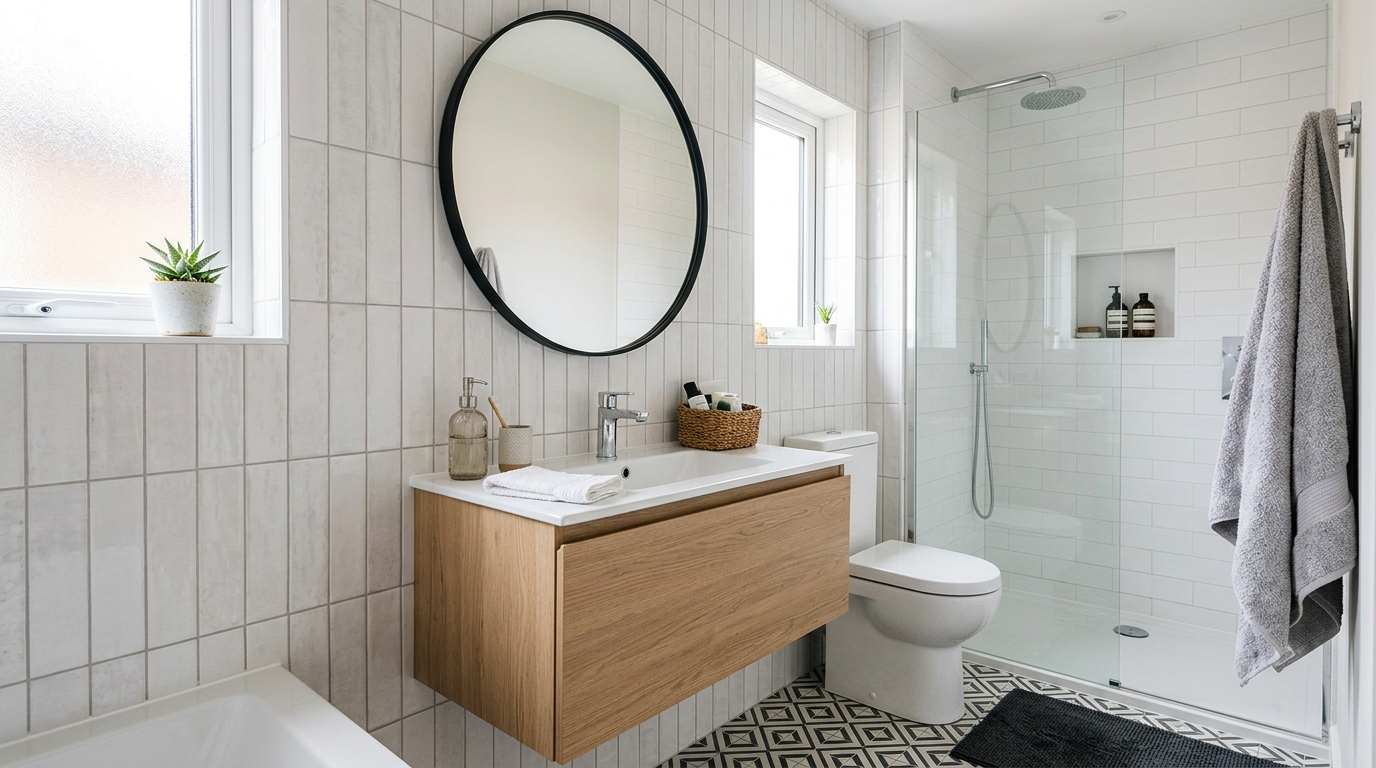
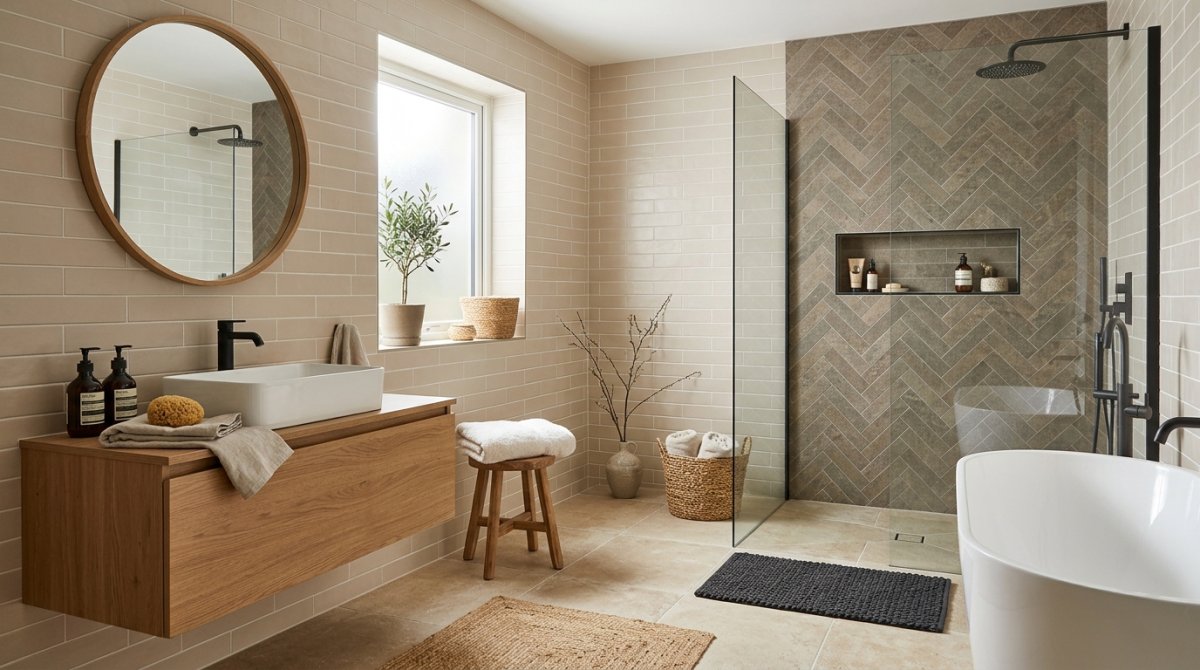
Beige and neutral tile are safe, but a bathroom that is all one tone can look flat and dated. The trick is to build contrast, texture, and warmth around the neutral base.
This guide covers 10 ways to make a neutral bathroom look intentional, with a table and FAQ. It’s based on design guidance rather than a personal remodel, so test samples in your light and consider how finishes wear.
1. Add texture
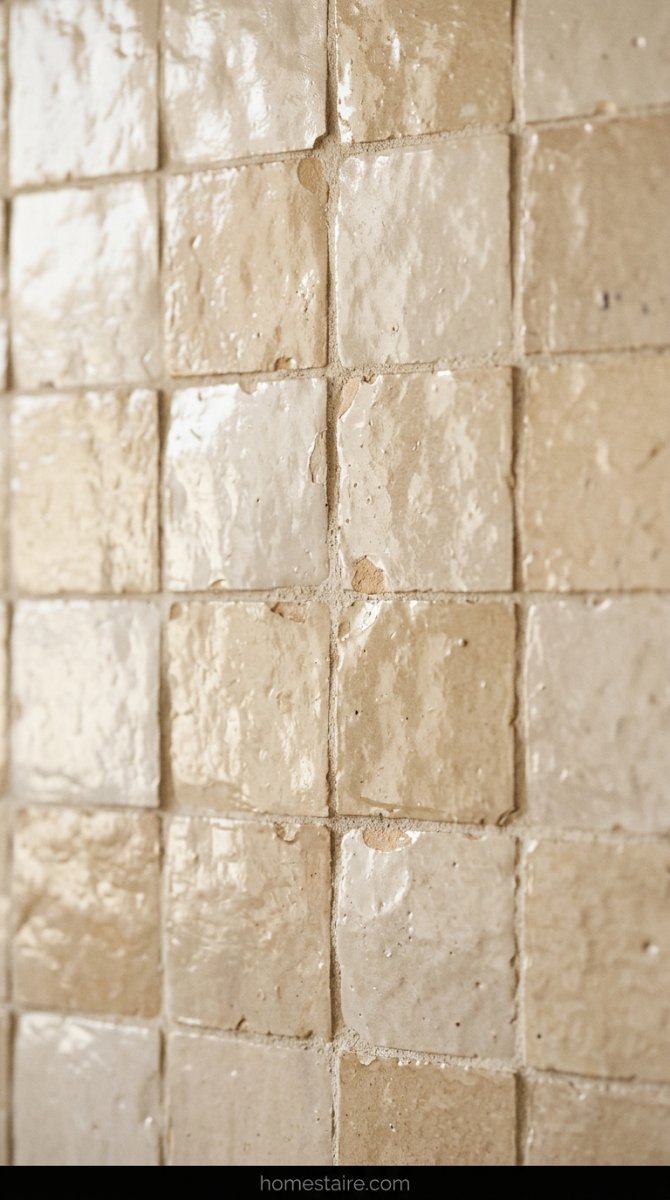
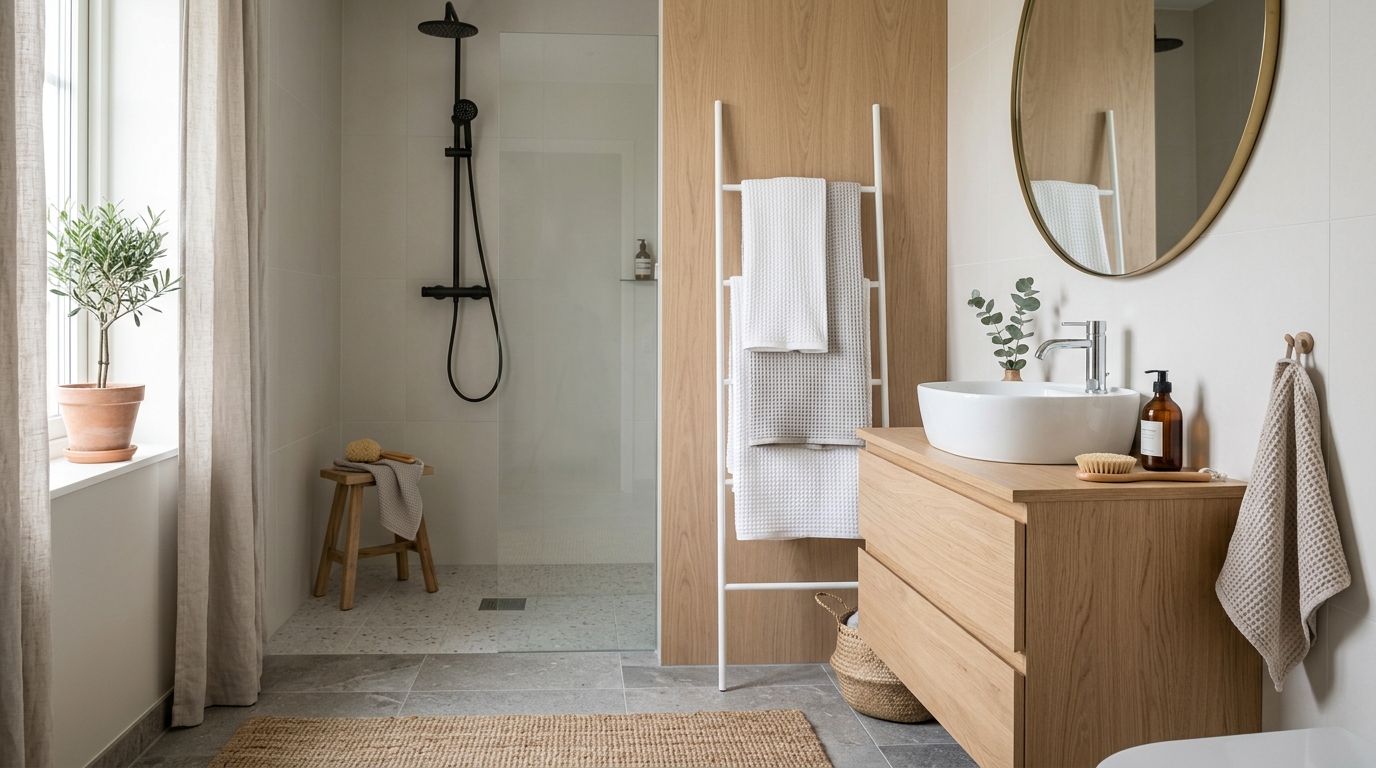
Textured tile, woven baskets, and ribbed towels add depth to a neutral palette.
Mix a few textures.
2. Consider contrasting grout
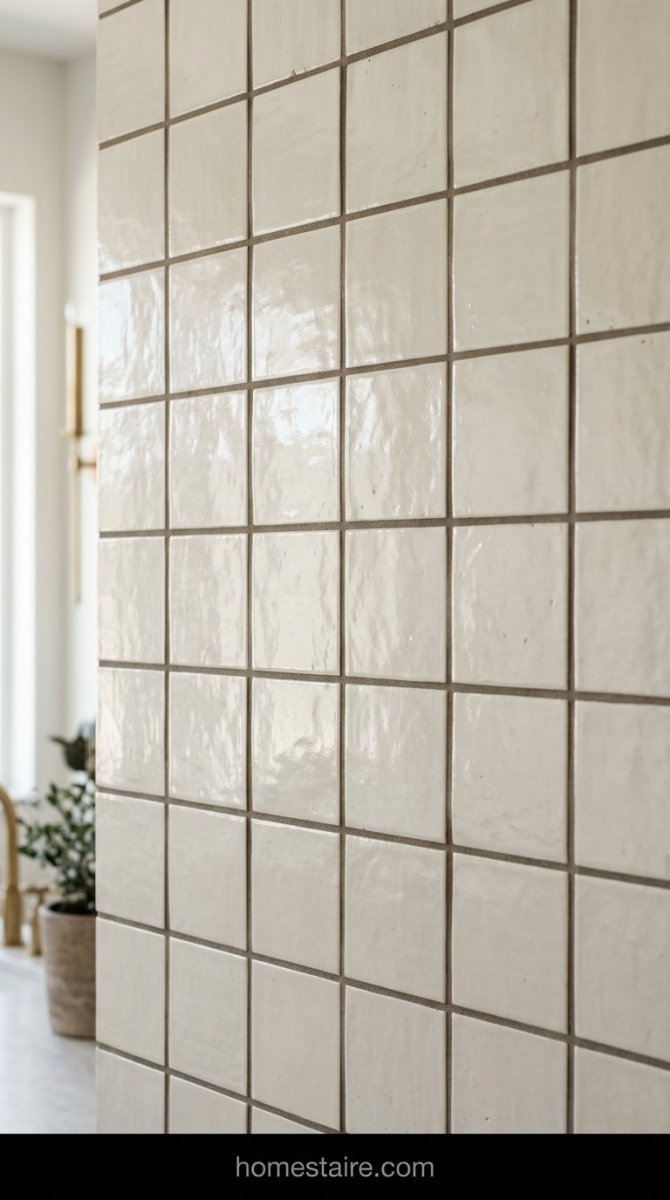
Matching grout blends tile into a plain surface. A slightly darker or lighter grout defines the pattern.
Test a sample first.
3. Add wood
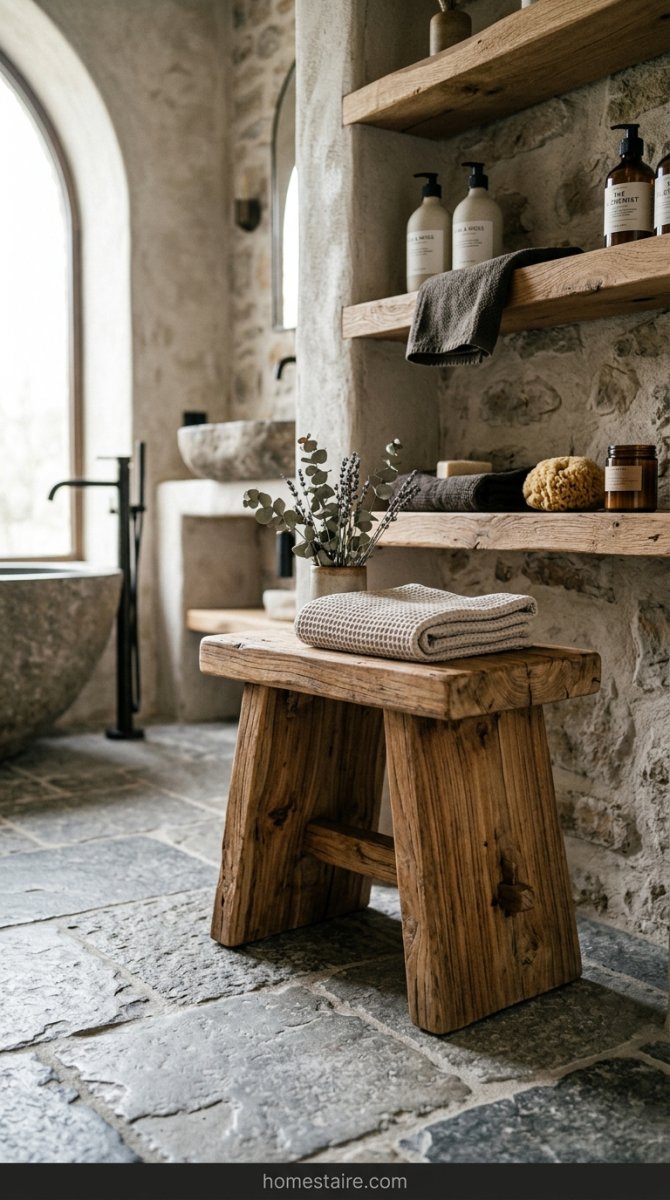
Wood warms beige and adds natural variation.
Use moisture-resistant, sealed wood.
4. Soften the lighting
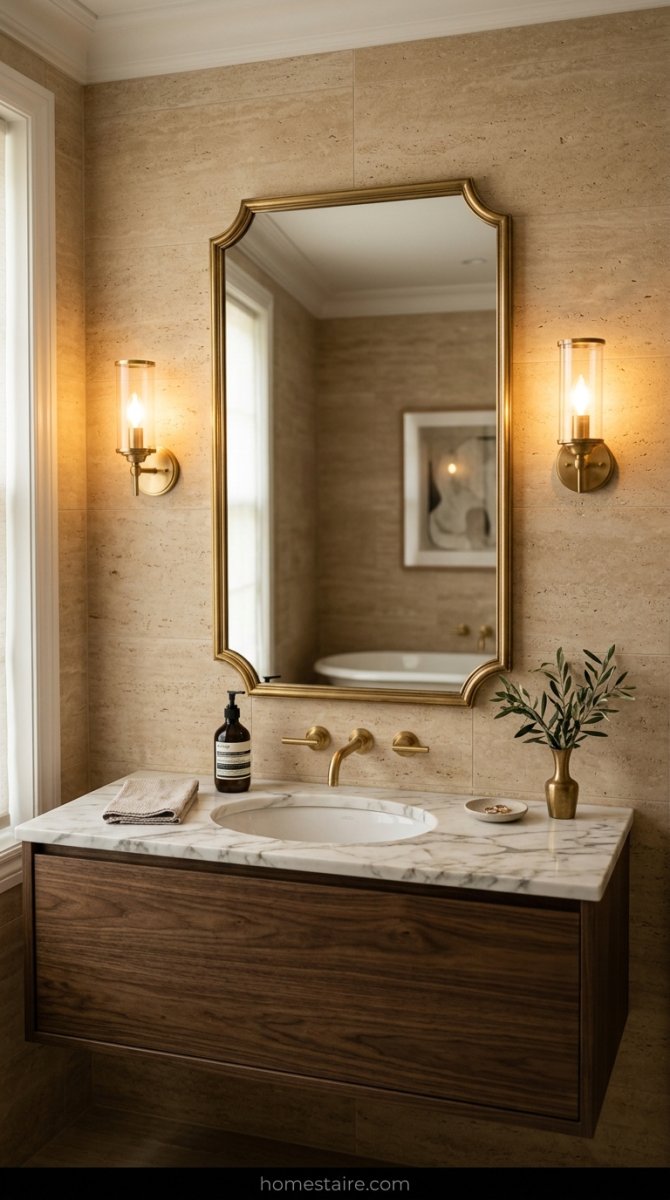
Cold, harsh light makes neutral colors look clinical. Use warm bulbs and layered lighting.
Add a dimmer if possible.
5. Use black or brass hardware
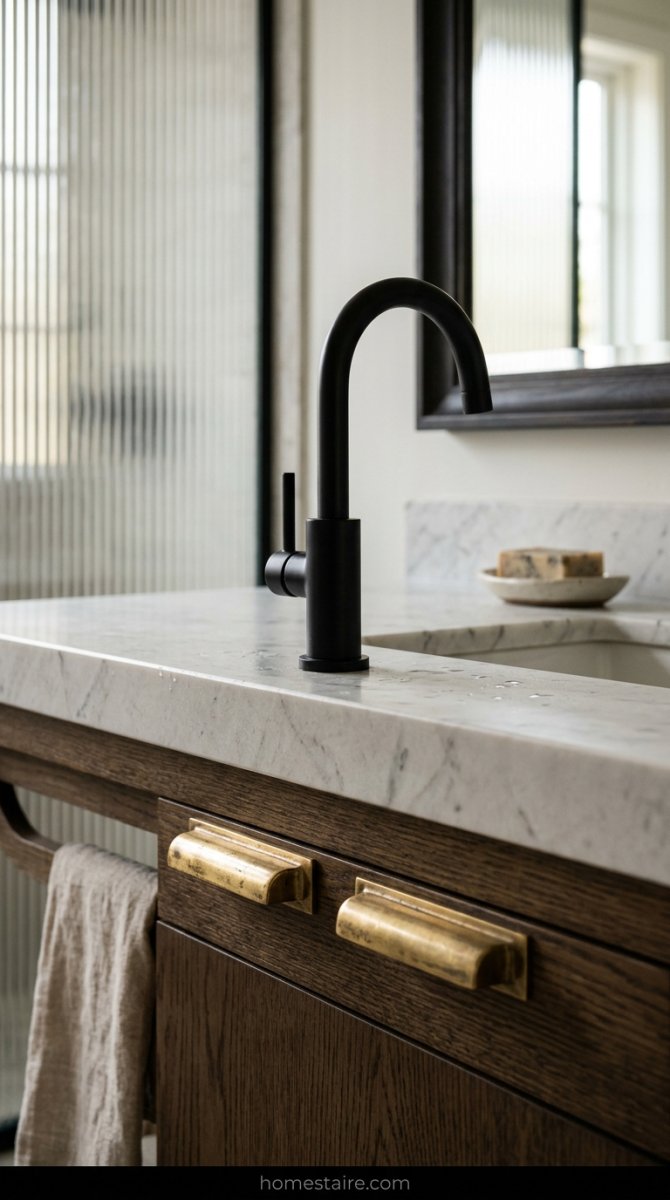
A bold metal finish gives a neutral room definition.
Keep finishes consistent.
6. Choose towels that stand out
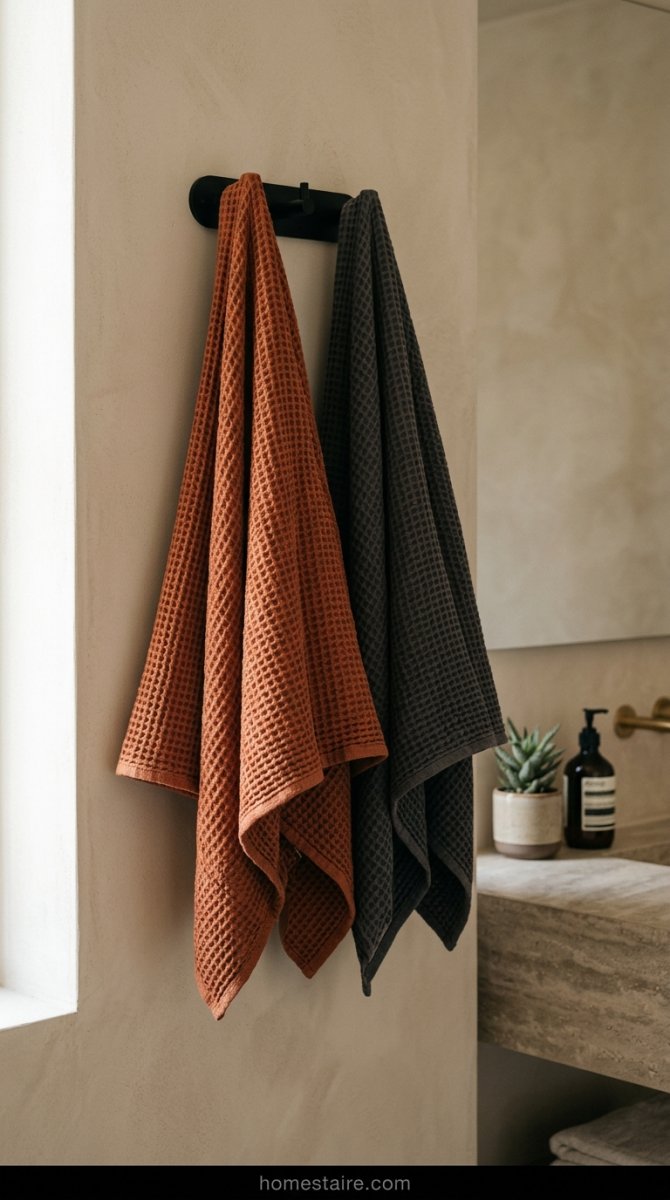
Towels in a deeper or contrasting tone add interest.
Choose thick, absorbent cotton.
7. Add one plant
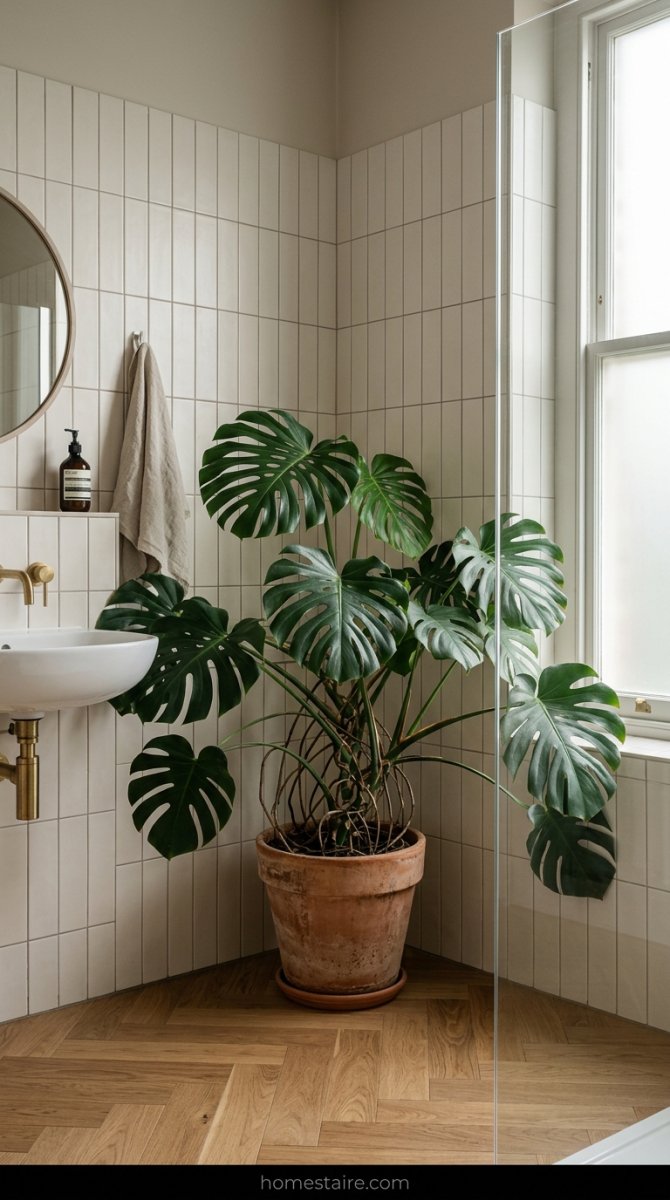
A single plant adds life and color. Choose one that tolerates humidity.
Check the light first.
8. Add a dark accent piece
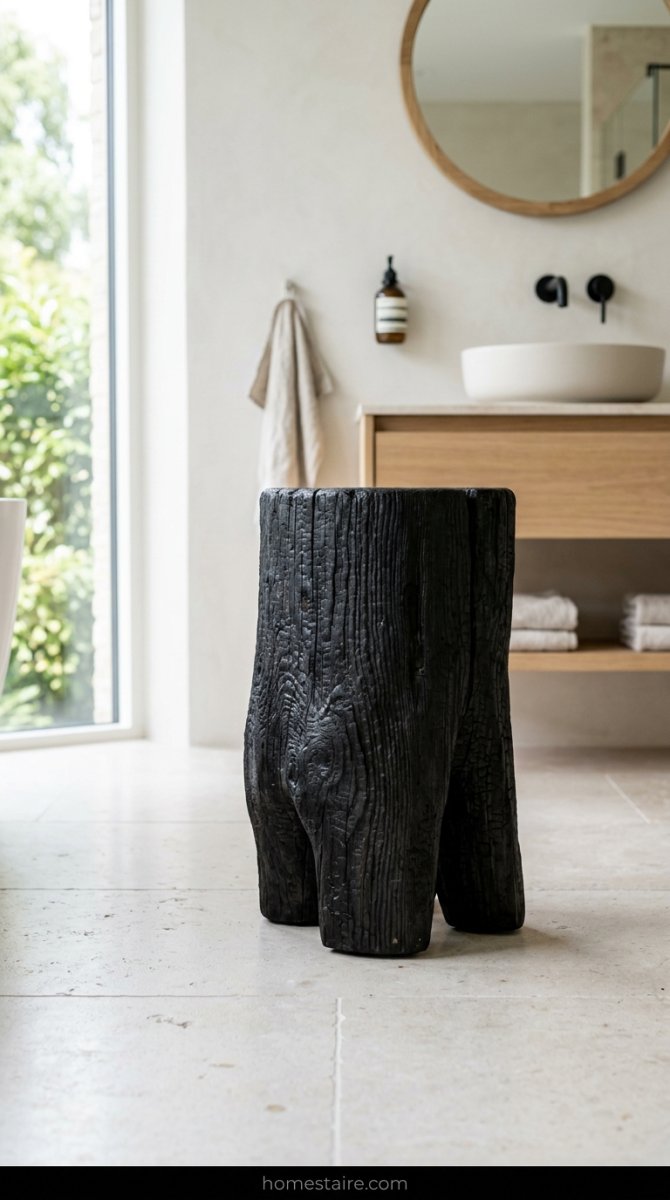
A dark vanity or mirror frame anchors a neutral room.
Use one, not many.
9. Hang art
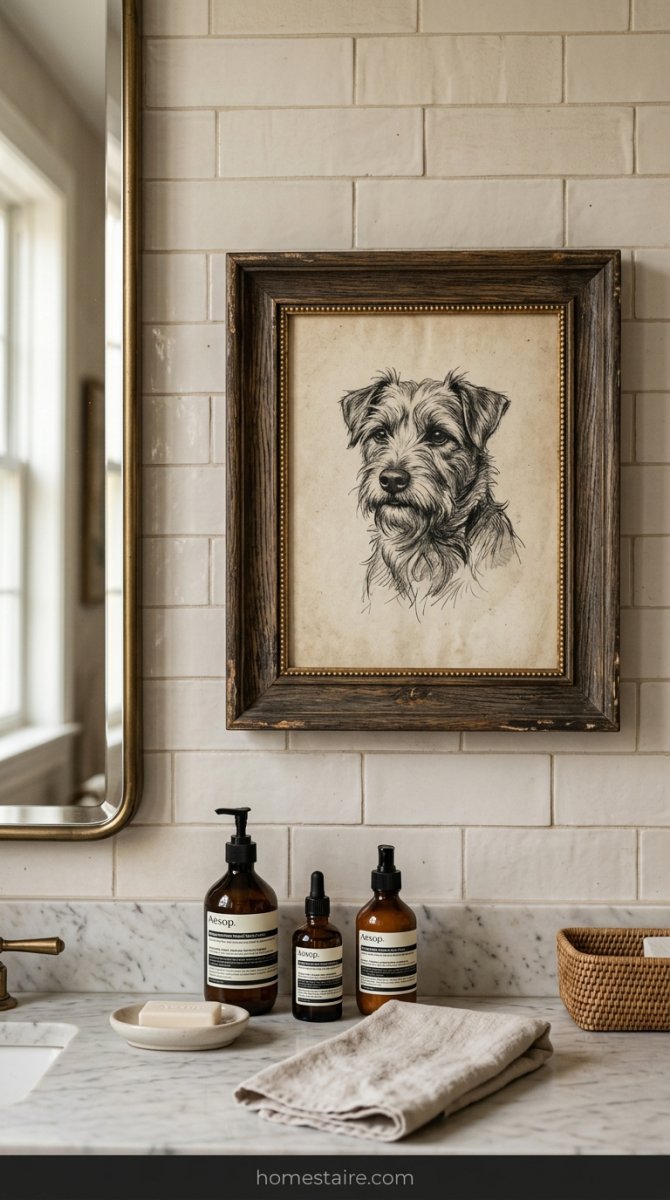
Art adds personality. Choose pieces protected from steam.
Framed prints behind glass work well.
10. Choose a statement mirror

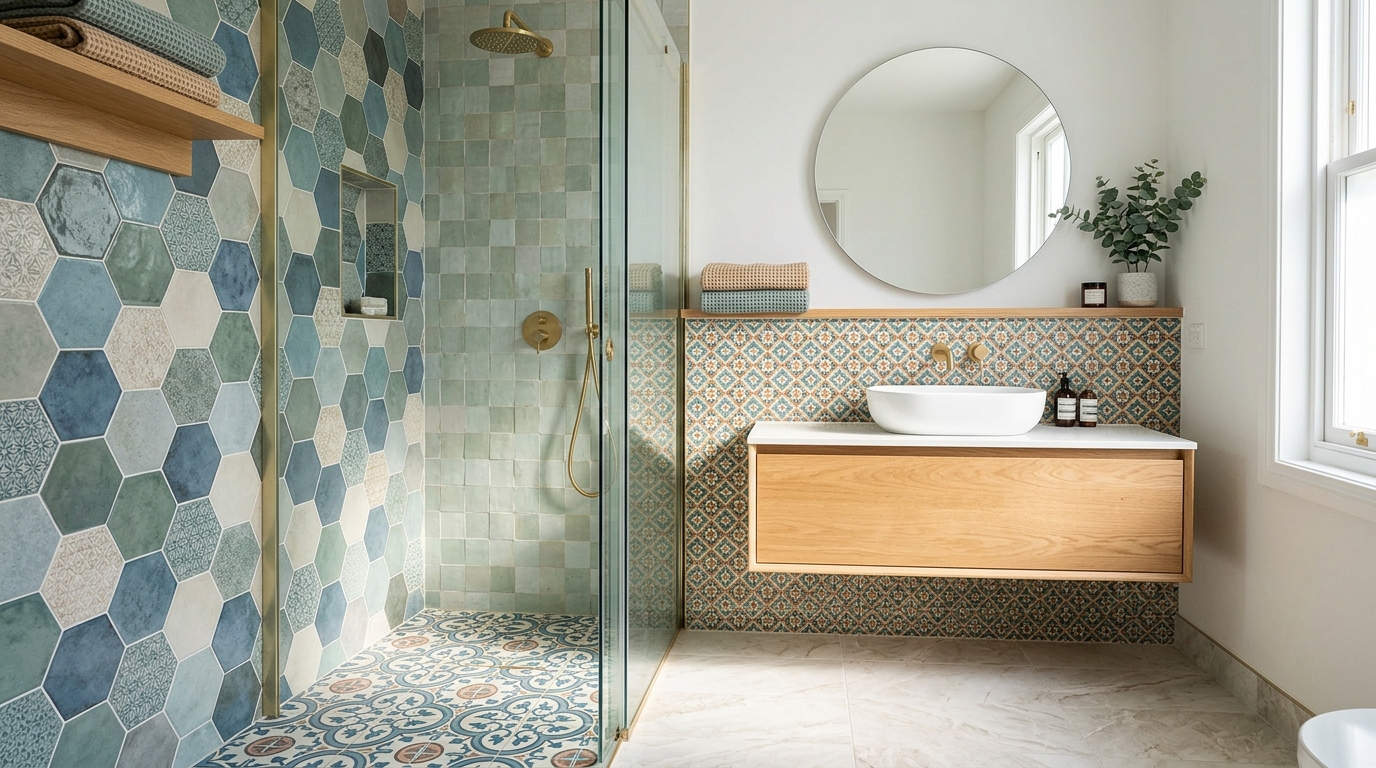
An interesting mirror frame adds shape and reflects light.
Anchor it securely.
Ways to add depth
| Element | Effect |
|---|---|
| Texture | Depth |
| Contrasting grout | Defines pattern |
| Wood | Warmth |
| Metal accents | Contrast |
| Plant | Life |
Choosing neutral undertones
Neutrals aren’t all the same. Warm neutrals, such as cream, sand, and greige, have yellow or red undertones. Cool neutrals, such as gray and stone, have blue or green undertones. Mixing warm and cool neutrals without planning is what often makes a bathroom look off.
Hold your tile, countertop, and paint samples side by side in the room’s actual light. If the tile leans warm, choose a warm white or cream for the walls. If it leans cool, use a clean white or soft gray. Keep metals consistent, since brass leans warm and chrome leans cool.
A sample checklist
- Test paint on a large board, not a small swatch.
- View samples at different times of day.
- Check tile and grout together, wet and dry.
- Compare against towels, rugs, and wood tones you plan to use.
- Take samples home before ordering, and live with them for a few days.
Neutral bathroom FAQ
How do I keep a neutral bathroom from being boring? Add texture, contrast, wood, and one or two bold accents.
What colors go with beige tile? White, warm gray, black, brass, and natural wood.
Can I change beige tile cheaply? Paint, new grout, and new fixtures can help.
Conclusion
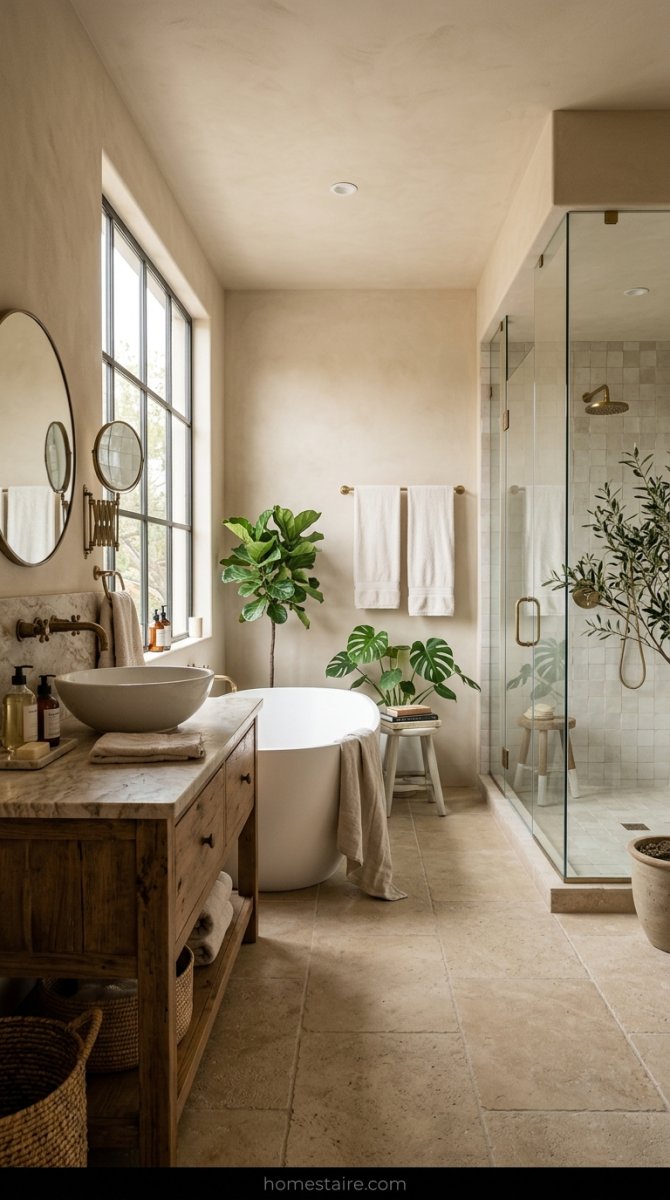
A neutral bathroom works when it has texture, contrast, and warmth. Add a few considered accents and soften the lighting.