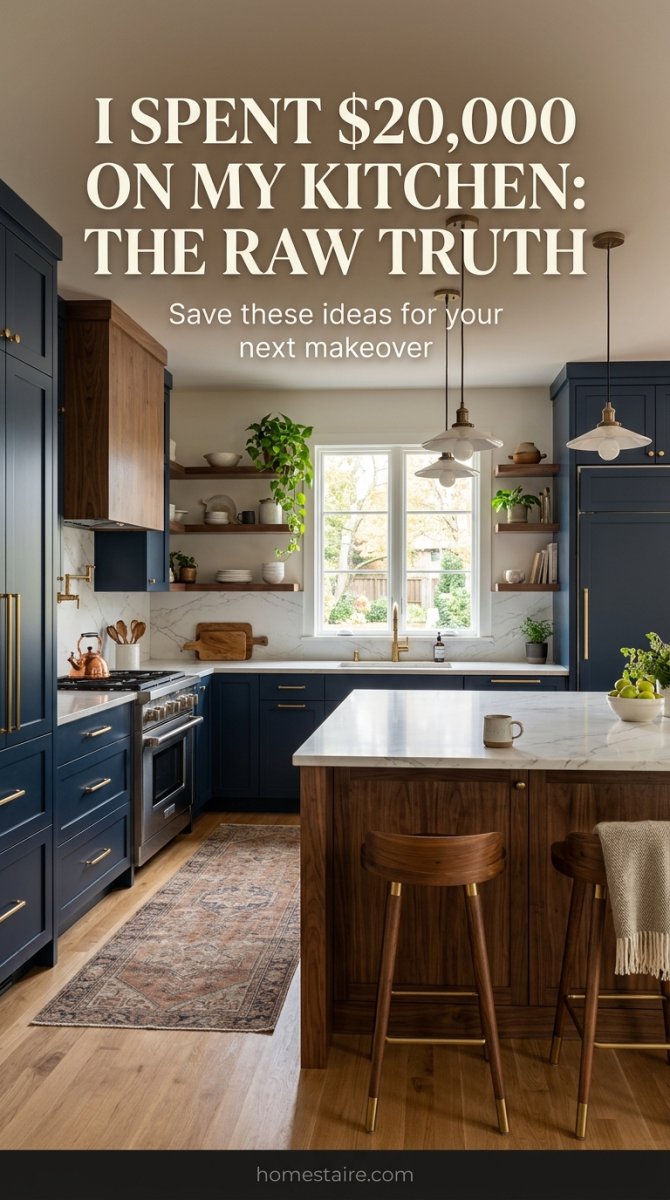
Cabinets are usually the biggest part of a kitchen budget and the hardest to change later, so the choice matters. Style, finish, material, and layout all affect how the kitchen looks and how well it works every day.
This guide covers 13 modern cabinet design ideas, two to avoid, and practical advice on materials and hardware, with a comparison table and FAQ. It’s based on cabinetry and design guidance rather than a personal remodel, so get quotes and samples before ordering.
1. Matte black flat-panel cabinets

Matte black slab doors look sleek and modern. They can show fingerprints and smudges, so look for fingerprint-resistant finishes.
Balance them with warm wood or light counters so the kitchen doesn’t feel heavy.
2. Reclaimed wood accents
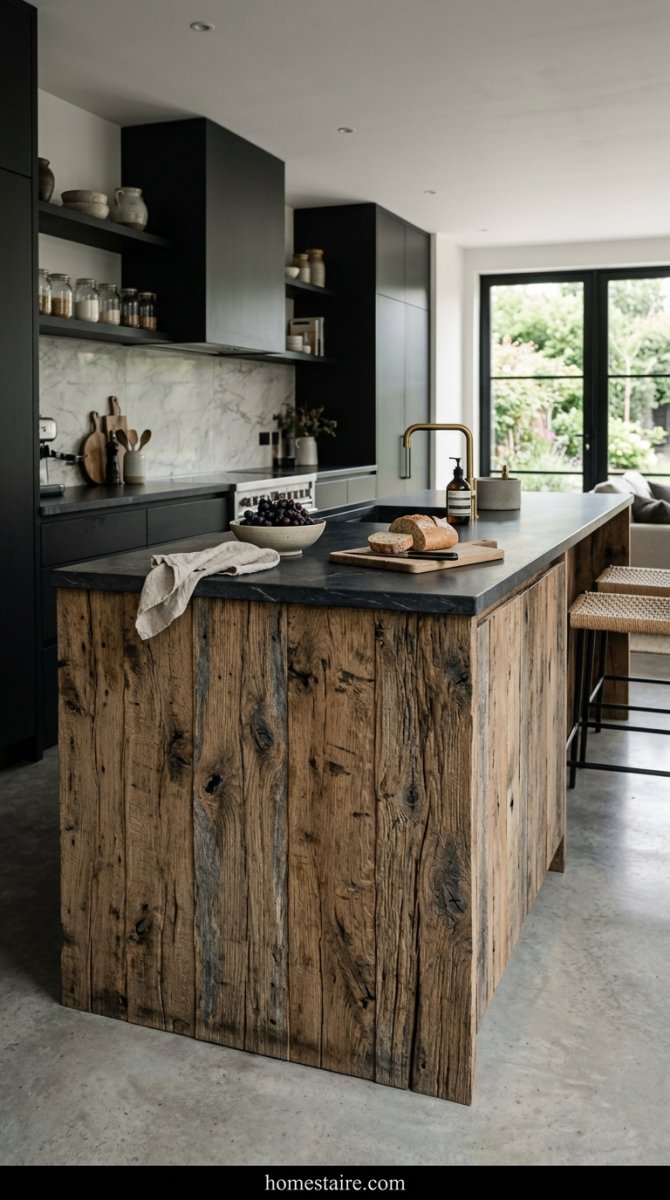
Reclaimed wood on an island or a few doors adds texture and character. Real reclaimed wood costs more than imitations.
Seal it for kitchen use so it resists stains and moisture.
3. Push-to-open doors
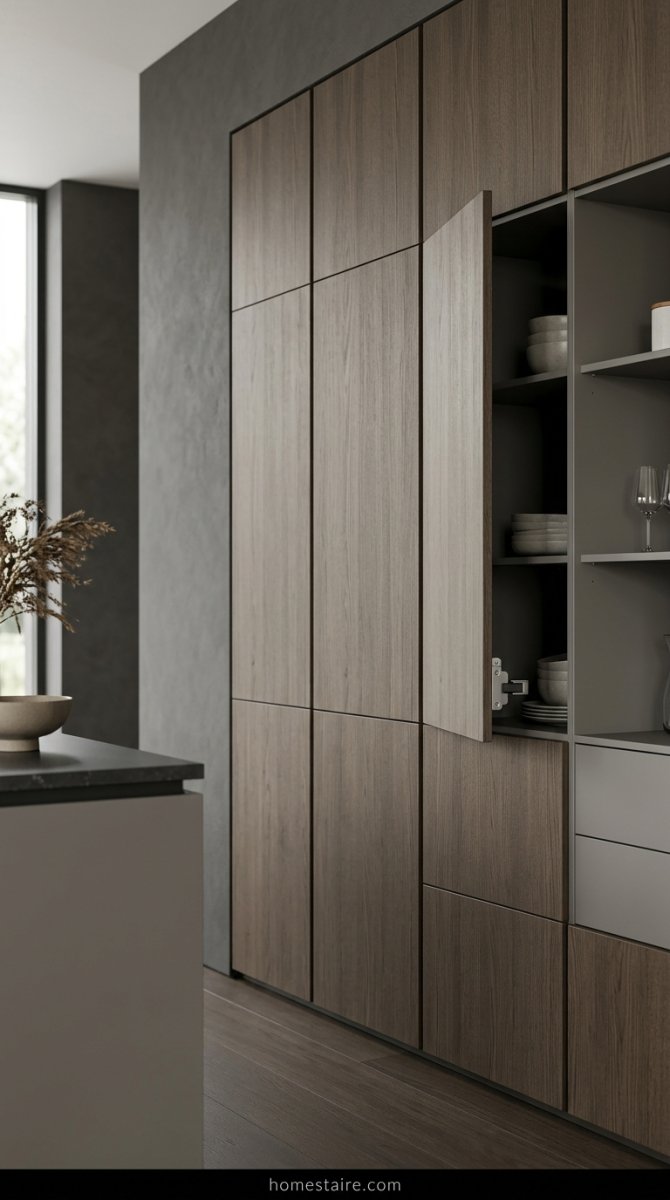
Push-to-open hardware removes handles for a clean, minimal look. Quality mechanisms matter, since cheap ones can fail.
If you cook with messy hands, consider handles on frequently used doors.
4. Floating upper cabinets
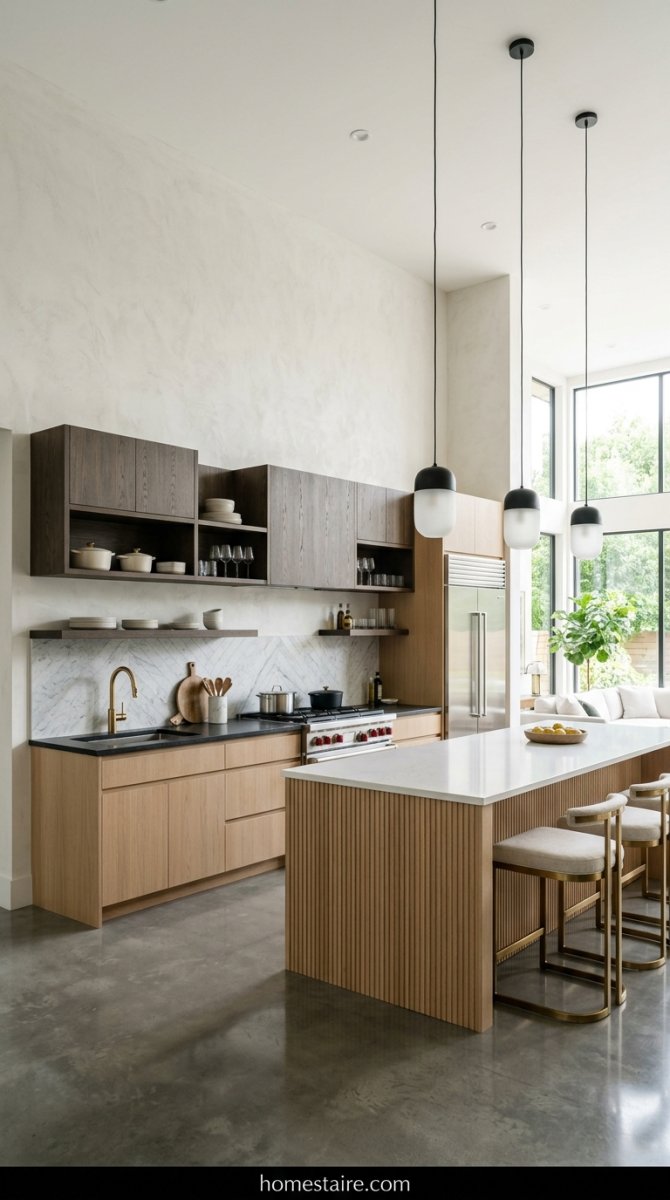
Upper cabinets that stop short of the ceiling, or are mounted with open space beneath, feel lighter and let more light in.
They need strong wall support, so anchor into studs.
5. Under-cabinet LED lighting
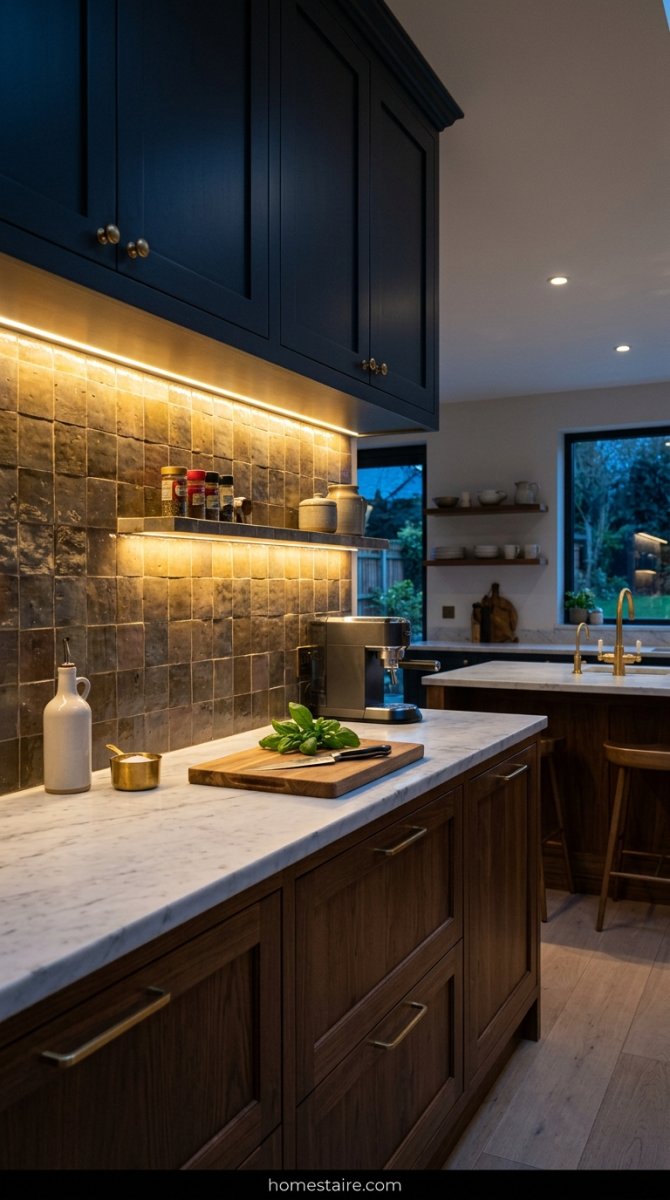
LED strips under upper cabinets light the counters and make the kitchen look finished. Choose warm-white strips with a diffuser, and a good color rendering index.
Cheap strips can look harsh or uneven, so check reviews.
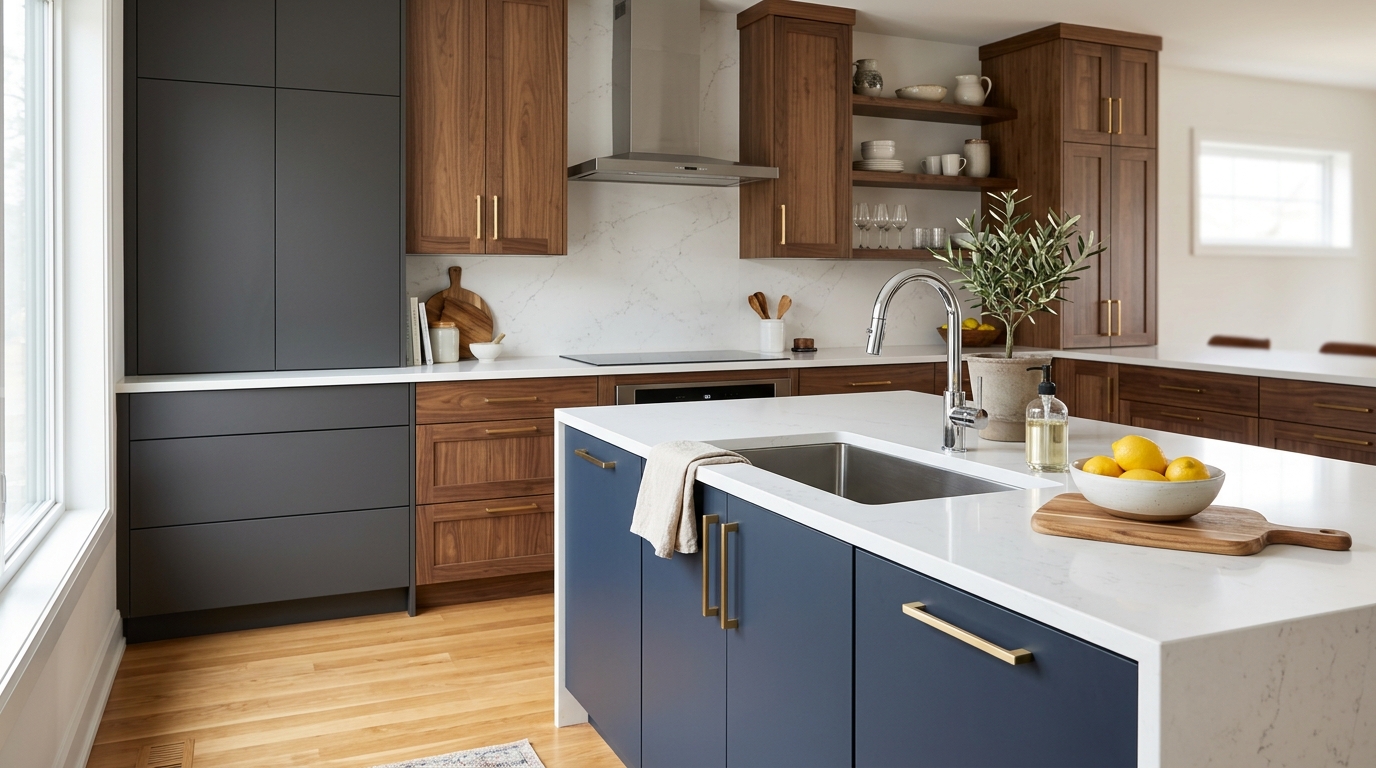
6. Navy and white

Navy lowers with white uppers is a classic, safe combination that works in many kitchens.
Use a durable cabinet paint or factory finish.
7. High-gloss acrylic
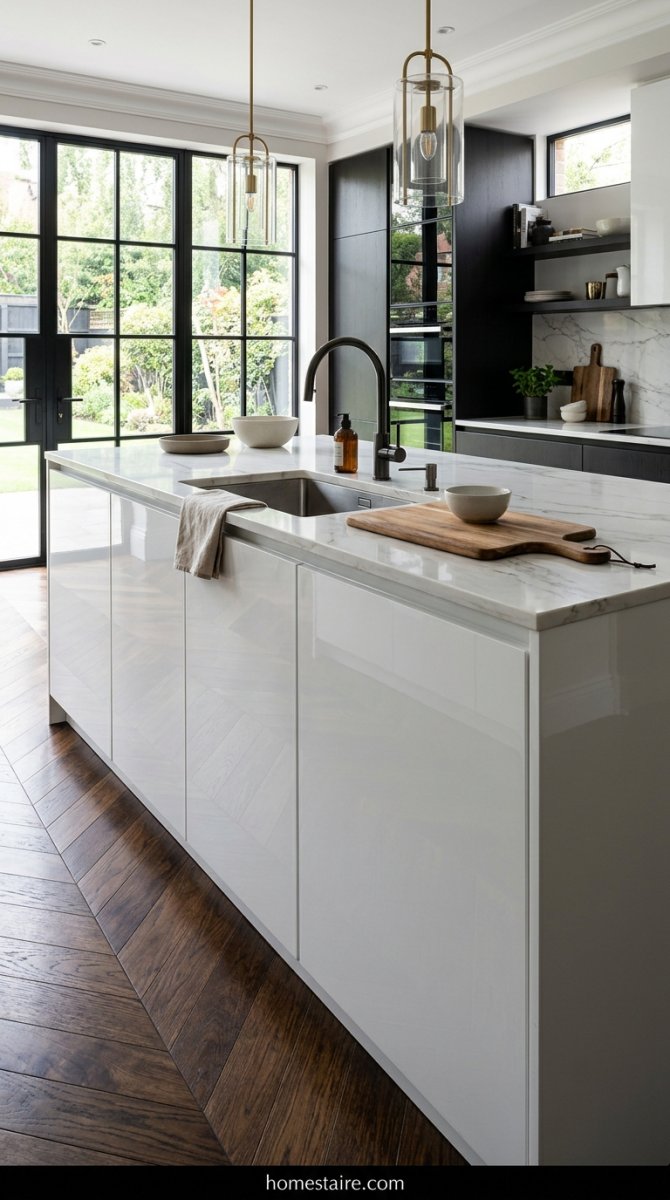
High-gloss acrylic reflects light and has a mirror-like finish. It’s easy to wipe clean but shows fingerprints and scratches.
It suits modern, European-style kitchens.
8. Real walnut veneer
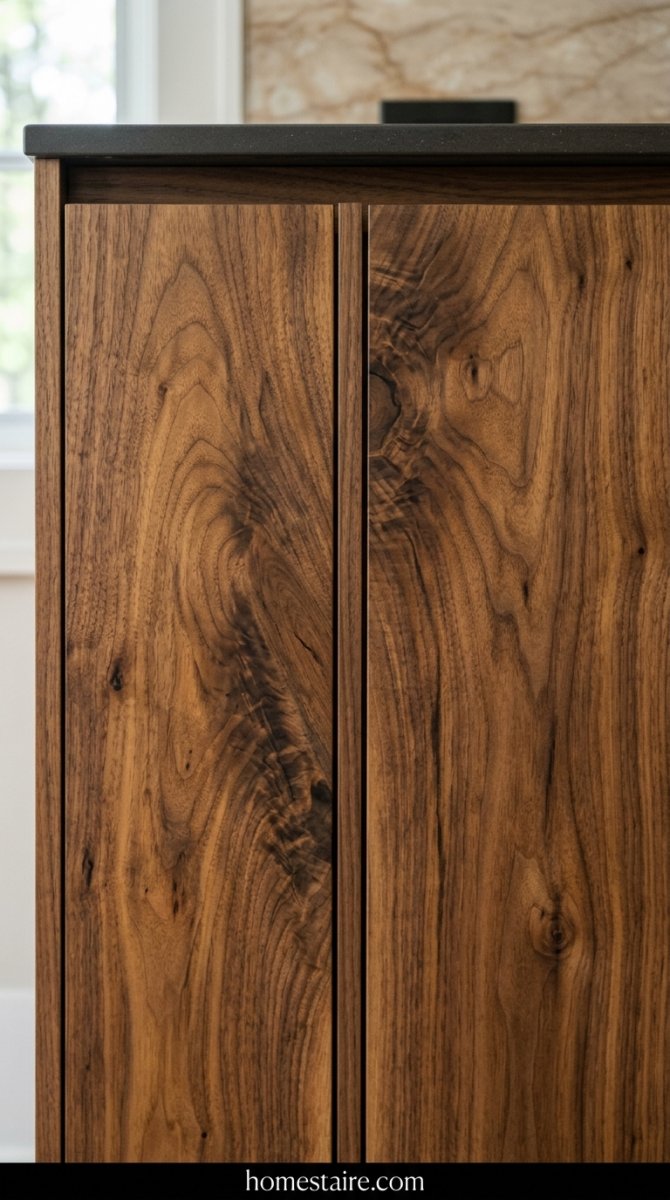
Walnut veneer gives a rich, warm look at a lower cost than solid walnut. Veneer on quality plywood is stable and consistent.
Check the veneer thickness and the edge finish.
9. Vertical slatted wood

Slatted panels add texture and a Scandinavian or mid-century feel. They suit islands and tall pantry doors.
Gaps can collect dust, so keep them away from the stove.
10. Glass doors with black frames
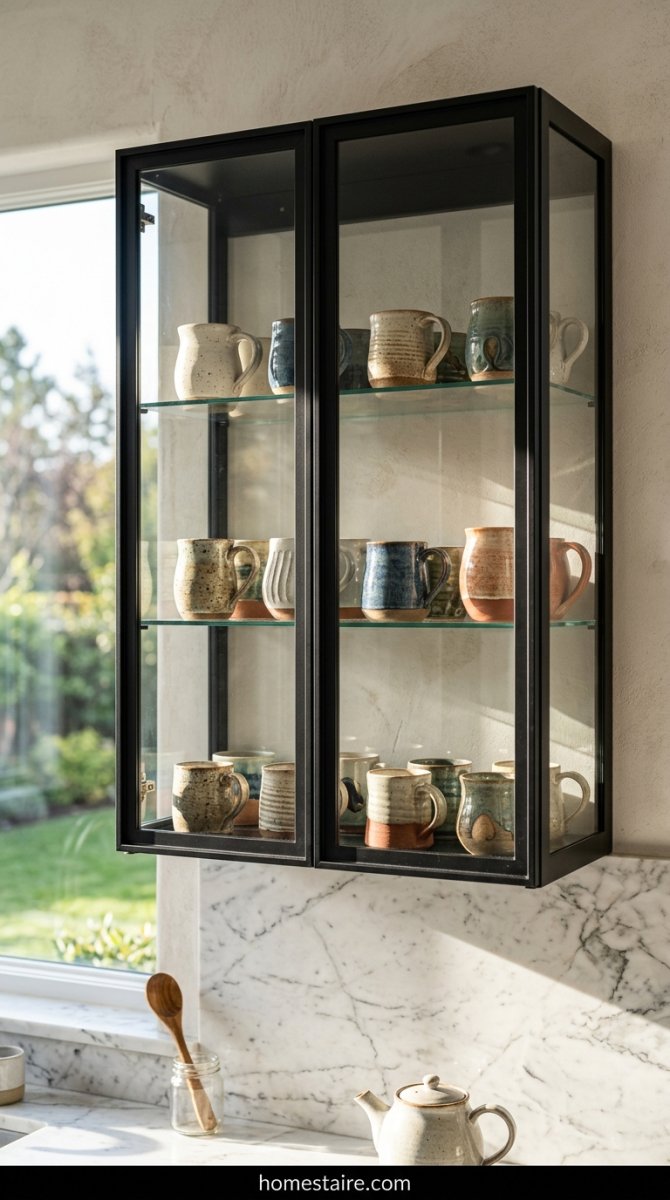
Glass-front doors with slim black frames display nice dishware and lighten a wall of cabinets.
They work best when you keep the contents tidy, since everything is visible.
11. Deep pull-out drawers for lowers
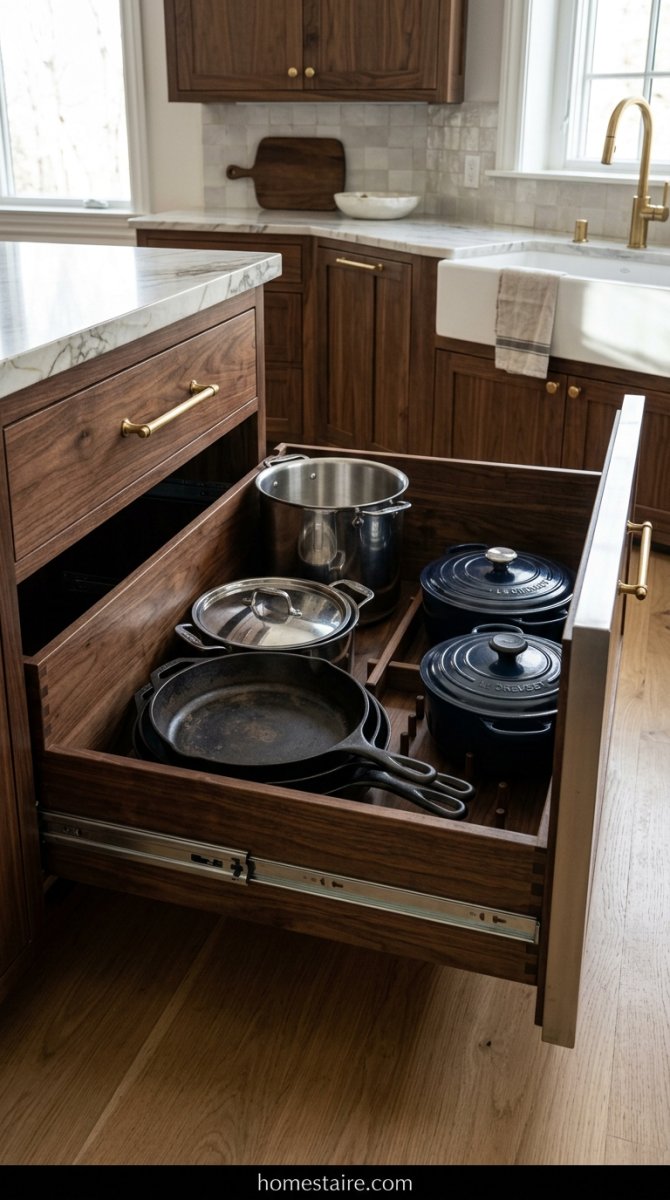
Drawers give full access to pots and pans, unlike deep shelves behind doors. They’re one of the most practical upgrades.
Choose full-extension, soft-close slides rated for heavy loads.
12. Champagne gold hardware

A soft gold finish adds warmth to dark or neutral cabinets.
Keep the metals consistent with faucets and lighting.
13. An appliance garage

A cabinet with a lift or roll-up door hides small appliances such as the toaster and coffee maker, keeping counters clear.
Include an outlet inside, and allow ventilation for heat-producing appliances.
To skip: open shelving near the stove
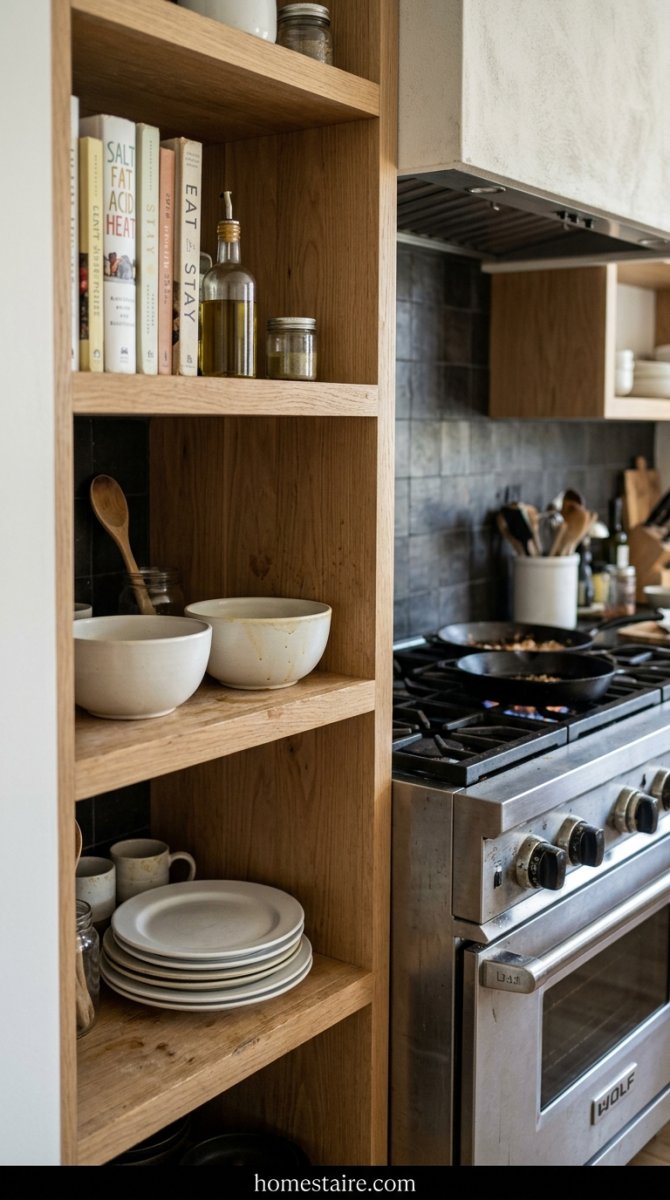
Open shelves near a stove collect grease and dust, so dishes need frequent washing.
If you want open shelves, place them away from the cooktop.
To skip: low-quality wood-look laminate
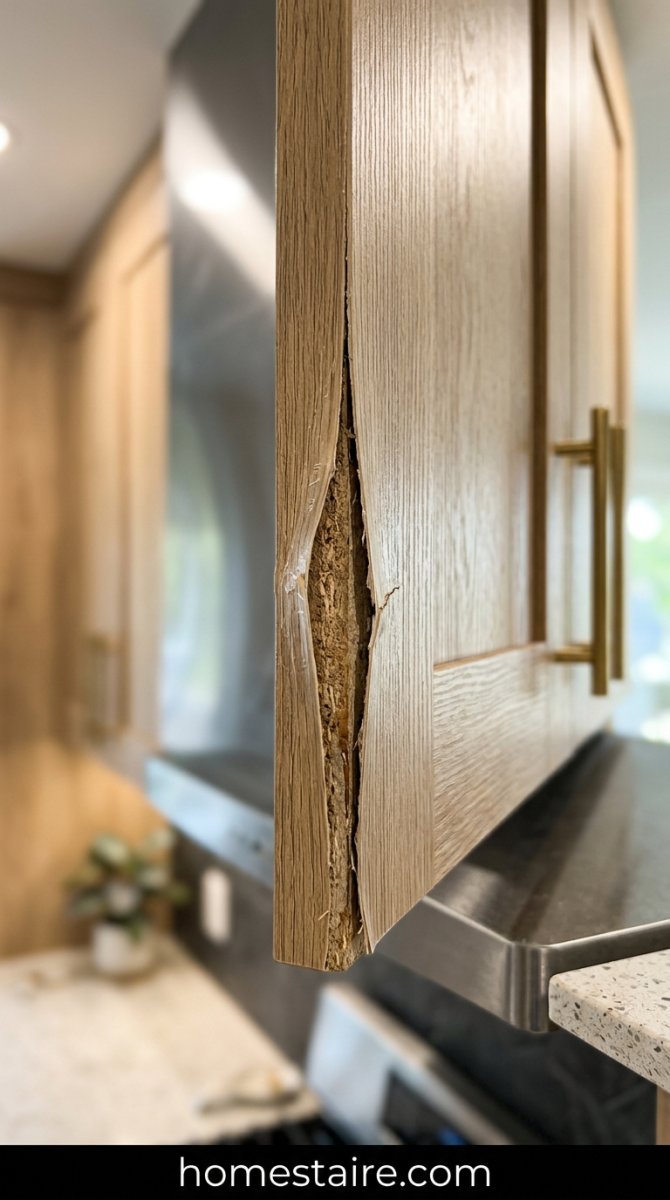
Cheap laminate can peel at the edges, especially near heat and moisture, and it can look flat.
If you’re on a budget, consider painted cabinets or quality thermofoil with good edge sealing.
Choosing cabinet materials and construction
Plywood boxes resist moisture and hold screws better than particle board, which can swell when wet. Soft-close hinges and drawer slides protect cabinets and reduce noise.
Check the box thickness, the drawer construction (dovetail or sturdy joints), and the finish. Ask whether the box and the doors are the same material.
Style, layout, and hardware tips
Shaker-style doors are timeless and suit many kitchens, which is why they’re a common recommendation. Drawers are usually more convenient than doors for lower cabinets. Plan corner cabinets with pull-outs or lazy Susans before building, since corners waste space.
Hardware is a low-cost way to upgrade a cabinet. Match your ceiling height to the upper cabinet height, and test paint samples in morning and evening light, since colors change through the day.
Cabinet finishes compared
| Finish | Look | Maintenance | Notes |
|---|---|---|---|
| Matte painted | Soft, modern | Wipe clean; may mark | Use a durable cabinet paint |
| High-gloss acrylic | Sleek | Shows fingerprints | Easy to wipe |
| Wood veneer | Warm, natural | Low | Check edge finish |
| Solid wood | Classic | Low to medium | Higher cost |
| Laminate or thermofoil | Budget-friendly | Low | Edge quality matters |
Kitchen cabinet FAQ
What are the best materials for kitchen cabinets? Plywood boxes with a durable finish are a strong all-round choice.
Are dark cabinets harder to keep clean? Dark finishes show dust and fingerprints more, so consider matte, fingerprint-resistant finishes.
Should I choose drawers or doors? Drawers for lower cabinets give easier access, while doors work well for uppers.
How do I test a cabinet color? Use large samples on a door or board and check them in different light.
Conclusion

Choose cabinets for how you cook and clean, not only for how they look. Prioritize construction, drawers, and good hardware, and test finishes in your own light before committing.