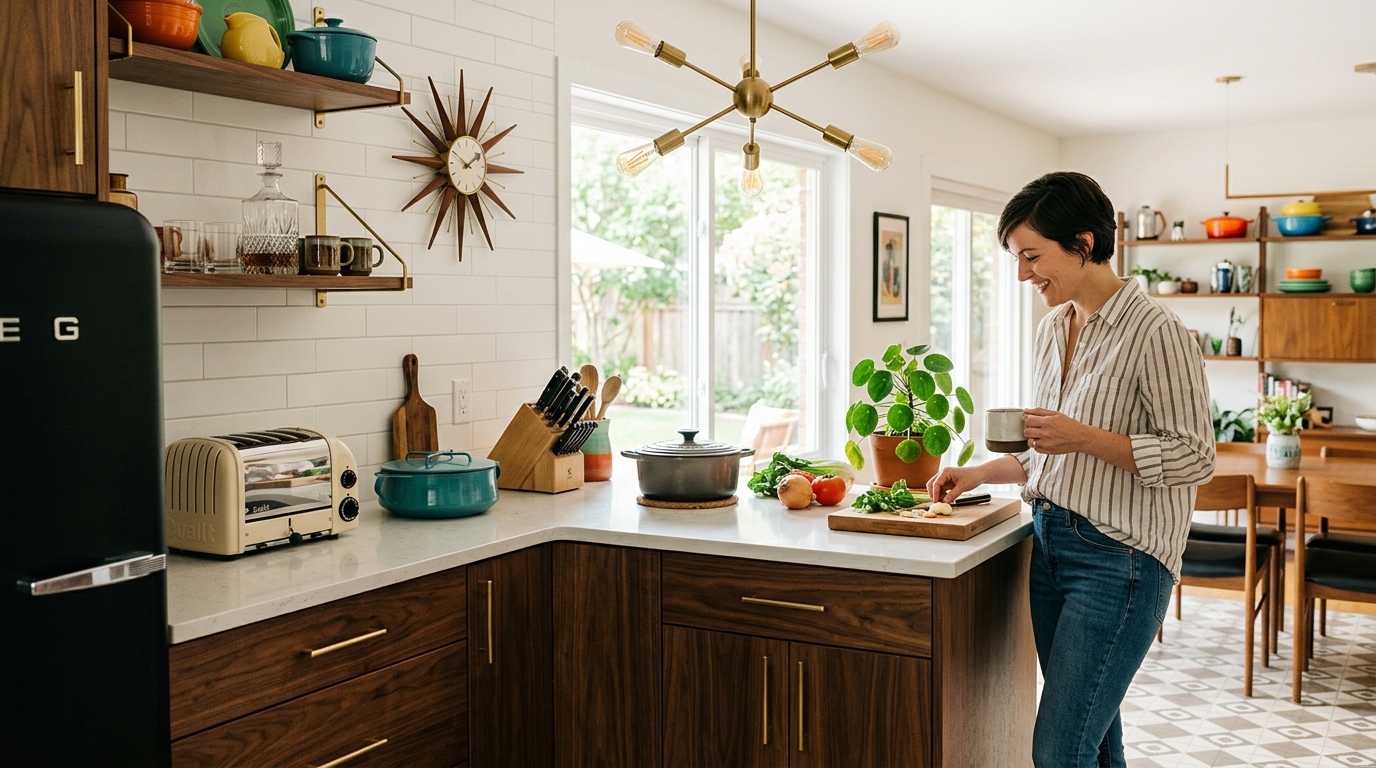
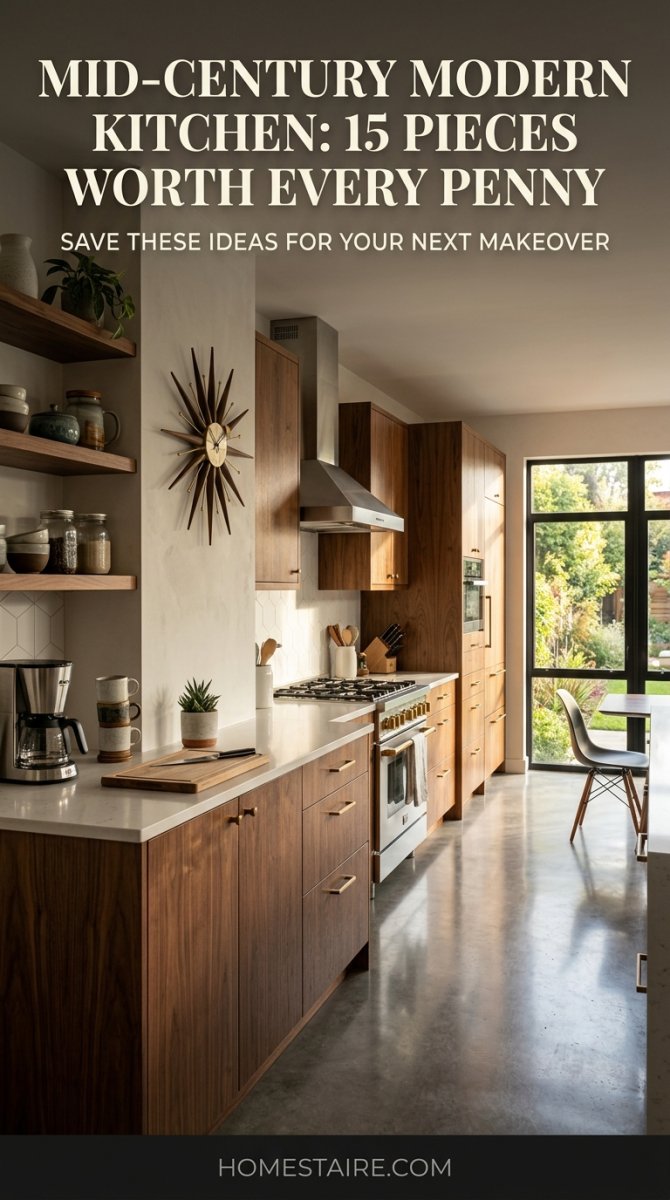
Mid-century modern design, from roughly the 1940s to the 1960s, mixes clean lines, warm wood, bold color, and playful geometry. In a kitchen, it translates into walnut cabinets, tapered legs, brass details, and sculptural lighting.
This guide covers 15 mid-century kitchen elements and how to use them, with a table and FAQ. It’s based on design history and guidance rather than personal purchases, so verify authenticity and quality when buying vintage or reproduction pieces.
1. A starburst clock
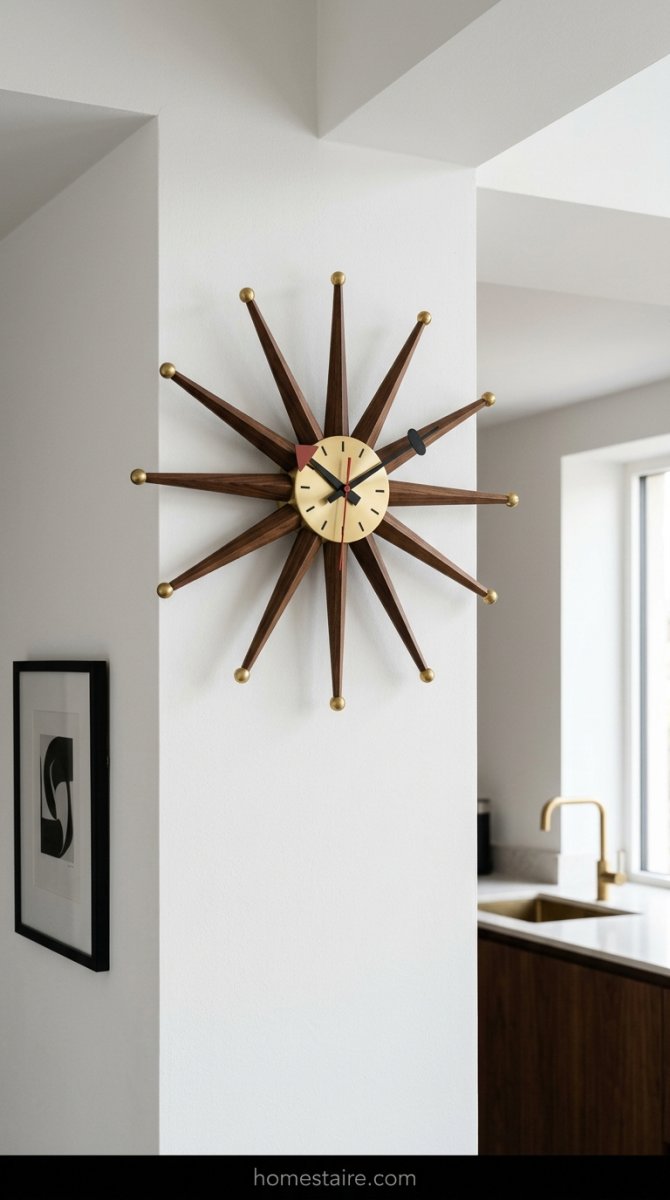
Sunburst clocks, famously designed by George Nelson, are an icon of the style. They serve as wall art and a focal point.
Originals are costly, and many reproductions exist.
2. Molded plastic stools
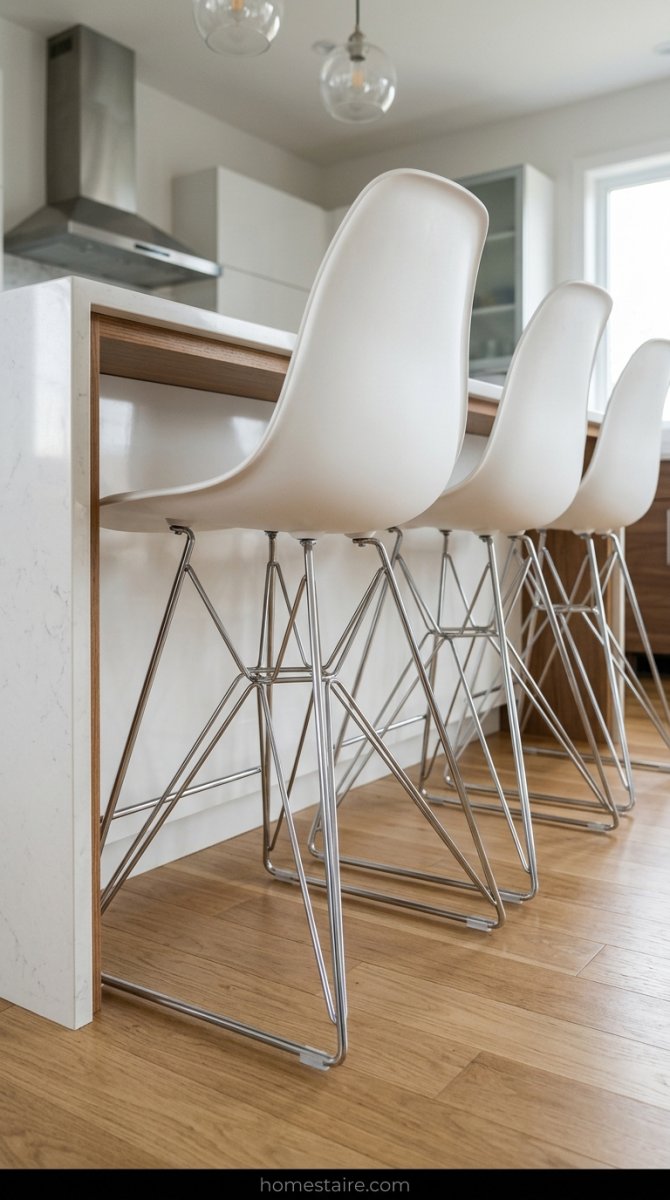
Molded shell seating, associated with designers such as Charles and Ray Eames, is comfortable and easy to clean.
Choose stools with the right seat height for your counter.
3. Teak canisters
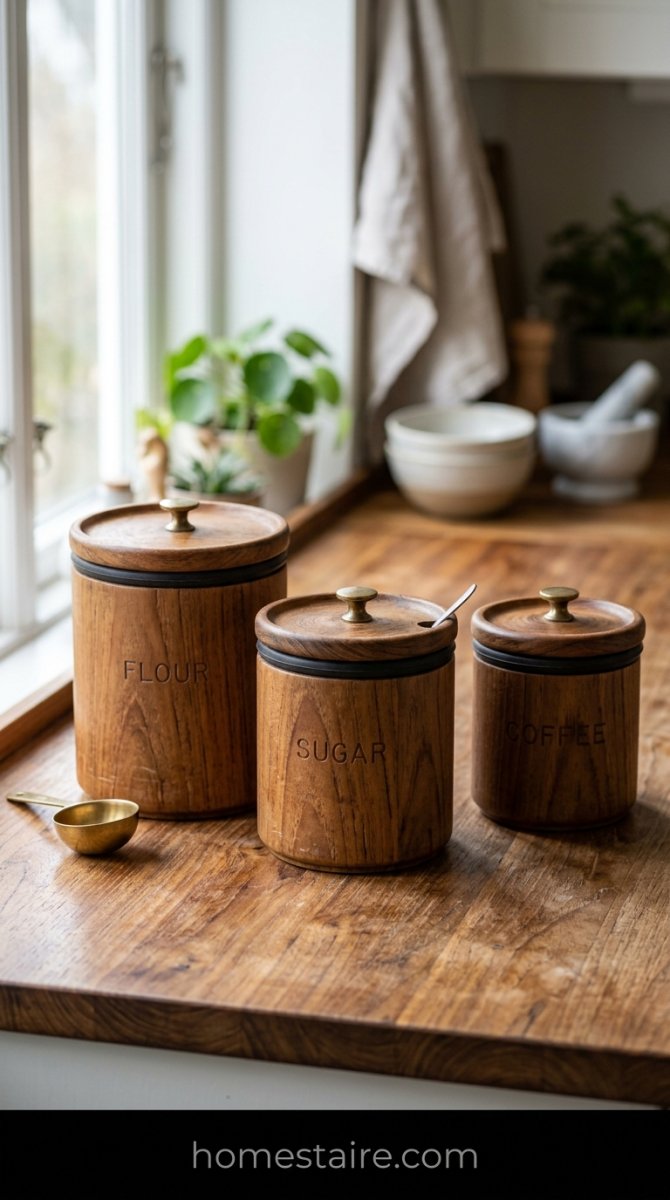
Danish-style teak canisters are warm, practical, and handsome on a counter.
Hand-wash teak and oil it occasionally.
4. A retro-style fridge
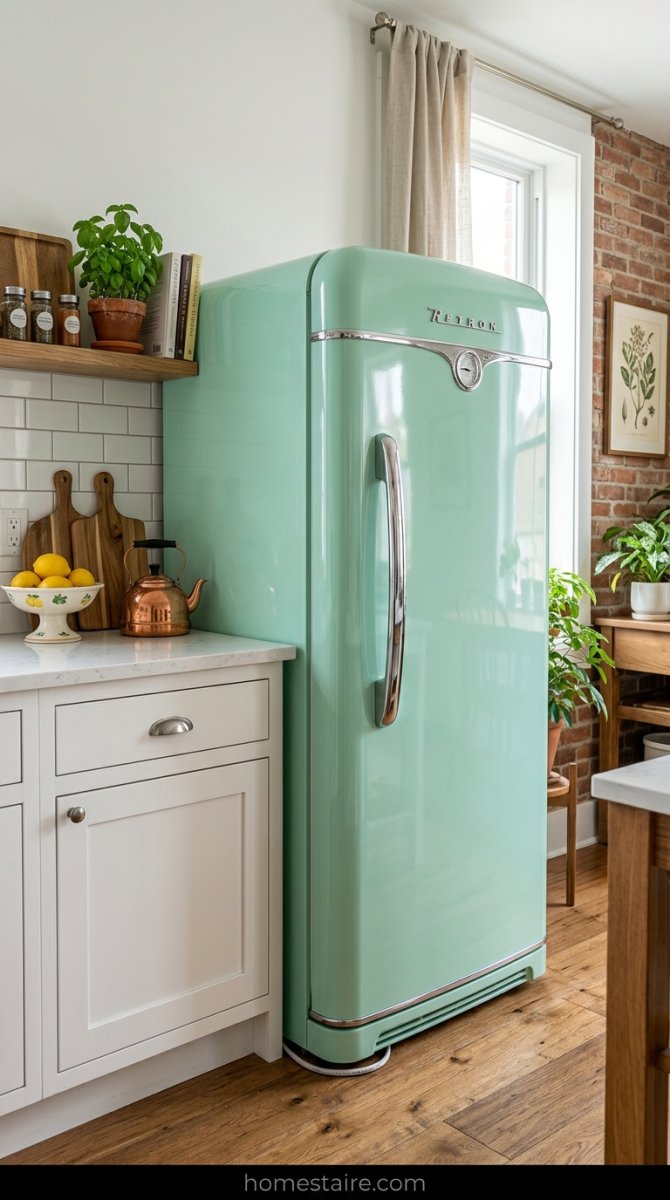
A pastel retro fridge is an eye-catching centerpiece. Modern retro models give the look with current efficiency.
Check capacity and energy ratings, since some are small.
5. A Sputnik chandelier
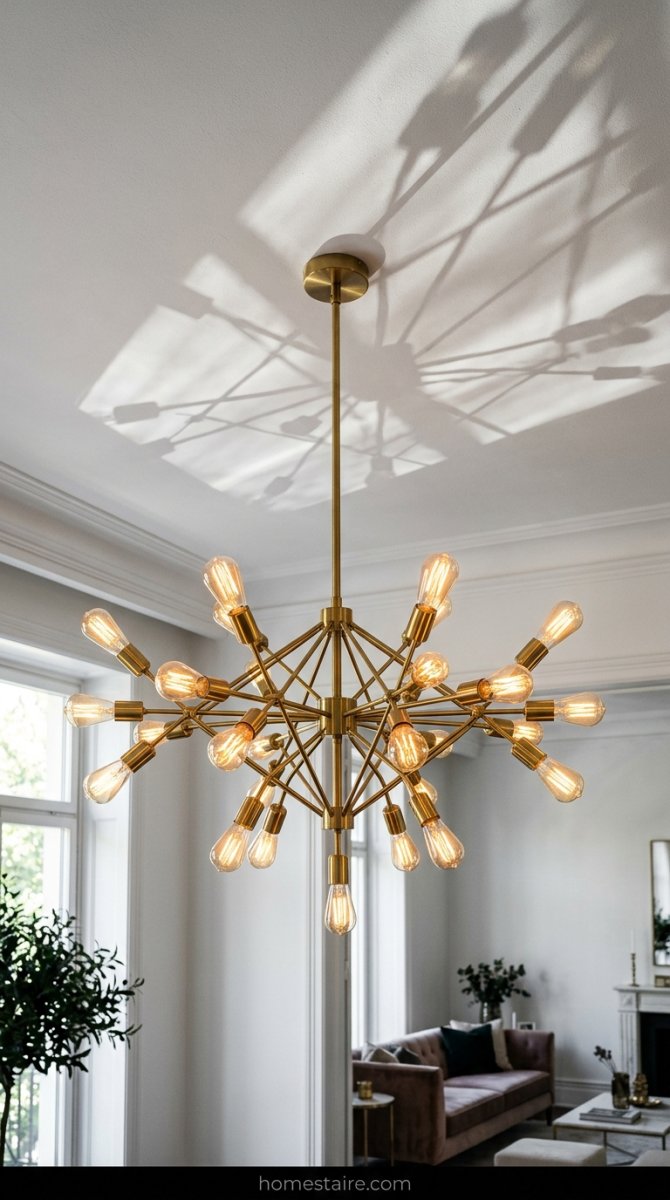
The radiating arms of a Sputnik chandelier define the Space Age look. It works over a table or island.
Check ceiling height and use appropriate bulbs.
6. Geometric backsplash tile
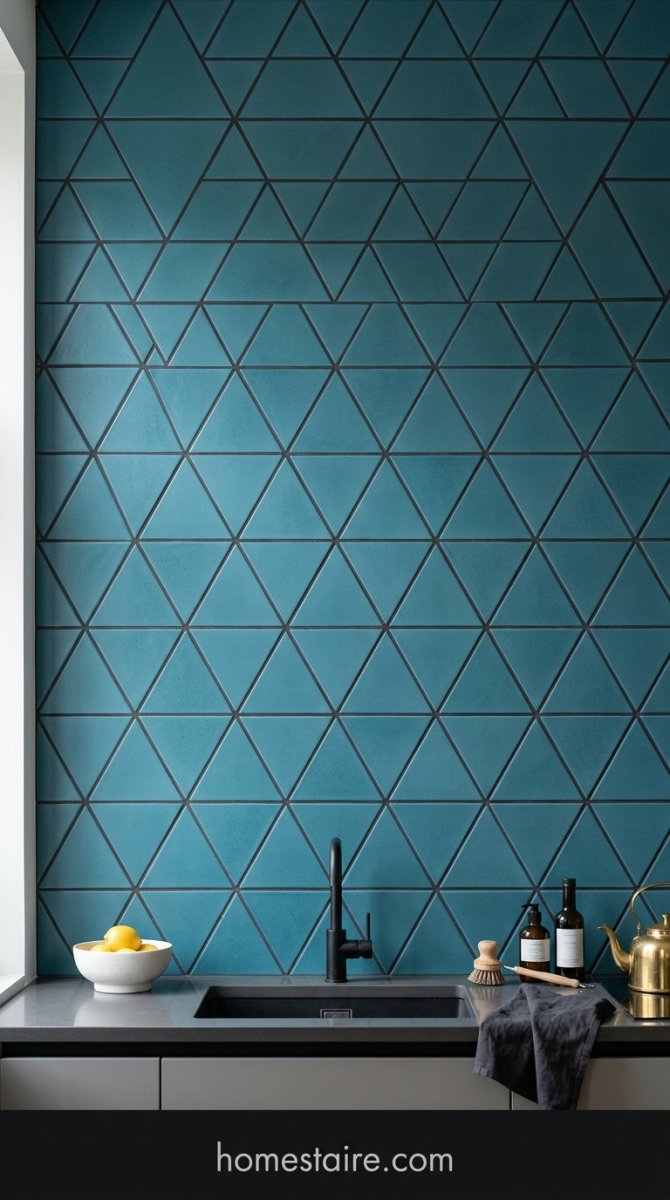
Geometric or hexagonal tiles suit the style. Many grout lines mean more cleaning, so choose stain-resistant grout.
Seal grout where needed.
7. Brass pulls
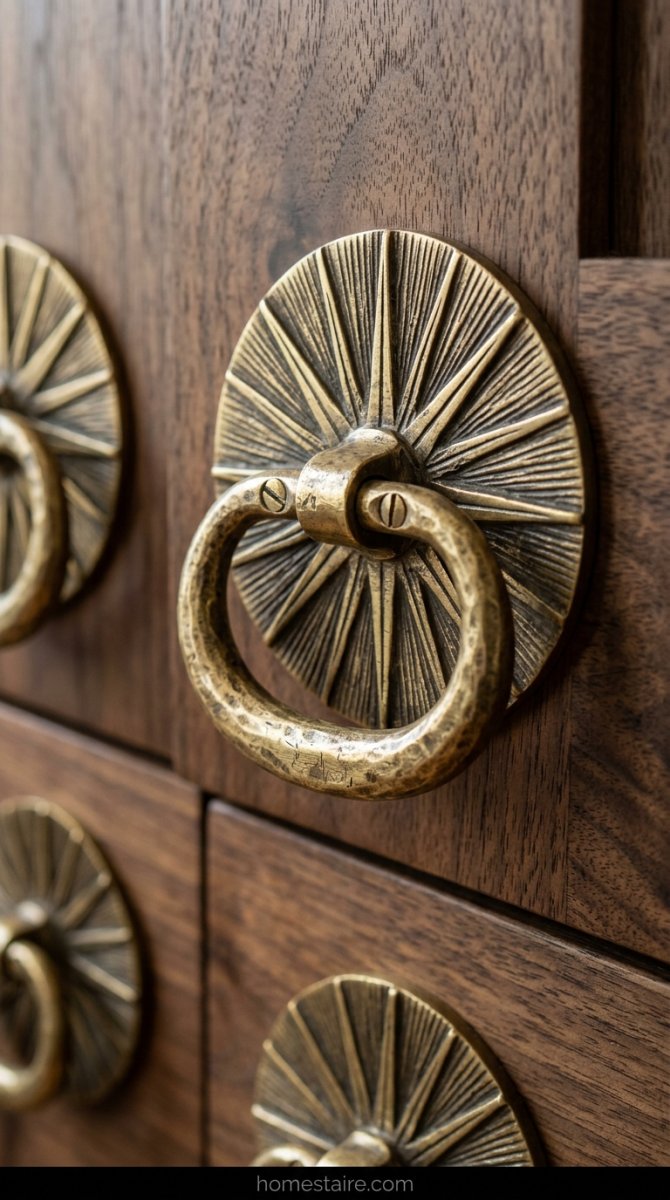
Simple brass pulls and atomic-style handles add warmth to wood cabinets.
Keep the finish consistent.
8. Walnut cabinetry
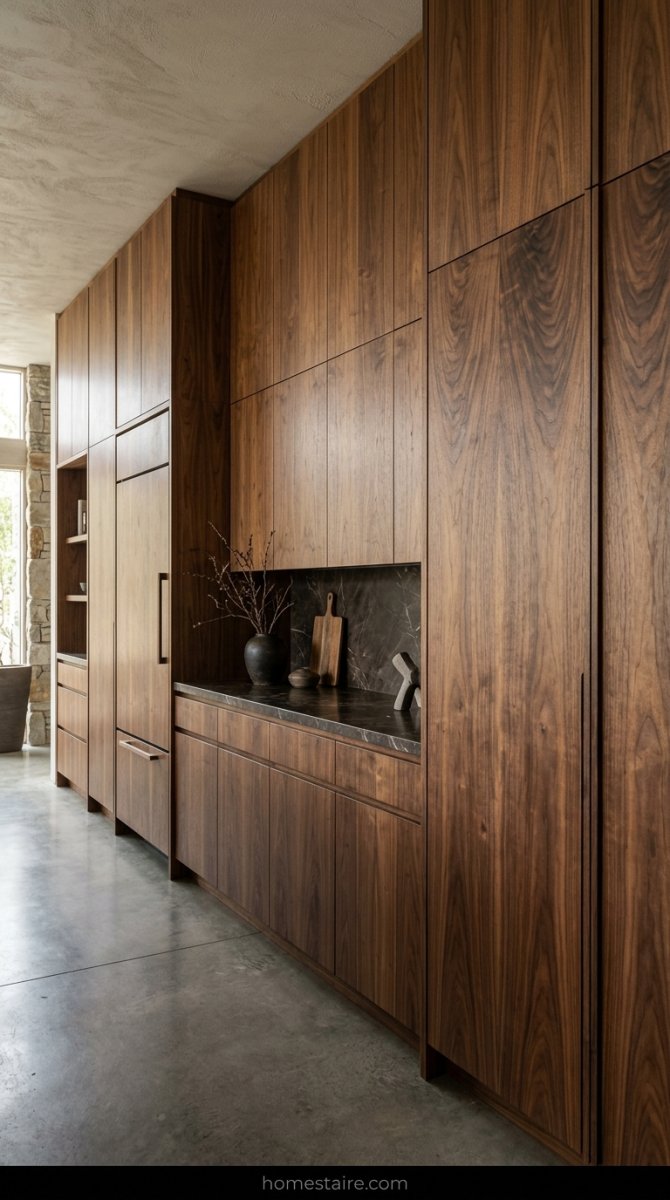
Walnut cabinets are the signature material. Veneer gives the look for less than solid wood.
Check the grain match and edge finish.
9. Vintage Pyrex bowls
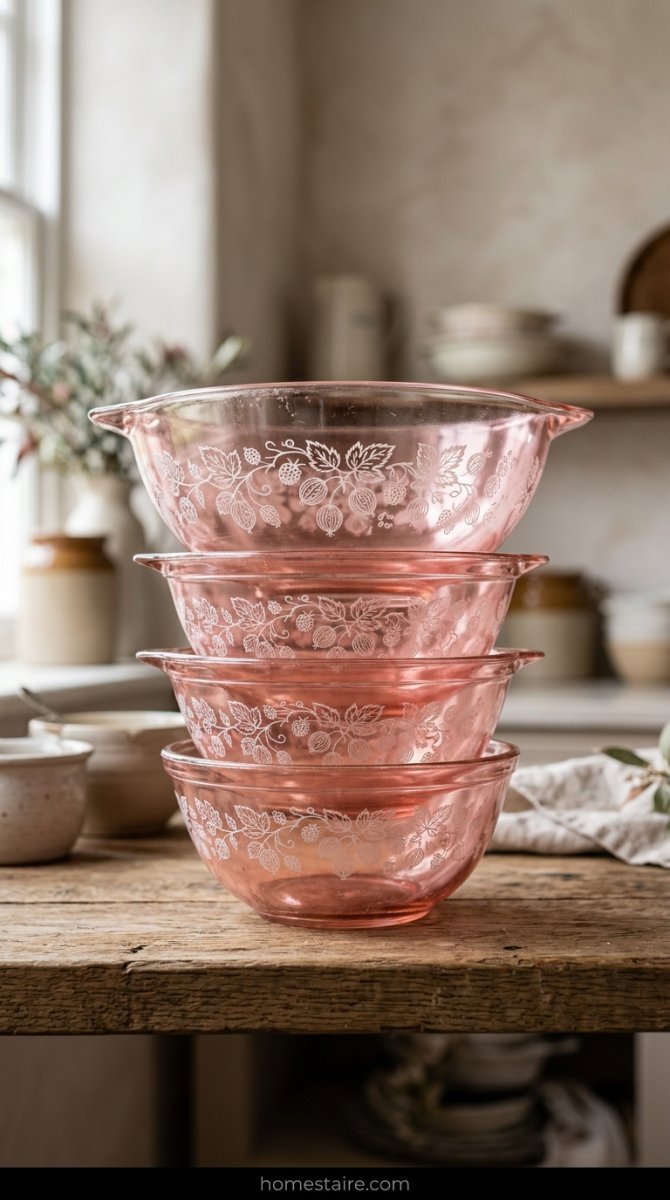
Colorful mixing bowls from the era are collectible and useful. Look for them at thrift stores and sales.
Follow care guidance, since older glassware can crack with sudden temperature changes.
10. A boomerang-pattern countertop
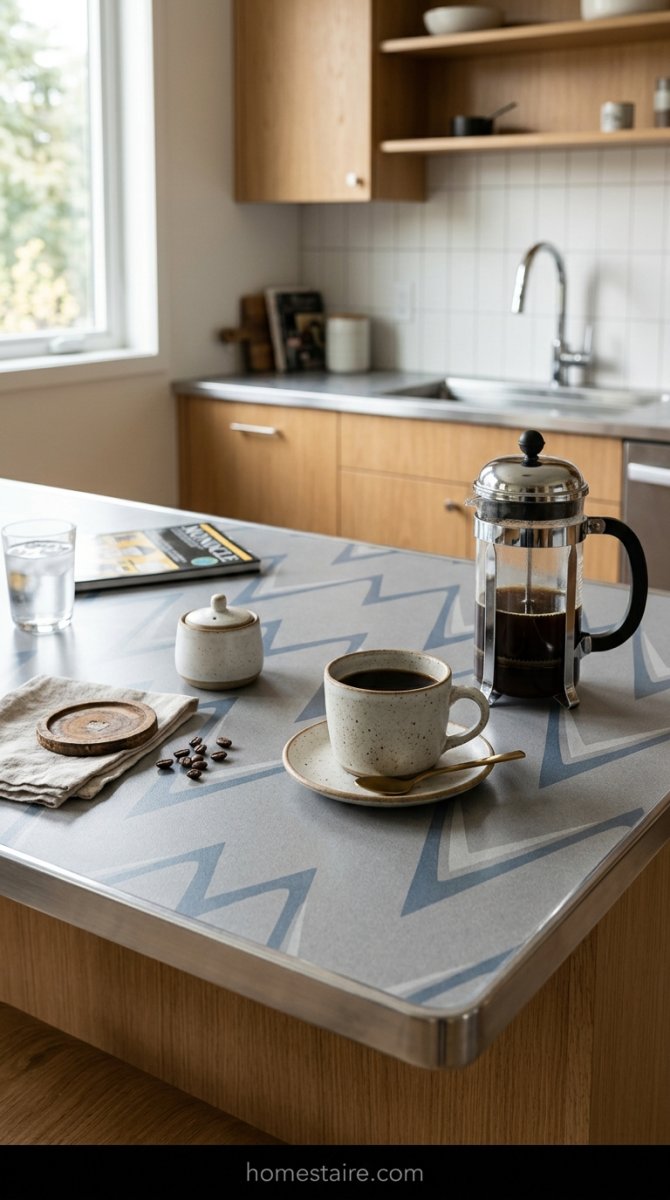
Boomerang-patterned laminate is a retro classic. Modern versions are available.
It works best as an accent, such as on an island.
11. Tapered-leg tables
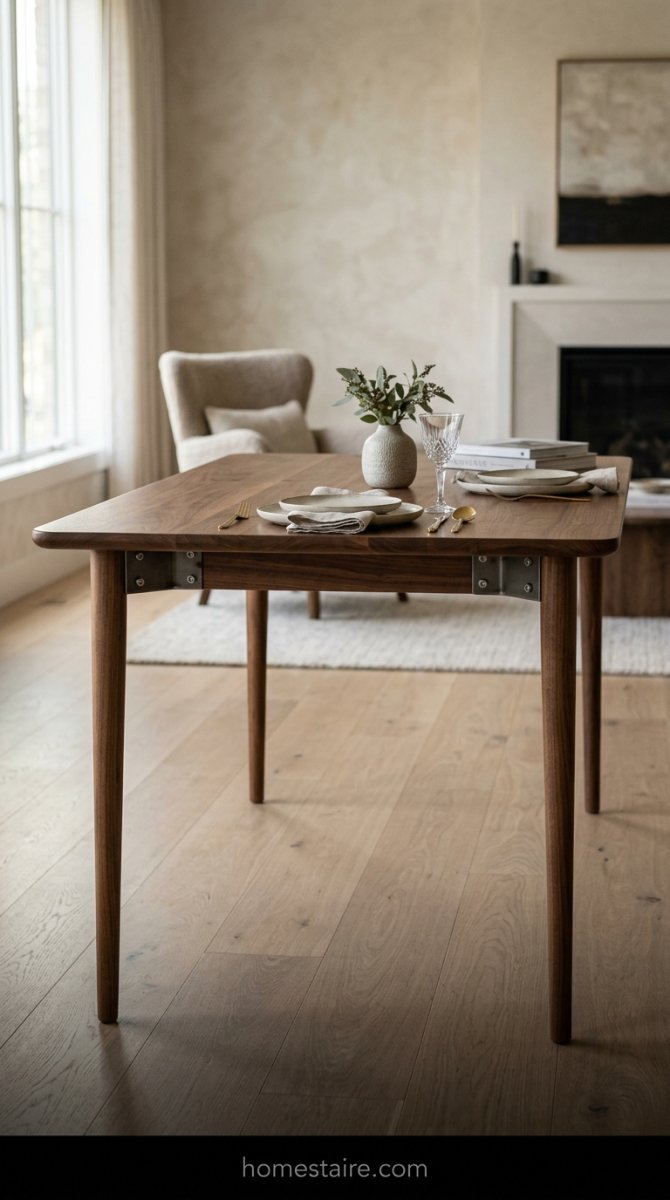
Tapered legs define the silhouette of mid-century furniture. A table with solid joinery shouldn’t wobble.
Check leg attachments.
12. Globe pendant lights

Opal globe pendants give soft light and a floating look.
Choose a size in proportion to the space.
13. A metal bread box
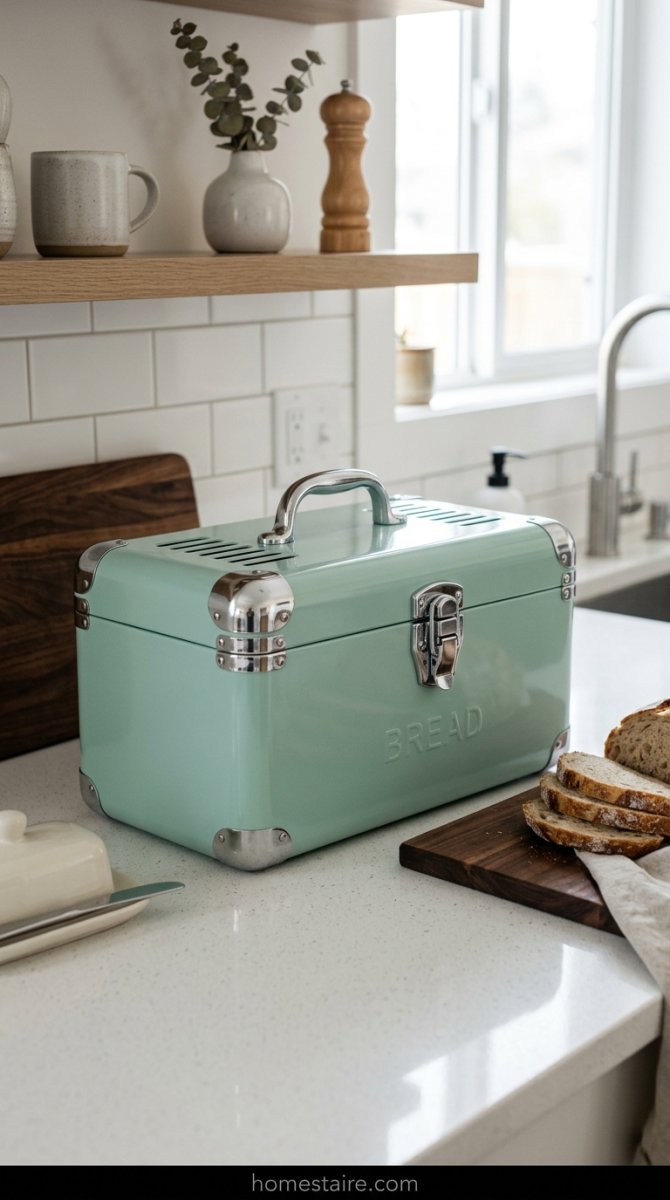
A retro bread box hides clutter and suits the style.
Check that it has some ventilation.
14. A wire fruit bowl
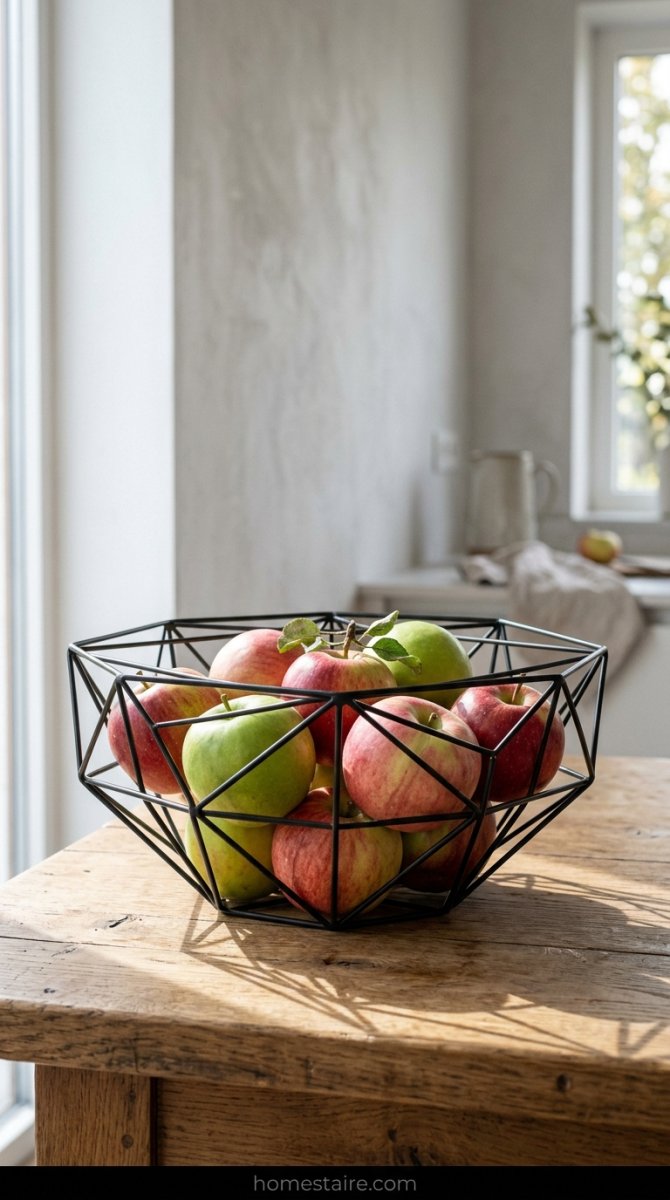
Sculptural wire bowls are functional art and allow air around fruit.
Choose sturdy construction.
15. Floating teak shelves
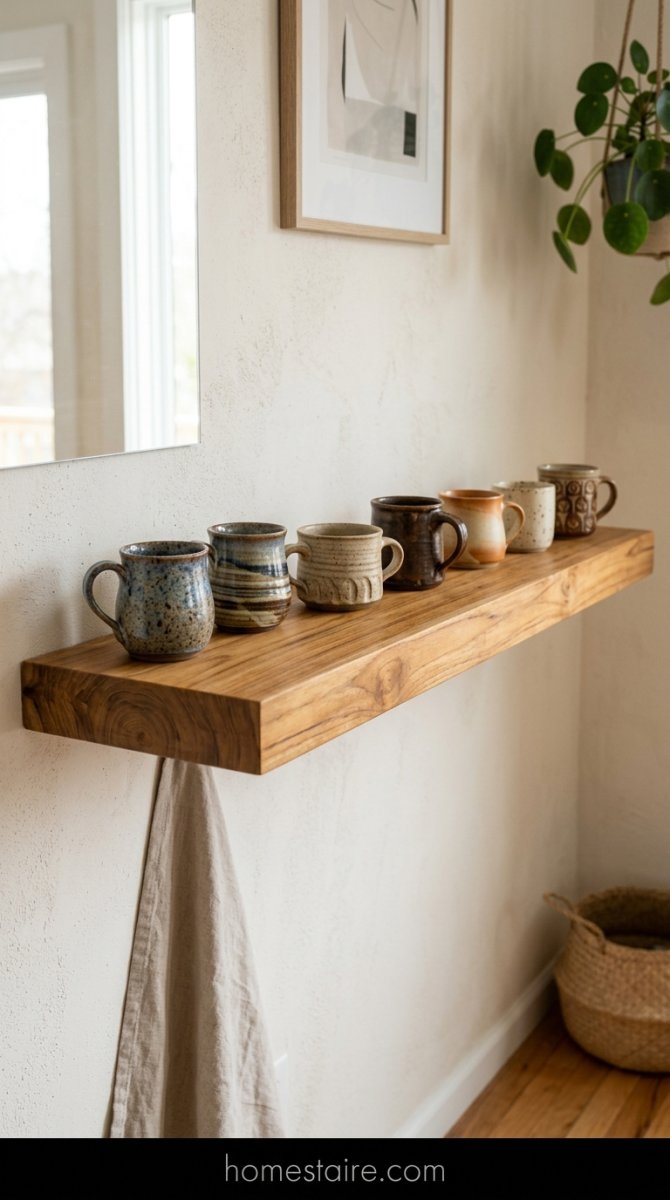
Simple floating shelves in teak display mugs and plants.
Mount into studs and keep them away from the stove.
Mid-century kitchen elements at a glance
| Element | Role | Tip |
|---|---|---|
| Walnut or teak wood | Warmth | Veneer saves cost |
| Brass hardware | Accent | Keep finishes consistent |
| Sculptural lighting | Focal point | Mind ceiling height |
| Geometric tile | Pattern | Use stain-resistant grout |
| Tapered legs | Silhouette | Check joinery |
| Retro colors | Playfulness | Use as accents |
Mid-century kitchen FAQ
What defines a mid-century modern kitchen? Clean lines, warm wood, tapered legs, sculptural lighting, and bold accents.
Is it expensive to get the look? Not necessarily. Thrift stores, reproductions, and veneers help.
How do I avoid it looking like a museum? Mix a few vintage pieces with modern basics and use what you own.
Conclusion
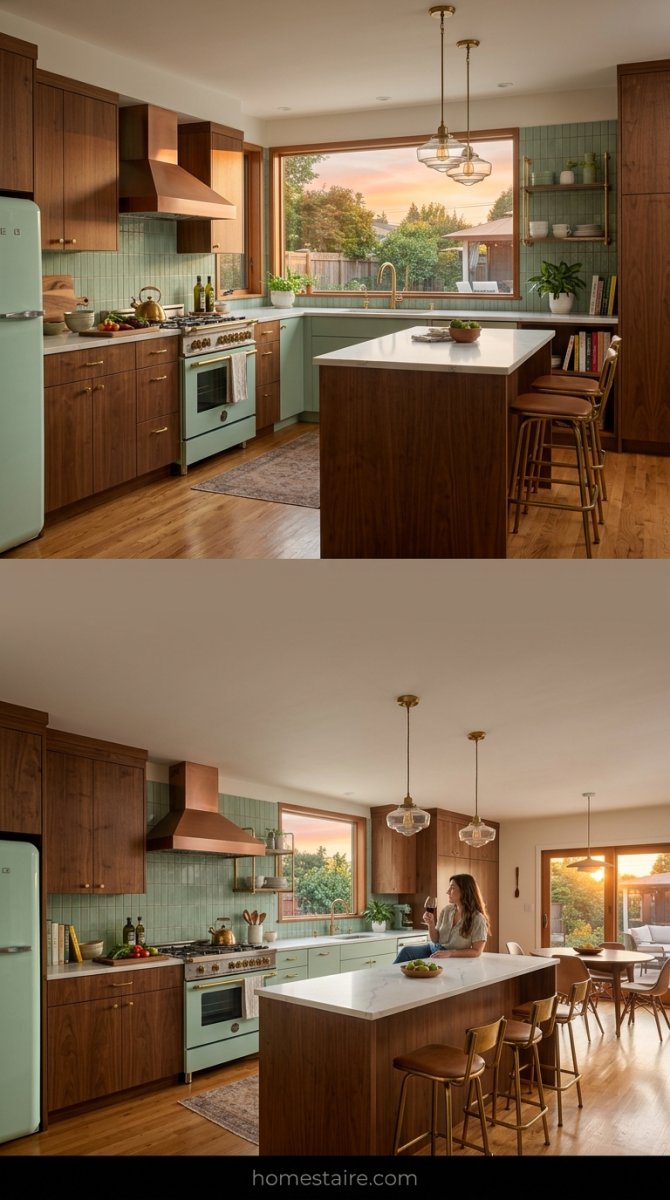
Mid-century style works best with a few standout pieces, warm wood, and restraint. Choose elements that suit how you cook and use the kitchen.