Why a minimalist cookware set makes sense
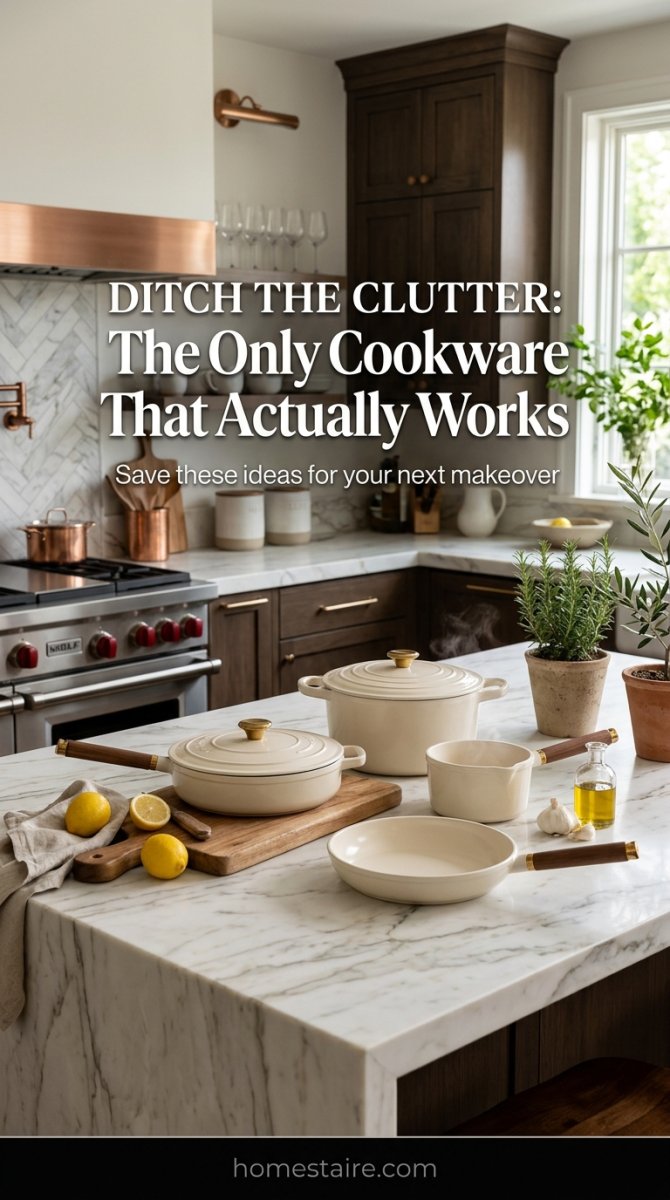
A cluttered cabinet of mismatched pots and lids makes cooking harder. A small, well-chosen cookware set cuts clutter, nests neatly, and covers what most home cooks use every day.
This guide explains what to look for in a minimalist cookware set, including materials, handles, lids, and storage, with a comparison table and FAQ. It’s a buying guide based on general cookware information, not a review of specific products, so check specs, warranties, and compatibility with your cooktop before buying.
Avoid paying for pieces you won’t use

Large sets often include items that rarely get used. Make a list of what you cook most and buy to match.
Sometimes buying a few good pieces separately beats a big set.
What a minimalist set usually includes
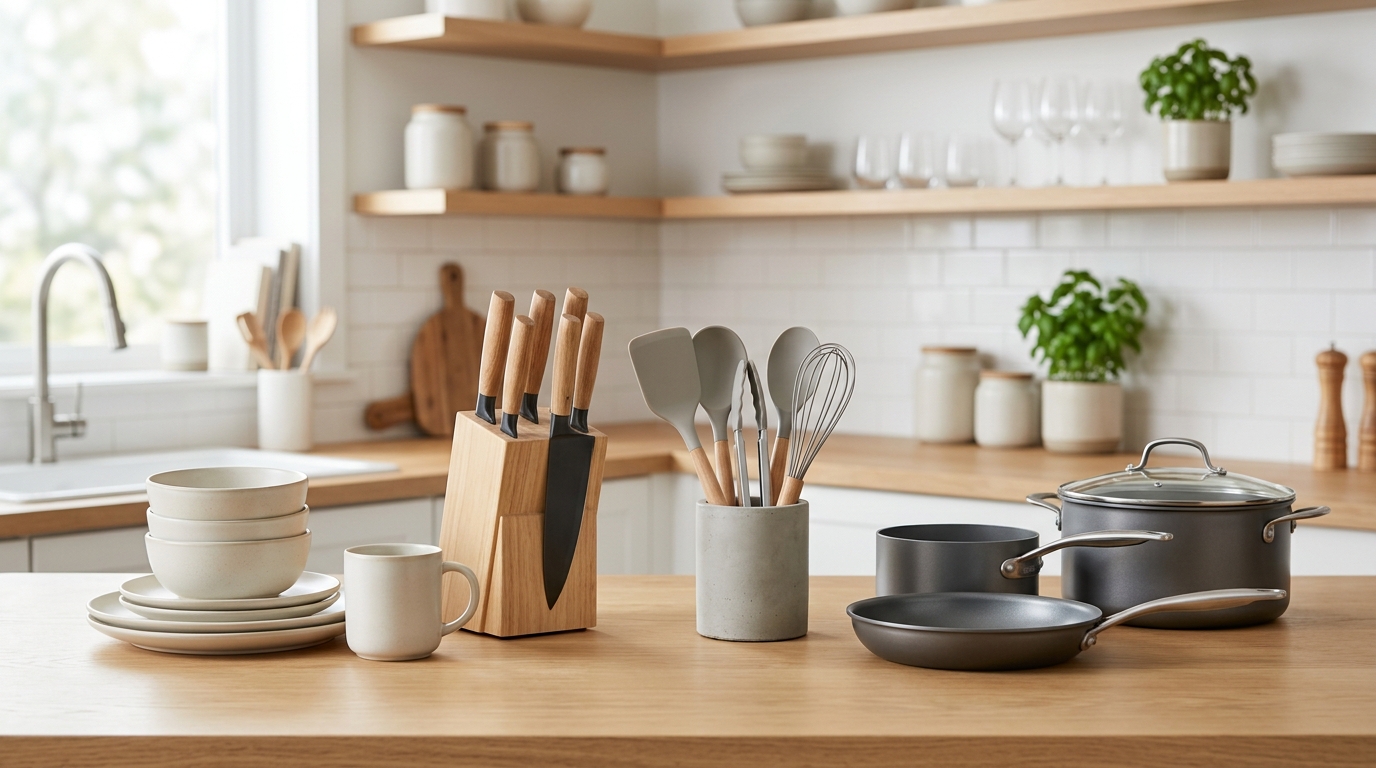
A typical small set has a frying pan, a saucepan or two, a stockpot or sauté pan, and lids that fit more than one pot.
That’s enough for most daily cooking.
Why huge sets can be a problem
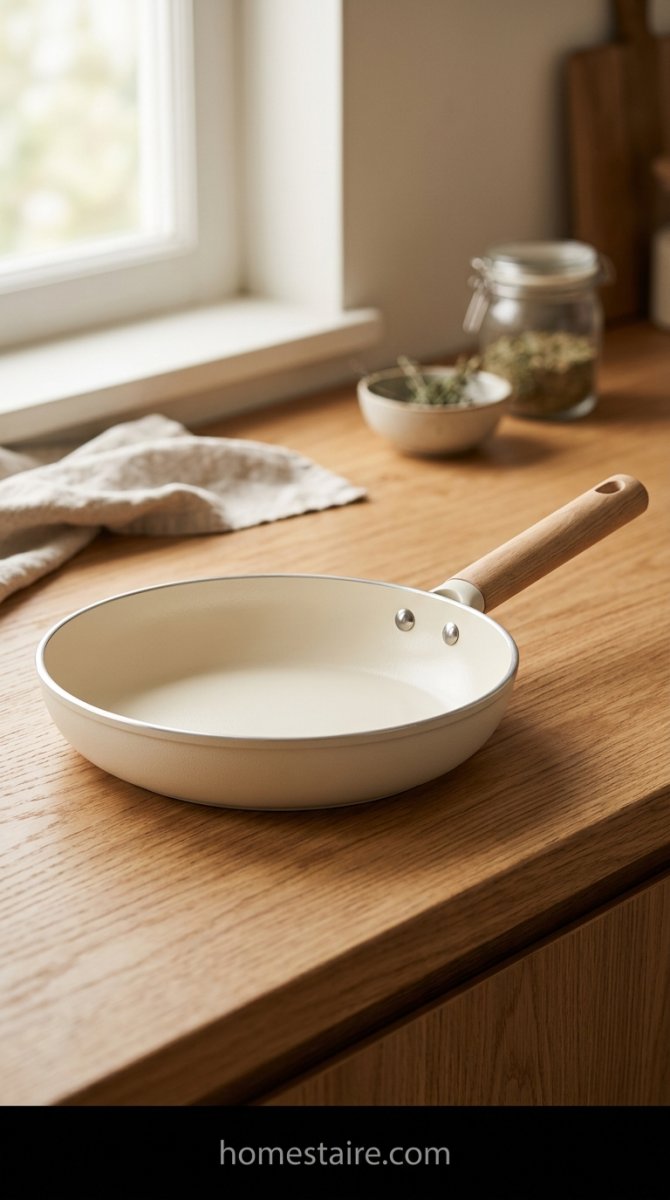
Piece counts can include lids, utensils, and tiny items. A 24-piece set may only have a handful of pots.
Check the number of actual pots and pans, not the total.
Understand ceramic nonstick coatings
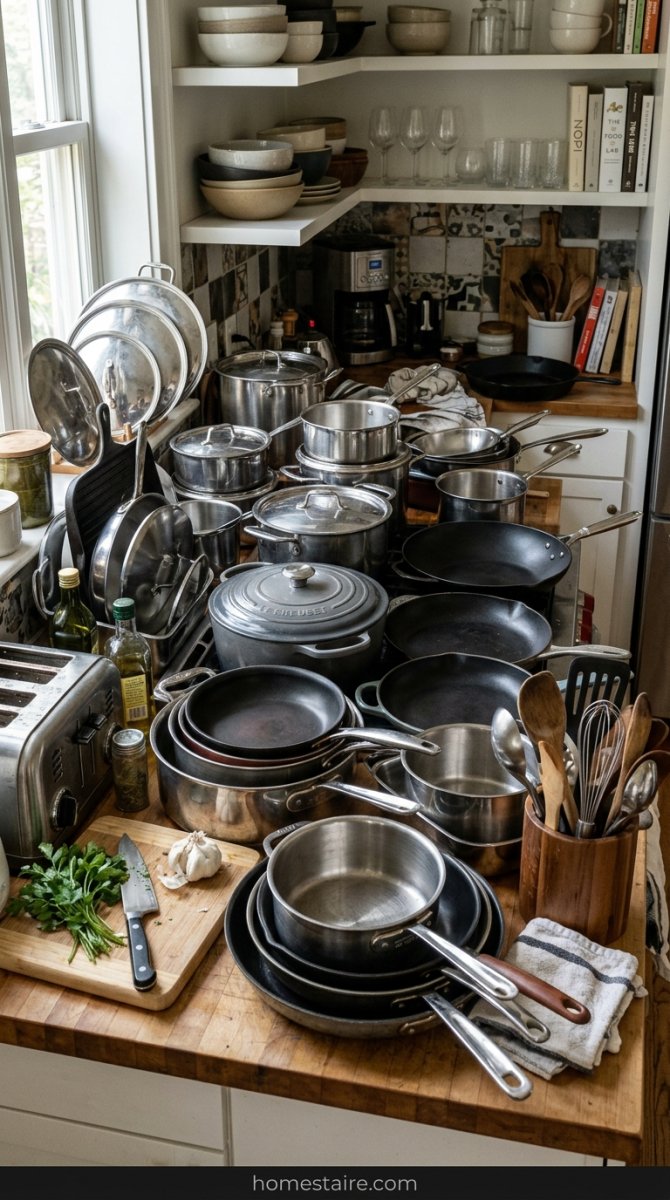
Ceramic nonstick coatings look attractive but often lose nonstick performance sooner than other options, especially with high heat and metal utensils.
Use medium heat and soft utensils, and read the care instructions.
Look for easy stacking
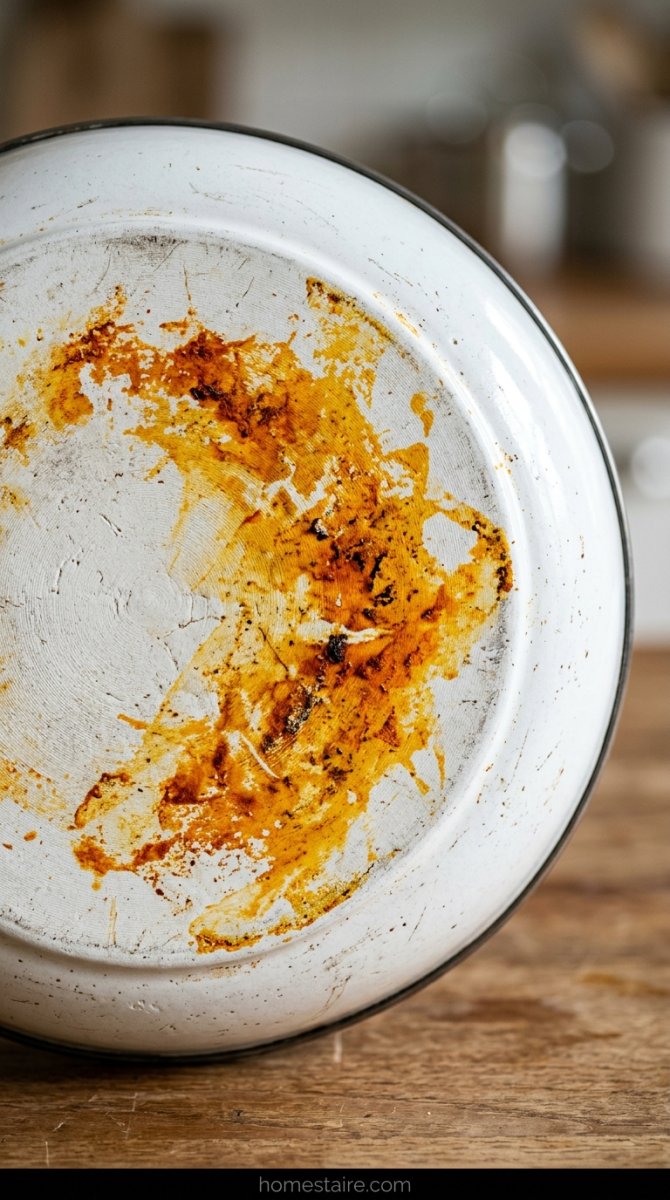
Pots that nest, with removable or foldable handles, save cabinet space. Check how the pieces fit together.
Measure your cabinet before buying.
Check the finish

Matte black exteriors look sleek, but coating quality varies and can wear with dishwashers and abrasive cleaning. Stainless steel is durable and easy to maintain.
Check whether the set is dishwasher safe.
Pay attention to handles
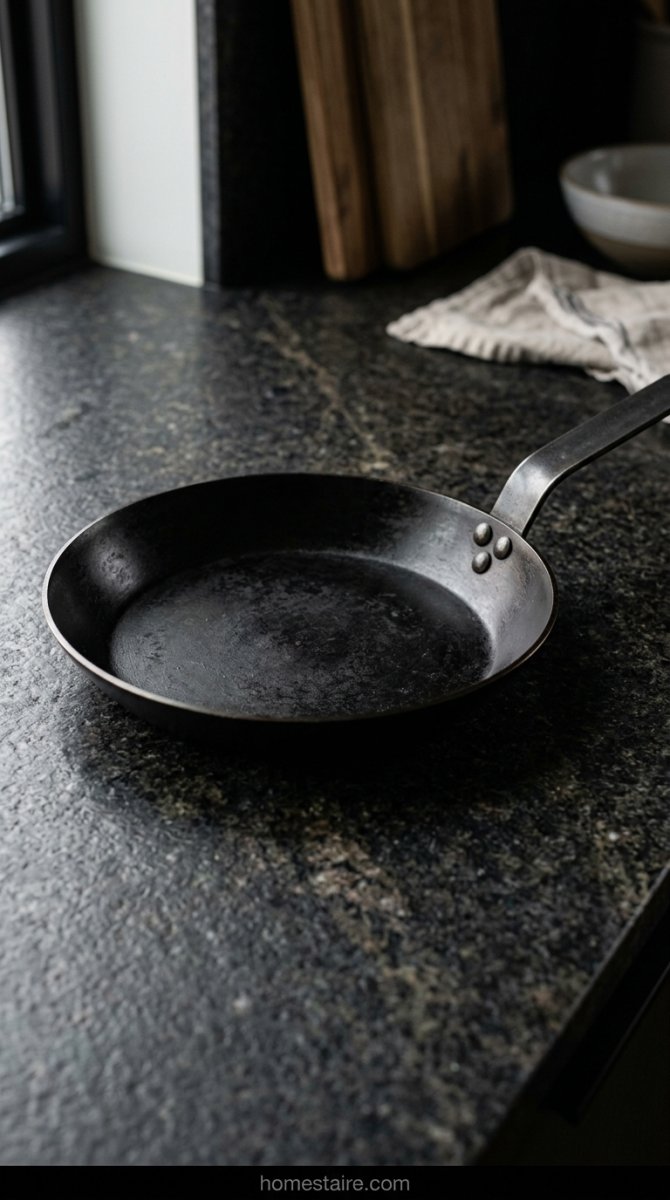
Metal handles can get hot on the stovetop, while silicone or stay-cool designs are safer. Handles should feel balanced and secure.
Check oven-safe temperature limits.
Test space-saving lids
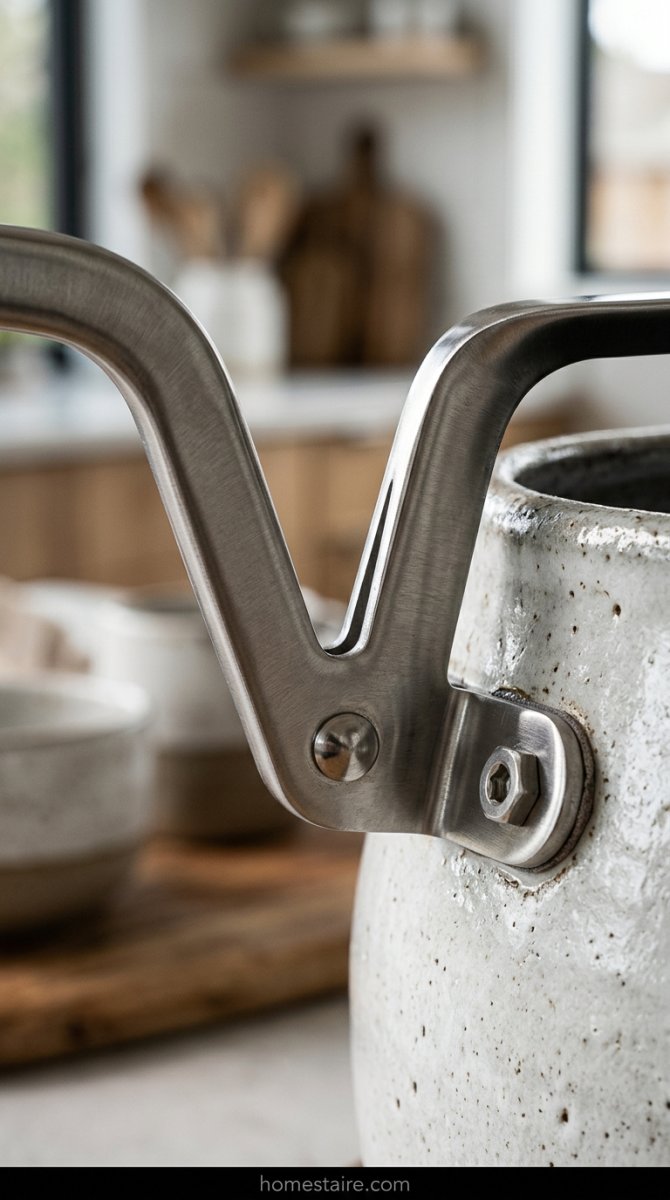
Universal or shared lids save space but may fit loosely. A good fit matters for simmering and braising.
Check reviews for lid fit.
Glass vs metal lids
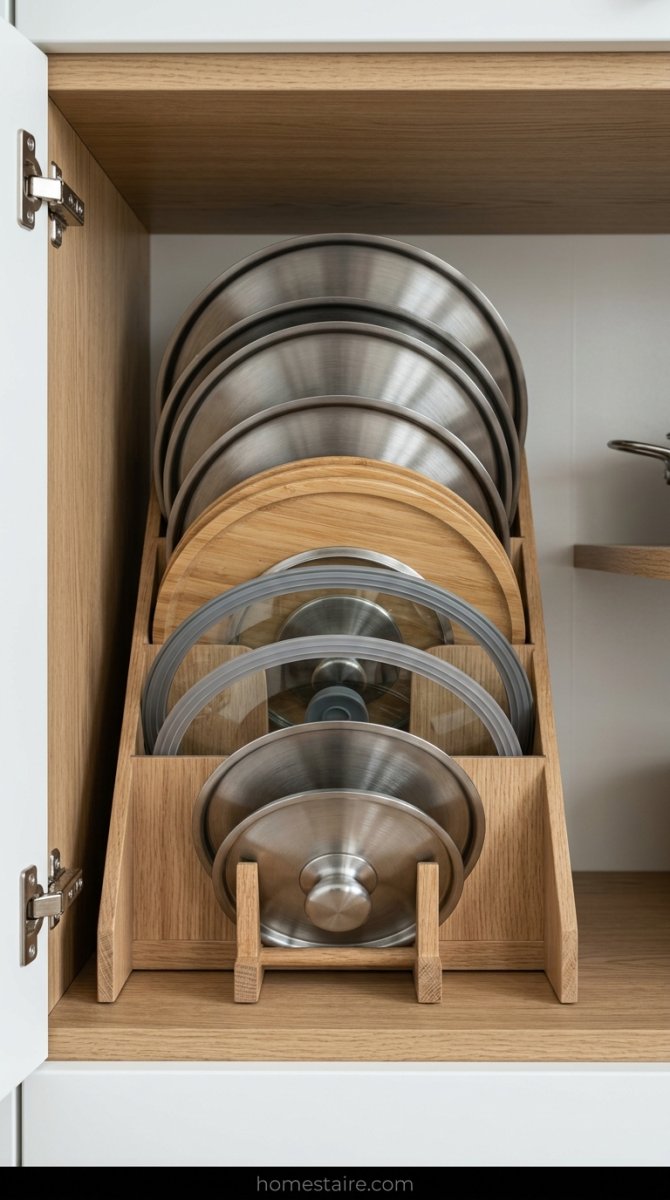
Glass lids let you see inside without lifting. Metal lids are tougher and often oven-safe at higher temperatures.
Choose based on how you cook.
Don’t assume expensive means better
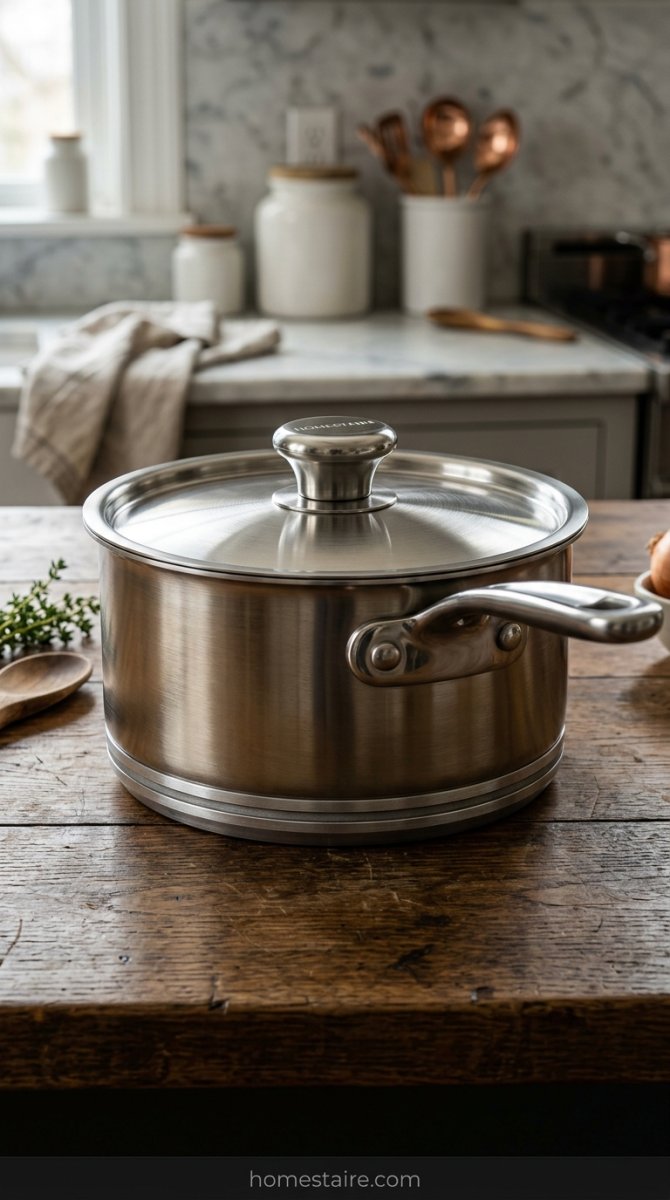
Some affordable sets perform well, while some costly ones disappoint. Look at material, thickness, and reviews, not only price.
A heavy, even-heating base is the main quality sign.
Consider cleaning effort
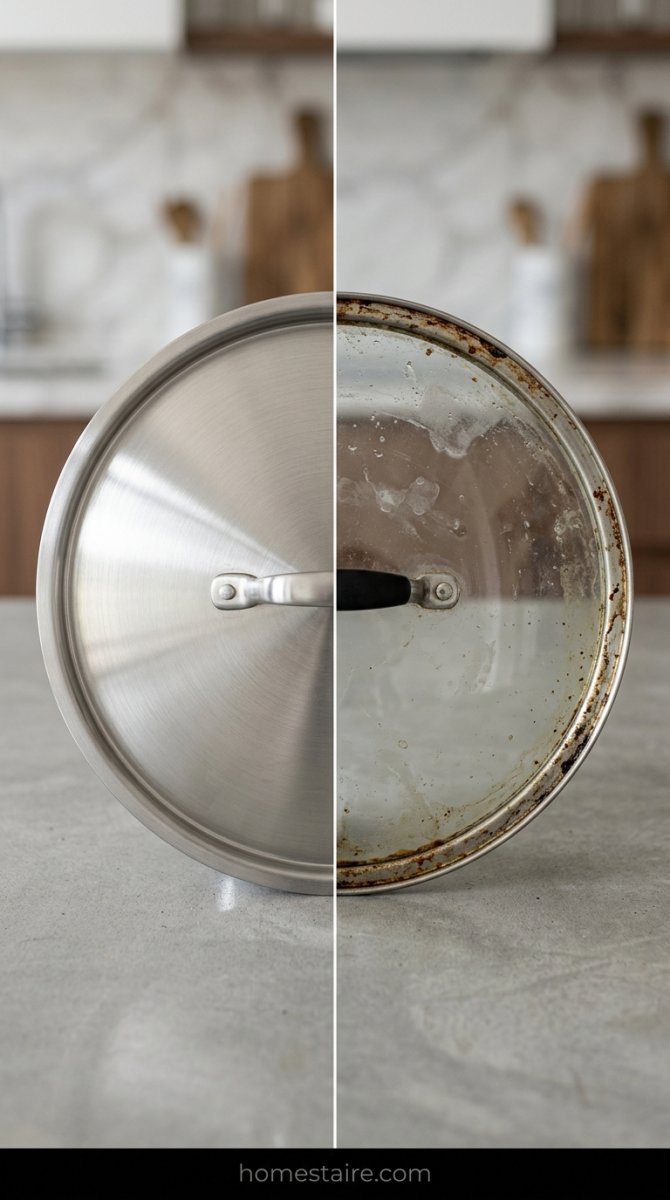
Stuck-on food is a common complaint. Nonstick is easiest to clean but wears out, while stainless steel needs more effort but lasts.
Choose the trade-off you’re comfortable with.
Clear out what you don’t need
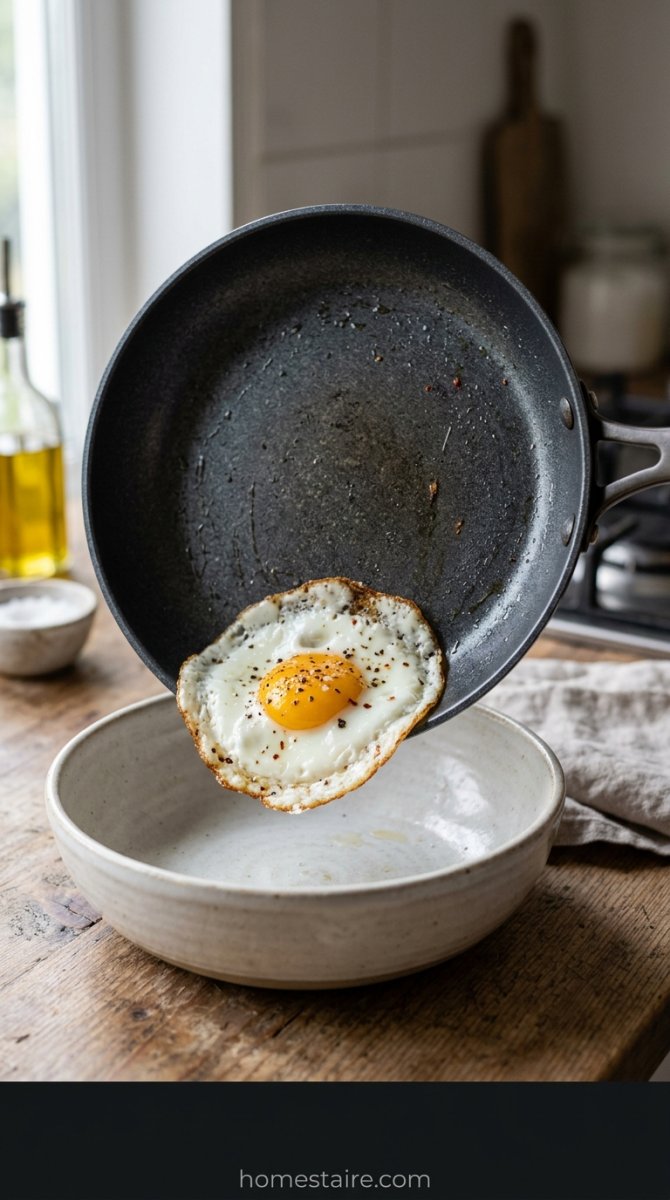
When you buy a new set, donate duplicates and clear cabinets of worn pieces.
Fewer items make cooking and cleaning easier.
Check expensive sets carefully

High-end sets are not always the best fit. Heavy cookware can be hard to handle, and some coatings need careful use.
Try weights in a store if you can.
Check your cooktop compatibility

Induction cooktops need magnetic cookware. Gas, electric, and glass cooktops each have base requirements.
Check compatibility and flat bases.
Look at warranty and replacement options

A good warranty and the ability to replace single pieces extend a set’s life.
Check the policy before buying.
Cookware materials compared
| Material | Pros | Cons |
|---|---|---|
| Stainless steel | Durable, oven-safe, works on induction if magnetic | Food can stick; needs technique |
| Ceramic nonstick | Easy cleanup, attractive | Coating wears sooner |
| Traditional nonstick | Easy cleanup | Not for high heat; wears out |
| Cast iron | Very durable, great heat retention | Heavy, needs seasoning |
| Carbon steel | Light, durable, high heat | Needs seasoning |
Cookware set FAQ
How many pieces do I need? Many home cooks do well with a frying pan, a saucepan, a larger pot, and matching lids.
Is ceramic nonstick safe? Many are made without certain chemicals, but quality and durability vary. Follow the manufacturer’s instructions.
What works on induction? Magnetic cookware, such as many stainless steel and cast iron pieces.
Conclusion

A good minimalist set matches how you cook. Count the real pots and pans, check materials and compatibility, and choose pieces that nest and are easy to clean.