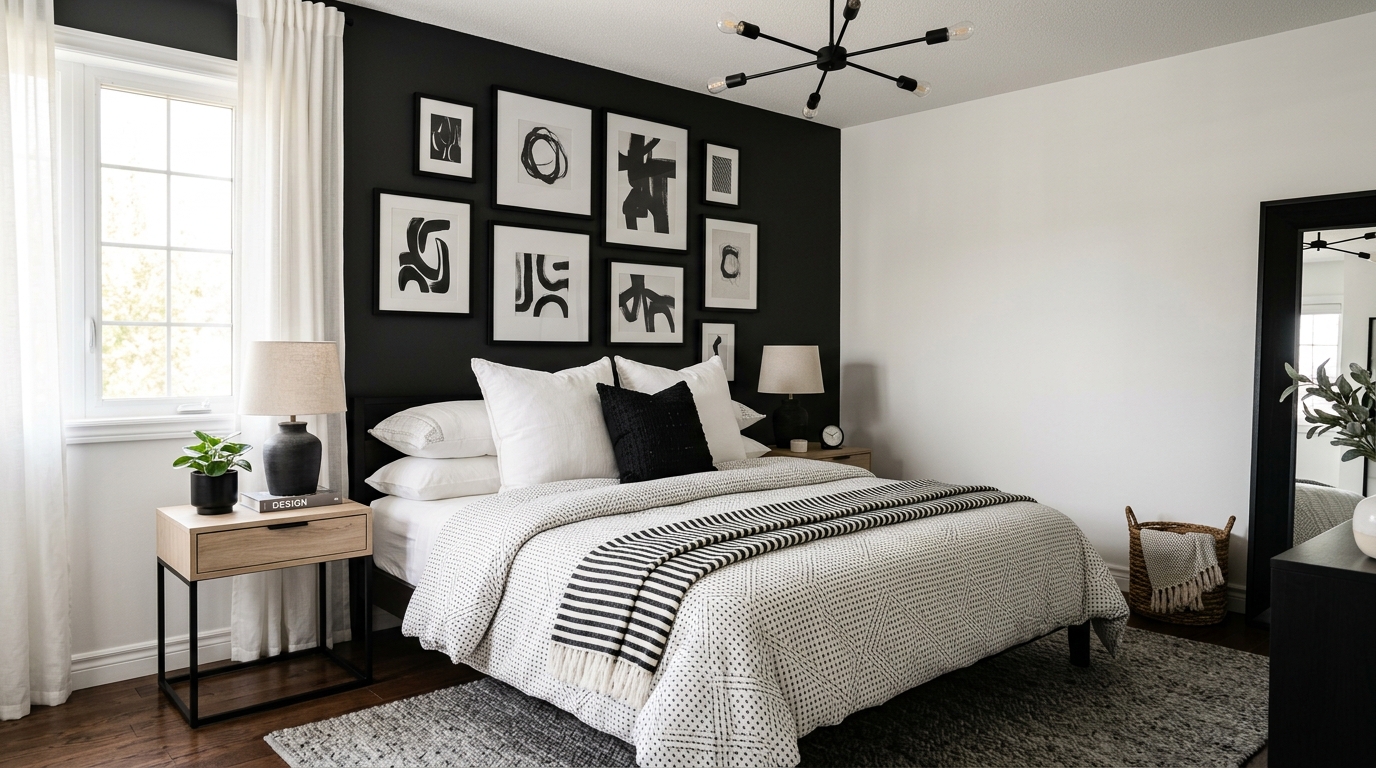
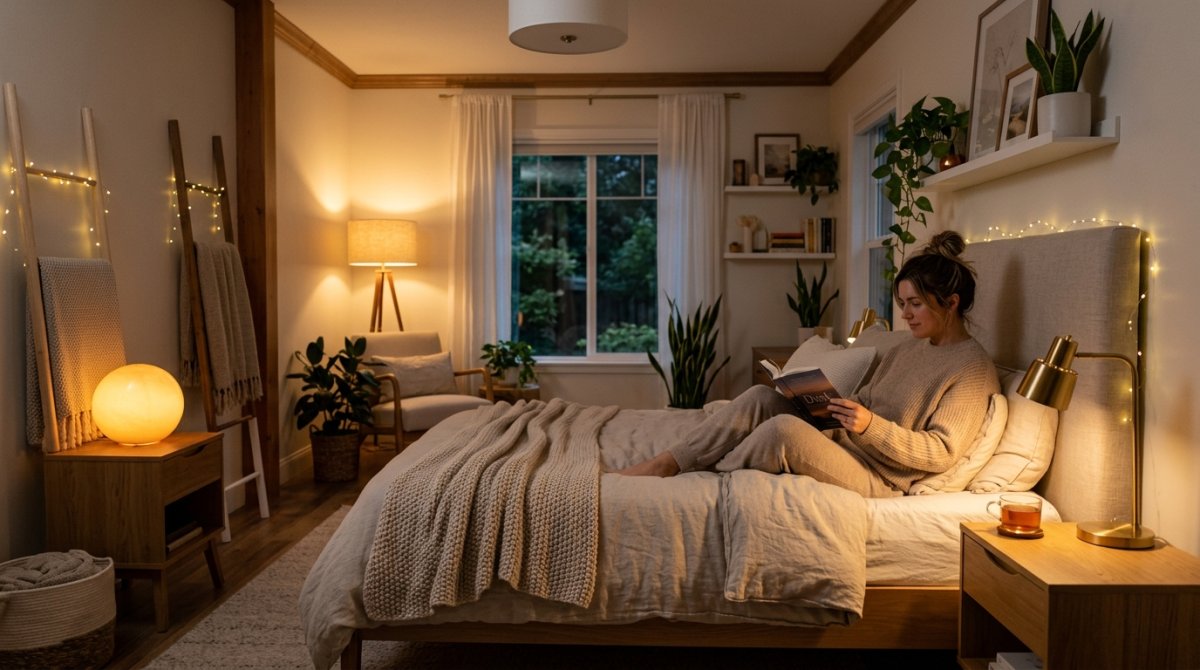

A single bright ceiling light makes a bedroom feel like an office. Layered, warm lighting helps the room feel calm and makes it easier to wind down.
This guide covers 14 bedroom lighting ideas, from bulbs and lamps to sconces and night lights, with a comparison table and FAQ. It’s based on lighting design guidance and product research rather than personal testing, so check wattage ratings and local electrical rules before installing anything.
1. Retire the big overhead light for evenings
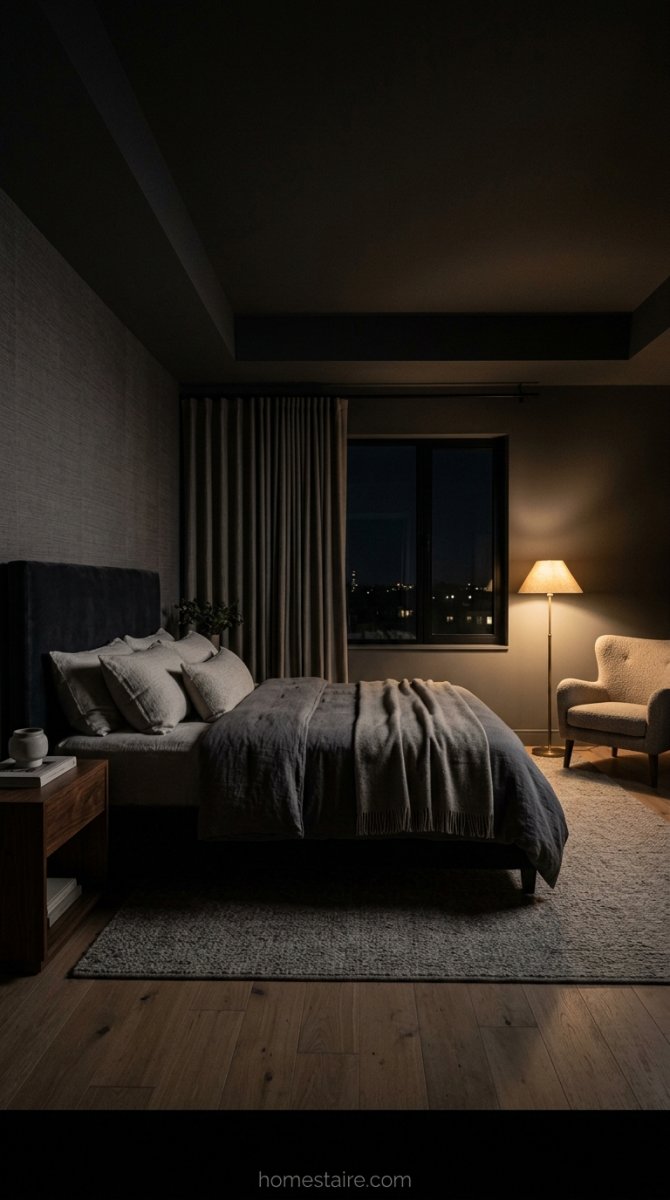
A central ceiling fixture casts flat, harsh light and creates shadows. Keep it for cleaning and use lamps and sconces in the evening.
If you can’t remove it, put it on a dimmer.
2. Choose warm 2700K bulbs

Color temperature is measured in kelvins. Around 2700K gives a warm, relaxed glow, while 5000K looks bluish and stimulating.
Use the same temperature in all bedroom bulbs so the light looks consistent.
3. Place table lamps at the right height
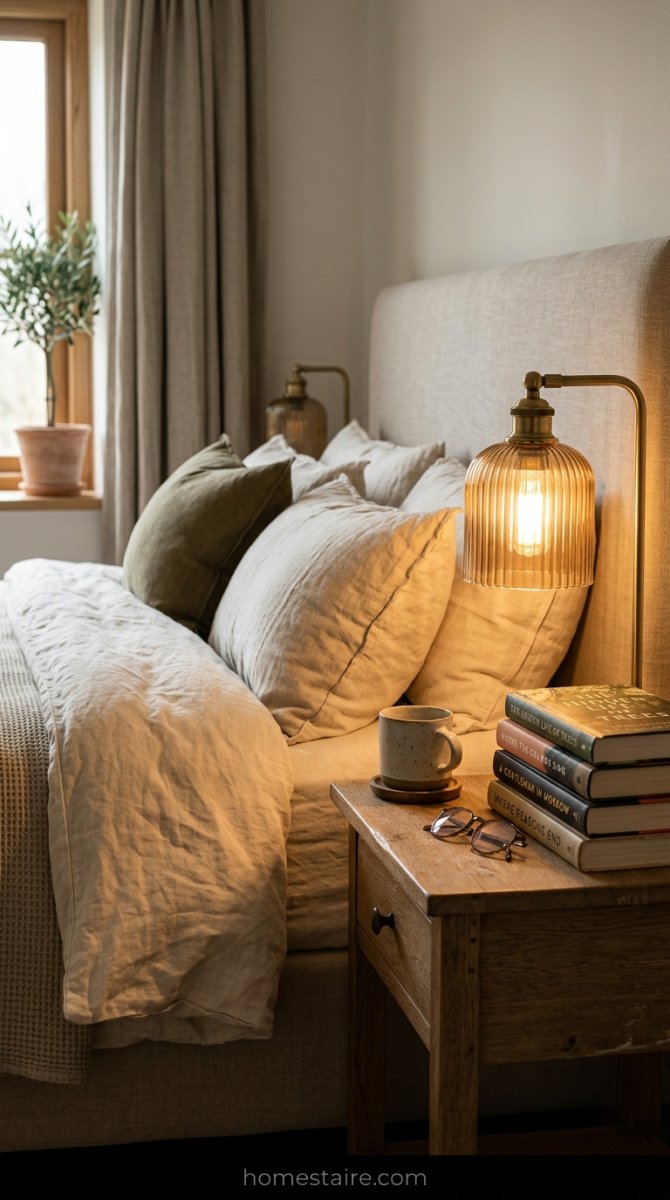
A bedside lamp should put its shade bottom near eye level when you sit up in bed, so the bulb isn’t visible and glare is reduced. Match lamps to the nightstand height.
A pair of lamps gives symmetry, but one lamp on each side isn’t required.
4. Salt lamps for a soft glow
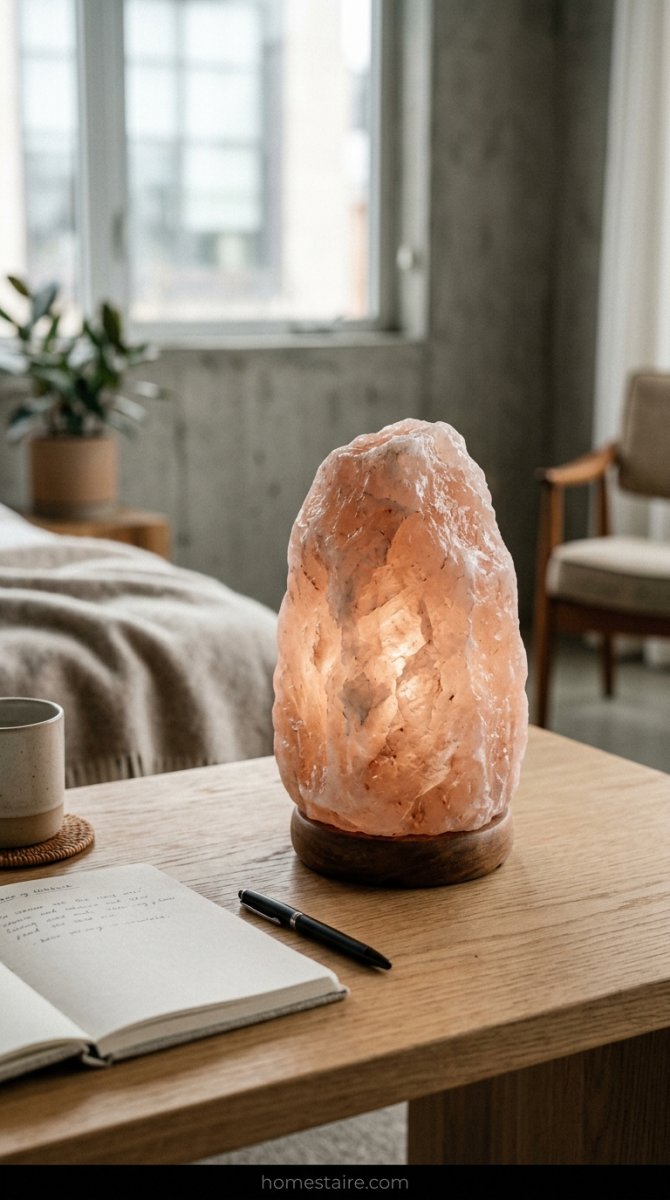
Salt lamps give off a dim amber or pink light that works as a night light. They’re an inexpensive decorative option.
Their health claims aren’t well supported, so choose one for the look, and keep it on a stable surface away from moisture.
5. Plug-in wall sconces
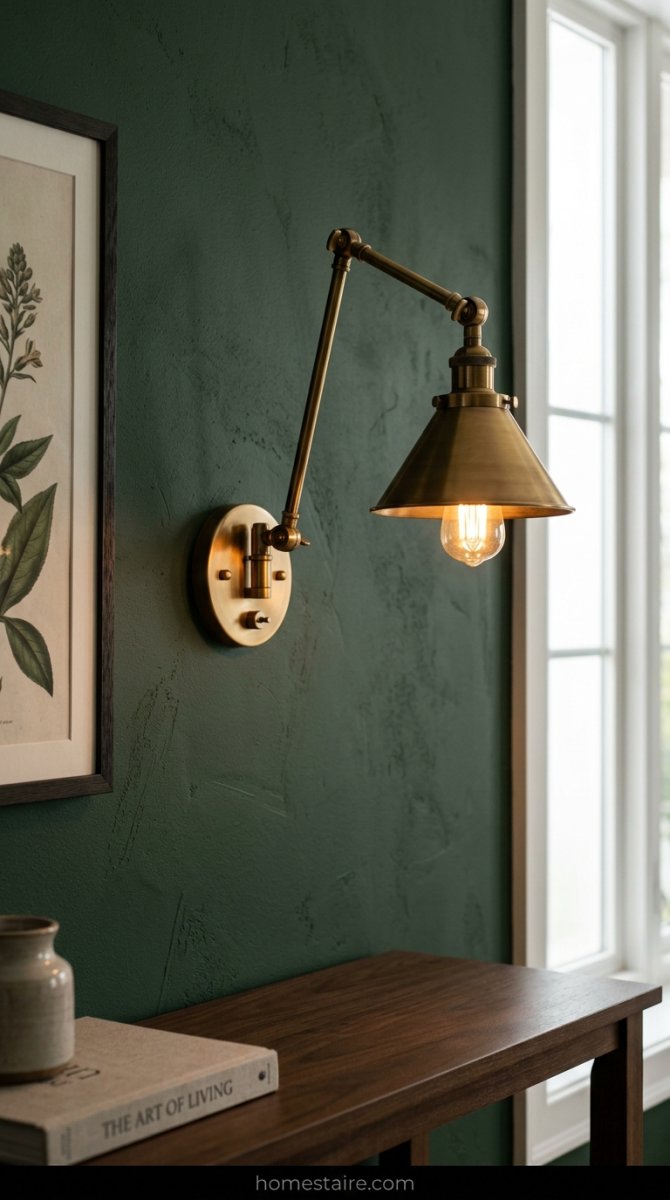
Plug-in sconces mount on the wall and use a cord with a switch, so you get the look of built-in lighting without rewiring. They free the nightstand surface.
Use cord covers for a tidy finish.
6. Use string lights with restraint
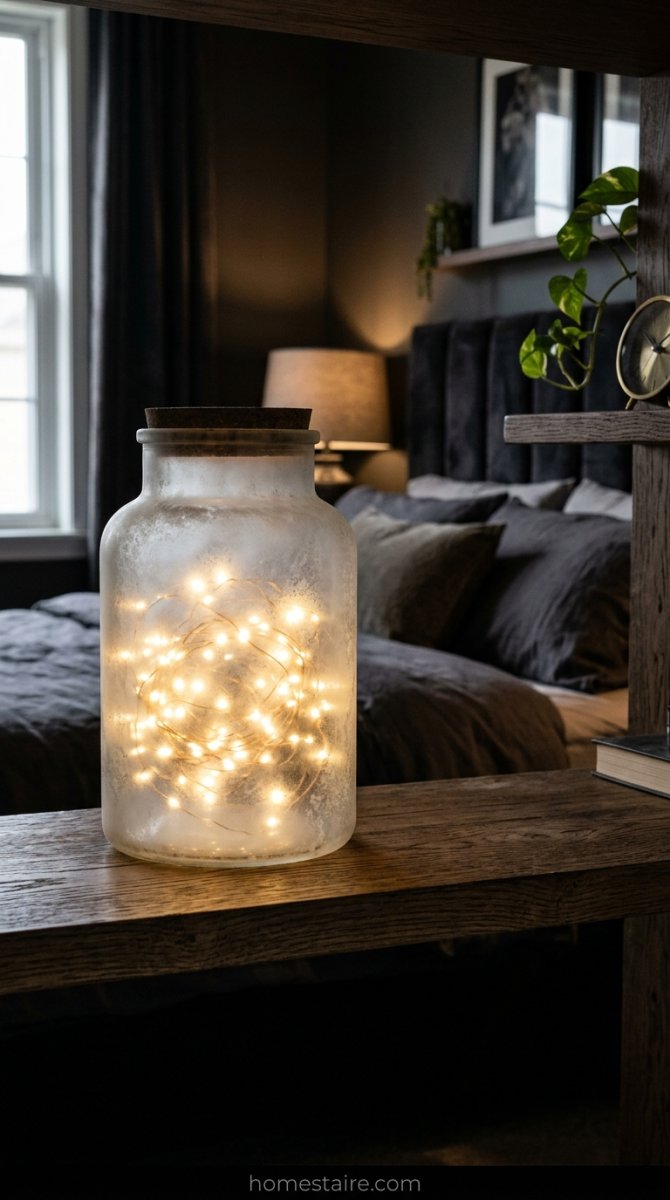
Warm-white string lights can add a soft layer when draped neatly, for example along a headboard or in a glass jar. Avoid colored or flashing strings.
Choose lights with a safety certification and don’t leave them on overnight.
7. Add smart bulbs for routines
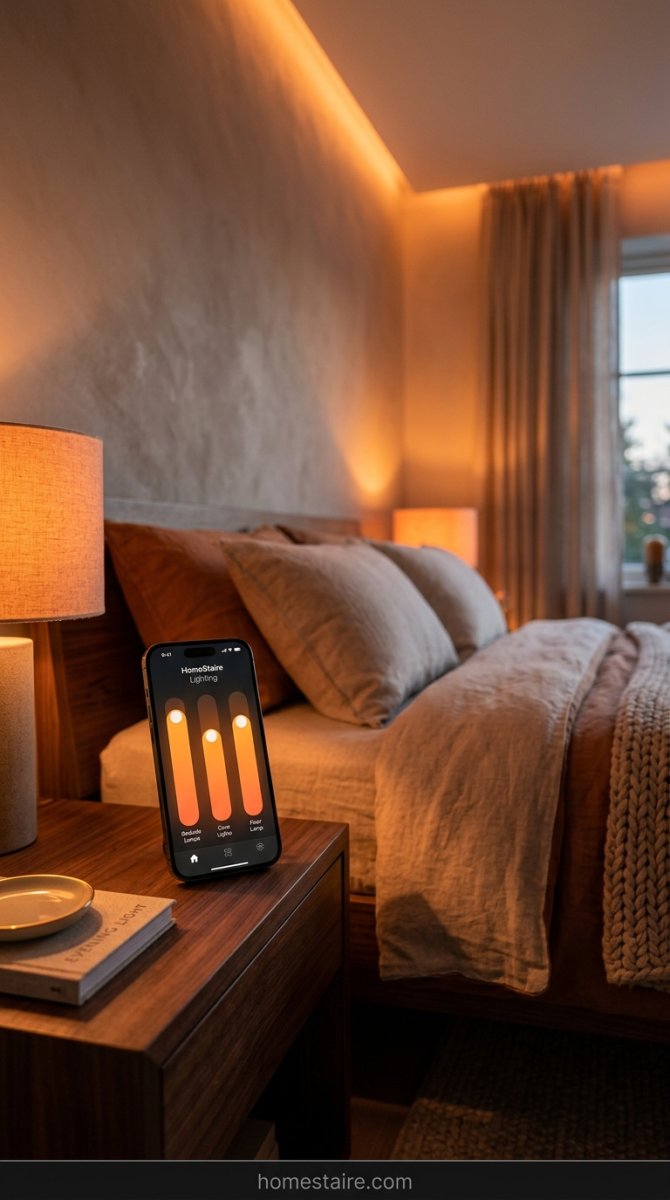
Smart bulbs let you dim and schedule lights, including a gradual evening dimming routine. They cost more than regular bulbs.
Check that the bulb works with your lamp and app, and choose warm-white models.
8. Use motion-sensing under-bed lights
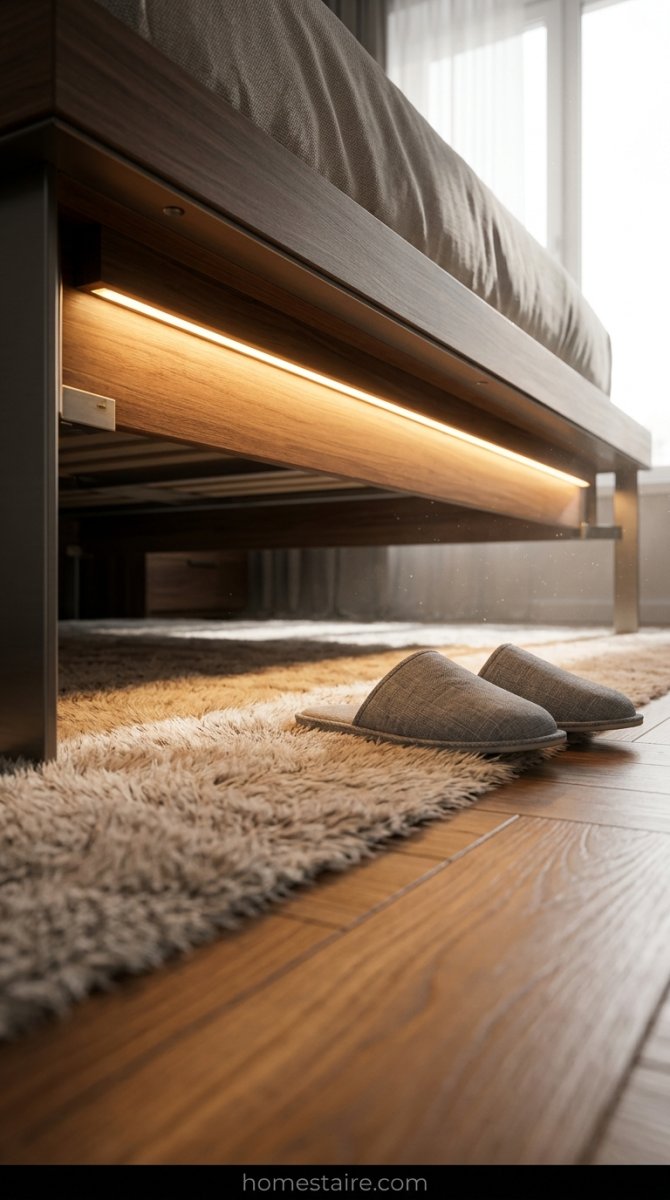
A soft, motion-sensing strip under the bed lights the floor when you get up at night, without the shock of a bright light.
Choose a warm color and low brightness, and avoid cheap strips with harsh blue tones.
9. Add LED candles
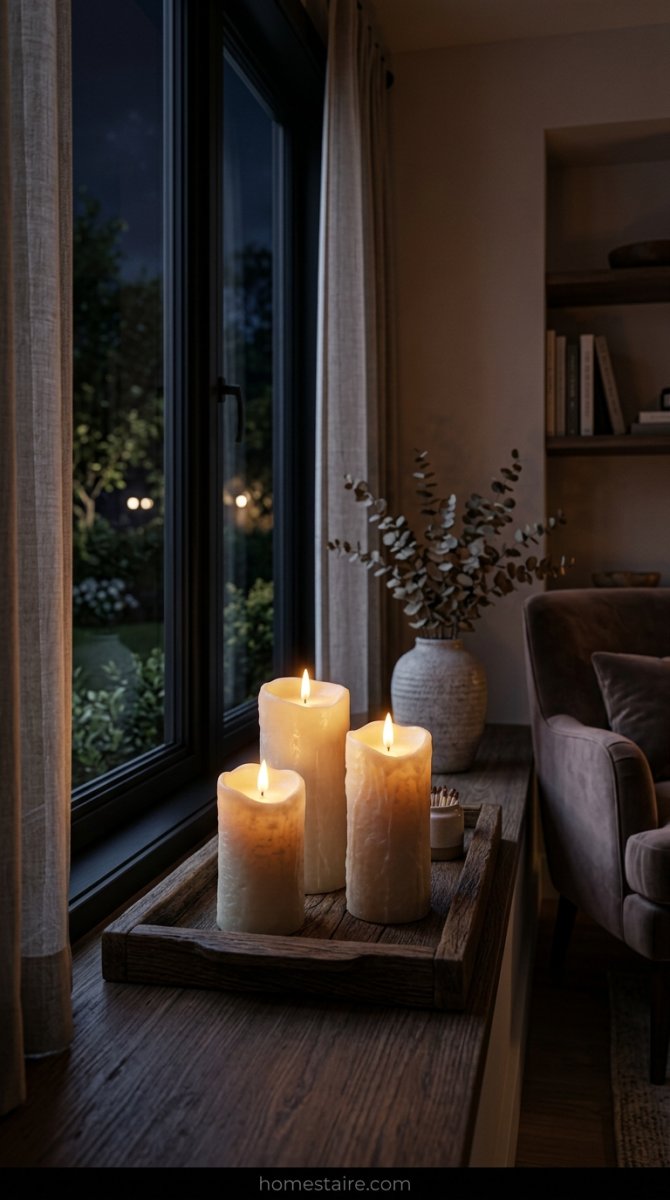
Flameless candles give a flickering glow without smoke or fire risk, which is safer in a bedroom.
Use a timer so they turn off automatically.
10. Hide the cords
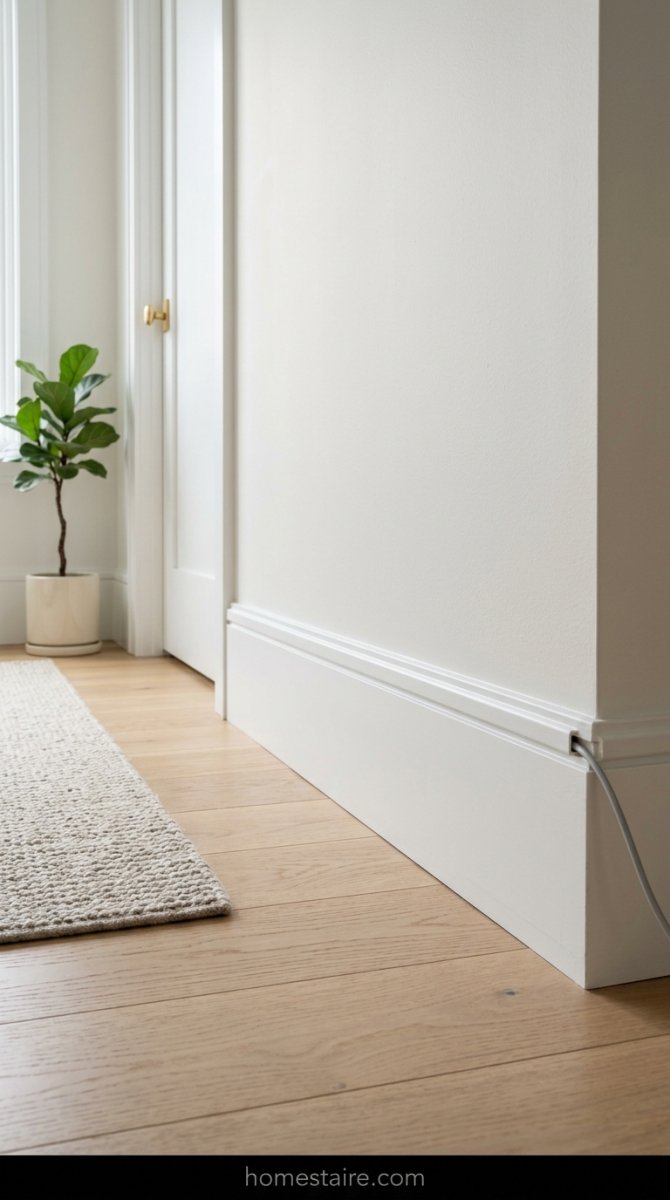
Visible cords make lighting look cheap. Use adhesive cord covers, clips, or channels along walls and behind furniture.
Don’t run cords under rugs or through places where they can overheat.
11. Add dimmers
Dimmers let you adjust brightness for reading, relaxing, and night use. Use dimmable bulbs and a compatible dimmer, since mismatches can cause flicker or buzzing.
Plug-in dimmers work for lamps without any wiring.
12. Layer your lights
Combine ambient light (soft overall glow), task light (reading lamps), and accent light (a wall washer or shelf light). Layering stops corners from looking dark.
Place at least one light source at a low or mid level, not only on the ceiling.
13. Choose reading lights carefully
A clip-on or swing-arm reading lamp should be adjustable and shielded so the light falls on the page, not in your eyes. A harsh, bare LED can cause glare.
Look for a warm color and a dimmer.
14. Keep lighting safe
Use bulbs within the lamp’s wattage rating, keep fabric away from hot bulbs, and don’t cover lamps with cloth.
Replace damaged cords and check for UL or equivalent safety marks.
Bedroom lighting options compared
| Option | Effort | Cost | Best use |
|---|---|---|---|
| Warm 2700K bulbs | Very low | Low | Overall warm glow |
| Table lamps | Low | Low to medium | Bedside light |
| Plug-in sconces | Low | Medium | Saving nightstand space |
| Smart bulbs | Low | Medium | Routines and dimming |
| Under-bed motion light | Low | Low | Night navigation |
| Dimmer | Low to medium | Low to medium | Adjustable mood |
Bedroom lighting FAQ
What color temperature is best for a bedroom? Many people prefer warm white, around 2700K, for evenings.
Is a ceiling light necessary? Not always. Lamps and sconces can provide enough light, but a ceiling light can be useful for cleaning.
Do smart bulbs help sleep? They can help you dim lights gradually in the evening, but results vary from person to person.
Conclusion

Good bedroom lighting is warm, layered, and adjustable. Start by changing the bulbs and adding a lamp, then add dimmers or sconces as needed.