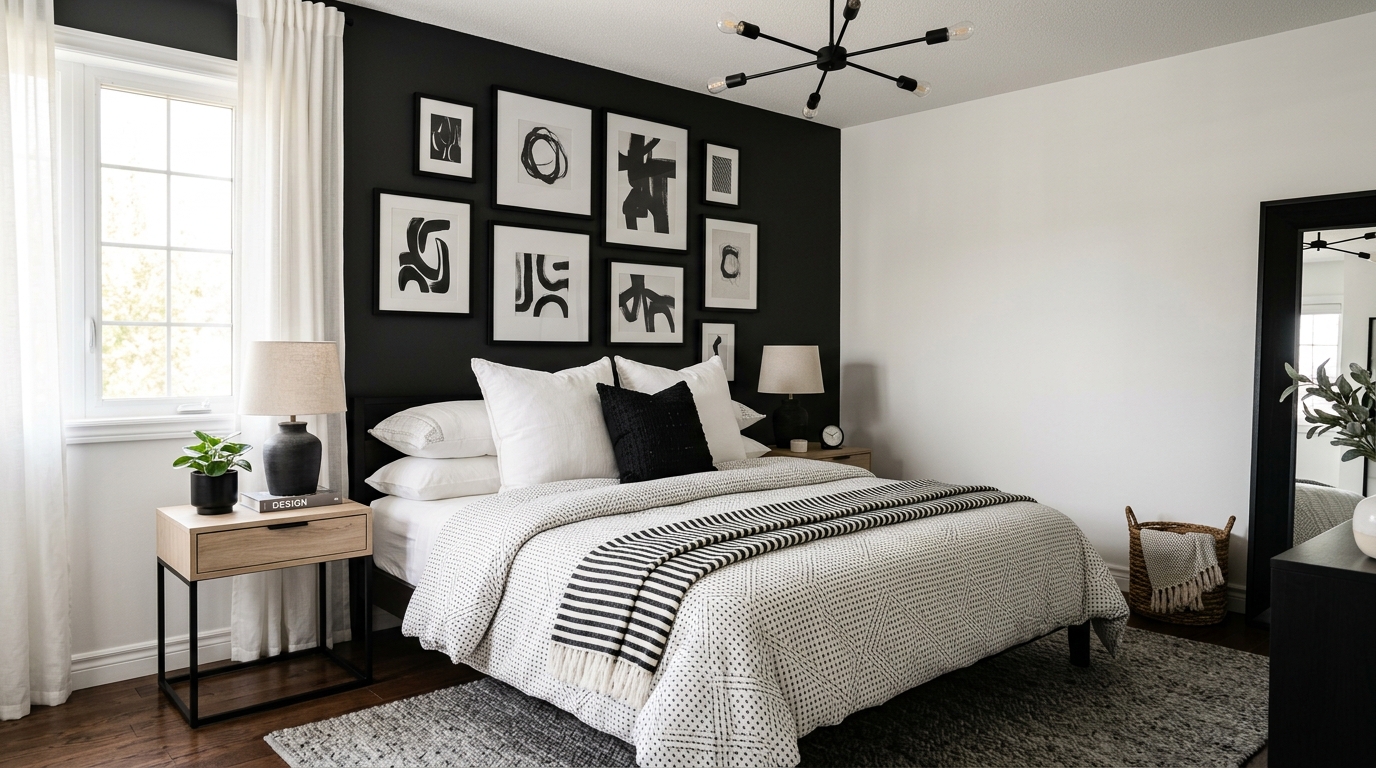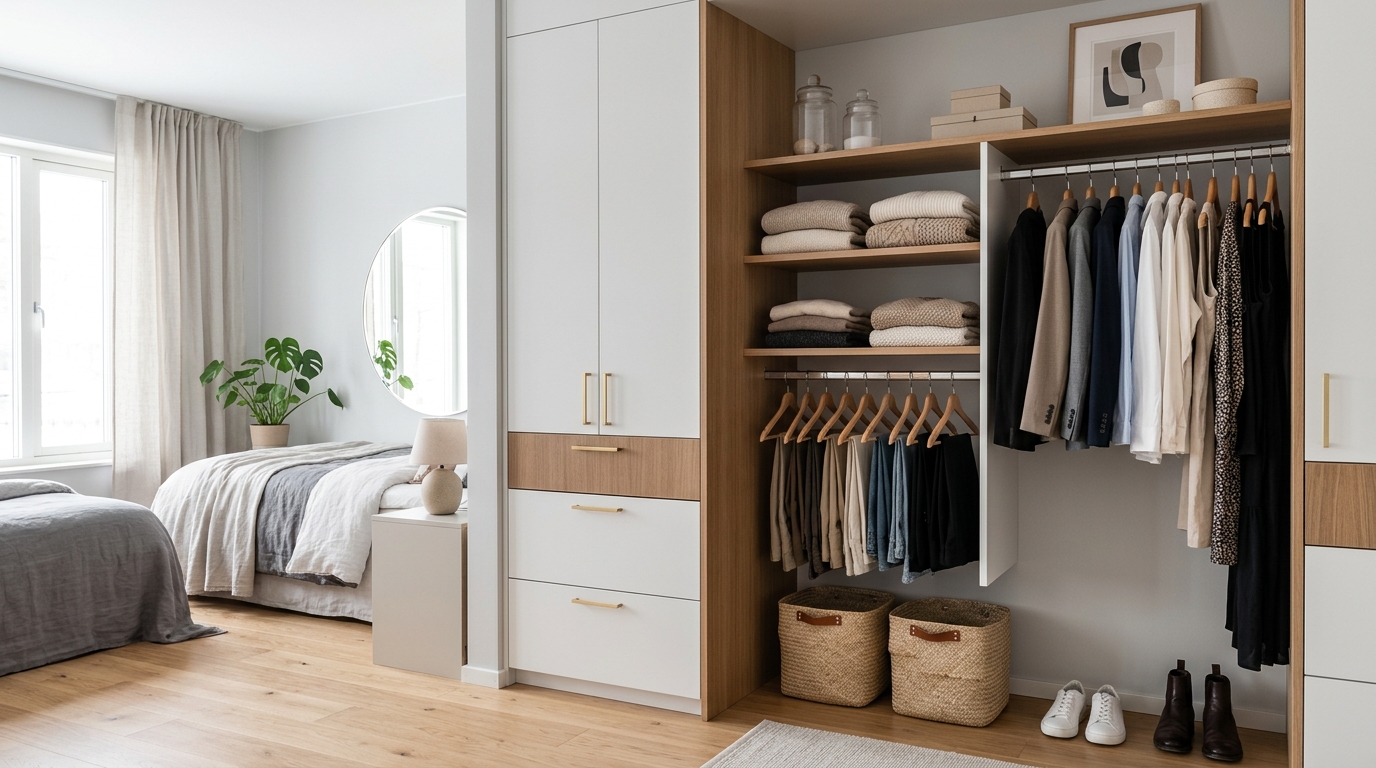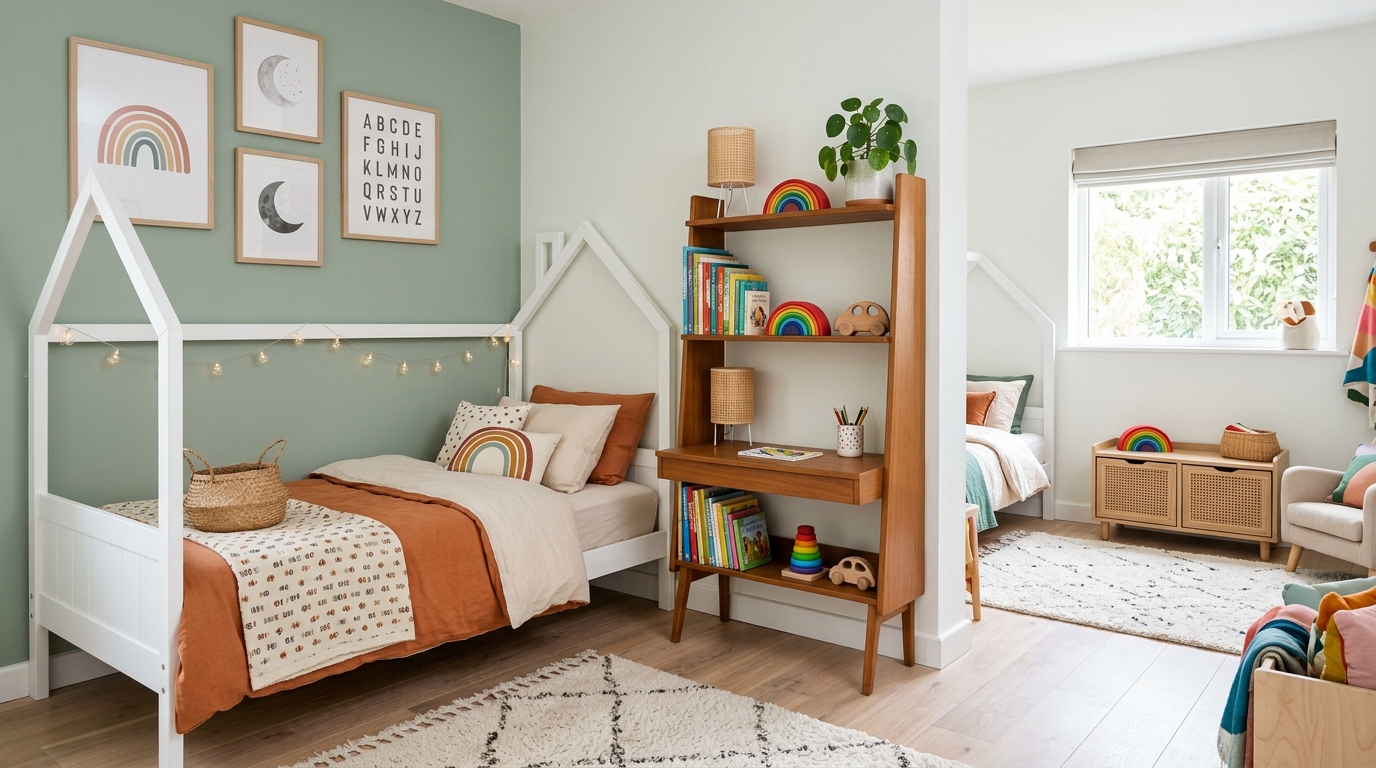
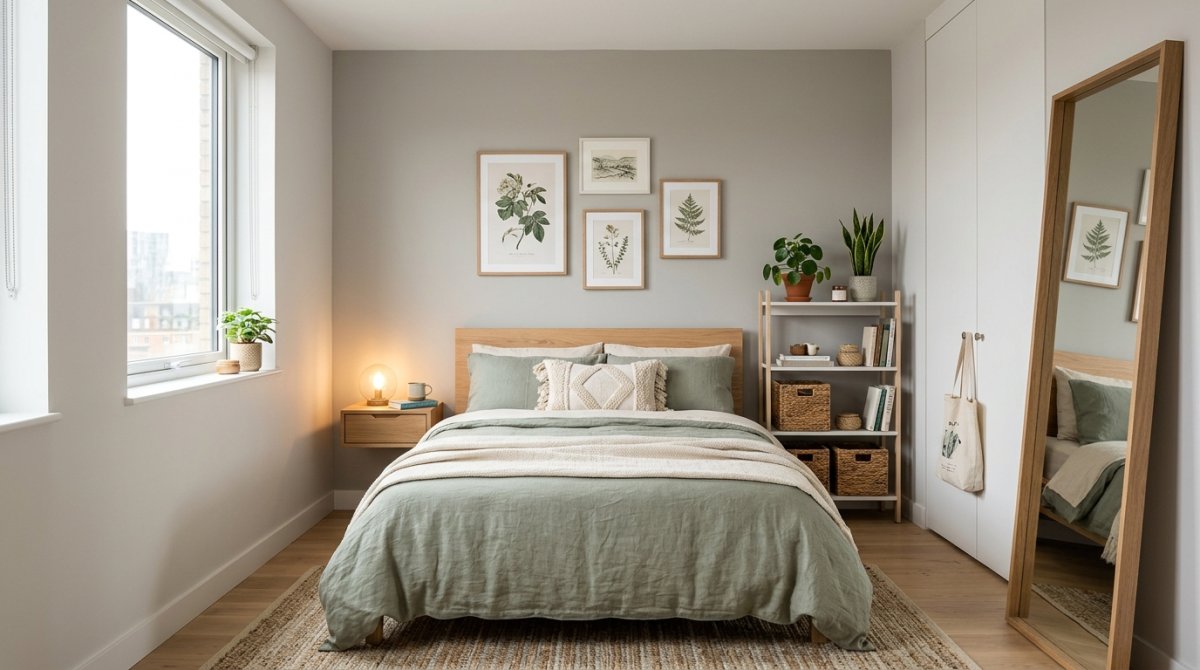

A small bedroom needs a layout that leaves space to move, store clothes, and sleep comfortably. The right arrangement can make a tiny room feel organized instead of cramped.
This guide covers 19 layout and furnishing ideas for small bedrooms, with a comparison table and FAQ. It’s based on space-planning guidance rather than personal trials, so measure your room and sketch options before moving furniture.
1. Think twice about the corner bed

Pushing a bed into a corner frees floor space on one side but can feel boxed in, and it makes the bed harder to make. It can work in very narrow rooms.
If you try it, leave an accessible side and consider a wall-mounted light.
2. Replace nightstands with floating shelves
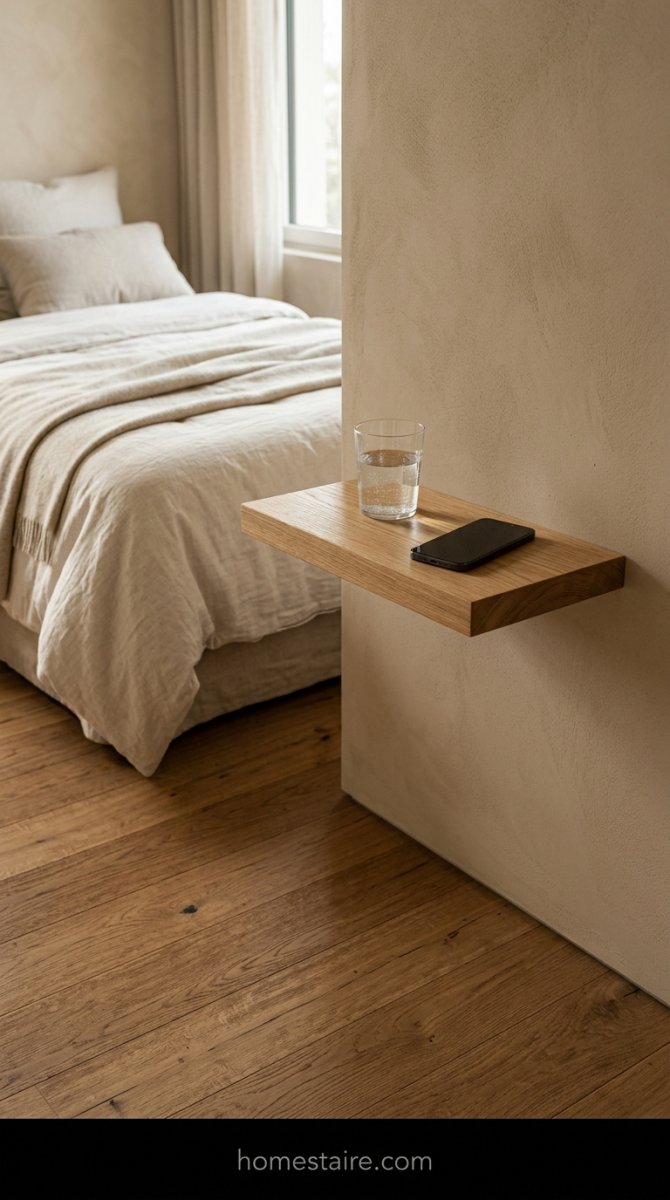
Small wall shelves beside the bed hold a lamp and a book without using floor space.
Mount them into studs and keep them at a comfortable reach.
3. Center the bed on the short wall
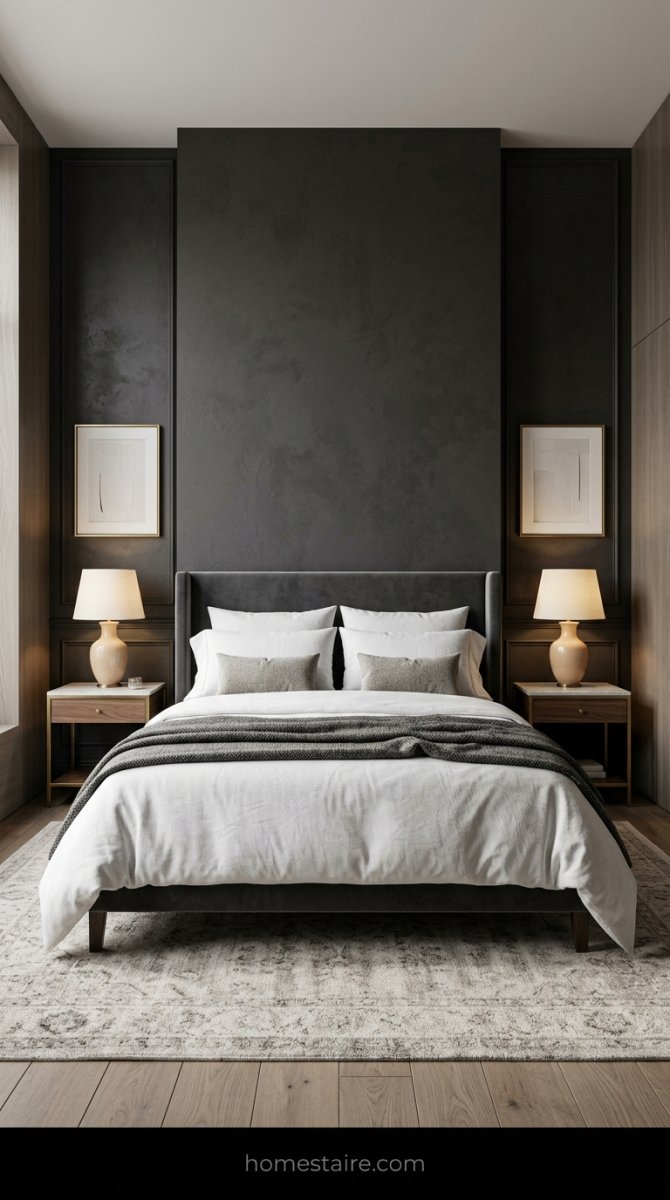
Placing the head of the bed on the shorter wall often leaves the longest clear path and balanced sides.
Leave at least two feet on each side if the room allows.
4. Size the rug to the bed
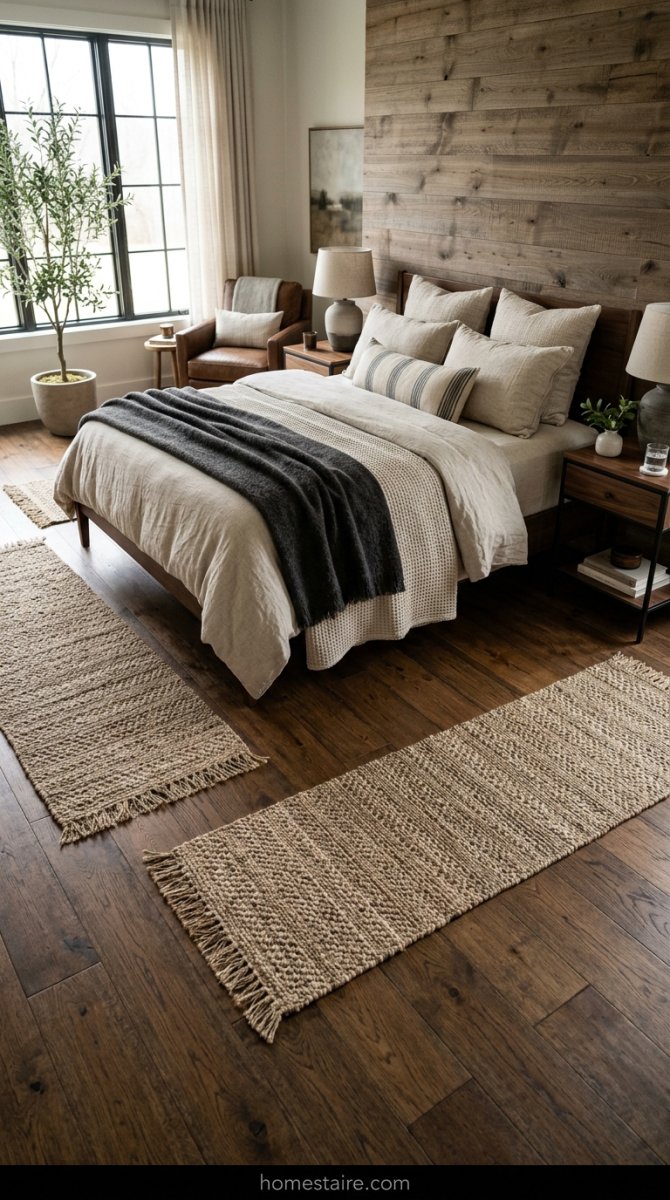
A rug that’s too large can make a tiny room feel busy, while one that’s too small looks like a postage stamp. A rug that extends under the lower two thirds of the bed is a common compromise.
A larger rug can also make a small room feel bigger if the colors are light and quiet.
5. Put a desk at the foot of the bed
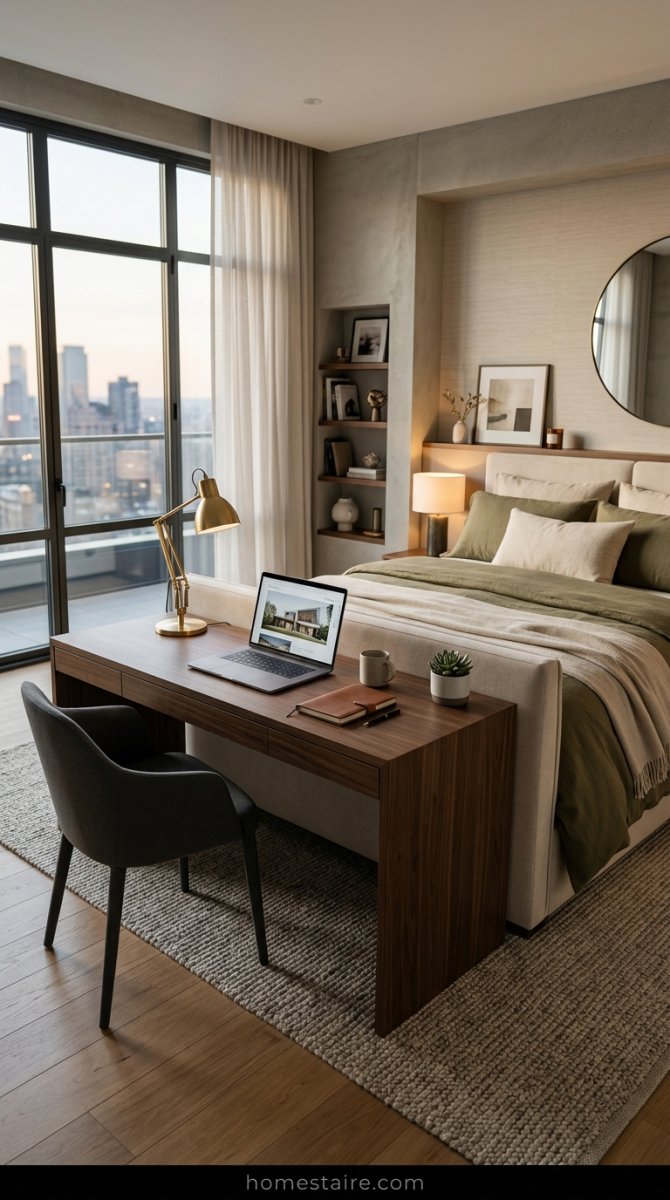
A slim desk or console at the foot of the bed uses an otherwise empty area and can double as a vanity.
Keep the walkway clear.
6. Use a deep window sill as a surface

A deep sill can work as a nightstand or small desk if the bed sits beside the window.
Check for drafts and avoid placing electronics where condensation can form.
7. Placing the bed against the window

A bed under a window frees wall space but can mean drafts and early light. Use blackout curtains and make sure the window can be locked.
A headboard that sits below the sill keeps the look neat.
8. Use under-bed storage instead of a dresser
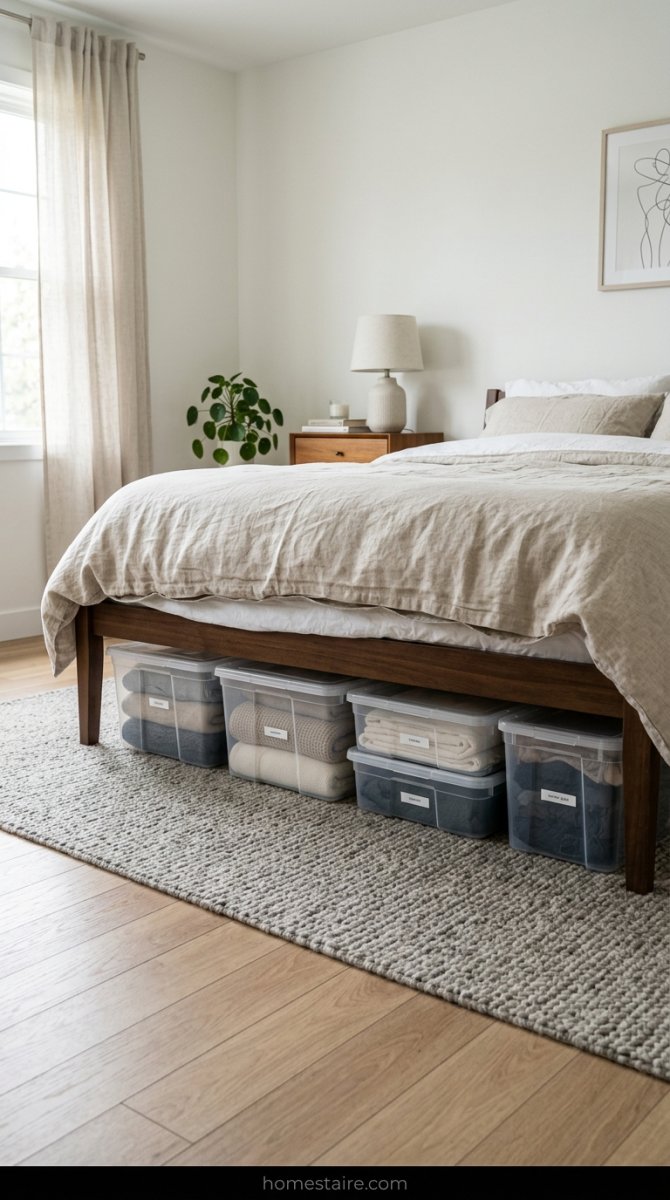
Slim storage boxes or drawers under the bed replace a bulky dresser. Choose containers with lids and wheels.
Make sure the bed’s height leaves enough clearance.
9. Hang a large wall mirror
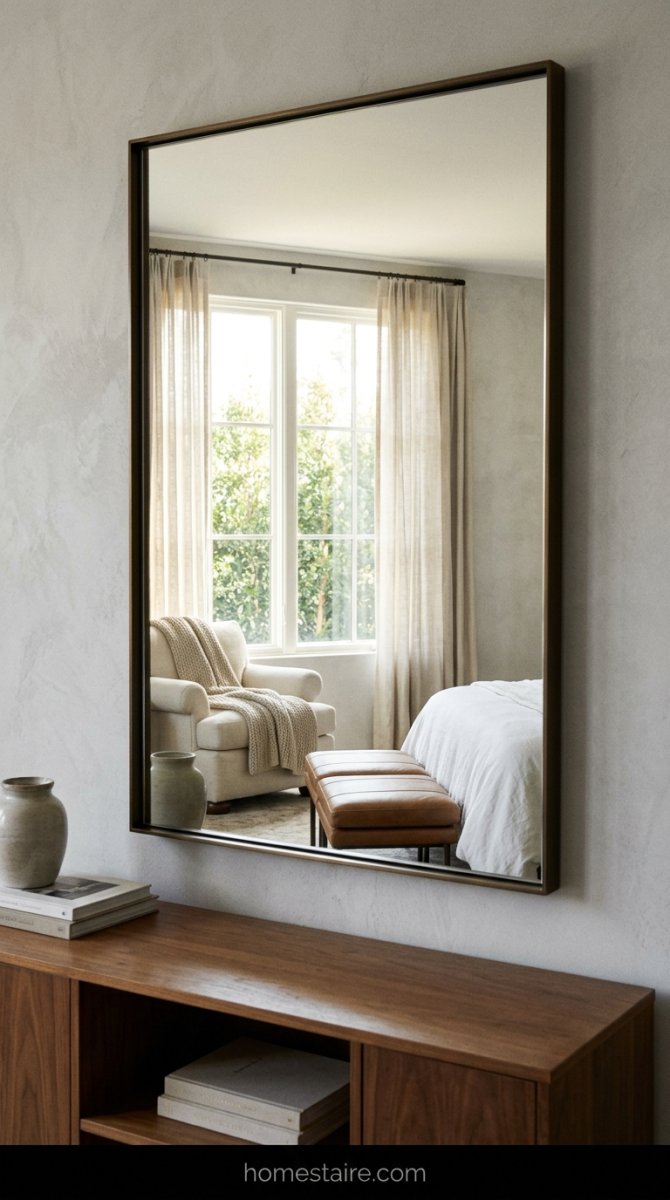
A mirror opposite a window reflects light and makes a room feel deeper.
Use proper wall anchors and avoid placing it where it reflects clutter.
10. Raise the bed on risers

Bed risers increase the storage space underneath. Choose sturdy ones rated for the bed’s weight.
Check that the bed remains easy to get into.
11. Loft beds and Murphy beds
A loft bed frees the floor below for a desk or wardrobe. It needs enough ceiling height, so check clearance and guardrails. A Murphy bed folds into the wall during the day, which suits studios and guest rooms, but it needs professional installation and a wall strong enough to carry it.
12. Choose light colors and clear furniture
Light paint colors reflect more light and can make walls recede. Furniture with visible legs or clear acrylic parts reduces visual weight.
An all-white room can feel flat, so add texture with bedding and a rug.
13. Skip or slim the headboard, add a storage bench
A slim headboard or a painted or wall-mounted one saves a few inches. A storage bench at the foot of the bed replaces a chair and holds extra blankets.
Check that the bench doesn’t block drawers or doors.
14. A rolling rack and high curtains
A rolling clothing rack can replace a closet in a rental, but it’s visually busy, so keep it tidy. Hanging curtains close to the ceiling makes the walls look taller.
Choose a rack with a sturdy base.
15. Use wall lighting instead of floor lamps
Floor lamps take floor space. Wall-mounted or plug-in sconces and a small bedside lamp give light without clutter.
Use warm bulbs and keep cords tidy.
Layouts compared
| Idea | Space saved | Effort | Notes |
|---|---|---|---|
| Floating shelves | Medium | Low | Anchor into studs |
| Under-bed storage | High | Low | Needs clearance |
| Loft bed | High | High | Needs ceiling height |
| Murphy bed | High | High | Professional install |
| Wall mirror | Visual | Low | Use anchors |
| Desk at the foot | Medium | Low | Keep walkway clear |
Small bedroom FAQ
How much space should I leave around a bed? Aim for at least two feet on the sides you use, and enough room to open doors and drawers.
Where should the bed go in a small room? Usually against the wall opposite the door or on the shorter wall, but it depends on windows, doors, and radiators.
Do mirrors really make a room look bigger? They reflect light and views, which can make a room feel larger, especially opposite a window.
Conclusion
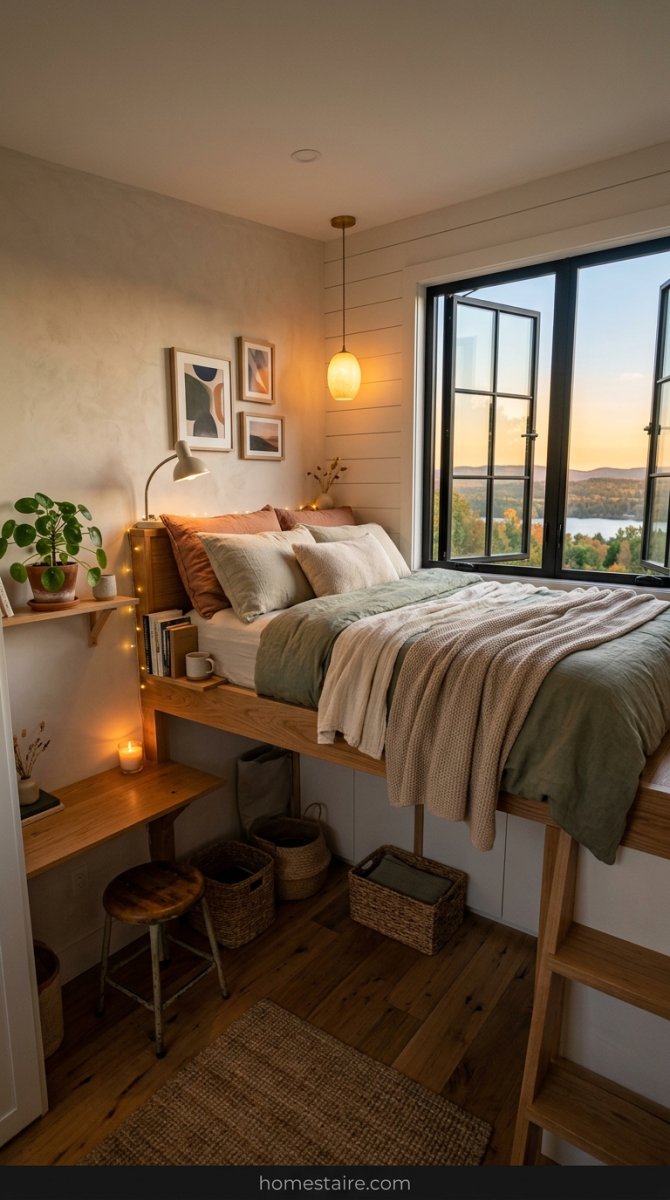
The best small bedroom layout leaves clear paths, uses vertical and under-bed space, and avoids bulky pieces. Measure first, try a layout on paper, and adjust until the room feels easy to move in.