
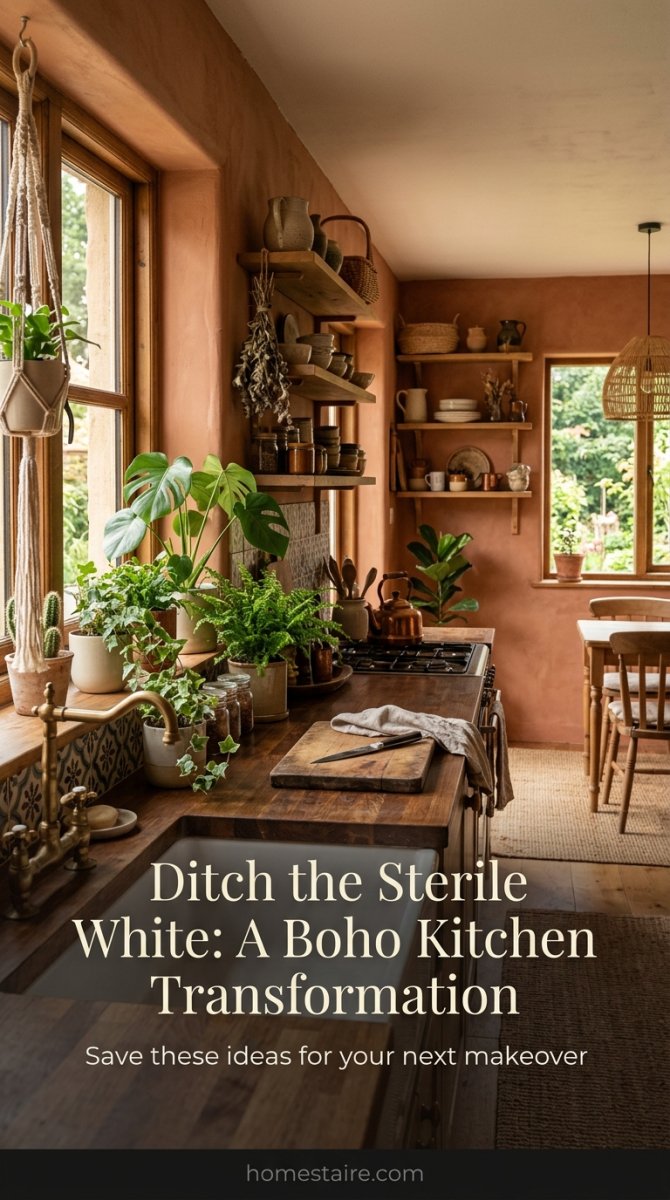
A boho kitchen feels warm, layered, and personal, with natural textures, earthy colors, and pieces that look collected over time. Done well, it’s inviting. Done carelessly, it can look cluttered.
This guide covers 10 ways to style a boho kitchen, with a table and FAQ. It’s based on design guidance rather than a personal remodel, so adapt the ideas to how you cook and clean.
1. Warm up white with terracotta tones

Terracotta, clay, and warm cream tones soften a sterile white kitchen. Use them in paint, tile, or ceramics.
Start small, such as a backsplash or a few pots.
2. Replace a few cabinets with open shelving

Open shelves show off ceramics, plants, and baskets. Removing upper cabinets can open up a kitchen, but check for wiring and plumbing first.
Keep shelves away from the stove and curate the contents.
3. Mix wood textures

Combine two or three wood tones and finishes, such as a butcher-block counter, a dark cutting board, and light shelves.
Repeat each tone at least twice so it looks deliberate.
4. Add rattan lighting

Rattan or woven pendants create a warm glow and an interesting shadow pattern. Affordable options are available.
Use LED bulbs, which run cool near natural fibers.
5. Use brass hardware
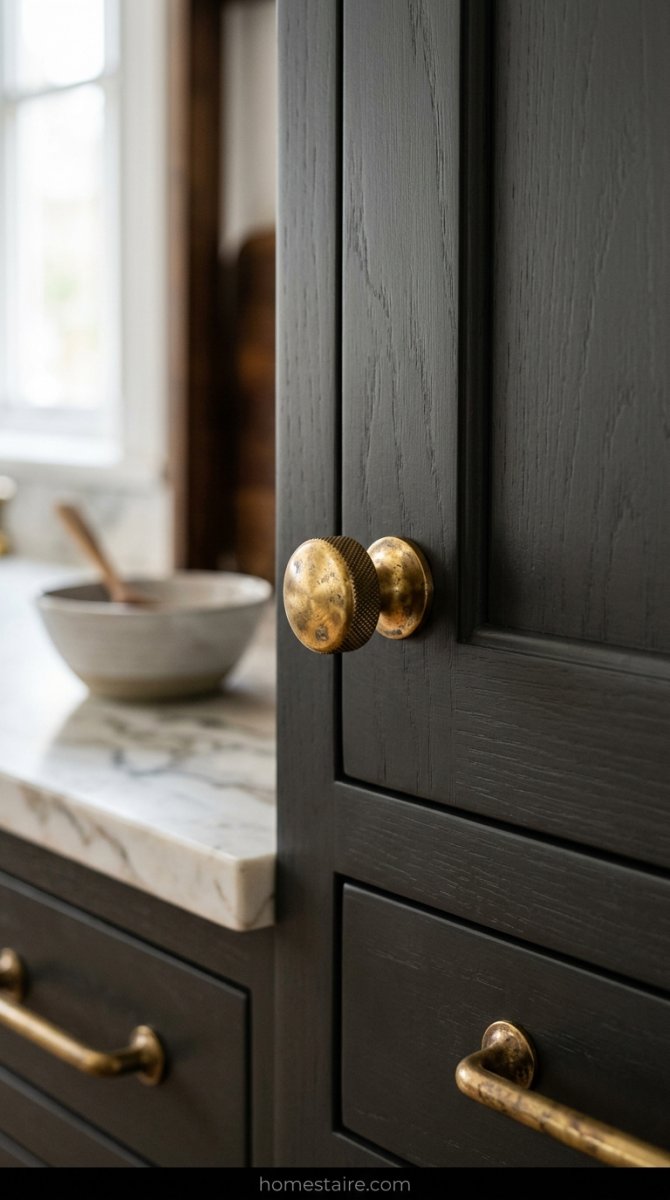
Brass knobs and pulls add warmth and a handmade feel.
Keep finishes consistent across the kitchen.
6. Choose a washable rug
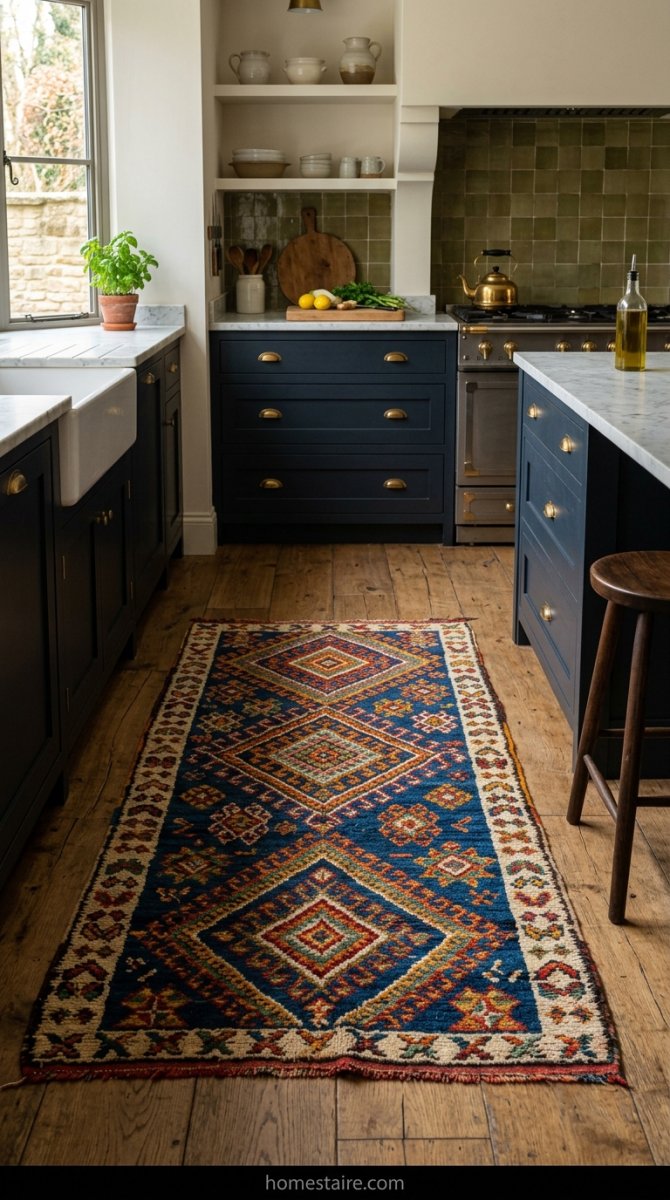
A patterned runner hides stains and adds softness. Machine-washable rugs are practical for kitchens.
Use a non-slip pad.
7. Add plants and herbs
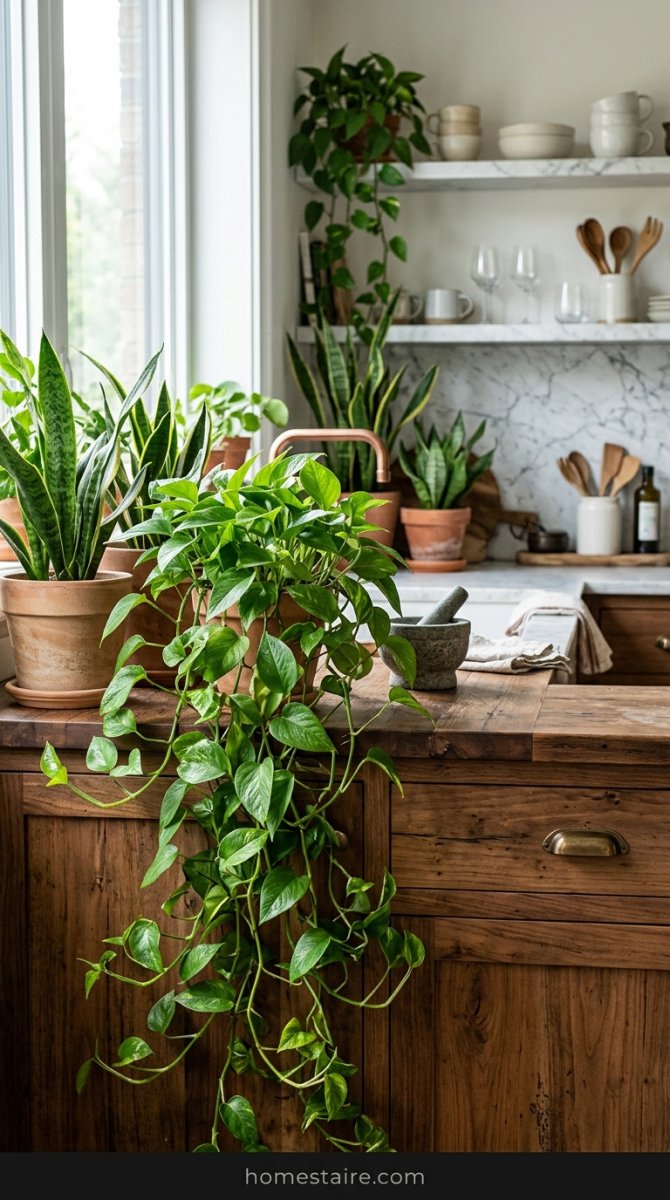
Pots of herbs and trailing plants add life and are useful. Group them on a tray or a shelf.
Check pet safety for plants.
8. Collect mismatched ceramics
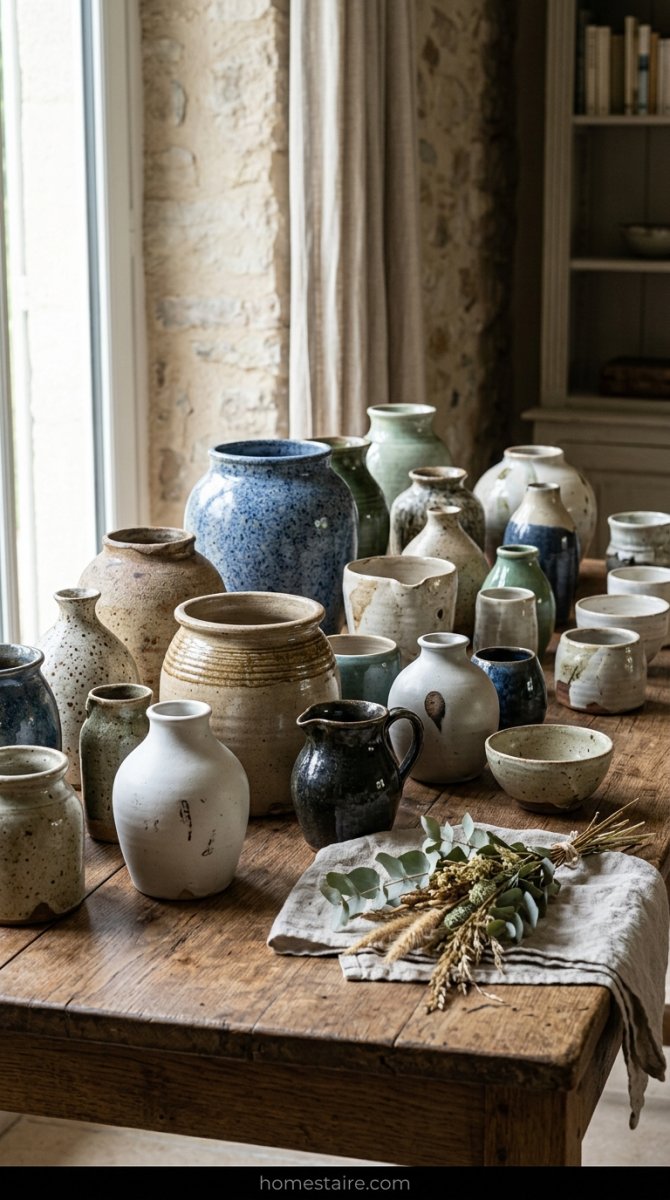
Thrifted bowls, jars, and pitchers give a collected look. Keep them in a related color palette.
Check for chips and for lead in old glazes before using for food.
9. Hang macramé and woven pieces
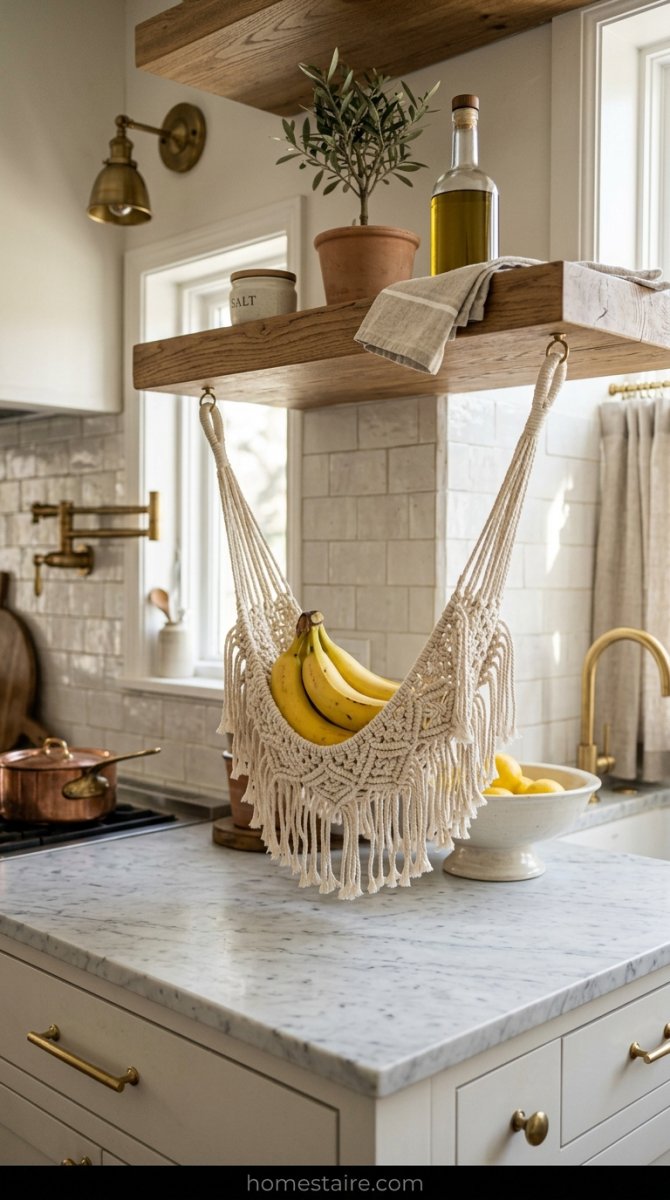
Macramé or woven wall hangings add texture. Keep fiber pieces away from the stove and splash zones.
A window or a blank wall away from heat works best.
10. Style a coffee station
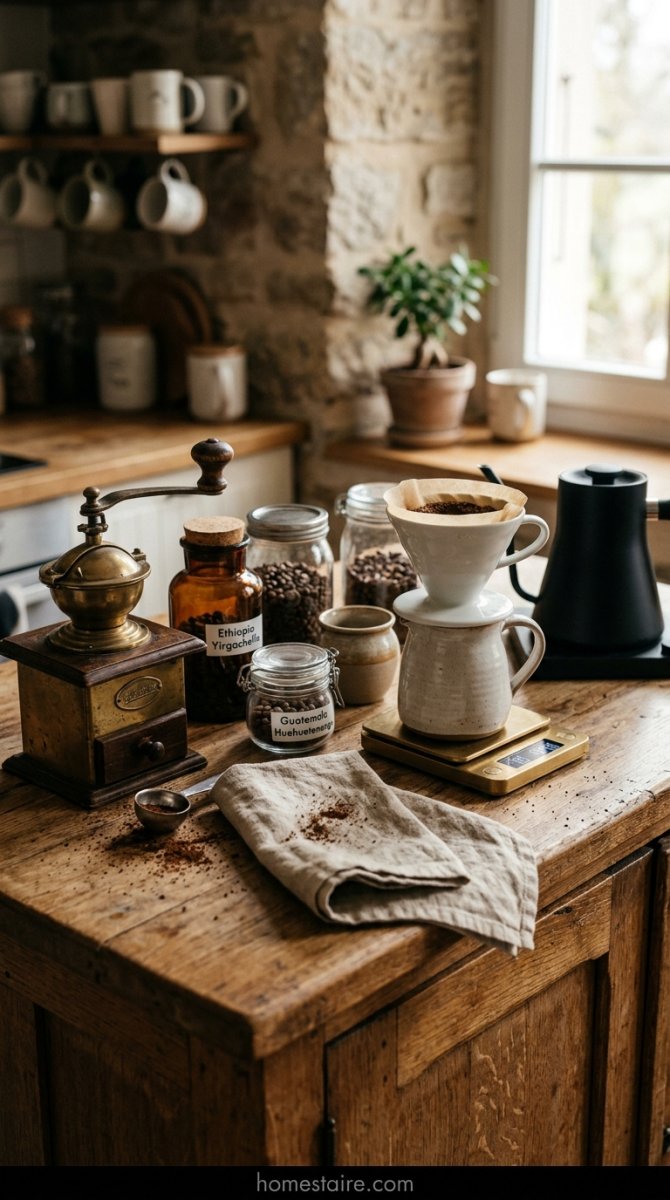
A tray with mugs, a canister, and a small plant makes a lived-in focal point.
Keep the area wiped and uncluttered.
Boho kitchen palette and materials
| Element | Examples | Caution |
|---|---|---|
| Colors | Terracotta, cream, sage, mustard | Limit to a few |
| Natural materials | Wood, rattan, jute, clay | Keep fibers away from heat |
| Metals | Brass, copper | Stay consistent |
| Textiles | Washable rug, linen towels | Choose washable fabrics |
| Greenery | Herbs, trailing plants | Check light and pet safety |
Practical rules for a boho kitchen
Kitchens have grease, steam, and heat, so some boho materials need care. Keep woven baskets, macramé, and dried stems away from the stove and sink, and use them for dry goods or in drier corners. Choose washable fabrics for towels and rugs, and seal wood surfaces used for food prep with a food-safe finish.
Open shelves look best when styled with intention. Use them for items you use often, since they’ll need regular dusting, and leave some empty space.
A simple layering order
Start with the permanent elements: wall color, cabinet or shelf choices, and lighting. Then add one or two large natural pieces, such as a butcher-block counter or a rattan pendant. Next come textiles and plants, and finally small items such as ceramics and trays. Review the room after each stage so it stays collected rather than crowded.
Boho kitchen FAQ
How do I avoid a cluttered boho kitchen? Limit the palette, group items, and leave open space.
Is open shelving practical? It can be, if you use it for items you use often and keep it away from the stove.
What colors suit a boho kitchen? Earthy tones such as terracotta, cream, sage, and mustard.
Conclusion
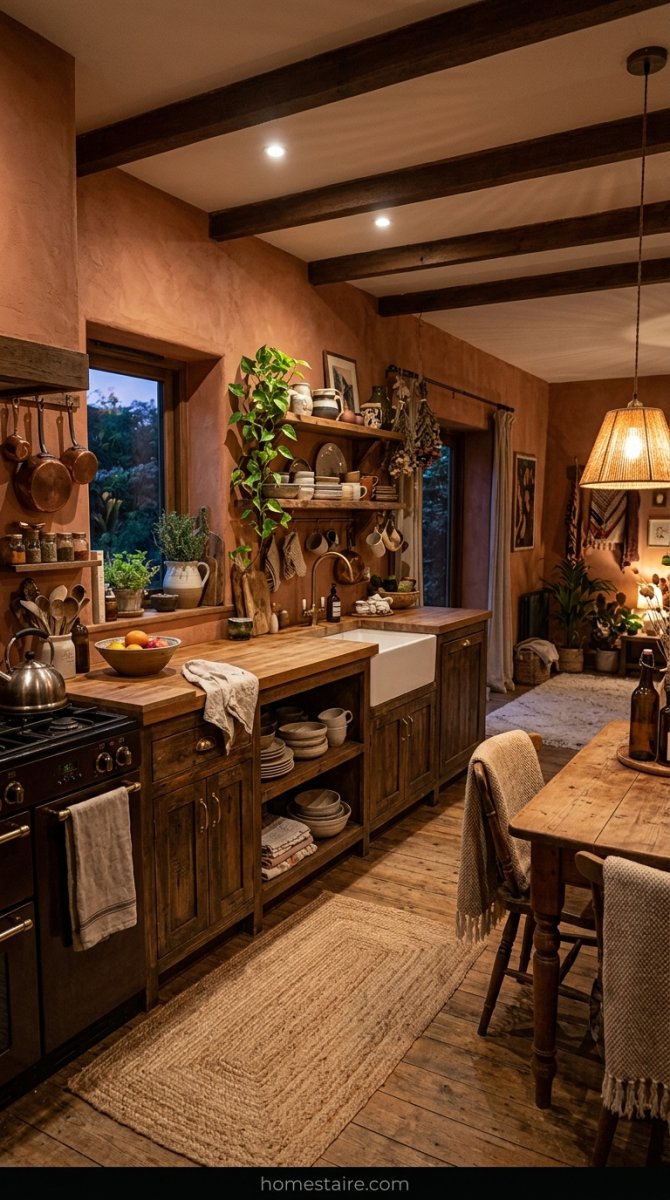
A boho kitchen works best when it’s warm, layered, and edited. Choose natural materials, mix a few textures, and keep surfaces practical for cooking.